
Sector cluster
Dubai Internet City (DIC)
DIC is not a general-purpose zone with a technology theme painted on it. It is one lane of a ten-district estate operated by TECOM Group, and each lane licenses its own trade.
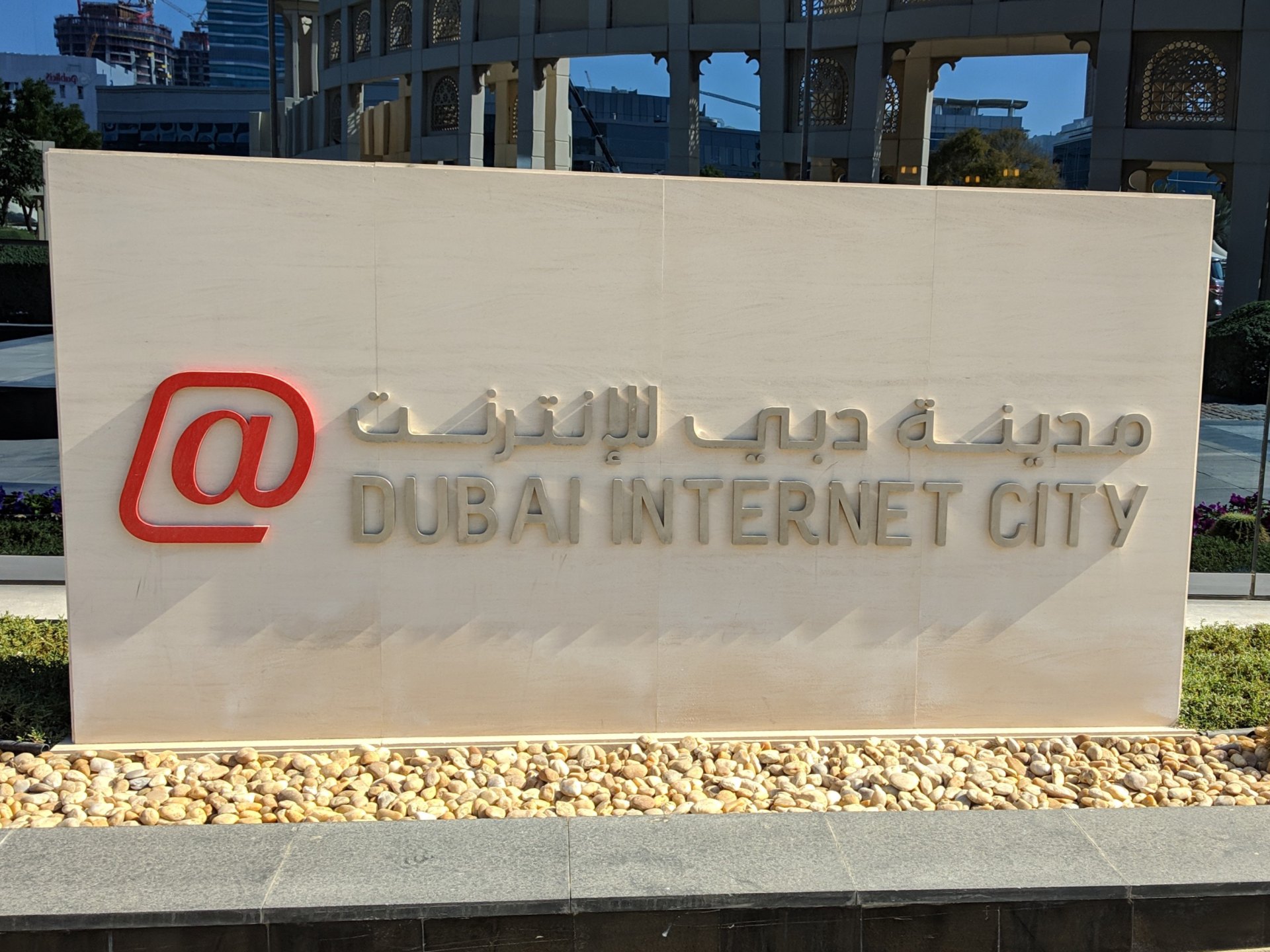
Admission
Dubai Internet City (DIC) is defined by what it admits.
A cluster zone is chosen by the list it keeps. What it is known for is the admission test in practice, so it is printed first, ahead of anything about cost or premises — those only matter once the activity is accepted.
- Who is on the list A tenant list weighted to international technology names, behind an activity gate
- The rule that admits them Creative-cluster free zone — not a Designated Zone for VAT
The record
The standing facts behind the cluster.
These are the standing facts we hold, restated against the authority before any application is filed. Where the authority’s own sheet and this page disagree, the authority wins and this page changes.
- Emirate
- Dubai
- Premises
- Leased offices, the Innovation Hub, business-centre suites and in5 Tech incubation space
- Visa allocation
- Confirmed against the authority for your package.
Packages, fees and visa allocations are set by the authority and revised annually. Nothing on this page is a quotation — we confirm the current position in writing before you commit to anything.
In detail
Dubai Internet City will not licence a recruitment agency at any price. What you do decides whether you get in at all here, and for most callers that settles it before a number is ever quoted.
DIC is not a general-purpose zone with a technology theme painted on it. It is one lane of a ten-district estate operated by TECOM Group, and each lane licenses its own trade. A recruitment consultancy does not get a DIC licence at a higher price — it gets pointed at Dubai Knowledge Park. A production house gets pointed at Dubai Studio City. A fashion label gets pointed at Dubai Design District. The gate is an activity list, not a package tier.
So the order here is inverted on purpose. The limitations come first, ahead of the licence types and the premises, because for most founders who arrive at this district the honest answer arrives in the first ninety seconds.
Where Dubai Internet City is the wrong choice — and why that section comes first here
We would rather send you to the district next door today than take a fee for placing you badly.
Your trade is media, marketing or content, not technology. Advertising, public relations, brand studios and influencer businesses belong in Dubai Media City; broadcast and film in Dubai Studio City; printing, packaging and publishing in Dubai Production City. Same regulator, same landlord, different district.
You train, recruit or place people. Training institutes, HR consultancies and recruitment firms belong in Dubai Knowledge Park; degree-awarding institutions in Dubai International Academic City.
You design objects rather than software. Product, fashion, interior and architectural practices belong in Dubai Design District.
Your work is life sciences. Pharmaceuticals, biotechnology, medical devices and clinical research belong in Dubai Science Park, where the approvals chain is already built for you.
You run a call centre, a shared service centre or back-office processing. That is Dubai Outsource City, whose cost base was designed for headcount at volume.
You move physical goods, or need a workshop. No warehousing, no industrial land, no customs-controlled storage, and DIC is not a Designated Zone for VAT. Import and re-export belong in JAFZA, SAIF Zone or KEZAD; prototyping and small-batch assembly want the light industrial units at Dubai Silicon Oasis.
Price is your deciding criterion, or you are one person buying a famous postcode. Both are legitimate positions and neither is answered in this district. At DIC the space is the bill and the licence is a line on it, so there is no configuration of this zone that competes with a desk-based product; and a postcode returns nothing from a client base that never asks for it. Start at IFZA, Meydan or SHAMS instead.
You are regulated, or you touch client money. Payments, lending, asset management, insurance and capital markets require DIFC or ADGM; virtual assets in Dubai require VARA. Calling a regulated business "a software platform" does not move it out of the perimeter.
Your pipeline is Dubai corporates rather than overseas accounts. A DIC licence does not reach onshore customers on its own; delivery into mainland Dubai runs through a Dubai Economy and Tourism permit under Executive Council Resolution No. (11) of 2025, carrying its own fee and its own separate books. For an enterprise software business whose entire named-account list sits onshore, that permit is not an edge case, it is the operating model — and it belongs in the budget before the district is chosen.
TECOM runs ten districts, and each one owns a single trade
The reason DIC turns work away is structural rather than commercial. TECOM operates ten business districts on a model of specialisation: each holds its own activity list, tenant mix and approvals relationships, and a district that licensed everything would be competing with the other nine.
That produces the routing below, which is the thing to have in front of you if somebody said "Dubai Internet City" when they meant "a Dubai free zone."
Read the diagonal. Nothing sits in two columns, and that is the point: these are not tiers of one product, they are separate products with a shared landlord. The grid holds five districts; Science Park, Studio City, Production City, Academic City and Industrial City sit outside it on the same principle, the last of them on a licensing basis worth confirming rather than assuming.
So your activity chooses your district before you choose anything else. Founders who reverse that order pay twice: once for the wasted application, and again in the awkward year that follows when the licence does not quite cover what the business sells.
Your regulator, your landlord and your neighbours are three separate purchases
This district separates the regulator from the operator, and confusing the two is how founders end up negotiating with the wrong party.
The Dubai Development Authority (DDA) licenses and regulates the creative clusters. One body has carried three names in turn — Dubai Technology and Media Free Zone Authority, then Dubai Creative Clusters Authority, now DDA — which is why older agent material and older correspondence name a regulator that no longer exists under that name. Your licence, your permitted activities and your compliance obligations all sit with DDA.
TECOM Group PJSC is the operator and landlord — a listed company, not a government department, holding and leasing the space you occupy. The commercial conversation is faster than a ministry counter, and your rent is a line on a public company's revenue, priced and reviewed accordingly.
The district itself is the third thing you buy, and the one the other two cannot sell you: neighbours. DIC publishes its membership, and the list is weighted to large international technology names. Read it yourself rather than accept a claim about density — whether that adjacency is worth a premium has a different answer for a fifty-person regional office than for a two-person startup.
The founding instruments are worth naming because agents rarely do. The free zone traces to Dubai Law No. (1) of 2000 and was re-based by Law No. (15) of 2014 concerning the Dubai Creative Clusters Authority. Both are flagged for confirmation on the Dubai legislation portal before this page publishes: the lineage is right, the numbers deserve checking rather than repeating.
The activity list is the product, and it is narrower than "tech"
DIC licenses within information and communications technology, and the list is more specific than "tech" suggests to a founder using the word loosely.
Comfortably inside: software development and publishing, SaaS and platform businesses, IT consulting and systems integration, cloud and managed hosting, cybersecurity, data and analytics, telecommunications and network services, e-commerce technology, and the sales and support arms of technology manufacturers.
At the edge, and worth confirming rather than assuming: digital marketing agencies, which frequently belong in Media City; technology-enabled recruitment platforms, which frequently belong in Knowledge Park; and any business whose revenue is a commission on someone else's product rather than a fee for its own technology.
Two consequences. The activity on your licence is the activity you may lawfully perform — a licence is a permission list, not a statement of ambition, and adding activities later is a priced amendment. And the number of activities is itself a pricing input, so "how many do you need" has a financial answer rather than a free one.
Entity forms follow the standard free zone pattern: a free zone limited liability company, or a branch that carries the parent's name and leaves the parent liable. Where the shareholder is a company, its constitutional documents have to be attested in the home jurisdiction and its board has to resolve to incorporate here — a chain that clears on somebody else's calendar, which is exactly the constraint on the group-subsidiary files this district exists to attract.
This address only pays when somebody outside your company cares where you are
The zone rewards businesses for whom the address is doing commercial work.
- Regional headquarters of international technology groups, where the licence is a formality and the point is a Dubai base for EMEA, South Asia or Africa coverage.
- Enterprise software and platform businesses selling to large regional accounts, where a procurement team recognises the district and a co-working address invites questions.
- Cloud, cybersecurity and managed service providers serving government and enterprise customers who ask where you are before they ask what you charge.
- Telecoms and connectivity businesses whose counterparties already sit inside the same estate.
- Funded startups at in5 Tech, TECOM's incubation platform in the district, where programme access and investor traffic are part of what is bought.
If nobody outside your company cares where you are, you are paying a location premium into a void.
The order the work happens in, and where the queue actually forms
Each step gates the next, and the gate that catches people is the first one, not the last.
- Confirm the activity is licensable at DIC. Not "is it technology" — is it on this district's list. Do this before you speak to a landlord or a bank.
- Choose the entity form, company or branch, and assemble the shareholder file. Attestation from abroad starts now because it finishes last.
- Trade name reservation. Names implying regulated activity, governmental association or a scope wider than the licence are refused.
- Fix the premises. Not paperwork at the end. The space sets the visa ceiling and a large share of the annual cost, so size it against year-two headcount.
- Submit the application with passports, photographs, proof of address, the business description and the corporate documents.
- Initial approval, then the lease or licence-to-occupy, then payment and signature of the incorporation documents.
- Licence issue, followed by the establishment card and the immigration file.
- Per person: entry permit, medical, Emirates ID and stamping. The step that expands with headcount, and it runs on the immigration authority's clock rather than the zone's.
- Corporate bank account, and Federal Tax Authority enrolment for corporate tax — which is owed whether or not the account has opened.
The realistic critical path is the attestation chain and the premises decision, in that order. Neither is a licensing delay, and neither appears in a "licence in X days" claim.
Premises are not an afterthought here — they are the application
DIC is a physical district and presence within it is the normal expectation. The stock runs from leased floors in the district's commercial buildings, through the purpose-built Innovation Hub, to business-centre suites and the incubation space at in5 Tech. TECOM also runs a freelance permit programme across its districts for individual technology professionals — a different product from a company licence, and not comparable with one.
Three things to settle in writing before signing:
- The service charge on top of the rent, and how it is reviewed. On a central Al Sufouh floor this is not a rounding error.
- The visa allocation the specific space carries. Not the building, not the product name — the unit.
- Whether the co-working or business-centre product on offer actually supports the licence and the visas you need. These are revised without notice and a reseller's page is not evidence.
Location is part of the pricing. DIC sits on Sheikh Zayed Road in Al Sufouh between Dubai Marina and Media City, served by the Metro Red Line and beside the tram network. That buys engineering and commercial candidates who will not commute to the edge of the city, and it is a large part of why the cost base sits where it does.
There is no package ladder here — the lease sets the visa ceiling
Allocation is assessed against the space you hold. Nothing here resembles the tiered quota IFZA or Meydan sell, and the mechanics should be confirmed in writing with the district rather than taken from a quote sheet.
That cuts two ways, and the direction that catches technology companies is the first one. Headcount you cannot seat, you cannot sponsor. An engineering team that mostly works remotely still has to be given floor area here, because floor area is what the quota is measured against — so the cost of a distributed team lands on the lease rather than on the payroll, which is the opposite of how such a team is usually budgeted. In the other direction there is no tier to outgrow: the ceiling moves when the floor plan moves, and nothing else on the licence is repriced when it does.
Get the quota confirmed against the specific unit before the lease is executed. After signature you have no leverage, and a quota that turns out smaller than assumed is then renegotiated from the weaker side of the table, or not at all.
Why this page carries no price for a DIC licence
Competitor pages about this zone quote an AED figure. We are not going to, and the reason belongs on the page rather than behind a range.
TECOM prices a DIC licence against the activity, the number of activities and the space, then quotes it. There is no published tariff to cite the way there is for a package zone, so every headline number circulating for "Dubai Internet City licence cost" is an intermediary's quote for one configuration, or an estimate. Reprinting one as an authority rate would make this page look more useful and make it less true.
What we can give you is the shape of the bill, which is what you budget from:
- The licence, priced by activity and by how many activities sit on it.
- The lease or licence-to-occupy, plus service charge — normally the largest recurring line by a distance, larger than the licence itself.
- A security deposit against the space, refundable and payable up front.
- The establishment card and immigration file, once per company.
- The per-person visa chain — entry permit, medical, Emirates ID, stamping — plus a refundable deposit per visa, repeated for every hire.
- An annual audit, compulsory rather than optional the moment you claim free zone tax status.
- Renewal, which is not the first-year number.
- A mainland permit, if any part of your revenue is onshore UAE work.
Insist that authority fees are itemised separately from the intermediary's margin. A single bundled figure is not a price, it is a negotiating position.
The 0% a DIC software company gets is not the 0% it was sold
This is the most consequential technical section on the page, and where a technology zone diverges sharply from an industrial one.
Corporate tax enrolment is mandatory for every DIC entity regardless of rate or profit, and the deadline carries a fixed AED 10,000 penalty that no free zone has the power to waive. Founders who read "0% tax zone" as "no filing" pay it first.
The 0% is conditional, self-assessed and narrower than the marketing. A free zone entity gets 0% only on qualifying income as a Qualifying Free Zone Person, and the qualifying and excluded activities sit in Ministerial Decision No. 229 of 2025, which replaced the earlier list retroactively to 1 June 2023.
Here is the part that matters at DIC. Software development, SaaS subscriptions, IT consulting and systems integration are not qualifying activities. A DIC software company selling to customers in Dubai, Riyadh or London is generally earning non-qualifying income and pays 9% on it above the AED 375,000 threshold, with the free zone address changing nothing.
And here is the exception that explains DIC's tenant mix. Headquarter services to related parties, and treasury and financing services to related parties, are qualifying activities, as is holding shares and securities for investment. A regional headquarters entity providing management and coordination to group companies has a genuine 0% story. A venture-backed SaaS business two floors below, selling to third parties, does not. Same district, same licence category, opposite tax outcome.
Three mechanics decide the rest:
- The de minimis threshold. Non-qualifying revenue must stay below the lower of 5% of total revenue or AED 5 million. Breach it and qualifying status is lost for the current tax period and the four that follow.
- Audited financial statements are compulsory for anyone claiming qualifying status under Ministerial Decision No. 84 of 2025, regardless of revenue. That is an annual audit fee attached to a status that, for a third-party software business, is delivering nothing.
- Small Business Relief under Ministerial Decision No. 73 of 2023 treats businesses under AED 3 million in revenue as having no taxable income, and it is mutually exclusive with qualifying free zone status. Read that against the paragraph above: a young DIC company whose income is non-qualifying anyway is being asked to fund an audit to protect a 0% it cannot use, when the relief would cost it nothing. The election has a deadline and a date beyond which the relief itself stops; our UAE corporate tax page holds both.
An ICT licence exempts you from none of the federal obligations
VAT applies at 5% and enrolment is required once taxable supplies pass AED 375,000. The Designated Zone question that dominates industrial zone pages is the wrong question here twice over: DIC is not on the Designated Zone schedule, and that treatment covers the movement and storage of goods, never services. A software company would gain nothing from it even if the address qualified.
Beneficial ownership records are a standing obligation under Cabinet Decision No. 109 of 2023: the company holds them and brings them up to date inside the window the regulations set whenever ownership moves. On a venture-funded cap table that moves at every round, which makes this a calendar item rather than an incorporation one.
Anti-money-laundering obligations apply where you carry on a designated activity. Most pure technology businesses do not; payment-adjacent and brokerage-adjacent models frequently do, and the test is what you do rather than what your licence line says.
Economic Substance reporting stops at financial years ending after 31 December 2022, under Cabinet Decision No. 98 of 2024. It is worth checking your own invoices for it: an annual ESR notification line on a renewal quote is a charge for work the Cabinet removed.
Employment sits under Federal Decree-Law No. 33 of 2021, with the free zone administering the file. There is no separate DIC employment law and no funded end-of-service scheme of the kind DIFC operates — a cost difference in the other direction, worth knowing if you are comparing the two.
Data protection is a live obligation for the businesses this district attracts. DIC has no data law of its own; the federal Personal Data Protection Law applies, and its implementing position should be checked when you build the compliance programme. A company whose product is other people's data cannot treat this as a filing exercise.
Mainland delivery runs on a permit. Under Executive Council Resolution No. (11) of 2025, a Dubai free zone establishment may operate in mainland Dubai only under a licence or permit from Dubai Economy and Tourism, and must keep separate financial records for that activity.
The licence buys ownership and an address, not a lighter obligation set.
Against Dubai Silicon Oasis, and against a cheap general-purpose zone
The instructive comparison is against the other technology district founders are shown, and against the low-cost licence they were quoted first.
Against Dubai Silicon Oasis, the two are not competing on price and pretending otherwise misleads people. DSO sells a building and the ability to make things in it — light industrial units, prototyping, assembly, a campus you can live on. DIC sells a location and a neighbour list, with no industrial capacity at all. A hardware company that picks DIC will be renting a workshop elsewhere within a year. A software company selling to enterprise accounts that picks DSO pays for a workbench it never uses and keeps losing candidates to the commute. The question is not which is cheaper; it is whether the business needs a workbench or a boardroom.
Against IFZA and the low-cost zones, DIC loses on every axis except the one its tenants care about. IFZA will licence more activities for less money and will not ask you to lease a floor. What it will not do is put you inside the district your enterprise customer already visits. If nobody is assessing you on your postcode, the postcode is not worth buying.
Answer one question and the district chooses itself
The first question decides everything downstream, and it is not a budget question. What exactly does the business sell, who pays for it, and is that revenue technology or something adjacent that TECOM licenses in a different district?
Answer that honestly and the district answers itself — DIC, one of its nine siblings, a general-purpose zone, or the mainland. We will tell you which, including when the answer costs us the engagement.
Compare all free zones · Document attestation · Free zone company formation · Mainland company · UAE corporate tax
Provenance
How this record is verified.
Everything above is re-checked against Dubai Internet City (DIC)’s own current published material and against the federal rules before any application is filed. Where the two disagree, the authority wins and we tell you.
Frequently asked questions about Dubai Internet City
How do I know whether my business is on DIC's activity list?
Ask the district, because "is it technology" is not the test — "is it on this list" is. Comfortably inside: software development and publishing, SaaS and platform businesses, IT consulting and systems integration, cloud and managed hosting, cybersecurity, data and analytics, telecommunications and network services, e-commerce technology, and the sales and support arms of technology manufacturers. At the edge and worth confirming rather than assuming: digital marketing agencies, technology-enabled recruitment platforms, and any business whose revenue is a commission on somebody else's product rather than a fee for its own technology. The activity on the licence is the activity you may lawfully perform.
My named accounts are all Dubai corporates. Does a DIC licence reach them?
Not on its own. Delivery into mainland Dubai runs through a Dubai Economy and Tourism permit under Executive Council Resolution No. (11) of 2025, which carries its own fee and requires separate financial records for that activity. For an enterprise software business whose whole account list sits onshore, that permit is not an edge case, it is the operating model, and it belongs in the budget before the district is chosen. It has a tax consequence too, because selling software to customers in Dubai is generally non-qualifying income and taxed at 9% above the AED 375,000 threshold.
Does a DIC software company get the 0% corporate tax rate?
Generally not, and the exception explains the tenant mix. Software development, SaaS subscriptions, IT consulting and systems integration are not qualifying activities under Ministerial Decision No. 229 of 2025, so a company selling to third parties in Dubai, Riyadh or London earns non-qualifying income and pays 9% above AED 375,000. Headquarter services, and treasury and financing services to related parties, are qualifying, as is holding shares and securities for investment — so a regional headquarters has a genuine 0% story and a venture-backed SaaS business two floors below does not. Enrolment is mandatory either way.
Can I sponsor a remote engineering team from DIC?
Only as far as you can seat it. Allocation is assessed against the space you hold rather than against a package tier, so floor area is what the quota is measured against, and headcount you cannot seat you cannot sponsor. The cost of a distributed team therefore lands on the lease rather than on the payroll, which is the opposite of how such a team is usually budgeted. In the other direction there is no tier to outgrow: the ceiling moves when the floor plan moves. Get the quota confirmed against the specific unit before the lease is executed.
Who regulates a DIC company, and who is the landlord?
Two different parties, and confusing them is how founders end up negotiating with the wrong one. The Dubai Development Authority licenses and regulates the creative clusters — the same body previously named the Dubai Technology and Media Free Zone Authority and then the Dubai Creative Clusters Authority, which is why older material names a regulator that no longer exists under that name. Your licence, permitted activities and compliance obligations sit with it. TECOM Group PJSC is the operator and landlord, a listed company rather than a government department, so your rent is a line on a public company's revenue.
DIC or Dubai Silicon Oasis?
It turns on whether the business needs a workbench or a boardroom, not on which is cheaper. Dubai Silicon Oasis sells a building and the ability to make things in it — light industrial units, prototyping, assembly, a campus you can live on. DIC sells a location and a neighbour list, with no industrial capacity at all. A hardware company that picks DIC will be renting a workshop elsewhere within a year, and a software business selling to enterprise accounts that picks the other pays for a workbench it never uses while losing candidates to the commute.
Begin with a clear conversation
Tell us what you intend to build.
A consultant will map the structure, jurisdiction, approvals and likely cost against what you actually described — not against a package.
