
Operating site
SAIF Zone — Sharjah Airport International Free Zone
SAIF Zone is the strongest value in the UAE for airport-side warehousing and light manufacturing — a customs-controlled Designated Zone twenty minutes from Dubai International at Sharjah prices.
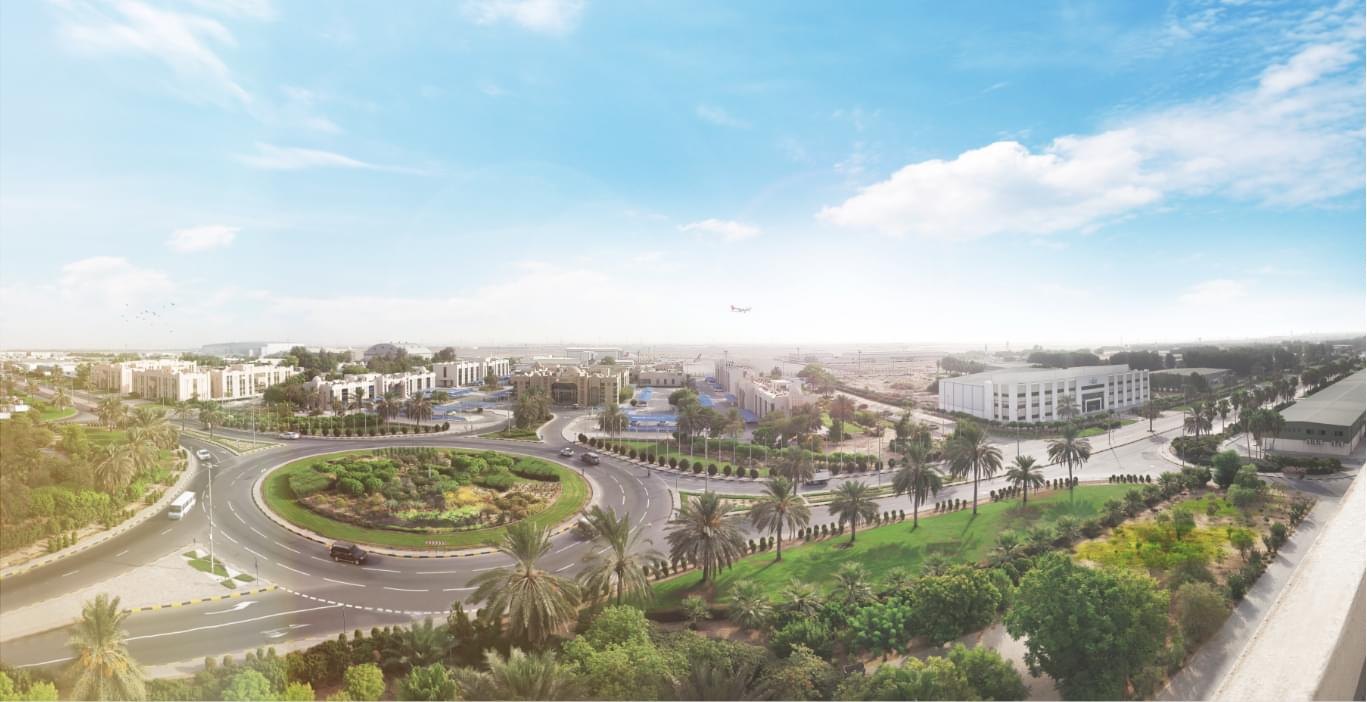
The site
SAIF Zone — Sharjah Airport International Free Zone is a site before it is a licence.
Premises, visa allocation and customs standing decide whether the operation actually works at this address. They lead the record where we hold them, because they are what you are buying; the licence is the paperwork that follows them.
- What you can occupy Desks and offices, pre-built warehouses from 125 sqm, and land plots
- Customs and VAT standing Free zone — Designated Zone for VAT
The record
The standing facts behind the site.
These are the standing facts we hold, restated against the authority before any application is filed. Where the authority’s own sheet and this page disagree, the authority wins and this page changes.
- Emirate
- Sharjah
- Known for
- Airport-side warehousing and light manufacturing at Sharjah prices
- Visa allocation
- Confirmed against the authority for your package.
Packages, fees and visa allocations are set by the authority and revised annually. Nothing on this page is a quotation — we confirm the current position in writing before you commit to anything.
In detail
Most comparisons rank SAIF Zone on licence price, where it looks unremarkable — cheaper than Dubai, dearer than Ajman, level with the rest.
That measures the wrong thing. The licence is not the product. The product is a fenced, customs-controlled industrial estate around a working cargo airport, where a 400 square metre warehouse costs a fraction of the Dubai equivalent and sits twenty minutes from Dubai International. If your business has weight, volume or a production line, that is the argument. If not, read the limitations section first.
What SAIF Zone is, and who runs it
Sharjah Emiri Decree No. 2 of 1995 created the free zone at Sharjah International Airport and the Sharjah Airport International Free Zone Authority together, the latter as licensor and incorporating authority. It is chaired by H.H. Sheikh Khaled bin Abdullah bin Sultan Al Qasimi, with Saud Salim Al Mazrouei as Director, and was the world's first ISO 9001-certified airport free zone — which reflects how it runs: procedurally tight, unfashionable, quick. SAIF Zone publishes more than 8,000 companies from around 165 countries, though that figure on its own About page carries a 2019 date, so treat it as an order of magnitude.
Two structural facts outweigh the marketing.
It is a Designated Zone for VAT. Under Cabinet Decision No. 59 of 2017, Sharjah has exactly two — Hamriyah and Sharjah Airport International Free Zone. Shams is not on that list. Designated status treats the area as outside the UAE for VAT on the movement of goods, and it exists because the zone is genuinely fenced and controlled: Sharjah Customs operates a customs centre inside SAIF Zone, open daily 08:00 to 20:00. That is not a structure someone sold you. It is a gate with officers at it.
The airport beside it is a freight airport. Sharjah International handled 204,323 tonnes of air cargo in 2025, up from 195,909 tonnes in 2024, and is Air Arabia's home base. Port Khalid is a short drive on the Arabian Gulf; Port Khorfakkan, on the Gulf of Oman, sits roughly 120 kilometres east — both coasts, without transiting the Strait of Hormuz. Dubai International is around 21 kilometres away; read the commute section before relying on any drive time.
Who it genuinely suits
- Light manufacturing and assembly — processing, packaging, finishing, electronics, food production, where floor area and power matter more than a prestige address.
- Regional distribution and re-export with real stock, particularly goods that sit in bond and leave without entering the UAE market.
- Air-freight-led trade — perishables, spares, high-value low-volume goods; anything on an AWB rather than a bill of lading.
- Jewellery and precious metals manufacturing, in the zone's dedicated Jewellery Park. Read the AML paragraph below first.
- Operations with large blue-collar headcount, because on-site worker accommodation removes a cost office-park zones cannot address at all.
The common thread is physical operations; move away from that and the case weakens fast.
Licence types, and what each permits
The three-line cap is where money leaks: founders take the cheaper trade licence, add a fourth product line in month eight, and pay to convert inside the first year. Map every line you expect to sell in three years before choosing.
Entity types are FZE (single shareholder), FZC (multiple shareholders), and branches of UAE or foreign companies. Minimum share capital is AED 150,000 (about USD 41,000) for an FZE or FZC — declared in the constitutional documents, not deposited — and nil for branches. Not a cash cost, but a number you will be asked to justify, and one that distinguishes SAIF Zone from Shams, IFZA and Meydan.
What setup involves, in the order it happens
- Activity and licence type, mapped against your three-year product list — not the reverse.
- Entity type, following from shareholder structure and whether a parent is involved.
- Trade name reservation with the Authority.
- Facility selection — a gating step. The unit sets your visa allocation and, for an industrial licence, whether you can be licensed at all.
- Application and documents. Corporate shareholders need attested constitutional documents and a board resolution.
- External clearances. Industrial licences need health and environmental sign-off — the step that adds weeks.
- Payment, then licence issue. SAIF Zone markets delivery within one hour. True, and narrow: that is the licence counter, not fit-out, customs codes or visas.
- Establishment card and immigration file, then entry permits, medicals and Emirates ID.
- Customs client code, which makes designated status usable.
- Bank account, then enrolment with the Federal Tax Authority.
For a desk-based service company, steps 1 to 8 run in a week or two. For a warehouse, fit-out, environmental approval, gate passes and customs onboarding push real go-live out by months.
What it costs
SAIF Zone publishes no public tariff. Everything below is indicative, drawn from what clients pay. Authority fees change without notice, and anyone quoting a fixed all-in figure for a year not yet reached is guessing.
Drawn as bands rather than as single figures, the six lines that carry a number show what a headline package price hides — how far the floor of a brief sits from its own ceiling, and how far a desk sits from a warehouse.
A service licence with a SAIF Desk and a small visa quota has run AED 10,500 – 15,000 in the first year, a trade licence with a SAIF Executive Office AED 14,000 – 25,000, a general trading licence with an office AED 20,000 – 35,000, and a 125 square metre pre-built warehouse with its licence from roughly AED 60,000 – 90,000; each employee visa adds AED 4,000 – 7,000 across all stages and the annual audit AED 6,000 – 15,000. A land plot of 2,500 square metres and above is a lease plus your own build cost, and is the one line nobody can put a band around.
Routinely excluded: establishment card, medical, Emirates ID and stamping per person; attestation of foreign documents; activity amendments; external approvals; refundable visa guarantees; warehouse fit-out.
Where the Dubai saving actually sits
Not in the licence. Fees across the low- and mid-cost zones sit within a few thousand dirhams of each other, and a SAIF desk package is not the cheapest — Shams and the Ajman zones undercut it.
The saving is in floor area, land and labour. Pre-built warehouse rents here run at a fraction of Jafza or DAFZA rates for comparable space, land starts at 2,500 square metres against Hamriyah's 5,000, and on-site accommodation removes the largest line in a Dubai industrial operation's staff budget. A 400 square metre warehouse is where the arithmetic separates; a flexi-desk is where it does not.
Visa allocation, and why it is a premises decision
SAIF Zone ties allocation to the facility and publishes the numbers for its standard units — more transparency than most zones offer. Put on one scale rather than listed, the three published units read as a ladder, and the step between the rungs is the thing being chosen.
Three visas come with a SAIF Desk, five with a SAIF Executive Office and eight with a SAIF Suite; on a warehouse or a land plot the quota scales with the facility and there is no practical ceiling. Residence visas run three years for investors, two years for employees from date of issue.
The sequencing error we see most often is signing the facility, then discovering the quota. Count headcount eighteen months out — upgrading mid-term to raise the visa allocation costs more than leasing correctly at the start, every time.
Offices, desks, warehouses and land
The ladder runs SAIF Desk, SAIF Executive Office, SAIF Suite, then pre-built warehouses at 125, 250, 400 and 600 square metres, typically with attached office space, then land plots from 2,500 square metres upward for custom builds. Alongside sit the Jewellery Park, container parking, temporary storage and labour accommodation.
Read that ladder as four different companies rather than four rents. The unit you sign for sits upstream of your visa quota, of what a bank can verify about you, and of whether the cost advantage that brought you here reaches your accounts at all.
There is no virtual office here, and there should not be. A desk is a real allocation in a real building — and the first thing a bank compliance officer sees, and what the Federal Tax Authority would weigh if it tested your substance. It fits a two-person consultancy or a holding structure, not a trading company projecting eight-figure turnover.
Banking: who says yes, and why files fail
Sharjah Islamic Bank keeps a branch inside SAIF Zone — the most reliable signal as to who is structurally receptive, since SAIF Zone companies are its home market. RAKBANK and the digital-first business banks are usually fastest to a first account; large conventional banks are open but apply full scrutiny to any Sharjah free zone file.
A warehouse operation banks more easily here than a service company: banks want substance, and a lease, a customs client code, inventory and staff supply it in a form a compliance officer can verify.
Files fail predictably:
- The desk against the projection. A three-visa desk package with stated turnover in the millions. The premises contradict the plan, and the file dies on that contradiction alone — the most common refusal we see here.
- Geography as a question. A company licensed in Sharjah whose only director lives and works in Dubai invites the question of where it actually operates — a good answer if you leased space here, none if you did not.
- Activity mismatch — general trading with no named suppliers, no identifiable customers, no supply chain.
- Trade corridors triggering enhanced due diligence — SAIF Zone's trade is genuinely global.
- Thin source-of-funds evidence, common where capital arrives from a related offshore entity.
None of this is fixed at the bank. It is fixed at formation, by choosing premises and activities that describe a real operation — our banking advisory page covers the mechanics.
The compliance that starts the day the licence is issued
Corporate tax. Federal Decree-Law No. 47 of 2022 applies and a SAIF Zone company is not exempt: 0% to AED 375,000 of taxable income, 9% above. A Qualifying Free Zone Person takes 0% on qualifying income, and SAIF Zone is well placed — under Ministerial Decision No. 229 of 2025, superseding MD 265 of 2023, manufacturing, processing of goods, logistics services, and distribution of goods in or from a Designated Zone all qualify. Here, designated status is load-bearing rather than decorative.
The conditions are cumulative: adequate substance, qualifying income, arm's length related-party dealings, transfer pricing documentation, audited financial statements, and non-qualifying revenue below the lower of 5% of revenue or AED 5,000,000. Two points get misrepresented constantly. A Qualifying Free Zone Person does not also get the AED 375,000 band — non-qualifying income is taxed at 9% from the first dirham; and breaching any condition removes the status for that period and the four following ones.
Small Business Relief (Ministerial Decision No. 73 of 2023) lets a resident business with revenue at or below AED 3 million elect to be treated as having no taxable income, for periods ending on or before 31 December 2029 — extended from 31 December 2026 by Ministerial Decision No. 131 of 2026. It is closed to Qualifying Free Zone Persons, and on a desk package it usually beats a 0% rate bought with an annual audit. Enrol with the FTA either way; returns fall due nine months after year end.
That relief is a line rather than a sliding scale. Which side of it you sit on decides whether there is a taxable income figure to compute at all, and the side you are on is a fact about revenue rather than a choice.
Small Business Relief reaches a resident business with revenue at or below AED 3 million, for periods ending on or before 31 December 2029; above that line corporate tax runs as it does for everyone else, at 0% to AED 375,000 of taxable income and 9% above it.
VAT is mandatory above AED 375,000 of taxable supplies. Designated Zone treatment covers goods, not services — a distinction that trips people constantly — and goods moving into the mainland are an import, with duty and VAT at entry.
Audited accounts by a firm on SAIF Zone's approved list are a renewal gate: no audit, no licence. The window is commonly stated as 90 days from year end; confirm it with the Authority.
Beneficial ownership records — shareholders, nominee directors, real beneficial owners — are required under Cabinet Decision No. 109 of 2023, filed with the zone as incorporating authority and updated on change.
AML, and the Jewellery Park point. SAIF Zone's regulations page expressly addresses dealers in precious metals and stones as Designated Non-Financial Businesses and Professions under Federal Decree-Law No. 10 of 2025, with penalties under Cabinet Decision No. 132 of 2023 — not boilerplate, with a jewellery cluster on site. A DNFBP must enrol on goAML, appoint a compliance officer, and report qualifying transactions to the UAE Financial Intelligence Unit; businesses have been suspended for failing to.
Economic substance is no longer a live filing. Cabinet Decision No. 98 of 2024 ended ESR for financial years ending after 31 December 2022; FY2019–FY2022 exposure survives. Anyone billing you for one today is billing you for nothing.
Employment falls under Federal Decree-Law No. 33 of 2021 — no separate free zone code.
Where SAIF Zone is the wrong choice
We would rather lose the engagement than place a client here badly.
You are in hospitality, F&B, events or lifestyle. Sharjah is the only emirate with a complete prohibition on alcohol. There is no licence to apply for — not for a venue, an event, a hotel, or under any structure. This is not a hurdle a good consultant negotiates; it is absolute, and it shapes corporate hospitality, entertainment and senior staff retention in ways founders from Dubai underestimate. If alcohol touches your revenue model at any point, Sharjah is closed to you.
Your work is client-facing and your clients are in Dubai. The Sharjah–Dubai corridor is among the most congested commutes in the region; peak crossings routinely run well over an hour each way. Relief is coming rather than present: Sharjah has committed roughly AED 750 million to five bridges and a tunnel easing pressure on Al Ittihad Road, adding around 2,600 vehicles per hour of capacity, first phase due November 2026. Until it lands, price two lost hours a day into every client meeting and every senior hire living in Dubai.
You need a deep-water berth or heavy marine capability. SAIF Zone is an airport estate. Rig fabrication, shipbuilding, ship repair, offshore services and anything needing 14-metre draft belong at Hamriyah, or at Jafza.
You want the cheapest licence and no premises. Shams and the Ajman zones are cheaper and no further from Dubai — Ajman Free Zone sets out its own costs and limits if that is the whole decision. A desk here buys a share of an industrial estate you will never use, at an address that costs you at the bank and in recruitment.
Your activity is regulated financial services, insurance or virtual assets. SAIF Zone is a licensing authority, not a financial regulator. These belong in DIFC, ADGM or under VARA.
You need to sell into the UAE mainland directly. SAIF Zone's position is unambiguous: the licence is valid within the free zone and does not authorise operating in Sharjah or another emirate without separate local approval. You may sell locally subject to customs duties — via a distributor, a branch or an agent — and mainland income is generally non-qualifying for free zone tax anyway.
Your growth depends on senior specialist hires. Candidates with options want a Dubai address, a Dubai school run, or a package that erases your saving. The cost advantage is real for operators and production teams, and much thinner above that.
You want an easy exit. Warehouse and land leases carry terms, notice periods and restoration obligations, and fit-out is sunk. Federal company law gives no general route from one UAE free zone to another either: whether a company can move depends on both zones' own rules, and where they do not provide for it, leaving means a new entity, new visas and a new bank account.
How it compares to its two closest alternatives
Hamriyah Free Zone — the other Sharjah designated zone, and the heavier: a 14-metre deep-water port, roughly 6,500 companies, industrial plots from 5,000 square metres upward, built for oil and gas, petrochemicals, steel fabrication and marine industry. SAIF Zone wins on air freight, on warehousing from 125 square metres, on plots from 2,500, and on proximity. Choose Hamriyah if your cargo arrives by sea at scale; choose SAIF Zone if it arrives by air, or your footprint is in hundreds not thousands of square metres.
DAFZA — the Dubai equivalent, at Dubai International. A Dubai address, better bank recognition, an easier recruitment story, no alcohol constraint on hospitality or events — and it charges for all of it. For the same money SAIF Zone gives several times the floor area. DAFZA is right when the address is doing commercial work for you: enterprise procurement, institutional investors, a sales team that must be in Dubai. SAIF Zone is right when the floor area is doing the work.
If neither fits, RAKEZ is cheaper again on industrial land and further from Dubai still, and Jafza beats both on sea freight at a multiple of the cost. Tell us what moves through your business — pallets, containers, air waybills, or nothing physical — and we will tell you which permits it and what it costs.
Grouped by where each one actually sends you rather than left as separate warnings, the objections on this page stop being a catalogue and become a short set of answers — and two addresses hold most of them.
Three of those nine end at a Dubai address and two at Hamriyah or Jafza; the remaining four end outside Sharjah altogether, at Shams or the Ajman zones, at DIFC, ADGM or VARA, or at a distributor, a branch or an agent.
Compare the zones honestly · Free zone company formation · Banking advisory · Mainland company formation
Provenance
How this record is verified.
Everything above is re-checked against SAIF Zone — Sharjah Airport International Free Zone’s own current published material and against the federal rules before any application is filed. Where the two disagree, the authority wins and we tell you.
Frequently asked questions
Is SAIF Zone a Designated Zone for VAT?
Yes. Cabinet Decision No. 59 of 2017 names two Designated Zones in Sharjah — Hamriyah and Sharjah Airport International Free Zone. Designated status treats the area as outside the UAE for VAT on the movement of goods, and it exists because the zone is genuinely fenced and controlled, with a Sharjah Customs centre operating inside SAIF Zone daily from 08:00 to 20:00. Two limits matter: it covers goods and not services, and goods moving into the mainland are an import, with duty and VAT at entry.
How much share capital does a SAIF Zone company need?
AED 150,000, about USD 41,000, for an FZE or an FZC — declared in the constitutional documents rather than deposited — and nil for a branch of a UAE or foreign company. It is not a cash cost, but it is a number you will be asked to justify, and it is one of the things that distinguishes SAIF Zone from Shams, IFZA and Meydan.
What does space at SAIF Zone cost?
SAIF Zone publishes no public tariff, so every figure is indicative and drawn from what clients pay. A service licence with a SAIF Desk and a small visa quota has run roughly AED 10,500 to 15,000 in the first year, a trade licence with an Executive Office AED 14,000 to 25,000, and a 125 square metre pre-built warehouse with its licence from roughly AED 60,000 to 90,000. Land plots from 2,500 square metres are a lease plus your own build cost. Establishment card, medicals, Emirates ID, attestation, external approvals and warehouse fit-out sit outside all of those.
How many visas does each SAIF Zone facility carry?
The allocation follows the unit, and SAIF Zone publishes the numbers for its standard ones: three visas with a SAIF Desk, five with a SAIF Executive Office, eight with a SAIF Suite, and no practical ceiling on a warehouse or a land plot, where the quota scales with the facility. Residence visas run three years for investors and two for employees from the date of issue. Count headcount eighteen months out, because signing the facility first and discovering the quota afterwards is the sequencing error we see most.
Can I run a hospitality or events business from SAIF Zone?
No, if alcohol touches the revenue model at any point. Sharjah is the only emirate with a complete prohibition on alcohol, and there is no licence to apply for — not for a venue, an event, a hotel, or under any structure. This is not something a good consultant negotiates down. It is absolute, and it also shapes corporate hospitality, entertainment and senior staff retention in ways founders arriving from Dubai underestimate.
How far is SAIF Zone from Dubai in practice?
Dubai International is around 21 kilometres away, which is twenty minutes when the road is clear and something quite different when it is not. The Sharjah–Dubai corridor is among the most congested commutes in the region, and peak crossings routinely run well over an hour each way. Relief is committed rather than present: roughly AED 750 million for five bridges and a tunnel easing pressure on Al Ittihad Road, adding around 2,600 vehicles per hour of capacity, with the first phase due in November 2026. Until it lands, price two lost hours a day into every client meeting and every senior hire living in Dubai.
Begin with a clear conversation
Tell us what you intend to build.
A consultant will map the structure, jurisdiction, approvals and likely cost against what you actually described — not against a package.
