
Licensing desk
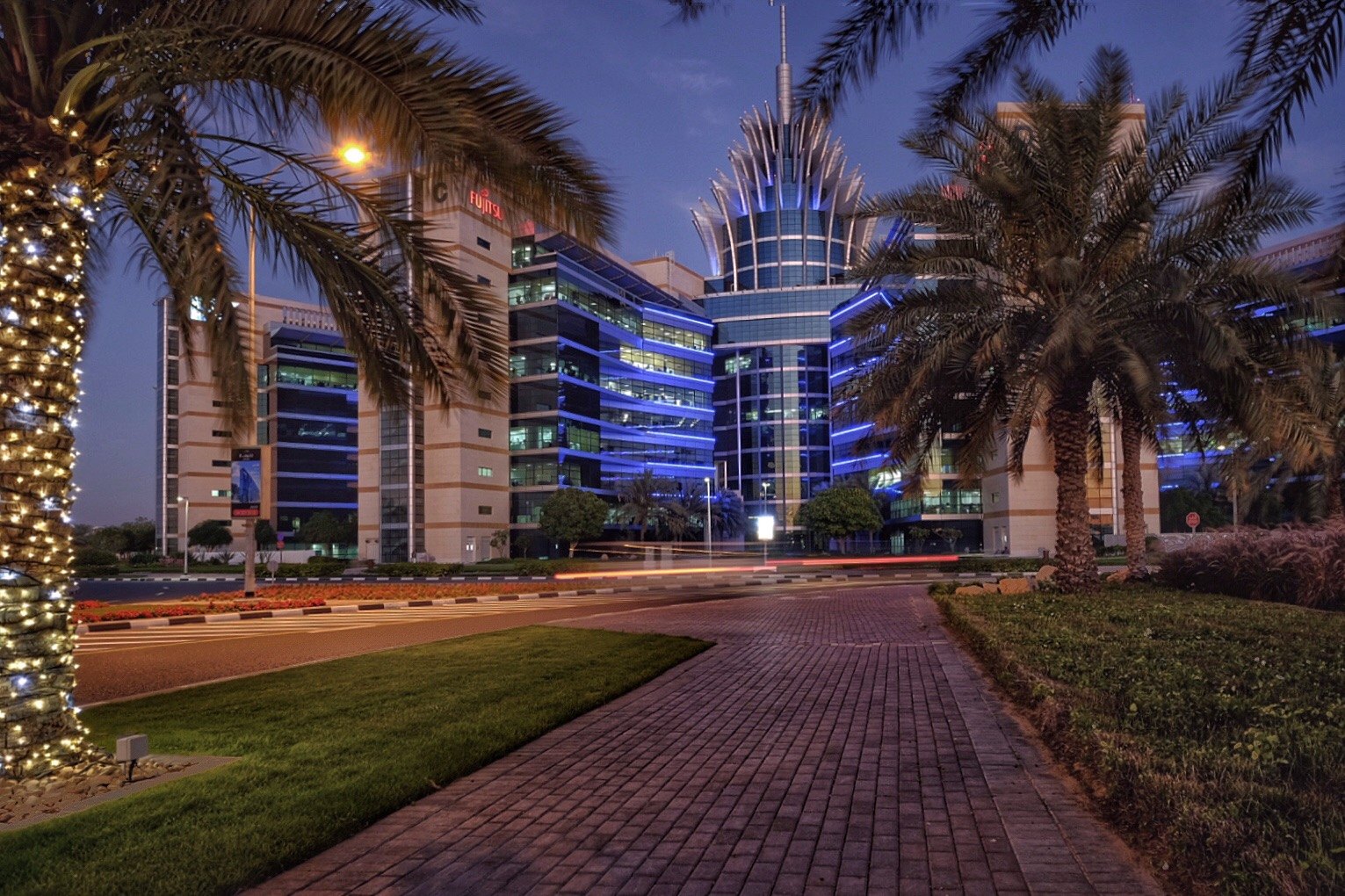
Dubai Silicon Oasis (DSO)
DSO's advertised licence is cheaper than DMCC's. Its actual first-year cost is roughly four times its own headline, and several times what IFZA quotes for a company sitting a few hundred metres away on the same estate.
The record
The rest of the record.
These are the standing facts we hold, restated against the authority before any application is filed. Where the authority’s own sheet and this page disagree, the authority wins and this page changes.
- Emirate
- Dubai
- Regulatory framework
- Free zone
- Premises
- Confirmed against the authority for your package.
- Visa allocation
- Confirmed against the authority for your package.
Packages, fees and visa allocations are set by the authority and revised annually. Nothing on this page is a quotation — we confirm the current position in writing before you commit to anything.
In detail
Most Dubai free zones sell a licence and let you decide later whether you ever visit. Dubai Silicon Oasis sells a campus, and it charges you for the campus whether or not you want it — because on the standard route into this zone, a leased office is not optional.
That single rule reorders every comparison you have been shown. DSO's advertised licence is cheaper than DMCC's. Its actual first-year cost is roughly four times its own headline, and several times what IFZA quotes for a company sitting a few hundred metres away on the same estate. Whether that is money well spent depends entirely on whether your business needs a building.
What Dubai Silicon Oasis is, and who actually runs it
DSO is a government-owned technology park and free zone of roughly 7 square kilometres, established by Law No. (16) of 2005 Concerning Dubai Silicon Oasis, issued 16 July 2005. The law created both the district and the Dubai Silicon Oasis Authority (DSOA) — under Article 3 a legal person with independent financial liability and administrative autonomy, and under Article 22 the power to approve and license establishments within it.
Two provisions of that founding law still get quoted at founders, and both need handling carefully. Articles 17 and 18 grant a 50-year exemption from taxes on operations, renewable, alongside customs exemptions and unrestricted transfer of capital and profits abroad. That language predates federal corporate tax by nearly two decades. It is not a corporate tax exemption, and no emirate-level law can create one — see our UAE corporate tax page for what actually governs your rate.
The authority is not who you were probably told
DSO is not administered by the Dubai Development Authority. This is worth stating plainly because the error is common, it appears in briefing documents and agent decks, and it points founders at the wrong comparison.
- Dubai Silicon Oasis is licensed by DIEZA — the Dubai Integrated Economic Zones Authority, established by Law No. (16) of 2021, which consolidated DSO with Dubai Airport Free Zone (DAFZ) and Dubai CommerCity. DSOA's rights and obligations transferred to DIEZA, and the operative rulebook today is the DIEZA Implementing Regulations issued 27 January 2023. DSO's own licence-types page names DIEZA as the issuing authority.
- The Dubai Development Authority (DDA) — formerly the Dubai Creative Clusters Authority, before that the Dubai Technology and Media Free Zone Authority — regulates a different set of districts entirely: the ten TECOM Group clusters, including Dubai Internet City, Dubai Media City, Dubai Design District, Dubai Knowledge Park, Dubai Science Park, Dubai Outsource City and Dubai International Academic City.
The sequence matters as much as the names. This district is older than almost everything that now governs a company inside it, and the instruments arrive in a shape worth seeing before reading them.
The district dates from 16 July 2005, the authority that licenses it from Law No. (16) of 2021, the rulebook that authority applies from 27 January 2023, and the framework for working on the mainland from 3 March 2025 — so almost anything written about this zone before 2021 names the wrong body.
The distinction is not pedantry. DDA's Dubai Internet City is DSO's closest competitor for a technology company, and it is a materially different product at a materially different price. Confusing the regulator with the rival is how founders end up comparing the wrong two options.
The campus, and what is actually on it
DSO markets itself as a "15-minute city" within Dubai's Urban Master Plan 2040, and unusually for a UAE free zone the claim has physical substance. The estate carries offices, light industrial units, retail, schools and several thousand homes on the same footprint.
By DSO's own published figures — its claims, not independently verified — the district counts 40,000+ company members, 100,000+ residents, a 60,000+ talent pool, 15+ learning and R&D institutions and 11 industry clusters spanning future mobility, AI, robotics, 3D printing, cybersecurity and Web 3.0. Treat the company figure with care: it plainly counts more than free zone licence holders.
The anchors that matter commercially:
- Dubai Digital Park — the newer smart-district office stock, and where most modern tech tenants sit.
- Dtec (Dubai Technology Entrepreneurship Campus) — described by its operator as the largest technology start-up co-working campus in the region, reporting 1,000+ startups hosted and around 4,000 jobs created. This is the zone's second front door, and it changes the cost picture entirely (below).
- Techno Hub — mid-stage company space between incubator and headquarters building.
- Rochester Institute of Technology Dubai and Fakeeh University Hospital — genuine institutional anchors, and the reason the graduate-hiring argument here is real rather than decorative.
- Residential — Cedre Villas (around 1,047 townhouses and villas) and Semmer Villas, plus apartment stock, Silicon Central Mall and a Radisson RED hotel.
- Oraseya Capital — DIEZ's venture arm, an AED 500 million fund launched in November 2023 investing pre-Seed to Series B, sector agnostic. Access is not automatic and a licence is not an investment, but the proximity is not nothing.
DSO names Porsche, Jaguar Land Rover, Henkel, Orange, W Motors and the Mohammed Bin Rashid Space Centre among its tenants.
Free Zone, Administrative Zone and Dtec: three doors, three products
Law No. 16 of 2005 established both a Free Zone and an Administrative Zone inside the DSO boundary, and Dtec has since grown into a distinct commercial route. Most agent pages describe only one of the three and quote the price of another. Get this straight before you compare anything.
The Administrative Zone catches people out. A company operating there on a DED permit is not a free zone company, does not hold DIEZA's 100% ownership guarantees, and cannot claim free zone status for corporate tax. Same postcode, different legal universe. Confirm in writing which zone your building sits in before signing anything.
Each door buys something the other two do not, and charges for it somewhere else.
Two of the three doors are DIEZA licences and the third is not: the standard route buys a leased office from 13.5 sq m and a first year around AED 51,000, Dtec buys a licence from roughly AED 18,000 without one, and an Administrative Zone permit buys the address without the ownership guarantees or the free zone corporate tax position.
Who DSO genuinely suits
This zone rewards businesses with a physical or technical centre of gravity. If your operation is entirely a laptop and a client list, you are paying for infrastructure you will not use.
- Hardware, electronics and embedded systems. DSO was built for microelectronics and it still has the light industrial units — assembly, testing, prototyping, small-batch manufacture — that pure office zones cannot offer.
- R&D operations and deep tech. Robotics, AI, IoT, additive manufacturing, autonomous systems. Proximity to RIT Dubai and the wider Academic City cluster is a hiring channel, not a brochure line.
- IT services and software companies that want space. Once headcount passes about eight, DSO's rent per square metre generally undercuts Dubai Internet City and Media City for comparable stock.
- Funded start-ups at Dtec wanting programme access, investor traffic and Oraseya adjacency without an office lease.
- EdTech and training providers clustering near the academic institutions, subject to external approvals.
- Founders who want to live beside the business. DSO is one of very few UAE free zones where working, living and schooling in the same district is a real option rather than a slogan.
If none of that describes you, read the limitations section before the price list. The zone imposes its own order on that decision, and it is not the order an agent's quote implies: the premises answer is settled before the licence rather than after it, and one wrong answer about goods ends the enquiry no matter how the money works out.
Licence types and legal forms
DIEZA issues three operating licences at DSO:
Two legal forms exist. A Free Zone Company (FZCO) is a limited liability entity whose shareholders' liability is capped at their share capital. A Branch has no separate legal personality and no share capital, carries the parent's name and activities, and leaves the parent fully liable. Companies can also move in or out of the zone by Certificate of Continuation or cancellation.
Two exclusions are absolute, as everywhere outside the financial free zones. Regulated financial services — banking, insurance, asset management, capital markets — belong to DIFC or ADGM. Virtual asset activity requires VARA authorisation, which is a separate and far heavier process; an activity line on a DSO licence does not substitute for it. See our virtual asset licensing page.
What the setup involves, in the order it happens
Each step gates the next, and the premises decision arrives far earlier here than in a package zone.
- Fix the activity. Licence type, permitted premises and bankability all follow from it. Choosing a zone before an activity remains the most expensive sequencing error in UAE formation.
- Choose the route — DSO Free Zone, Dtec, or Administrative Zone. Decided now, not after you have a quote.
- Choose the legal form — FZCO or branch. Corporate shareholders need attested constitutional documents and a board resolution from the home jurisdiction, reliably the longest lead item in any file.
- Trade name reservation with DIEZA. Names implying regulated activity or governmental association are refused.
- Secure the premises. On the standard route this is a gating item, not paperwork at the end — the lease sets the visa ceiling, so it must be sized against year-two headcount.
- Submit the application with shareholder passports, photographs, proof of address and the corporate documents above.
- Initial approval, payment, and signature of the incorporation documents.
- Licence issue — commonly quoted at two to three weeks from a genuinely complete file, and longer once external approvals, industrial fit-out, or attestations from abroad are involved.
- Establishment card and immigration file, then entry permit, medical, Emirates ID and stamping, per person. The general manager must hold a DSO residence visa.
- Corporate bank account, then corporate tax enrolment with the Federal Tax Authority.
What it costs — indicative ranges, and why they move
Every figure below is indicative. DIEZA does not publish a live public price list, authority fees are revised without notice, and the numbers here reconcile two independent agent sources rather than an authority confirmation. Treat them as a planning range and insist on authority fees itemised separately from any agent's margin.
Here is the number the headline hides. Licence plus the minimum mandatory office plus one owner visa lands around AED 51,000 in year one — against an advertised AED 12,000. Nothing improper is happening; the office is disclosed. But a founder comparing "AED 12,000 at DSO" against "AED 12,500 at IFZA" is comparing a licence to a complete package, and will be roughly AED 35,000 out.
AED 12,000 of licence carries ~AED 28,392 of mandatory office and a ~AED 2,704 deposit behind it, and one owner visa adds ~AED 4,800 plus ~AED 650 for the medical, ~AED 390 for the Emirates ID and a ~AED 2,500 refundable deposit — which is how an advertised AED 12,000 becomes around AED 51,000.
Budget separately for annual renewal — rarely the first-year figure — and, if you intend to claim free zone tax status, for an annual audit (below). Which components you cannot decline, and how to read a zone quotation line by line, is set out in what actually drives a DSO setup cost.
Visa allocation, and how it relates to premises
DSO uses the square-metre model, not the package-tier model that IFZA and Meydan made popular. The distinction decides which zone is cheaper for you, and it is the opposite answer at different headcounts.
The working convention is one additional visa per 9 sq m beyond the base allocation. Verify it in writing before signing a lease — this is agent-quoted convention, not an authority-published schedule, and conventions are revised quietly.
The consequence is symmetrical. You cannot buy visas without floor space, which makes DSO expensive for a five-person team that never meets in person. But you also never hit a package ceiling: a growing company simply leases more area, where a package-zone company must jump tiers. Count your year-two headcount before choosing the lease, not after.
Premises: the flexi-desk answer is no, with one exception
On the standard DSO Free Zone route there is no virtual office and no flexi-desk product. You lease real space. Options run from the DSO Headquarters Building (furnished, utilities included) through Dubai Digital Park and Techno Hub to privately owned freehold buildings on the estate, and Light Industrial Units for manufacturing, assembly and testing.
The exception is Dtec, where hot desks, dedicated desks and small offices support a licence from roughly AED 18,000 with a 2-visa quota on a flexi-desk and 3 on a fixed desk. If you want a DSO licence without an office lease, Dtec is the route — and any agent quoting you a cheap DSO desk without naming Dtec is describing something that does not exist on the standard route.
One caution on availability: this is leased real estate, and the unit you want may not exist on the day you want it. Industrial units in particular carry fit-out, HSE and civil defence lead times that no licensing timeline reflects.
Banking: who is receptive, and why applications fail here
DSO carries a genuine advantage at the bank, and it is worth naming precisely. This is a government-owned zone under a government authority, and — critically — every standard-route company here holds a real leased office with a tenancy contract. Compliance officers weigh both. A DSO file usually presents better than a flexi-desk file from a privately operated zone at the same revenue.
In our experience — our observation, not an authority statement — mid-market local and national banks are the most productive starting point for DSO entities, and the odds improve sharply where a UAE-resident signatory and a tenancy contract in the company's own name are both present. International banks operating in the UAE continue to apply the heaviest scrutiny to any newly formed company with non-resident shareholders, regardless of zone.
Applications fail here for a recognisable profile rather than for the zone:
- A Dtec desk address presented as though it were a leased office, which reads to compliance exactly like any other co-working file.
- No UAE-resident signatory, and directors who cannot attend in person.
- A generic trading or consultancy activity that does not match how the founder describes the business in the interview.
- Projected turnover the premises and headcount could not plausibly produce — the single most common reason a technically complete file is declined.
- Corporate shareholders in jurisdictions requiring further verification, with an incomplete ownership chain.
Individually each is survivable. Together they read as a shell. Our banking advisory page covers refusals and remediation in full.
The compliance that starts the day the licence is issued
Corporate tax enrolment is mandatory regardless of rate or profitability, through the FTA's EmaraTax portal. The fixed penalty for missing the deadline is AED 10,000.
The 0% rate is conditional and self-assessed. Qualifying Free Zone Person status delivers 0% only on qualifying income, with qualifying and excluded activities now defined by Ministerial Decision No. 229 of 2025, which replaced the earlier list retroactively to 1 June 2023. Read it against your actual revenue mix: IT services or consultancy sold to mainland UAE or overseas customers is generally non-qualifying income, and a QFZP pays 9% on that from the first dirham, with no AED 375,000 nil band. Non-qualifying revenue above the de minimis — 5% of revenue or AED 5 million, whichever is lower — forfeits the status for the current tax period and the following four.
Claiming QFZP status obliges you to maintain audited financial statements under Ministerial Decision No. 84 of 2025, irrespective of revenue. On a small consultancy this recurring fee can approach the licence cost, and almost nobody budgets it at formation.
Small Business Relief under Ministerial Decision No. 73 of 2023 treats businesses under AED 3 million in revenue as having no taxable income. It is mutually exclusive with QFZP status, and for many small DSO companies it is worth more. Our corporate tax page carries the current end date and the modelling.
VAT is a separate test — enrol where taxable supplies exceed AED 375,000. A free zone licence exempts nobody, and DSO is not a Designated Zone (below), so there is no goods-movement relief to fall back on.
UBO obligations apply. Maintain a real beneficiary record and update it within the prescribed window of any change. AML obligations under Federal Decree-Law No. (10) of 2025 and its executive regulations apply to designated activities.
Mainland activity now has a framework. Under Executive Council Resolution No. (11) of 2025, effective 3 March 2025, a Dubai free zone establishment may operate in mainland Dubai only under a DET licence or permit — a branch within the emirate, a branch operating out of the free zone (AED 10,000 a year), or a temporary permit for specific activities of up to six months (AED 5,000). Separate financial records for mainland activity are required, and entities already trading on the mainland were given a year from the effective date to regularise. This is a route, not a loophole, and it carries cost.
Where Dubai Silicon Oasis is the wrong choice
We would rather lose the file than place you here incorrectly.
1. You want the cheapest possible licence and a desk. The mandatory office is the whole story. If your requirement is a compliant Dubai licence and a residence visa at controlled cost, IFZA, Meydan or SHAMS will do it for a fraction of DSO's real first-year figure — and IFZA operates from IFZA Business Park inside this very estate, so you can have the postcode without the lease.
2. You are moving physical goods and expected free-zone VAT treatment. DSO is not a Designated Zone on the FTA's schedule under Cabinet Decision No. 59 of 2017. JAFZA, DAFZA and Dubai Airport Free Zone are. Goods held at DSO receive none of the designated-zone VAT treatment traders assume they are buying. For import, storage and re-export this is disqualifying — and it is the most consequential technical fact on this page.
3. Your team or clients are in Marina, Downtown, DIFC or Business Bay. DSO sits out along the Sheikh Mohammed Bin Zayed Road and Dubai–Al Ain corridor, past Academic City. Downtown is roughly 18 km by road — around 20 minutes when the road is clear, considerably more in the morning peak from the western communities. There is no Dubai Metro station serving DSO today. The Blue Line, approved in November 2023 at about AED 20.5 billion, is scheduled to reach Dubai Silicon Oasis and Academic City when it opens on 9 September 2029. That is a genuine improvement and it is three years away. Until then the commute is a real, recurring cost that never appears in a package comparison and quietly narrows your hiring pool.
4. You need the tech-cluster brand more than the tech-park floor space. If your requirement is regional-HQ adjacency, Fortune 500 neighbours and the network effects that come with them, Dubai Internet City under DDA has a density of large technology names DSO does not match. You will pay for it, and for some businesses it is worth paying for.
5. You need port access, bonded logistics or heavy industry. DSO's industrial capacity is light — assembly, testing, small-batch. For container volumes choose JAFZA; for air freight, Dubai South or DAFZA; for industrial cost, RAKEZ or KEZAD.
6. Your customers are UAE mainland businesses. No free zone company invoices mainland customers directly for work delivered on the mainland. Resolution No. 11 of 2025 gives you a permitted route, but it is a DET licence with its own annual fee and separate books. Model that cost honestly before concluding a free zone is cheaper — frequently it is not, and a mainland company is the correct answer.
7. You are regulated. Financial services require DIFC or ADGM. Virtual assets require VARA. A DSO licence substitutes for neither.
How DSO compares to its two closest alternatives
The instructive comparison is not against distant zones. It is against the premium tech cluster above it and the budget zone that sits on the same estate.
On those eight rows: DSO is indicatively AED 51,000 in year one against IFZA's ~AED 20,000 – 26,000 and Dubai Internet City higher again, DSO and Dubai Internet City both allocate visas per square metre where IFZA allocates per package tier, and none of the three is a Designated Zone for VAT.
The honest summary: IFZA wins on price, Dubai Internet City wins on prestige and location, and DSO wins only when you actually need the building. Laboratory, workshop, assembly line, a team that must be in one room, graduate hiring from the campus next door, or a founder who wants to live five minutes from the office — those are the cases where DSO's cost is buying something real. Absent them, you are paying a hardware premium for a software business.
Decide on the footprint, not the headline
Tell us what the business physically does, how many people you expect to sponsor in year two, and where those people will live. We will tell you whether DSO earns its premium — and when it does not, which of the three routes into this estate, or which other zone entirely, actually fits.
Compare all free zones · Free zone company formation · Banking advisory · UAE corporate tax
Provenance
How this record is verified.
Everything above is re-checked against Dubai Silicon Oasis (DSO)’s own current published material and against the federal rules before any application is filed. Where the two disagree, the authority wins and we tell you.
Frequently asked questions
Is an office really compulsory at Dubai Silicon Oasis?
On the standard free zone route, yes. There is no virtual office and no flexi-desk product, and the minimum leased office is 13.5 sq m. The one exception is Dtec, the campus where hot desks, dedicated desks and small offices support a licence — indicatively from around AED 18,000, with a two-visa quota on a flexi-desk and three on a fixed desk. Any quote offering a cheap DSO desk without naming Dtec is describing something that does not exist on the standard route.
Why is the year-one figure so much higher than the advertised licence?
Because the licence and the building are priced as separate purchases and the building is not optional. The advertised annual licence is indicatively AED 12,000; licence plus the minimum mandatory office plus one owner visa lands around AED 51,000 in year one. Nothing improper is happening — the office is disclosed — but comparing AED 12,000 here against a package price elsewhere compares a licence to a complete package. Every figure on this page is indicative, DIEZA publishes no live tariff, and authority fees should be itemised separately from any margin.
Which authority licenses DSO, and is it the same one as Dubai Internet City?
No, and the mix-up points founders at the wrong comparison. DSO is licensed by DIEZA, the Dubai Integrated Economic Zones Authority created by Law No. (16) of 2021, which consolidated DSO with Dubai Airport Free Zone and Dubai CommerCity. The Dubai Development Authority regulates a different set of districts — the TECOM clusters, Dubai Internet City among them. DSOA's rights and obligations transferred to DIEZA, and the operative rulebook today is the DIEZA Implementing Regulations issued 27 January 2023.
Does the visa count go up with the floor area?
Allocation follows leased area rather than a package tier. The 13.5 sq m minimum office indicatively carries two, about 36 sq m around four, and about 50 sq m around five, on a working convention of one further visa per 9 sq m beyond the base allocation. That convention is agent-quoted rather than an authority-published schedule, so have it confirmed in writing before signing a lease. The consequence cuts both ways: you cannot buy visas without floor space, but you never hit a package ceiling either.
Can I store and re-export goods from DSO with free zone VAT treatment?
No. DSO is not on the Federal Tax Authority's Designated Zone schedule under Cabinet Decision No. 59 of 2017, and JAFZA and DAFZA are. Goods held here receive none of the designated-zone treatment traders assume they are buying, which for import, storage and re-export is disqualifying. It is the most consequential technical fact on this page, and it ends the enquiry for a goods business however the rest of the money works out.
Does a DSO address help with a bank account?
It helps, and it is worth naming why. This is a government-owned zone under a government authority, and every standard-route company here holds a real leased office with a tenancy contract — compliance officers weigh both, so a DSO file usually presents better than a flexi-desk file from a privately operated zone at the same revenue. What sinks applications is a recognisable profile rather than the zone: a Dtec desk presented as a leased office, no UAE-resident signatory, a generic activity, or projected turnover the premises and headcount could not plausibly produce.
Begin with a clear conversation
Tell us what you intend to build.
A consultant will map the structure, jurisdiction, approvals and likely cost against what you actually described — not against a package.
