
Licensing desk
JAFZA — Jebel Ali Free Zone
Jafza is the UAE's port-and-warehouse jurisdiction — outstanding for physical goods, customs-bonded storage and manufacturing, and an expensive mistake for a consultancy that will never touch a container.
The record
The rest of the record.
These are the standing facts we hold, restated against the authority before any application is filed. Where the authority’s own sheet and this page disagree, the authority wins and this page changes.
- Emirate
- Not recorded
- Regulatory framework
- Free zone
- Premises
- Confirmed against the authority for your package.
- Visa allocation
- Confirmed against the authority for your package.
- Our standing
- Authorized channel partner. The authority pays us when a licence is placed here, and our fee is quoted on its own line.
Packages, fees and visa allocations are set by the authority and revised annually. Nothing on this page is a quotation — we confirm the current position in writing before you commit to anything.
In detail
Jafza is a seaport that happens to issue licences
Most people arrive at Jafza because of the name — the oldest and best-known free zone in the country, so it lands on every shortlist, including shortlists it has no business being on.
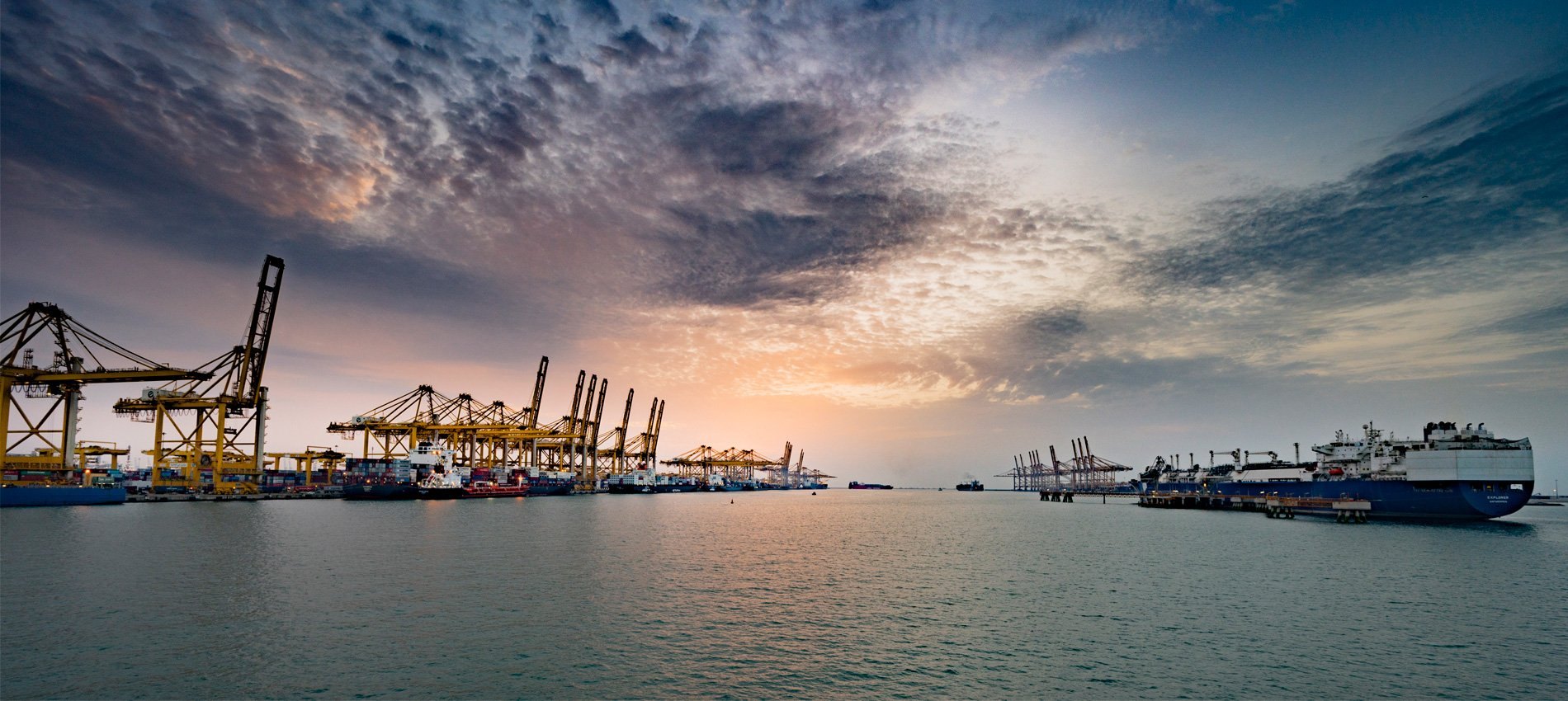
Jafza is built around one asset: a deep-water container port with a customs-bonded industrial estate wrapped around it. If your business moves physical goods, it is arguably the strongest jurisdiction in the region and the premium is worth paying. If it does not, you are buying a share of a port you will never use, at the far edge of Dubai. That is the decision; the rest is detail. What the licence itself conveys, as against the terminals and cranes in the photograph beside it, is taken apart in the port is not included with the licence.
What Jafza is, and who stands behind it
Operating since 1985, Jafza is DP World's flagship free zone — on the authority's own description, the largest customs-bonded zone in the Middle East — and the Jebel Ali Free Zone Authority is its incorporating authority and licensor. Jafza publishes 11,000+ businesses, USD 190 billion of trade generated in 2024, and 130,000 jobs sustained. The governing instruments are the Jafza Rules, 9th Edition (2023), the Companies Implementing Regulations 2016, and the Offshore Companies Regulations 2003 as amended in 2013.
One structural fact does more work than any marketing claim: Jebel Ali Free Zone (North and South) is a Designated Zone for VAT under Cabinet Decision No. 59 of 2017, treated as outside the UAE for VAT on the movement of goods. Most Dubai free zones are not on that list. With the port, that is the proposition.
The businesses Jafza genuinely suits
- Re-export and transhipment — goods that arrive by sea, sit in bond, and leave without entering the UAE market
- Regional distribution — hubs serving the GCC, East Africa, South Asia and the CIS
- Manufacturing and assembly, including processes needing HSE oversight, industrial power and effluent handling
- Heavy and controlled trade — oil and gas services, chemicals, metals, automotive parts, and cold-chain food or pharmaceutical distribution
- Large-headcount operations — over 9,450 rooms of on-site worker accommodation, which no office-park zone can match
If your business is not on that list, read the limitations section first.
Entity types, and what each is for
Jafza does not prescribe a minimum share capital for an FZE or FZCO — only capital "sufficient for the activities for which it is licensed." The old figures, AED 1,000,000 for an FZE and AED 500,000 per shareholder for an FZCO, were dropped in 2017. Out-of-date advisers and some bank onboarding staff still quote them.
Every one of those forms can be wholly foreign-owned. The Jafza Rules name it among the incentives the zone exists to offer: no limit on foreign ownership, and no requirement for a UAE national as a local partner or shareholder. An FZE can belong outright to one foreign individual or one foreign company, an FZCO can be owned entirely by foreign shareholders, and a branch belongs to its parent wherever the parent is incorporated. There is no Emirati shareholder to appoint and no nominee arrangement to paper over one. Where the word "sponsor" does appear, it describes Jafza rather than a partner: for residence visas the zone itself acts as nominal sponsor of your employees, under a personnel secondment agreement between your company and Jafza — the arrangement behind the visa guarantee in the costs section below.
Full ownership is worth having, and no longer worth choosing a zone for. Since Federal Decree-Law No. 26 of 2020, most mainland activities can be fully foreign-owned too, activities of strategic impact excepted, so ownership rarely separates Jafza from the mainland. Where your customers are does. Owning every share of a Jafza company still gives it no right to sell into the UAE market directly — the limitations section explains why — and our mainland company page covers the other side of that choice.
Licence types, and the tier that catches people out
Jafza issues Trading, Service, Industrial and Logistics licences, with conversions running Trading to General Trading, Industrial to National Industrial, and Service to Logistics. What nobody explains is that trading and service licences are tiered by activity group — the tier fixes both how many activities the licence may carry and how far across the authority's activity groups those activities are allowed to spread.
The trading tiers are nested rather than parallel: each rung contains everything the rung below it permits, and buys headroom the rung below refuses.
Service licences tier on the same principle: Service Type 1 covers up to seven activities within one group, Service Type 2 up to twelve activities across two.
This is where money leaks. A founder takes Type 1 to save the difference, then finds a second product line sits in a different group and pays for a conversion inside the first year. The constraint that catches people is not the activity count, which is generous at every rung — it is the group boundary. Seven slots are ample until two of the products you need are filed under different groups, at which point the count stops mattering and the tier is the only thing deciding whether you may sell both on one licence. Map every product line you expect to sell in three years before choosing a tier. Industrial licences also require the facility inside the zone, with ongoing HSE audits.
The setup sequence, in the order it actually happens
- Entity type and licence tier chosen — after activity mapping, not before
- Trade name reservation with the authority
- Application and documents — passports and shareholder papers; corporate shareholders need attested constitutional documents and a board resolution
- Lease agreed — a gating item, not paperwork at the end. Virtual offices are not permitted
- Payment, then licence issue and premises handover
- Establishment card and the company's immigration file
- Customs client code where goods move — this is what makes the port usable
- Bank account, then Federal Tax Authority enrolment
Jafza states 3 to 14 business days from complete documents to licence — honest for a small-office trading company, and not the timeline for a warehouse, where fit-out, HSE sign-off, customs codes and gate passes add weeks to months. The same sequence walked through step by step, with the refusals that interrupt it and the offshore check, is in the Jafza setup steps.
The name needs Jafza's approval, and approval is not the last word. Under the Companies Implementing Regulations 2016, the name of an FZE or FZCO must be approved by the authority, may not be contrary to the UAE's intellectual property laws or to any other UAE law, and must end in "FZE" or "FZCO" to match the form. A name that borrows somebody else's brand can therefore be refused on the first ground, and a name that clears approval is still not beyond reach: the regulations let the authority direct a company to change its name within a period it sets. Settle the name before anything is printed, and have alternatives ready when the application goes in. Changing it later is a formal amendment — a special resolution of the shareholders, an amended memorandum of association, a paid advertisement and new certificates — which Jafza's own service guide measures in weeks rather than days. And a reserved trade name is not a trademark. It settles what the company may be called, not who may use the brand in the market; that protection comes from a separate filing under the federal trademarks law, Federal Decree-Law No. 36 of 2021, and your intellectual property sits outside the licence file sets out which right covers what.
What it actually costs
Authority-published, and read at the date of review — Jafza revises its schedule and this page is not the schedule. Licences start at AED 5,000 per year — an industrial licence is AED 5,000 for up to seven activities in one group, plus AED 500 per additional activity. Pre-built warehouse leasing starts from AED 400 per sqm, and office space runs from 25 sqm to 5,000 sqm.
Indicative — ours, not the authority's. Planning figures from what we see clients pay. Fees and lease rates change, and Jafza's own cost calculator supersedes anything written here.
In words: each employee visa runs AED 4,000 to 7,000 and the annual audit AED 6,000 to 15,000; formation, the name and the establishment card come to AED 10,000 to 20,000; a workstation seat runs AED 15,000 to 30,000 and a small office of 25 to 50 sqm AED 40,000 to 90,000; and 300 sqm of pre-built warehouse starts at AED 120,000, at the AED 400 per sqm floor, with no ceiling published above it.
A realistic first year for a small office-based trading company sits in the AED 80,000 to 150,000 band; a warehouse operation starts near AED 200,000. Budget separately for the refundable guarantee held against employee visas — working capital, not a fee.
Premises, and how visa allocation follows the lease
Jafza offers co-working workstations, offices, pre-built warehouses, land plots, showrooms with frontage and attached warehouse space, retail units, and worker accommodation. Workstations are available to trading and service licences only — which excludes the industrial businesses the zone is built around.
Visa allocation is a function of the lease, not the licence. A workstation supports a small fixed number of visas; private offices are allocated on floor area, the convention commonly applied being roughly one visa per nine square metres; warehouse and industrial facilities scale without a practical ceiling.
Those ratios are not published by the authority, and they change without announcement. If headcount matters, get the quota confirmed in writing before signing a lease — signing first and discovering the quota afterwards is the most common sequencing error in free zone setups.
Set the four premises types against one another and the trade becomes visible: every step up in what the lease carries is a step up in what it commits you to.
In one line: a workstation is the cheapest way in and carries a small fixed number of visas, but only on a trading or service licence; a private office of 25 to 50 sqm is allocated at roughly one visa per nine square metres, on a convention the authority does not publish; a pre-built warehouse scales without a practical ceiling once fit-out, HSE sign-off, customs codes and gate passes are cleared; a land plot or industrial facility brings industrial power, effluent handling and HSE oversight, against long terms, notice periods and handover or restoration obligations — and a virtual office is not an option at Jafza at all.
Banking: where Jafza helps, and where it still fails
A Jafza licence is among the easier free zone licences to bank, for unglamorous reasons: banks want substance, and a warehouse, a customs client code, inventory, staff and a Designated Zone address supply it. Applications still fail, predictably:
- A workstation lease against a multi-million-dirham turnover projection — the premises contradict the plan. The most common refusal we see on Jafza files
- Activity mismatch — general trading with no coherent supply chain, no named suppliers, no identifiable customers
- No UAE-resident signatory, with every shareholder abroad
- Trade corridors that trigger enhanced due diligence — Jafza's trade is genuinely global, and some of that geography is what slows compliance down
- Source of funds evidenced thinly, common where capital arrives from a related offshore entity
None of this is fixed at the bank. It is fixed at formation, by choosing premises and activities that describe a real operation. Our banking advisory page covers the mechanics.
Money can leave in any currency; what holds it up is the file behind it
Currency itself is not the constraint. Jafza states that there are no currency restrictions and no restriction on repatriating capital, and at federal level the Ministry of Economy and Tourism states that investors may repatriate their profits in full. There is no exchange-control permit to obtain before converting dirhams or sending money abroad. A re-export business can buy in euros, sell in dollars and hold balances in both; UAE banks commonly run accounts in the major trading currencies alongside the dirham account, though which currencies, and at what cost, varies from bank to bank.
Three things still decide how money actually moves, and none of them is a currency rule:
- The dirham behaves as a dollar. The Central Bank holds it at a fixed parity to the US dollar and to nothing else. Dollar invoicing therefore carries almost no currency risk against dirham costs; euro, sterling or rupee invoicing carries the full swing of that currency against the dollar. Your UAE company is a dollar business works through what that means for pricing and borrowing
- The corporate tax figures are in dirhams. Whatever the business trades in, the corporate tax law requires every amount to be quantified in UAE dirhams, with amounts in other currencies converted at the exchange rate set by the Central Bank, subject to conditions the Federal Tax Authority may prescribe
- Profit leaves as a distribution, and a distribution has conditions. Under the Companies Implementing Regulations, an FZE or FZCO may pay dividends and other distributions only out of accumulated, realised profits, net of accumulated, realised losses, and its directors must resolve that, on reasonable grounds, the company will still be able to pay its debts as they fall due. A distribution made outside those rules must be returned by the shareholder who received it. Jafza's own procedure is a shareholder resolution on the distribution of profits, lodged through the Dubai Trade portal — and after that, the bank still has to be able to explain the payment to its own compliance team. Repatriating profit from a UAE company covers the tax and banking side of each step
What Jafza does to your tax position
Corporate tax applies. The federal rate is 9% above AED 375,000 of taxable income. A Jafza company meeting the conditions of a Qualifying Free Zone Person can access 0% on qualifying income — conditions including adequate substance, audited financial statements, and staying within the de minimis threshold of the lower of 5% of total revenue or AED 5,000,000 of non-qualifying revenue in a tax period.
Jafza is structurally advantaged in how qualifying activities are defined. Distribution of goods or materials in or from a Designated Zone is a qualifying activity — and Jebel Ali Free Zone is a Designated Zone. So are manufacturing, processing of goods, logistics services and trading of qualifying commodities. For a distribution business, designated status is not a marketing point; it is load-bearing on the tax outcome.
Two cautions. Qualifying activities are now defined by Ministerial Decision No. 229 of 2025, superseding MD 265 of 2023, so anything written earlier may describe the old list. And the Designated Zone list has been amended since 2017 — check it current when you rely on it.
The compliance that follows, every year
- Audited financial statements. FZE and FZCO licensees must file a balance sheet audited by an approved auditor holding a Dubai Department of Economy licence, covering a financial year of six to eighteen months. This is a renewal gate — no audit, no licence
- Ultimate Beneficial Owner filings under Cabinet Decision No. 109 of 2023, held and filed with the zone as incorporating authority
- Corporate tax return within nine months of the year end, and VAT where you cross the threshold or elect in. Designated Zone treatment affects goods, not services — a distinction that trips people up constantly
- AML obligations where they apply, under Federal Decree-Law No. 10 of 2025, effective 14 October 2025. Dealers in precious metals or stones — and Jafza hosts many — are DNFBPs supervised by the Ministry of Economy, must be enrolled on goAML, and must report to the UAE Financial Intelligence Unit any cash transaction of AED 55,000 or more with an individual, and any transaction at or above that figure with a company or other entity whether it is settled in cash or by wire. The Ministry has suspended businesses for failing to enrol
- Economic Substance Regulations — no longer a live filing. Cabinet Decision No. 98 of 2024 ended ESR for financial years ending after 31 December 2022 and cancelled related fines. Historic FY2019–FY2022 exposure survives. Anyone telling you to file for FY2023 onwards is working from stale material
None of those duties arrived together, and neither did the rest of the rulebook this page turns on. Set the instruments on a true date axis and the pattern is a quiet stretch and then four years in which nearly everything a Jafza company answers to was replaced, re-dated or given a start line.
In order: the Companies Implementing Regulations 2016 set the form of an FZE or FZCO; Cabinet Decision No. 59 of 2017 named Jebel Ali a Designated Zone for VAT; Federal Decree-Law No. 26 of 2020 opened most mainland activities to full foreign ownership; Federal Decree-Law No. 36 of 2021 moved brand protection into a filing of its own; 2023 brought the Jafza Rules, 9th Edition and, under Cabinet Decision No. 109 of 2023, Ultimate Beneficial Owner filings at the zone; Cabinet Decision No. 98 of 2024 ended economic substance filing and cancelled the related fines; Ministerial Decision No. 229 of 2025 redrew the qualifying activities; and Federal Decree-Law No. 10 of 2025 took effect on 14 October 2025.
Where Jafza is the wrong choice
We would rather lose the engagement than place a client here badly. These are not edge cases.
You are a consultancy, agency or solo professional. There is no cheap way into Jafza. Virtual offices are not permitted, a physical lease is mandatory, and the annual audit is enforced. A two-person advisory firm pays a multiple of what IFZA, SHAMS, RAKEZ or Meydan would charge, in exchange for port infrastructure it will never touch. This is the most common mistake made about this zone.
Your work involves meeting clients in the city. Jebel Ali sits at the far southwestern edge of Dubai, roughly 35 kilometres from Business Bay and closer to the Abu Dhabi border than to Downtown. That is a real commute for staff, a real obstacle to recruitment, and real friction on client meetings.
Your activity is regulated financial services, insurance or virtual assets. Jafza cannot license these — they belong to DIFC, ADGM or VARA. No amount of enthusiasm from a formation agent moves the licensing perimeter.
You need to sell into the UAE market directly. A Jafza licence does not permit mainland trade. Goods leaving the Designated Zone into the mainland are an import — duty and VAT apply at entry — and mainland sales require a distributor, a mainland branch, or a dual-licence arrangement where one is available. Verify availability; do not assume it. The declaration side of that crossing — the codes, the filings and who holds the importer position — is set out in customs codes and moving goods.
You want flexibility to exit. Land and warehouse leases carry long terms, notice periods and handover or restoration obligations. This is not a zone you walk away from at renewal — a feature if you are building something durable, a trap if you are testing a market.
You were sold Jafza Offshore as a company. It is not an operating company. No visas, no premises, no UAE trading rights, and banks scrutinise it heavily because there is no substance to point at. It has one legitimate use — holding Dubai freehold property, with Dubai Land Department approval that can be withheld at the department's discretion — and a great many illegitimate ones it gets sold for.
If Jafza is wrong, what is right
Directionally, subject to your actual activity: DMCC for commodity and office-based trade with a central address; IFZA, SHAMS or RAKEZ for cost-led service companies; DAFZA where the freight is air rather than sea; KEZAD where industrial land is the requirement and Abu Dhabi is acceptable; DIFC or ADGM for regulated finance. Our Dubai South profile gives the same treatment to the other goods jurisdiction most founders shortlist against this one.
Sorted by where each kind of business actually lands, rather than by the order the cases are usually argued, the shape of the answer is plain — the port earns its premium for four of these and none of the other five.
Read it by destination: bonded re-export and transhipment, regional distribution, manufacture or assembly under HSE oversight, and heavy or controlled trade all belong at Jafza; commodity trade from a central address belongs at DMCC, a cost-led consultancy, agency or solo professional at IFZA, SHAMS or RAKEZ, air freight at DAFZA — with industrial land, where Abu Dhabi is acceptable, at KEZAD — regulated finance, insurance or virtual assets at DIFC, ADGM or VARA, and anything sold into the UAE market directly on the mainland.
Tell us what moves through your business — containers, invoices, or neither — and we will tell you which jurisdictions permit it, which suit it, and what it genuinely costs.
Compare the zones honestly · Free zone company formation · Banking advisory · Mainland company formation
Provenance
How this record is verified.
Everything above is re-checked against JAFZA — Jebel Ali Free Zone’s own current published material and against the federal rules before any application is filed. Where the two disagree, the authority wins and we tell you.
Frequently asked questions
Which entity type should I choose — FZE, FZCO or a branch?
An FZE takes one shareholder, individual or corporate. An FZCO takes two to fifty, in any mix of individuals and companies. A PLC is for shares listed on an exchange under that market's rules, and a branch is wholly owned by its parent, carries the same name and the same activities, and leaves the parent liable. Every one of those forms can be wholly foreign-owned, with no Emirati partner or shareholder to appoint. The offshore vehicle is a different thing altogether and is not an operating company.
Is there a minimum share capital at Jafza?
No. Jafza does not prescribe a minimum for an FZE or an FZCO — only capital "sufficient for the activities for which it is licensed". The old figures, AED 1,000,000 for an FZE and AED 500,000 per shareholder for an FZCO, were dropped in 2017, and out-of-date advisers and some bank onboarding staff still quote them. Where somebody asks you to deposit one of those amounts, ask which edition of the rules they are working from.
What does the licence tier actually limit?
Not the number of activities, but how many activity groups they may spread across. Trading Type 1 carries up to seven activities inside one group, Type 2 up to twelve drawn from two, and Type 3 unlimited activities across three or more; service licences tier on the same principle. Seven slots are ample until two of the products you need are filed under different groups, at which point the count stops mattering and the tier decides whether you may sell both on one licence.
Can I start on a workstation, and how many visas does it carry?
Workstations exist, but only for trading and service licences — which excludes the industrial businesses the zone is built around — and virtual offices are not permitted at all. Allocation follows the lease rather than the licence: a workstation supports a small fixed number, private offices are allocated on floor area at a convention commonly applied at roughly one visa per nine square metres, and warehouse or industrial space scales without a practical ceiling. Those ratios are not published by the authority and change without announcement, so get the quota in writing before signing.
Can I sell into the UAE market from Jafza?
Not directly. A Jafza licence does not permit mainland trade. Goods leaving the Designated Zone into the mainland are an import, so duty and VAT fall due at entry, and mainland sales need a distributor, a mainland branch, or a dual-licence arrangement where one is available. Owning every share of the company changes none of that. Full foreign ownership is worth having and is no longer worth choosing a zone for, since most mainland activities allow it too, with activities of strategic impact excepted.
Is Jafza Offshore a company I can trade with?
No, and it is among the most mis-sold products in this market. A Jafza offshore company has no premises, no visas and no UAE trading rights, and banks scrutinise it heavily because there is no substance to point at. It has one legitimate use — holding Dubai freehold property, with Dubai Land Department approval that can be withheld at the department's discretion — and a great many illegitimate ones it gets sold for.
Begin with a clear conversation
Tell us what you intend to build.
A consultant will map the structure, jurisdiction, approvals and likely cost against what you actually described — not against a package.
