
Licensing desk
KEZAD — Khalifa Economic Zones Abu Dhabi
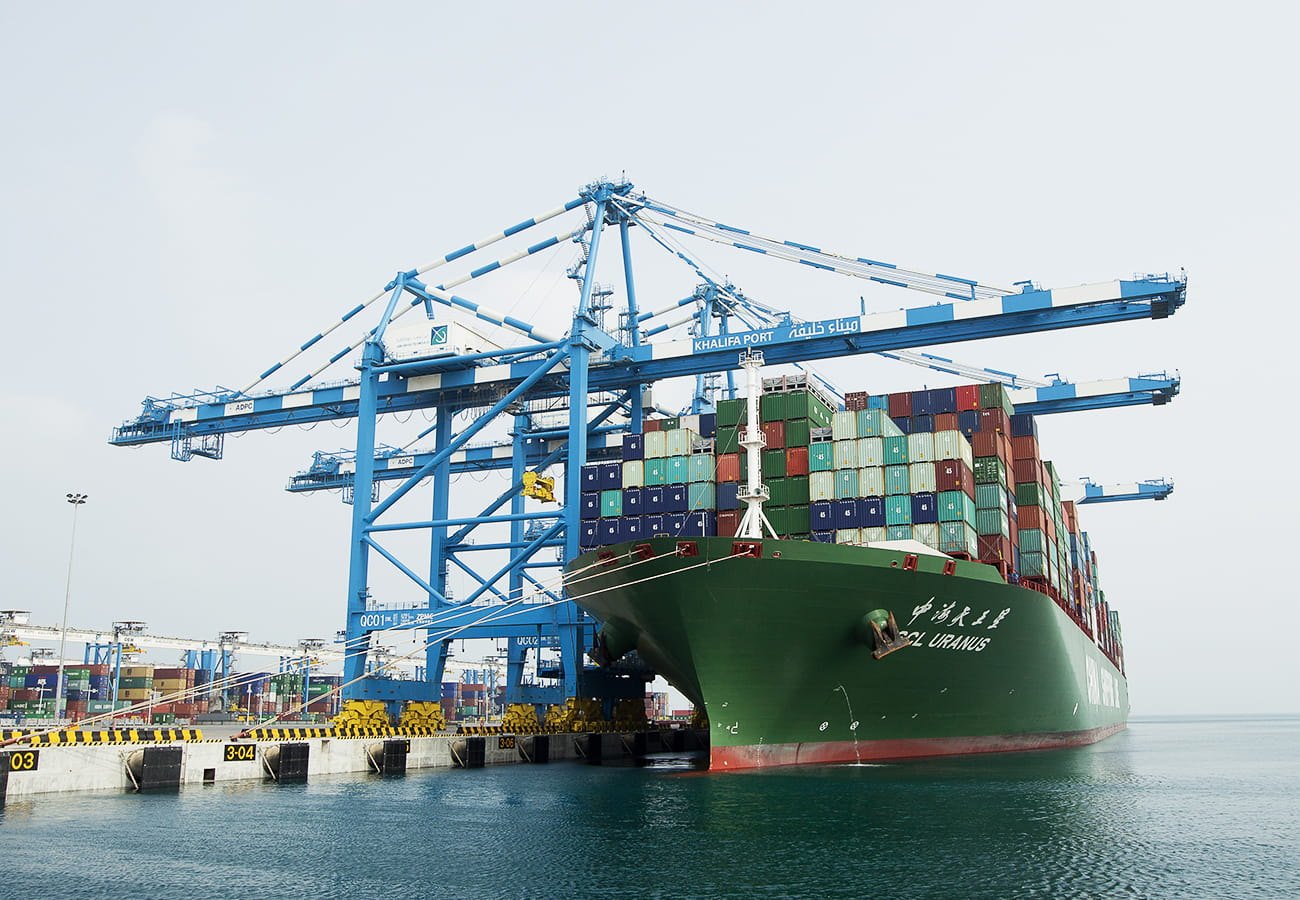
Abu Dhabi's industrial land bank wrapped around Khalifa Port and wired into Etihad Rail.
The record
The rest of the record.
These are the standing facts we hold, restated against the authority before any application is filed. Where the authority’s own sheet and this page disagree, the authority wins and this page changes.
- Emirate
- Abu Dhabi
- Regulatory framework
- Free zone
- Premises
- Confirmed against the authority for your package.
- Visa allocation
- Confirmed against the authority for your package.
- Our standing
- Authorized channel partner. The authority pays us when a licence is placed here, and our fee is quoted on its own line.
Packages, fees and visa allocations are set by the authority and revised annually. Nothing on this page is a quotation — we confirm the current position in writing before you commit to anything.
In detail
Almost every free zone page in this country opens with the licence. That is the wrong end of KEZAD.
Here the licence is close to a rounding error. The product is land — 550 square kilometres of it, most of which is not free zone at all — wrapped around a deep-water container port and wired into the national freight railway. The decision is not which package to buy. It is whether your business has enough physical mass to justify putting a building in the desert between Abu Dhabi and Dubai.
If it does, KEZAD is one of the strongest industrial propositions in the Gulf and deserves a site visit before a quotation. If it does not, skip to the two sections at the end and save yourself a year.
What the zone is, and who runs it
KEZAD Group was launched by AD Ports Group on 19 September 2022, consolidating Khalifa Industrial Zone Abu Dhabi (KIZAD) and the ZonesCorp specialised economic zones into a single operator. That is why half the material still circulating online says KIZAD: it is the same estate under a wider brand, and any agent still selling you "KIZAD" is quoting from a page nobody has updated since 2022.
The group publishes the following on its own About Us page: 12 economic zones, more than 550 km² of total area, of which 100 km² is free zone, serving more than 2,300 clients including more than 400 free zone clients. The zones run across Abu Dhabi, Al Ain and the Al Dhafra Region, along the E11 between the two largest economies in the country. KEZAD describes itself as the first port and economic zone in the UAE linked to the Etihad Rail network.
Two structural facts follow, and both are load-bearing.
The landlord is a listed operator, not a ministry. AD Ports Group is a commercial group listed on ADX, and KEZAD is one of its clusters. That produces a faster, more commercial counterparty than a government department — and a counterparty whose incentives include selling the asset you are standing on. More on that under premises.
Only about a fifth of KEZAD is free zone. One hundred square kilometres out of five hundred and fifty. The rest is Domestic Economic Zone — mainland, in customs and tax terms. This is the single most misunderstood thing about the zone and the source of most of the bad advice written about it.
The distinction that decides your customs and VAT treatment
KEZAD is a dual-jurisdiction estate. You choose Free Zone or Domestic Economic Zone at the point of licensing, and the choice is tied to the plot or unit you lease. It is the most useful structural option available anywhere in Abu Dhabi for a goods business — and it is routinely sold as though "KEZAD" were a single thing.
It is not. The label attaches to the address.
Read that last row twice. KEZAD Logistics Park Phase 4 — the pre-built warehouse product most commonly quoted to newcomers — sits in the Domestic Economic Zone, as KEZAD's own facility page states. A client who was sold "a KEZAD free zone warehouse" and signed a KLP 4 lease has a mainland facility. It may well be the right facility. It is not the one they were promised, and they will discover this at the customs desk.
Designated Zone status is per-location, not per-brand. Under Cabinet Decision No. 59 of 2017, the Abu Dhabi entries are the Free Trade Zone of Khalifa Port, Khalifa Industrial Zone and Abu Dhabi Airport Free Zone — the last of which is not KEZAD at all. The Al Ain plots, the Al Dhafra estates and the Musaffah logistics parks are not those entries. Designated Zone treatment also applies to the movement and storage of goods, never to services, which catches tenants here constantly.
One more correction, and it is to the authority's own marketing. KEZAD's free zone page advertises "0% tax-free" and "No VAT." Corporate tax is a federal tax and no zone can exempt you from it; VAT relief is confined to goods in a listed Designated Zone. Treat that line as a brochure, not a position.
The one row where the two columns agree is the one brochures lead with. Capital and profits can be taken out of a KEZAD company in full, whichever jurisdiction it is licensed in. KEZAD's own land page advertises it for the Free Zone and the Domestic Economic Zone alike, and the Ministry of Economy and Tourism states it for the country as a whole: individuals and investors may repatriate their profits in their entirety. Nothing is withheld on the way out either, because withholding tax on UAE-sourced income paid to non-residents is set at nil. That makes repatriation a reason to choose the UAE, never a reason to choose Free Zone over Domestic. What decides whether a particular transfer leaves when you want it to is paperwork rather than permission: audited accounts showing distributable profit, a shareholder resolution dated before the payment, and a transfer the bank can match to the profile you gave it at onboarding. Repatriating profit from a UAE company sets out all three.
Who KEZAD genuinely suits
The honest test is mass. Does your business occupy floor area, consume power, employ shift labour, or move containers? If two or more of those are yes, KEZAD is on your shortlist.
- Manufacturers and processors — building materials, metals, chemicals, plastics, food processing, pharmaceuticals, packaging, automotive components
- Heavy and mid-heavy industry needing power density, floor loading, gantry cranes and gas on site
- Warehousing and contract logistics operators at thousands, not hundreds, of square metres
- Importers, consolidators and re-exporters using Khalifa Port as the entry point
- Suppliers to Abu Dhabi government, ADNOC and their contractor tiers, where an In-Country Value score decides tenders
- Regional distribution arms of international manufacturers placing inventory closer to Gulf and East African customers
- Companies whose workforce lives on site — the estate is built around large-scale staff accommodation in a way no Dubai zone is
If your answer to the mass test is "none of the above, but the licence is cheap," you are the reader the last two sections were written for.
Licence types, and what each permits
KEZAD issues three licence categories, and each is available in both jurisdictions.
Two practical notes. First, the General Trading trigger — 17 products or 3 groups — is not a suggestion; map the range you expect to sell in three years before you choose, because converting inside year one is money spent on nothing. Second, logistics and freight forwarding are service activities here, which surprises operators who assumed a trading licence covers moving other people's cargo.
Legal forms are a limited liability company or a branch of an existing company. KEZAD does not publish a minimum share capital figure; the AED 150,000 number circulating on agency sites is intermediary-sourced. Get the requirement for your activity in writing before you plan the funding.
What the setup involves, in the order it happens
Each step gates the next, and the industrial route is a different animal from the desk route.
- Decide jurisdiction before anything else. Free Zone or Domestic Economic Zone. This is the question that determines customs, VAT, ownership and who you can invoice. Everything downstream is consequence.
- Fix the activity and licence category, and check it against the General Trading trigger.
- Choose the facility, because at KEZAD the facility is the application. A desk, a pre-built unit, a build-to-suit or a serviced plot each carry a different timeline, a different visa allocation and a different approvals chain.
- Trade name reservation, then submission of shareholder and manager documents — passports, photographs, proof of address, and attested constitutional documents plus a board resolution where a corporate shareholder is involved. Attestation from the home jurisdiction is almost always the longest lead item.
- Initial approval and lease execution. The lease and the licence move together; you do not get one without the other outside the startup packages.
- Licence issue. KEZAD advertises licensing within 24 hours on its free zone startup packages. That figure is real and it applies to a workstation with a clean file — not to a plot.
- Establishment card and immigration file, then entry permits, medicals, Emirates ID and stamping per person.
- For industrial and warehouse operations, the parallel approvals chain — design and building permits, HSE sign-off, environmental permitting under the Abu Dhabi environmental regime, civil defence, utility connections, fit-out, then your customs code and gate access. This runs in months and it, not the licence, is your critical path.
- For manufacturers, the federal industrial file. A zone industrial licence does not by itself place you on the Ministry of Industry and Advanced Technology industrial record. The Industrial Production Licence requires a local industrial licence plus a minimum of 10 employees and capital of no less than AED 250,000, with an inspection. It carries the customs duty relief on machinery, spare parts and production inputs, and it is a gate for federal industrial programmes. Micro-manufacturers do not clear those thresholds — plan for it or accept you will pay duty.
- Corporate bank account. Weeks, not days, and treated separately below.
What it costs — indicative AED, and why the numbers move
KEZAD publishes more real pricing than most UAE zones, which is to its credit, and the published figures carry annual escalation. Everything below moves. Authority fees are revised without notice and lease rates are quoted against your plot, your utilities and your term.
Authority-published land use fees, per square metre per annum, inclusive of a Common Area Maintenance levy of AED 3/m² per annum:
Authority-published free zone startup packages, by visa allocation:
Those cover a shared workstation or dedicated office with connectivity, and are the only genuinely cheap thing KEZAD sells.
Indicative all-in planning ranges — our observation of what clients pay, not an authority rate card:
The line that ends most conversations is the one in bold. A serviced plot is graded dirt with utilities at the boundary. The land is cheap precisely because you are buying the right to spend seven or eight figures putting a building on it, and no package comparison will show you that number. If you cannot fund the shed, the cheap land is irrelevant.
Visa allocation, and how it follows the premises
At KEZAD the allocation is a premises decision, not a package tier — with one exception at the bottom of the range.
The exception is the startup packages above, where the visa count is written into the product: one, two, three or four, priced accordingly. Above that, quota is assessed against the facility you hold — floor area, activity, and the operational headcount your footprint plausibly supports. KEZAD does not publish a fixed square-metres-per-visa formula, and any agent who quotes you one as authority policy is quoting convention.
The practical consequences:
- Get the quota confirmed in writing before you sign the lease. It is the single most common renegotiation we see, and the leverage disappears the moment the lease is executed.
- Industrial and warehouse quotas are generous relative to office zones, because the estate is designed for shift labour.
- Accommodation is part of the calculation. KEZAD's staff accommodation arm — merged with Al Eskan Al Jamae and now operating under the Sdeira Group name within AD Ports — manages tens of thousands of beds across workforce communities in Abu Dhabi, Al Ain and Al Dhafra. For a factory sponsoring 300 people this is a genuine operational asset that Dubai zones cannot match. For a five-person consultancy it is a signal about who the estate was built for.
Premises: land, pre-built, build-to-suit, and a desk
This is the actual product range, and the specifications are worth quoting because they tell you what kind of tenant is expected.
A warning that belongs in the lease review, not the brochure. AD Ports Group is actively monetising KEZAD real estate. Across 2025 it signed 3.3 km² of land leases, sold 4.6 km² to a developer for AED 2.47 billion, sold two tenanted warehouses for AED 570 million, and stated that an initial 16 km² of KEZAD land is earmarked for sale. None of that is a criticism — it is a well-run balance sheet. But if you lease a pre-built facility, your landlord may not be your landlord in three years. Read the assignment, change-of-control and rent-review clauses with a lawyer, not with a leasing agent.
The short way in is a desk or a temporary plot, and the two sit on opposite sides of the jurisdiction line
KEZAD is not all-or-nothing, though the long leases dominate the brochure. Its published rate cards carry two short-commitment entry points, and for a manufacturer or logistics operator unsure of its volumes they are the cheapest way to test the market before signing anything long.
- The startup workstation packages run for one, two or three years with one to four visas, at the prices published above. They carry a licence and the first visas while the real footprint is still a forecast. They are also a desk: anything physical — stock, a production line, a yard — needs premises the package does not include.
- Temporary industrial plots and temporary laydown areas are priced well under the serviced-plot rate. They suit work that does not need a permanent building: open storage, equipment and material yards, mobilisation for a project with an end date. KEZAD publishes the rates but not the tenure, not what you may put on the land and not what has to be removed when the term ends, so all three belong in the lease before you sign it.
The way up does not require leaving the estate. KEZAD Logistics Park is built in phases so that later units can be sized for tenants who have grown, the KLP 4 warehouses are marketed as scalable up to 15,000 m², and the light industrial units come with flexible lease terms; above those sit build-to-suit and the serviced plots. As the premises grow, the visa quota moves off the package's fixed allocation and onto the premises assessment described earlier.
The catch is the distinction this page began with. The startup packages are free zone products. KEZAD's own tariff labels the temporary industrial plots Domestic Zone, and KLP 4 is Domestic Economic Zone too. A test that starts on a free zone desk and moves onto temporary land or a KLP 4 unit has changed jurisdiction, not just address, and the licence has to follow the address. Expect that to be handled as a new licensing file rather than an amendment, and confirm the route with KEZAD before you plan around it. Decide which side of the line the permanent operation belongs on first, then run the test there.
A desk used as a stepping stone is a plan. A desk with no step after it is the flexi-desk this page warns against further down, and a bank reads it the same way.
The port, the railway, and what adjacency is actually worth
The investment case is physical. Khalifa Port is a deep-water container port whose container capacity, on AD Ports' own figures, moves to 10.5 million TEU once the CMA CGM terminal expansion completes — that terminal alone going from 1.8 to 2.7 million TEU by early 2028, on an 18.5-metre draft able to take the largest container ships afloat. There is a separate COSCO terminal on the same estate. Road access from the KEZAD plots runs direct to the quay, and Etihad Rail freight terminals connect the port and the industrial zone into the national network.
Now the honest calibration, because this is where the sales pitch overreaches.
Rail economics need volume and a siding. A dedicated rail corridor is worth money to a cement producer, a steel fabricator, an aggregates business or a high-volume distributor moving trainloads. If you ship forty containers a year, the railway is scenery you are paying for in land rent and commute time.
Port adjacency is worth most to whoever handles the cargo twice. Import-store-reprocess-export models capture it. A company that imports finished goods once a quarter and sells them into Dubai captures far less, and pays for the geography every day in logistics to the actual customer.
Jebel Ali is thirty minutes further and vastly denser. If your freight is going to Dubai anyway, honestly test whether KEZAD's cheaper land beats JAFZA's proximity to the market. Sometimes it does. Often it does not.
ADDED, the dual licence and In-Country Value
KEZAD sits inside Abu Dhabi's licensing architecture rather than beside it, which is a real advantage for anyone selling into the emirate. How that architecture reads route by route is worked through in ADGM against the Abu Dhabi mainland against KEZAD.
The dual licence. A KEZAD free zone company can hold an additional licence from the Abu Dhabi Department of Economic Development (ADDED), allowing it to carry out its activities outside the free zone without a local service agent and, per KEZAD's own material, without taking separate mainland premises. For a manufacturer selling to UAE buyers this is the mechanism that resolves the free zone's structural weakness. Confirm the current terms and which activities are eligible before you build a sales plan on it.
The unified economic licence. ADDED and the Abu Dhabi Free Zones Council announced a unified economic licence in June 2024, with KEZAD among the free zones in scope, standardising reference numbers and data across mainland and free zone licensing. It reduces duplication; it does not merge the jurisdictions.
In-Country Value is the part that decides tenders, and the part nobody explains. Abu Dhabi's local content programme and ADNOC's ICV programme run on a unified certificate issued by accredited certifying bodies from audited financial statements. Per ADDED's Industrial Development Bureau, government and semi-government entities in Abu Dhabi require it for procurement, the ICV factor carries 40% weighting in the financial evaluation, and the certificate is valid for 14 months from the date the financial statements were issued.
The blunt reading: a bidder without a certificate scores zero on 40% of the commercial evaluation and is not competing. And because the score rewards goods manufactured in the UAE, investment in UAE fixed assets, Emirati employment and expatriate contribution to the local economy, a KEZAD address does nothing for you by itself. A KEZAD factory scores. A KEZAD desk does not. That is the system working as designed, and it is the strongest argument for putting real capacity here rather than a nameplate.
The part that argument leaves out is when. The certificate is generated from audited financial statements, so the earliest a newly formed entity can hold one is after its first financial year has closed and been signed off. The licence is not the gate here. The audit is.
Only one station on that spine belongs to KEZAD. The rest are held by a builder, a ministry, an auditor and a certifying body, and none of them can be paid to move faster.
Banking: who is receptive, and why files fail here
KEZAD entities generally bank better than a cheap Dubai flexi-desk company, for one reason that has nothing to do with the zone's marketing: compliance officers can see the business. A lease over 3,000 square metres, a power connection, a customs code and forty sponsored staff answer the questions a KYC file is actually asking.
In our experience — our observation, not an authority statement — the Abu Dhabi-headquartered banks are the natural first approach: First Abu Dhabi Bank for larger operations with trade finance and cross-border needs, Abu Dhabi Commercial Bank as the more accommodating choice for newly formed mid-market companies, and Abu Dhabi Islamic Bank as competitive for manufacturing and trading files. Digital-first business banks will onboard the small free zone entities. International banks apply the heaviest scrutiny to anything that looks light.
Applications fail here for a recognisable profile, and it is a different profile from the Dubai one:
- A workstation package with a general trading activity and no UAE-resident staff. This reads exactly like a Dubai flexi-desk shell, and the industrial postcode does not rescue it.
- A trade finance request with no goods history. A first-year company asking for LC facilities against projected volumes gets a current account, not a facility.
- Jurisdiction confusion in the file. Free zone licence, Domestic Economic Zone lease, and an activity that only makes sense in the other one. Compliance reads inconsistency as concealment.
- Commodity, metals, dual-use or sanctioned-adjacent product lines. Legitimate businesses in these categories get long questions and long timelines here. Budget for it.
- Corporate shareholders through opaque jurisdictions with incomplete attestation.
Allow two to six weeks after licensing for a straightforward file, and considerably more where trade finance is involved. Our banking advisory page covers refusals and appeals in detail.
The compliance that starts the day the licence is issued
Corporate tax enrolment is mandatory whatever your rate or profit, through EmaraTax, with the fixed penalty for missing the deadline at AED 10,000. No zone can waive it.
The 0% is conditional and self-assessed. Qualifying Free Zone Person status requires adequate substance in the zone, qualifying income, arm's length pricing with documentation, and audited financial statements regardless of revenue. Qualifying and Excluded Activities are set by Ministerial Decision No. 229 of 2025, which replaced the 2023 list retroactively to 1 June 2023. Manufacturing and processing of goods, logistics, and distribution of goods in or from a Designated Zone are on the qualifying list — which is why KEZAD's industrial tenants have a far better 0% story than a free zone consultancy does, provided the plot is in a listed Designated Zone. Non-qualifying revenue above the de minimis — the lower of 5% of revenue or AED 5 million — forfeits status for the current period and the following four. Read our UAE corporate tax page before you assume anything here.
VAT applies at 5% and your VAT enrolment with the FTA attaches at the federal thresholds. Designated Zone treatment covers goods, not services, and not every KEZAD address is a Designated Zone.
No personal income tax — a lighter payroll, and no change at all to the company's tax. The UAE levies no income tax on individuals, and the Federal Tax Authority treats wages as outside corporate tax, so nobody on a KEZAD payroll owes UAE tax on a salary, whichever side of the jurisdiction line the employer sits. For a plant sponsoring three hundred people, that means no employee tax to calculate or withhold each month; the payroll duties that do exist are the employment ones at the end of this section. A benefits list that prints "personal taxes" among a zone's exemptions has the source wrong: the relief is the country's, not KEZAD's, and it does not reach the company at all. Profit is taxed through corporate tax as set out above, and a dividend's route out is covered under repatriation near the top of this page. Nor does the relief follow a founder home. A shareholder who stays tax-resident elsewhere answers to that country's rules, and UAE tax residency and what your home country still taxes sets out when that happens.
Audited financial statements are required for licence renewal and are the input to your ICV certificate. Budget the audit as a recurring cost from year one.
Real beneficiary filings under Cabinet Decision No. 109 of 2023, kept current within the statutory window of any change.
Economic Substance filings have ended for financial years ending after 31 December 2022 under Cabinet Decision No. 98 of 2024. Anyone billing you for a current-year ESR notification is billing you for abolished work. Historic 2019–2022 exposure survives.
Industrial and environmental obligations are continuous, not one-off: environmental permit conditions under the Abu Dhabi environmental regime, HSE reporting, civil defence renewals, and the federal industrial file where you hold one.
ICV recertification is annual in practice, keyed to the 14-month validity from your financial statements. Miss the window and you drop out of tender eligibility until it is restored.
Employment sits under Federal Decree-Law No. 33 of 2021 in either jurisdiction; which authority holds your labour file depends on whether you licensed free zone or domestic, and that determines your contract and wage protection mechanics. Confirm it at licensing, not at your first hire.
Where KEZAD is the wrong choice
We would rather lose the engagement than place a client here badly. This zone is placed badly more often than most, because the land is cheap enough to look like a bargain to people who will never use it.
You are a service business, a consultancy or an agency. Your value is people and invoices. You will spend the next three years explaining to clients why your office is on an industrial estate off the E11, and the cheap land you bought into does nothing for a business with no goods. IFZA, Meydan or SHAMS cost less and cost you less to justify.
You wanted a cheap flexi-desk and found a cheap flexi-desk. KEZAD's AED 9,450 one-visa package is real, and it is a real free zone licence. It is also a desk in the middle of an industrial masterplan roughly equidistant from two cities you actually do business in. Buying a licence in the largest industrial estate in the country in order to never touch industry is paying for capability you will not use, at a location that costs you daily.
You need a Dubai address. There is no version of this that works. A KEZAD licence is an Abu Dhabi licence. If your clients, your investors or your recruitment story require Dubai, the conversation ends here — and cross-emirate operating adds its own licensing questions on top.
You need to hire commercial and professional staff quickly. Abu Dhabi's professional talent pool is smaller than Dubai's, KEZAD sits outside the city, and mid-level commercial candidates with options will want a relocation package that erases your saving. The estate is superb at housing and moving operational labour and structurally poor at attracting a marketing director.
Your customers are UAE mainland businesses and you licensed free zone. You reach them through a distributor, an agent or the ADDED dual licence — never directly on the free zone licence alone. Price that route before concluding the free zone was cheaper. Frequently it is not, and the Domestic Economic Zone was the correct answer all along.
You are regulated. KEZAD is a licensing authority, not a financial regulator. Banking, insurance, fund management, payments and virtual assets belong in ADGM, DIFC or under VARA.
You cannot fund the building. Cheap serviced land is a capex commitment dressed as a rent line. If your model only works on the AED 32–38 per square metre figure and has no line for construction, HSE compliance, utility connection and fit-out, the model is wrong.
Your volumes do not justify the geography. Below a real threshold of containers, pallets or tonnes, port and rail adjacency is a story rather than a saving, and RAKEZ or SAIF Zone will give you industrial capability closer to your actual market for less commitment.
You want a short commitment or an easy exit. Industrial leases here run long — 25 to 50 years for major investments — with restoration obligations and sunk fit-out. Federal company law gives no general route from one UAE free zone to another either: whether a company can move depends on both zones' own rules, and where they do not provide for it, leaving means a new entity, new licence, new visas and a new bank account. The exception is the bottom of the range. A startup desk or a temporary plot is short by design and the sensible way to test the estate before committing to anything long — provided the test runs in the jurisdiction you mean to stay in, as the premises section explains.
You assumed every KEZAD address is a Designated Zone. It is not, and if your VAT modelling depends on it, confirm your specific plot against the current schedule before you sign anything.
How KEZAD compares to its two closest alternatives
Its real competitors are the other two zones in the country that sell industrial capability at scale.
Against JAFZA, KEZAD wins decisively on land cost, on the dual free zone plus mainland option inside one estate, and on anything touching Abu Dhabi government or ADNOC procurement. JAFZA wins on the depth of Jebel Ali, on being inside the Dubai market rather than an hour from it, on the density of freight forwarders and service providers around you, and on how easily a bank and a customer recognise the address. If your cargo is going to Dubai, JAFZA usually beats the cheaper land.
Against RAKEZ, KEZAD wins at genuine scale — larger plots, heavier power, port depth, and an incentive landscape RAKEZ has no equivalent for. RAKEZ wins below that scale on every axis that matters to a smaller operator: cheaper entry, shorter commitments, faster decisions and a lighter approvals chain. As we put it on our RAKEZ profile: KEZAD wins decisively at genuine industrial scale and loses everywhere below it.
And if none of the three fits because you have nothing physical to place, none of them is yours, and we will say so before you pay a licence fee.
Tell us what you are putting on the ground
The only questions that decide this are physical ones. How many square metres, what power, what floor loading, how many containers a year, how many people, and who signs your invoices — a Dubai company, an Abu Dhabi government entity, or a buyer overseas.
Answer those six and the jurisdiction answers itself. We will tell you whether it is KEZAD free zone, KEZAD domestic, somewhere else entirely, or nothing physical at all.
Compare the zones honestly · Business setup in Abu Dhabi · Free zone company formation · Banking advisory
Provenance
How this record is verified.
Everything above is re-checked against KEZAD — Khalifa Economic Zones Abu Dhabi’s own current published material and against the federal rules before any application is filed. Where the two disagree, the authority wins and we tell you.
Frequently asked questions
Is my KEZAD address free zone or mainland?
That depends on the plot, not on the brand. Only about 100 of KEZAD's 550-plus square kilometres are free zone; the rest is Domestic Economic Zone, which is mainland in customs and tax terms. You choose at the point of licensing, and the choice is tied to the plot or unit you lease, because the label attaches to the address. KEZAD Logistics Park Phase 4 — the pre-built warehouse most commonly quoted to newcomers — sits in the Domestic Economic Zone, as KEZAD's own facility page states.
Does KEZAD give me Designated Zone VAT treatment?
Only at listed locations, and never for services. The Abu Dhabi entries under Cabinet Decision No. 59 of 2017 are the Free Trade Zone of Khalifa Port, Khalifa Industrial Zone and Abu Dhabi Airport Free Zone — the last of which is not KEZAD at all. The Al Ain plots, the Al Dhafra estates and the Musaffah logistics parks are not those entries. Designated Zone treatment also covers the movement and storage of goods rather than services, which catches tenants here constantly.
What does a serviced plot at AED 32 to 38 per square metre actually buy?
Graded dirt with utilities at the boundary. The published land use fees are per square metre per year, include a common area maintenance levy of AED 3, and carry annual escalation. The land is cheap precisely because what you are buying is the right to spend seven or eight figures putting a building on it, and no package comparison will show you that number. Power, clean water, piped gas and rail corridors are on the estate; the building, the fit-out, the HSE sign-off and the utility connections are yours to fund.
How soon can I hold an ICV certificate?
Not before your first audited financial statements exist, which makes the audit the gate rather than the licence. The unified certificate is issued by accredited certifying bodies from audited statements and is valid for 14 months from the date those statements were issued. Until it exists, a bidder scores zero on the 40% of the financial evaluation that the ICV factor carries in Abu Dhabi government and semi-government procurement. The score rewards output rather than postcode: a KEZAD factory scores, a KEZAD desk does not.
Can a KEZAD free zone company sell direct to Abu Dhabi customers?
Not on the free zone licence alone. You reach mainland customers through a distributor, an agent, or the additional ADDED licence, which per KEZAD's own material lets a free zone company carry out its activities outside the zone without a local service agent and without taking separate mainland premises. Confirm the current terms and which activities are eligible before you build a sales plan on it, and price the route honestly — frequently the Domestic Economic Zone was the correct answer all along.
KEZAD or Jafza?
KEZAD wins decisively on land cost, on holding both a free zone and a mainland option inside one estate, and on anything touching Abu Dhabi government or ADNOC procurement. Jafza wins on the depth of Jebel Ali, on being inside the Dubai market rather than an hour from it, on the density of freight forwarders and service providers around you, and on how easily a bank or a customer recognises the address. If your cargo is going to Dubai, Jafza usually beats the cheaper land.
Begin with a clear conversation
Tell us what you intend to build.
A consultant will map the structure, jurisdiction, approvals and likely cost against what you actually described — not against a package.
