
Sector cluster
Dubai Media City (DMC)
The TECOM district that licenses the business of media rather than the making of it.
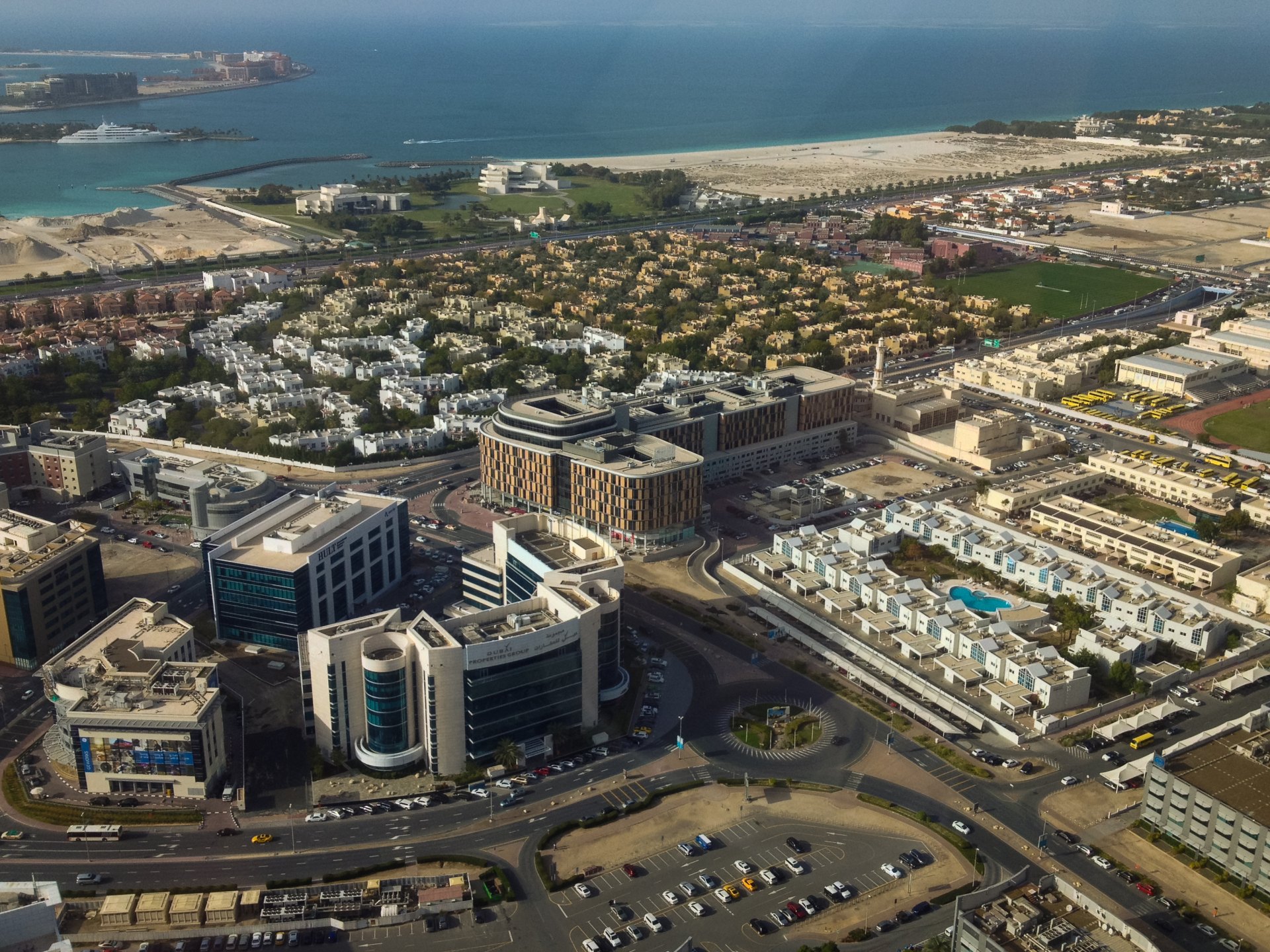
Admission
Dubai Media City (DMC) is defined by what it admits.
A cluster zone is chosen by the list it keeps. What it is known for is the admission test in practice, so it is printed first, ahead of anything about cost or premises — those only matter once the activity is accepted.
- Who is on the list Regional offices of broadcasters, agency networks and publishers, behind a media activity list
- The rule that admits them Creative-cluster free zone — not a Designated Zone for VAT
The record
The standing facts behind the cluster.
These are the standing facts we hold, restated against the authority before any application is filed. Where the authority’s own sheet and this page disagree, the authority wins and this page changes.
- Emirate
- Dubai
- Premises
- Leased offices in the district's commercial buildings, business-centre suites, and a freelance permit route
- Visa allocation
- Confirmed against the authority for your package.
Packages, fees and visa allocations are set by the authority and revised annually. Nothing on this page is a quotation — we confirm the current position in writing before you commit to anything.
In detail
A Dubai Media City licence is a permission to trade in media. It is not a permission to publish, to broadcast, or to film, and those are granted by different bodies under different law.
That gap is the single most expensive thing about this district, and almost nobody selling a DMC licence mentions it. Founders arrive comparing package prices against SHAMS or IFZA, sign, and discover in month four that the thing they actually sell sits behind a permit the zone never quoted them — or worse, that it sits on an activity line they did not buy, which means the invoice they have just raised is one their client's procurement team can refuse.
So this page is built around the permit layer rather than around the price. What you may invoice, and what you may put in front of an audience, are two separate questions here, and the licence answers only the first one partially.
A media business needs three permissions, and the district issues one of them
Take the stack apart, because the sales conversation compresses it into a single number.
The trade licence. Issued by the Dubai Development Authority, the regulator for the creative clusters. It says a company exists, is owned by whom, and may carry on the activities printed on it. This is the thing agents quote.
The activity lines on that licence. Media is not one activity. Advertising services, public relations, media representation and buying, content production, publishing, broadcasting, event and brand activation, and market research are separate entries, and the ones you selected are the ones you may bill for. This is the layer that decides your revenue, and it is chosen in about ninety seconds at the application stage by people who have not yet met their first client.
The content layer. Media activity in the UAE is federally regulated under Federal Decree-Law No. 55 of 2023 on the Regulation of Media, and the point that matters here is that it reaches media free zones rather than stopping at their boundary. The regulator itself moved in January 2026, when Federal Decree-Law No. 11 of 2025 established the National Media Authority in place of the UAE Media Council, the National Media Office and WAM. A DMC trade licence is the commercial permission; standards and content approvals sit above it, with a body your leasing agent does not work for.
There is a fourth layer that only bites on the day it bites: permits attached to a specific piece of work. A shoot on a Dubai location, a public event, and advertising physically placed in the emirate each carry approvals granted per production or per placement, not once per company.
Read the middle branch twice. It is the one that separates an agency from a publisher, and it is why two companies on the same floor of the same building, both holding a DMC licence, have completely different compliance calendars. A studio that makes films for brands is selling a service. A studio that owns a channel and monetises it is operating media, and is regulated as such.
The sub-activities you list are the invoices you are allowed to raise
This is the practical half of the argument, and it costs real money.
An agency wins a client on strategy. Within a year it is producing the film, buying the media, running the launch event and managing the social channels. That is four revenue lines, and on a licence bought for one of them, three of those invoices are outside scope. Nobody notices while the client is a founder-to-founder relationship. It surfaces the first time a large corporate's procurement team matches your trade licence against the scope of work on the purchase order, and it surfaces again at your bank, where a compliance officer comparing your incoming payments against your licensed activities reads the mismatch as something worse than an oversight. Where the client sits in Abu Dhabi rather than Dubai, the activity lines on an Abu Dhabi advertising licence decide the same question at a different counter.
Two consequences follow, and both belong in the decision rather than in the second year.
Map the activities against year-three revenue, not year-one revenue. Adding an activity later is an amendment, priced, and it takes the time it takes. The cheap moment to be broad is at the beginning.
The number of activities is itself a cost input. Which means "how many do you need" has a financial answer rather than a free one, and the honest answer is neither the minimum nor everything on the list. It is the set you can describe a real client paying for.
Entity forms follow the standard free zone pattern — a free zone limited liability company, or a branch carrying the parent's name and leaving the parent liable. Where the shareholder is a company, its constitutional documents are attested in the home jurisdiction and its board resolves to incorporate here. That chain clears on somebody else's calendar, and it is the usual reason a regional office opens two months later than the group planned.
This district sells the business of media; the making of it is licensed next door
TECOM Group runs ten business districts on a model of specialisation, each holding its own activity list. The Dubai Development Authority names twelve TECOM communities in total, of which in5 and D/Quarters are products available across the estate rather than districts in their own right.
The split inside media is finer than outsiders expect, and getting it wrong is the most common reason a media founder ends up in the wrong lane:
- Dubai Media City licenses the commercial side — agencies, public relations firms, publishers, broadcasters' regional offices and news bureaux, media representation, marketing services.
- Dubai Studio City holds the production infrastructure: sound stages, backlots, studio facilities and the businesses that need them.
- Dubai Production City holds printing, packaging and publishing production.
- Dubai Design District holds product, fashion, interior and architectural design — a different trade from advertising, and routinely confused with it.
- Dubai Internet City holds software and SaaS, which catches technology-enabled media platforms.
- Dubai Knowledge Park holds training, HR and recruitment; Dubai Outsource City holds call centres and back-office processing.
So the district is chosen by the activity, not the other way round. A production house that signs at DMC because the name matched will be renting stage space in Studio City within a year, holding two commitments where one would have done.
Your landlord, your licensing authority and your content regulator are three separate counterparties
Confusing them is how founders end up negotiating with a party that cannot give them what they want.
The Dubai Development Authority licenses and regulates. One body has carried three names in turn — Dubai Technology and Media Free Zone Authority, then Dubai Creative Clusters Authority, now DDA — which is why older agent material and older correspondence name a regulator that no longer exists under that name. The creative clusters trace to Dubai Law No. (1) of 2000 and were re-based by Law No. (15) of 2014; both numbers are flagged for confirmation on the Dubai legislation portal rather than repeated on trust.
TECOM Group PJSC is the operator and landlord — a listed company, not a government department. Your rent is a line on a public company's revenue and is priced and reviewed accordingly, and the commercial conversation moves faster than a ministry counter.
The federal media authority is the third, and it is the one absent from every quote sheet. It does not lease you space, does not issue your trade licence, and can still determine what you are permitted to publish.
The district itself is the fourth purchase and the one the other three cannot sell you: neighbours. DMC's value to a media business is adjacency — to broadcasters, to agency networks, to the regional principals who commission work. Read the member list yourself rather than accept a claim about density.
The address pays when somebody who commissions work needs to see you here
The zone earns its cost where the location is doing commercial work rather than decorating a letterhead.
- Regional offices of international broadcasters, publishers and agency networks, where the licence is a formality and the point is a Dubai base for MENA coverage.
- Independent agencies pitching to regional marketing directors who recognise the district and read a co-working address as a question about whether you will still exist at renewal.
- Media representation and sales houses whose counterparties already sit inside the same estate.
- Publishers and content businesses that need to be near the commissioning end of the market rather than the production end.
- Group holding or headquarters entities coordinating a regional media portfolio, which is the tenant type with the strongest tax position on this page.
If nobody who pays you cares where you sit, the location premium is going into a void, and there are cheaper media licences in this country.
The order the work happens in, and the step a media file stalls on
- Confirm the activity is licensable at DMC — not "is it media", but is this specific line on this district's list. Do it before you speak to a landlord or a bank.
- Establish whether your work needs a permit above the licence, and whether it is applied for through the zone or directly with the federal authority. This is the step that is skipped, and the one that later resets a launch date.
- Choose the entity form, company or branch, and start the shareholder attestation chain. It begins now because it finishes last.
- Trade name reservation. Names implying a media title you do not hold, governmental association, or a scope wider than the licence are refused.
- Fix the premises. The space sets the visa ceiling and most of the annual cost, so size it against year-two headcount rather than today's.
- Submit the application with passports, photographs, proof of address, the business description and the corporate documents.
- Initial approval, then the lease or licence to occupy, then payment and signature of the incorporation documents.
- Licence issue, then the establishment card and the immigration file, then per person the entry permit, medical, Emirates ID and stamping.
- Corporate bank account, and Federal Tax Authority enrolment for corporate tax, which is owed whether or not the account has opened.
The realistic critical path is step two and step three, in that order. Neither is a licensing delay and neither appears in a "licence in X days" claim.
Premises set the visa ceiling, and a freelance permit is a different product
Allocation is assessed against the space you hold. Nothing here resembles the tiered quota IFZA or Meydan sell, and the mechanics should be confirmed in writing against the specific unit rather than the building or the product name.
For media businesses that cuts in a particular direction. Production and creative teams flex hard between projects, and freelance contributors are the norm rather than the exception — but people you cannot seat, you cannot sponsor, because floor area is what the ceiling is measured against. A team that scales for a pitch and contracts afterwards is being asked to hold the lease for its peak.
Which is what the freelance permit route across the TECOM districts exists to absorb, and it is not a smaller company licence. It is a permission for an individual to work in a named role, with its own eligibility list, and it does not give you an entity, a corporate bank account, or the ability to hold client contracts the way a company can. Treat the two as different products with different uses, and confirm the current scope on the permit portal rather than on a reseller's page.
Three things to settle in writing before signing a lease: the service charge and how it is reviewed, the visa allocation the specific unit carries, and whether the business-centre product on offer actually supports both the licence and the visas you need. These products are revised without notice.
Why this page carries no price for a DMC licence
Competitor pages quote an AED figure for a Dubai Media City licence. We are not going to, and the reason belongs on the page rather than behind a range.
TECOM prices against the activity, the number of activities and the space, then quotes it. There is no published tariff to cite the way there is for a package zone, so every headline number circulating for "Dubai Media City licence cost" is an intermediary's quote for one configuration. Reprinting one as an authority rate would make this page look more useful and make it less true.
What we can give you is the shape of the bill:
- The licence, priced by activity and by how many activities sit on it.
- The lease or licence to occupy, plus service charge — normally the largest recurring line, larger than the licence.
- A security deposit against the space, refundable and payable up front.
- Any permit above the licence for the media activity itself, on its own schedule.
- Per-project approvals — filming, events, placed advertising — which are a production cost, not an overhead.
- The establishment card and immigration file, once, then the per-person visa chain repeated for every hire.
- An annual audit, compulsory the moment you claim free zone tax status.
- Renewal, which is not the first-year number.
- A mainland permit, if any part of your revenue is onshore UAE work — and for an agency, most of it usually is.
Insist that authority fees are itemised separately from the intermediary's margin. A single bundled figure is a negotiating position, not a price.
An agency's 0% is thinner than a software company's, and marketing IP is the reason
Corporate tax enrolment is mandatory for every DMC entity regardless of rate or profit, and the deadline carries a fixed AED 10,000 penalty no free zone can waive.
The 0% is conditional, self-assessed and narrower than the marketing. A free zone entity gets 0% only on qualifying income as a Qualifying Free Zone Person, with qualifying and excluded activities set by Ministerial Decision No. 229 of 2025, which replaced the earlier list retroactively to 1 June 2023. Advertising, public relations, content production, publishing and broadcasting services are not on that list. An agency billing a client in Dubai, Riyadh or London is generally earning non-qualifying income and pays 9% on it above the AED 375,000 threshold, with the district changing nothing.
The exception explains the tenant mix. Headquarter services to related parties, and treasury and financing services to related parties, are qualifying activities, as is holding shares and securities for investment. A regional headquarters entity coordinating a group's media businesses has a genuine 0% story. The production company two floors down, selling to third parties, does not.
Then there is the point specific to this district, and it is the one that surprises people who assumed their brand was an asset. Qualifying intellectual property income is confined to patents, copyrighted software and functionally equivalent rights. Marketing-related intellectual property is outside it — trademarks, brands, mastheads, formats and the goodwill attached to them. A software business can hold qualifying IP. A media business almost never can, because what a media business owns is precisely the category the rules exclude. Licensing a format to a broadcaster in another market, or franchising a title, is therefore not the tax-efficient structure the brochure implied, and this is the paragraph to check against the instrument before you build a group around it.
Three mechanics decide the rest. Non-qualifying revenue must stay below the lower of 5% of total revenue or AED 5 million, and breaching it loses qualifying status for the current period and the four that follow. Audited financial statements are compulsory for anyone claiming the status under Ministerial Decision No. 84 of 2025, regardless of revenue. And Small Business Relief under Ministerial Decision No. 73 of 2023 treats businesses under AED 3 million of revenue as having no taxable income, but is mutually exclusive with qualifying free zone status — so a young agency whose income is non-qualifying anyway may be funding an audit to protect a 0% it cannot use. Our UAE corporate tax page holds the election deadline and the relief's own end date.
The licence adds obligations rather than removing them
VAT applies at 5% and enrolment is required once taxable supplies pass AED 375,000. DMC is not on the Designated Zone schedule, and that treatment covers the movement and storage of goods rather than services, so it would do a media business no good even if the address qualified.
Beneficial ownership records are a standing obligation under Cabinet Decision No. 109 of 2023, brought up to date within the window the regulations set whenever ownership moves.
Anti-money-laundering obligations apply where you carry on a designated activity. Most media businesses do not, but agencies handling large client media budgets through their own accounts should take advice on whether the flows change the analysis, because the test is what you do rather than what your licence line says.
Economic Substance reporting stops at financial years ending after 31 December 2022 under Cabinet Decision No. 98 of 2024. An annual ESR line on a renewal quote is a charge for work the Cabinet removed.
Employment sits under Federal Decree-Law No. 33 of 2021, with the free zone administering the file. There is no separate DMC employment law.
Data protection is a live obligation for anyone running audience, subscriber or campaign data. There is no district data law; the federal Personal Data Protection Law applies, and its implementing position should be checked when the compliance programme is built. An agency holding a client's customer list is holding somebody else's regulatory exposure.
Mainland delivery runs on a permit. Under Executive Council Resolution No. (11) of 2025, a Dubai free zone establishment may operate in mainland Dubai only under a licence or permit from Dubai Economy and Tourism, with separate financial records for that activity. For an agency whose retained clients are onshore Dubai brands, that permit is not an edge case. It is the operating model, and it belongs in the budget before the district is chosen.
Where Dubai Media City is the wrong choice
We would rather send you to the district next door today than take a fee for placing you badly.
You make things rather than sell them. If your business is stages, crews, edit suites and physical production capacity, you want Dubai Studio City, where the infrastructure is. A DMC licence with no access to production facilities means renting them from somebody who chose correctly.
Your trade is design, not communication. Product, fashion, interior and architectural practices belong in Dubai Design District. The two are adjacent in conversation and separate in licensing, and a design studio that lands here has bought the wrong list.
You print, package or publish physically. That is Dubai Production City. A publisher whose economics are the press run, not the title, is in the wrong district.
Your product is software with media attached. Platforms, tools and SaaS belong in Dubai Internet City, even where the customers are broadcasters.
You train, recruit or place creative talent. Training institutes, HR consultancies and talent agencies that place people belong in Dubai Knowledge Park.
Price is your deciding criterion, or you are one person selling your own output. Both are legitimate and neither is answered here. At DMC the space is the bill and the licence is a line on it, so nothing in this district competes with a desk-based product. Start at SHAMS, IFZA or Meydan — and read our SHAMS profile's own warning about what a media licence there does and does not buy.
You move physical goods. Merchandise, print stock and equipment distribution need customs-controlled storage that does not exist here, and DMC is not a Designated Zone for VAT. That is JAFZA, SAIF Zone or KEZAD.
Your content or your client's category is restricted in the UAE. A free zone address does not lift a federal content standard, and it does not make a restricted product advertisable. If your revenue depends on categories that are constrained here, the constraint travels with you into the district.
You are regulated, or you publish investment content. Financial promotions, advisory content and anything touching client money require DIFC or ADGM; virtual assets in Dubai require VARA. Describing regulated advice as "content" does not move it out of the perimeter.
Your revenue is onshore Dubai retainers. An agency whose entire client list sits on the mainland is buying a free zone licence plus a mainland permit plus two sets of books, and should model a straight Dubai mainland licence honestly before assuming the free zone is cheaper. Frequently it is not.
Against Dubai Studio City, SHAMS, and a Dubai mainland licence
The instructive comparison is not against other free zones in general. It is against the three things a media founder is realistically choosing between.
Against SHAMS, the two are not competing and pretending otherwise misleads people. SHAMS is the cheapest credible media licence in the country and it is the correct answer for a solo creator or a small studio invoicing outside the UAE. What it does not do is put you in the building the regional marketing director already visits. If nobody is assessing you on your address, do not buy one. And if Sharjah is genuinely on your list, settle which Sharjah authority a creative business belongs under before you compare a single package.
Against a Dubai mainland licence, the honest test is where the money comes from. Mainland wins outright for an agency whose clients are UAE companies: no permit, no second set of books, no free zone status to protect. DMC wins where revenue is regional or international, where the group needs a wholly owned entity, and where the district itself is part of what the client is buying.
Name the invoice and the district names itself
The question that decides this is not the budget. It is what specifically you will bill for, who signs the purchase order, and whether the thing you are selling is a service, a title you own, or a production somebody else commissions.
Answer those three and the routing follows — Dubai Media City, one of its nine siblings, a cheaper media licence in another emirate, or a Dubai mainland company. We will tell you which, including when the answer costs us the engagement.
Compare all free zones · Free zone company formation · Mainland company · Document attestation · UAE corporate tax
Provenance
How this record is verified.
Everything above is re-checked against Dubai Media City (DMC)’s own current published material and against the federal rules before any application is filed. Where the two disagree, the authority wins and we tell you.
Frequently asked questions
Does a Dubai Media City licence let me publish or broadcast?
No. The licence is commercial permission to trade in media — it says the company exists, who owns it, and which activities it may carry on. What you put in front of an audience is regulated federally under Federal Decree-Law No. 55 of 2023, which reaches media free zones rather than stopping at their boundary, and the authority that applies it does not lease you space and does not issue your trade licence. A shoot, a public event or advertising placed in Dubai carries its own approval, granted per production rather than once per company.
Can I bill a Dubai mainland client directly from Dubai Media City?
Not without a permit. Under Executive Council Resolution No. (11) of 2025, a Dubai free zone establishment may operate in mainland Dubai only under a licence or permit from Dubai Economy and Tourism, and it must keep separate financial records for that activity. For an agency on retainer to onshore Dubai brands that is the operating model rather than an edge case, so the permit belongs in the budget before the district is chosen. Where the whole client list is onshore, price a straight Dubai mainland licence honestly first.
Why does this page carry no price for a Dubai Media City licence?
Because there is no published tariff to cite. TECOM prices against the activity, the number of activities and the space, then quotes it, so every headline figure circulating for a DMC licence is an intermediary's quote for one configuration. What the page gives instead is the shape of the bill: the licence, the lease and service charge, a security deposit, any permit above the licence, per-project approvals, the establishment card and the per-person visa chain, an annual audit, and renewal at a number that is not the first year's. Ask for authority fees itemised separately from the margin.
How many activities should go on the licence?
As many as your year-three revenue needs, not your year-one revenue. Media is not one activity: advertising services, public relations, media representation and buying, content production, publishing, broadcasting, event and brand activation and market research are separate entries, and the ones you selected are the ones you may bill for. Adding one later is a priced amendment on its own timetable, and the number of activities is itself a cost input — so the honest answer is neither the minimum nor the whole list. It is the set you can describe a real client paying for.
Why is an agency's 0% thinner than a software company's?
Because of what a media business owns. Qualifying intellectual property income is confined to patents, copyrighted software and functionally equivalent rights, and marketing-related intellectual property — trademarks, brands, mastheads, formats and the goodwill attached to them — sits outside it. Advertising, public relations, content production, publishing and broadcasting services are also absent from the qualifying list set by Ministerial Decision No. 229 of 2025, so an agency billing clients is generally earning income taxed at 9% above the AED 375,000 threshold. Enrolment is mandatory either way, with a fixed AED 10,000 penalty for missing the deadline.
How many visas can we sponsor, and does a freelance permit work instead?
Allocation is assessed against the space you hold, so people you cannot seat you cannot sponsor, and the mechanics should be confirmed in writing against the specific unit rather than the building or the product name. That cuts hard for creative teams which flex between projects. The freelance permit across the TECOM districts is a different product rather than a smaller company licence: it permits an individual to work in a named role, and it gives you no entity, no corporate bank account, and not the contracting position a company holds.
Begin with a clear conversation
Tell us what you intend to build.
A consultant will map the structure, jurisdiction, approvals and likely cost against what you actually described — not against a package.
