
Sector cluster
Dubai Design District (d3)
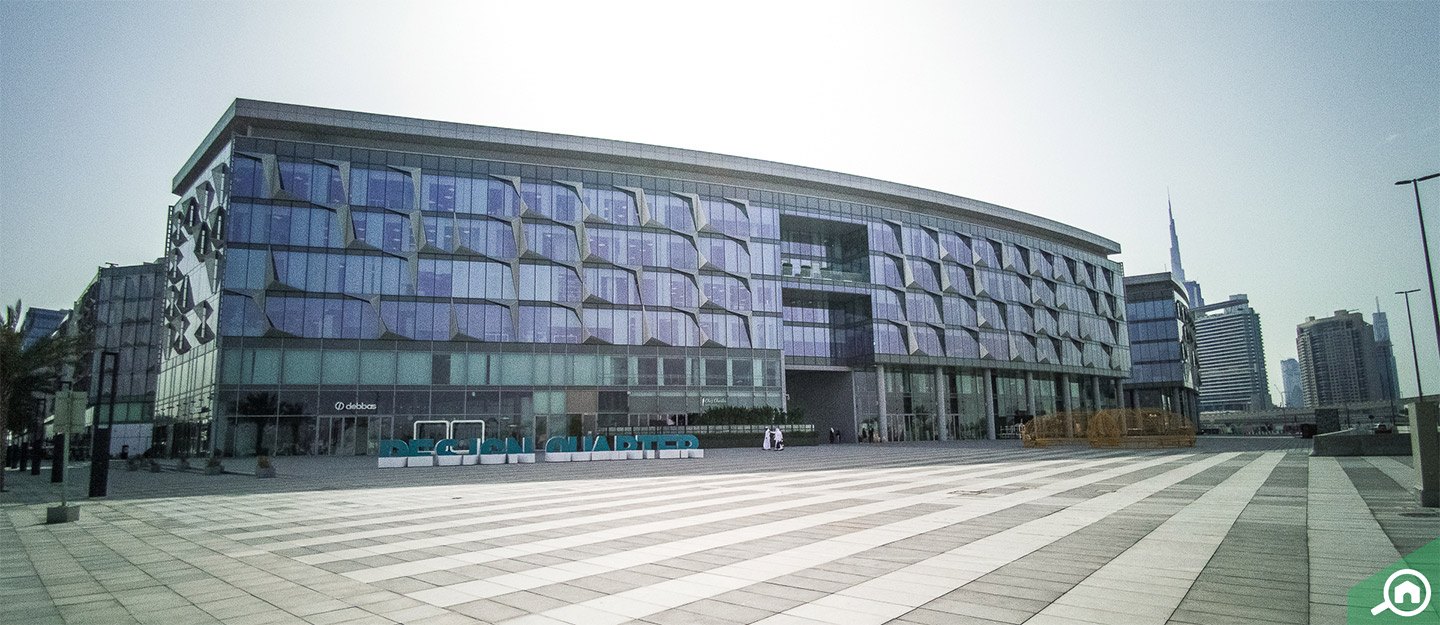
TECOM's design, fashion and art district — eleven buildings, retail frontage and a public events calendar, sold to people who make objects, in a district with no production space of its own.
Admission
Dubai Design District (d3) is defined by what it admits.
A cluster zone is chosen by the list it keeps. What it is known for is the admission test in practice, so it is printed first, ahead of anything about cost or premises — those only matter once the activity is accepted.
- Who is on the list Design, fashion and art tenants with retail frontage and a public events calendar
- The rule that admits them Creative-cluster free zone — also arranges a Dubai mainland licence; not a Designated Zone for VAT
The record
The standing facts behind the cluster.
These are the standing facts we hold, restated against the authority before any application is filed. Where the authority’s own sheet and this page disagree, the authority wins and this page changes.
- Emirate
- Dubai
- Premises
- Commercial offices from 700 sq ft, co-working desks and micro studios, retail units, event venues and the in5 Design labs
- Visa allocation
- Confirmed against the authority for your package.
Packages, fees and visa allocations are set by the authority and revised annually. Nothing on this page is a quotation — we confirm the current position in writing before you commit to anything.
In detail
A design practice makes objects. d3 licenses the practice, leases it a floor, gives it a shop window and puts a public events calendar outside the door — and sells no production space inside the district for the objects themselves. That gap is the decision, and almost nobody quoting this address describes it.
Which is not an argument against the place, only for knowing what you are buying. d3 is TECOM's district for design, fashion and art: established in 2013, licensed under the Dubai Development Authority, and reporting on its own About page more than 550 partner businesses, more than 10,000 professionals and more than 50 retailers. Eleven numbered buildings, event venues, retail and food frontage, the in5 Design labs. What it is not is a factory, and the businesses that struggle here are the ones that needed one.
The gate is the trade, not the price
TECOM runs its districts on specialisation, and each one licenses a different trade. d3 takes design, fashion, art and culture. That is the admission test, and it is applied before anybody discusses money.
So "a TECOM licence" is not a thing you can buy. An advertising agency, a PR consultancy or a content studio is routed to Dubai Media City; a production house to Dubai Studio City; a publisher or packaging printer to Dubai Production City; a software business to Dubai Internet City; a training institute or recruiter to Dubai Knowledge Park. Same regulator, same landlord, different door — and being turned away is not a negotiation you win by paying more.
Inside d3 the sector reads wider than "design" suggests. Product and industrial design, interiors, architecture and design consultancy. Fashion houses, apparel labels, jewellery and accessories. Art galleries and studios. The regional offices of luxury and lifestyle brands whose business is the look of a thing.
The line that catches people runs between designing a thing and communicating about it. A studio that designs a product belongs here. A studio that designs the campaign for someone else's product usually belongs in Media City. If your revenue is a media budget, you are in the wrong district, and asking early costs nothing.
d3 issues two different licences over the same counter
The fact that separates d3 from the other creative clusters is buried in its own FAQ rather than advertised. d3 will licence you as a free zone company under the Dubai Development Authority, or arrange a mainland licence issued by Dubai Economy and Tourism. Both are available at the same address. For a design business with a retail habit — a furniture brand, a jewellery label, a studio selling to Dubai homeowners and Dubai developers — the second is very often the right answer, and it is the one nobody offers unprompted.
Read the mainland licence as the commercial one. d3's own guidance is blunt: a free zone licence permits operating within the free zone territory, and doing business elsewhere requires the dual licence. Delivery into mainland Dubai by a free zone establishment runs under Executive Council Resolution No. (11) of 2025, which requires a licence or permit from Dubai Economy and Tourism and separate financial records for that activity. The two routes are not cheap versus expensive. They are two different customer bases, and you pick the one your invoices actually go to.
One more thing the FAQ settles: a customs code is available where the licence carries import and export activity and the customs requirements are met. That matters, because a design business ships samples, stock and finished pieces, and a licence with no import line on it discovers the omission at the airport.
Seven working days is the licence, not the setup
d3 quotes roughly seven working days once documents and payment are complete — four to initial approval and three to licence issue. The figure is honest about what it measures and routinely misread as the timeline for the whole exercise. Everything expensive sits outside it.
- Get the activity onto d3's list first. "Creative" is not the test; the printed line is. Everything after this step is wasted if the answer turns out to be no.
- Choose free zone or mainland, because that decides who you may invoice and it is awkward to reverse.
- Assemble the shareholder file. Where a company is the shareholder, its constitutional documents need attestation in the home jurisdiction and its board needs to resolve to incorporate here. That chain runs on a foreign notary's calendar, so open it on day one.
- Reserve the trade name. A label name, a house name and a studio name are each refusable where they imply regulated activity, government association or a scope wider than the licence — worth settling before the branding is printed.
- Fix the premises. The trade licence is linked to the office address in d3, so the lease is never paperwork at the end.
- Submit, take initial approval, sign and pay. The four-day half of the published figure.
- Licence issue, then the establishment card and the immigration file. The three-day half.
- Per person: entry permit, medical, Emirates ID and stamping. None of this sits inside the seven days, and it repeats for every designer you hire.
- Corporate bank account, and Federal Tax Authority enrolment for corporate tax. The enrolment runs to its own deadline; an account that has not opened yet is not a reason to miss it.
Steps 3 and 5 set the real date, in that order. Both sit outside the seven days, and neither is d3's to accelerate.
The lease is the application, and the cheap route has a catch in it
Because the licence attaches to a d3 address, the space decision is the licence decision.
Co-working ends a lot of plans. A membership is a place to work, not a licensed address, so anyone hoping to hold a d3 licence at co-working prices should confirm which product carries an address before building a budget on it. The district itself runs 24/7 while each company keeps its own hours — a real convenience for studios working to a show deadline.
Warehousing is the honest gap. d3 publishes units of 5,000 to 11,000 sq ft with 6×6 metre sliding doors, described as suitable for light manufacturing, logistics and storage — but that offering is presented across TECOM's districts and names Dubai Industrial City. Confirm before you assume the shed is here. If your model needs production floor beside the studio, plan for two addresses and price the drive.
Where a designer actually makes something in d3
The making capacity that does sit inside the district is in5 Design, TECOM's incubation platform for the creative verticals, on Level 2 of Building 3. It runs a prototyping lab with 3D printers and CNC machines, a fashion lab set up as a small production facility, and machinery for working metals, wood, plastics and textiles, alongside training rooms, workspace, mentoring and investor introductions.
That is a real asset, and worth being precise about. Across all four of its verticals — design, media, tech and science — in5 reports supporting more than 940 startups and AED 8 billion raised since 2013. Those are in5's platform-wide figures, not d3's alone, and should be quoted that way.
The calibration matters more than the numbers. A shared lab is where you sample, prototype, test a joint, cut a first pattern and prove a piece before you commit. It is not a production line and it does not scale to a season's stock or a furniture order. Designers who treat it as a sampling facility get a great deal out of it. Designers who plan a manufacturing business around it find the limit in month four, usually with an order in hand.
The one tax break a designer could claim needs a factory the district does not sell
Corporate tax enrolment is mandatory for every d3 entity, whatever its rate and whether or not it made a profit. Miss the deadline and the penalty is a fixed AED 10,000, set federally, so the district has nothing to waive. Founders who read "0% zone" as "no filing" pay that bill first.
The 0% is conditional, self-assessed, and much narrower than the word suggests. It reaches only qualifying income earned by a Qualifying Free Zone Person, and what qualifies is a closed list — Ministerial Decision No. 229 of 2025, which replaced the earlier one with effect back to 1 June 2023. Read a design business against that list and the result is close to a paradox.
Design services are not on the qualifying list. A studio invoicing fees for interiors, product design, branding or architecture is generally earning non-qualifying income and pays 9% above the AED 375,000 threshold. The address changes nothing.
Manufacturing and processing of goods is on the list — the one entry a design business could genuinely reach, because a label that makes what it sells is a manufacturer. But d3 sells no production space, so the activity that would qualify you cannot be carried on where you are licensed.
Distribution of goods in or from a Designated Zone is on the list too — and d3 is not a Designated Zone. The second route out is closed for the same structural reason as the first.
Three further mechanics close the argument. Non-qualifying revenue must stay below the de minimis test of the lower of 5% of total revenue or AED 5 million; breach it and qualifying status is lost for that period and the four that follow. Audited financial statements are compulsory for anyone claiming qualifying status under Ministerial Decision No. 84 of 2025, regardless of revenue — an annual audit fee protecting a status a fee-earning studio cannot use. And Small Business Relief under Ministerial Decision No. 73 of 2023 treats businesses under AED 3 million in revenue as having no taxable income, but is mutually exclusive with qualifying free zone status. For a young studio whose income is non-qualifying anyway, that arithmetic points one way. The election has a deadline and the relief itself has an end date; both dates sit on our UAE corporate tax page.
The compliance a design business gets wrong is the intellectual property, not the licence
Every district profile lists the same federal obligations. For d3 the ones that decide outcomes are different, because here the asset is the work.
Three separate instruments protect three separate things, and studios routinely assume one covers all of it. Trademarks — the name, the logo, the mark on the label — sit under Federal Decree-Law No. 36 of 2021 and are protected by filing with the Ministry of Economy, not by using them. Copyright under Federal Decree-Law No. 38 of 2021 attaches to the creative work itself. The appearance of a product — the shape, the pattern, the ornamental form you actually sell — falls under industrial design protection in Federal Decree-Law No. 11 of 2021, and it is the one designers most often never file at all. None of that work is done by the licence file, which is the assumption a free zone does not protect your intellectual property takes apart.
Showing work publicly before you file is a risk to the filing, not only to the idea. Design protection turns on novelty, and a district whose calendar is built around public exhibition is where that gets tested. Take advice on the sequence before you show a new piece at a fair — stated here as a risk to check rather than a rule to rely on, because the novelty and grace-period position needs confirming for your specific case.
Who owns the output is a contract question, not a licence question. A studio that delivers designs without written assignment or licence terms has sold the same asset twice by accident. Settle it in the engagement letter.
The federal baseline still applies on top. VAT at 5% with enrolment once taxable supplies pass AED 375,000, and the Designated Zone question answered above. Beneficial ownership records kept current under Cabinet Decision No. 109 of 2023. Economic Substance reporting stopped for financial years ending after 31 December 2022 under Cabinet Decision No. 98 of 2024; if an ESR notification is still itemised on your d3 renewal quote, ask what it buys, because the obligation it names was removed. Employment under Federal Decree-Law No. 33 of 2021. And data protection under Federal Decree-Law No. 45 of 2021 for anyone running a customer list or an e-commerce front.
The events calendar is part of the rent, so decide whether you can use it
d3 hosts a public programme other business districts do not have. Dubai Design Week is held in strategic partnership with the district and carries Downtown Design, the region's contemporary design fair, inside it. Dubai Fashion Week and Sole DXB bring their own audiences. Dubai has been named a UNESCO Creative City of Design, and that is the credential the district trades on.
Be unsentimental about who it pays. A brand that sells to people — a furniture label, a jewellery house, a fashion line, a gallery — gets buyers walking past the door and a fair on its doorstep every year, and can charge part of the rent to a marketing budget it would otherwise spend elsewhere. A consultancy whose revenue is three retained corporate clients gets nothing from footfall. The test: if a stranger walking past your unit could become a customer, the calendar is part of what you are buying. If not, it is scenery.
GoFreelance is the smallest thing d3 sells, and the only place published prices exist
Individual designers can hold a GoFreelance permit rather than form a company. The eligible design roles run to apparel, fashion, interior and jewellery design among other specialisms, and the permit carries co-working access, meeting rooms and the district's events.
It is also the one product on this page with published figures, which is why they are here and why they carry a warning. TECOM publishes the permit at AED 7,520, renewable annually, with an employment visa as an optional addition at AED 4,600 for one year or AED 5,042 for two, and an establishment card at AED 2,000. These change without notice: treat them as the shape of the bill and confirm each before planning around it.
The honest limit is that a permit is not a company. No shareholders, no entity to raise against or sell, no ability to sponsor staff. It suits the individual practitioner who wants to be lawfully resident and lawfully invoicing at the lowest defensible cost. It does not suit a studio that intends to hire, and converting later means forming a company properly rather than upgrading a permit.
Where d3 is the wrong address, and where to go instead
This district gets bought on atmosphere more than most, and atmosphere is the least durable reason a lease ever gets signed. Work through the list below before the showroom does the deciding.
Your revenue is a media budget, not a design fee. Advertising, public relations, brand campaigns, influencer and content businesses belong in Dubai Media City. Broadcast and film belong in Dubai Studio City; printing, packaging and publishing in Dubai Production City. Same regulator, same landlord, and the activity list decides, not your job title.
You design software rather than objects. Product design for a digital product is still a technology business to the licensing authority. That is Dubai Internet City.
You need to manufacture at any real volume. There is no production floor in this district, no industrial land, and warehouse stock that is presented across other TECOM addresses. If the business is making things at scale, look at Dubai Industrial City, JAFZA or SAIF Zone, and keep a studio here only if the address earns its own rent.
You import and hold stock and expected Designated Zone treatment. d3 is not on the schedule, and that treatment covers the movement and storage of goods rather than services in any case. Model your customs and VAT position properly before you sign.
Price is your deciding criterion. Here you rent floor area first and buy a licence second, which is the reverse of how a package zone is sold and cannot be made to compete with one. IFZA, Meydan or SHAMS will licence a design consultancy for a fraction of the cost, and your clients will not ask.
You are one person buying a famous postcode. A design buyer looks at the portfolio long before the letterhead, so an address nobody asks about returns nothing. Take the GoFreelance permit, or take a cheap zone and spend the difference on the work itself.
Your customers are all mainland Dubai and you took the free zone licence. You will reach them through the dual licence or not at all. Price that route first; frequently the mainland licence was the correct answer from the beginning.
Your product is a financial one with a designed surface. Payments, lending, asset management and capital markets require DIFC or ADGM. A regulator reads the money flow, not the art direction, and a design licence will not carry a regulated business.
You are testing the market for a season. The licence is tied to a lease in a district with a limited stock of space, so the commitment is the floor rather than the paperwork. And federal company law gives no general route from one UAE free zone to another: whether a company can move depends on both zones' own rules, and where they do not provide for it, leaving means a new entity, a new licence, new visas and a new bank account.
Against Dubai Media City, and against a licence bought on price alone
The two comparisons that matter are the district next door and the cheapest licence you were quoted first.
Against Dubai Media City, the split is clean and it is not about quality. Media City licenses the businesses that communicate — advertising, publishing and agency work. d3 licenses the businesses that design the thing being communicated about. Founders go wrong assuming the two are interchangeable because both feel creative. They are separate activity lists with separate approvals, and the choice is not yours to make on atmosphere. If your invoices say "campaign", start at Media City and let them tell you otherwise.
Against IFZA, Meydan and the low-cost zones, d3 is beaten on price and on flexibility, and wins on exactly one thing. A package zone will licence a design consultancy for a fraction of the money and will not require a floor. What it cannot supply is a ground-floor unit on a street buyers walk down, a fair on the doorstep, a lab two buildings away, and neighbours who are your market. If none of those four converts into revenue for your business, the cheaper licence is the better one, and we will say so.
Whether you sell an object or a fee decides this on its own
What does the business sell, and to whom — a design fee to corporate clients, or an object to a person?
If the answer is an object, the retail frontage, the events and the sampling lab are things you can use, and the mainland licence deserves a serious look before anyone defaults you to the free zone one. If the answer is a fee from a handful of corporate clients, you are buying a location premium your customers will never notice, and the honest recommendation is a cheaper address and a better portfolio.
Tell us which you are, what you make, and where the money comes from. We will tell you whether it is d3 free zone, d3 mainland, the district next door, or somewhere with far less charm and a much better fit.
Compare all free zones · Free zone company formation · Mainland company · Document attestation · UAE corporate tax
Provenance
How this record is verified.
Everything above is re-checked against Dubai Design District (d3)’s own current published material and against the federal rules before any application is filed. Where the two disagree, the authority wins and we tell you.
Frequently asked questions about Dubai Design District
Can I hold a d3 licence at co-working prices?
Not as your licensed address. An individual membership is daily or monthly, open to anyone and needs no work permit, but d3's own guidance is explicit that it does not give you a d3 address as the licensed address — and the trade licence attaches to a d3 address. Commercial offices start at 700 sq ft, while co-working desks and micro studios have to be checked product by product for whether they support the licence and the visas you need. Confirm which product carries an address before a budget is built on it.
Is there anywhere in d3 to actually make things?
Not at volume. The district sells offices, retail frontage, basement storage and event space, and no production floor. What is genuinely here is in5 Design on Level 2 of Building 3: a prototyping lab with 3D printers and CNC machines, a fashion lab run as a small production facility, and machinery for metals, wood, plastics and textiles. That is a sampling and prototyping resource rather than a production line, and it does not scale to a season's stock. The warehouse units d3 publishes are presented across TECOM's districts and name Dubai Industrial City.
Free zone or mainland licence at d3 — which one do I need?
It follows your invoices rather than the price. d3 will license you as a free zone company under the Dubai Development Authority, or arrange a mainland licence issued by Dubai Economy and Tourism, both at the same address. A free zone licence permits operating within the free zone, and doing business elsewhere requires the dual licence; delivery into mainland Dubai runs under Executive Council Resolution No. (11) of 2025, which requires a Dubai Economy and Tourism licence or permit and separate financial records. For a furniture brand or a jewellery label selling to Dubai homeowners, the mainland licence is very often the right answer.
Can a design studio here claim the 0% corporate tax rate?
Almost certainly not, if it earns fees. The 0% reaches only qualifying income of a Qualifying Free Zone Person, and under Ministerial Decision No. 229 of 2025 design services are not on the qualifying list, so fees for interiors, product design, branding or architecture are non-qualifying and taxed at 9% above AED 375,000. Manufacturing and processing of goods is on the list, but d3 sells no production space; distribution from a Designated Zone is on it too, and d3 is not a Designated Zone. Small Business Relief under AED 3 million is usually the better election.
Is seven working days really how long it takes?
That is the licence, not the setup. d3 quotes roughly seven working days once documents and payment are complete — four to initial approval, three to licence issue — and everything expensive sits outside it. A corporate shareholder's constitutional documents need attestation in the home jurisdiction and its board has to resolve to incorporate here, which runs on a foreign notary's calendar. The premises decision comes before the licence, because the trade licence is linked to a d3 office address. And the entry permit, medical, Emirates ID and stamping repeat for every person hired.
What does the GoFreelance permit cost, and what does it not do?
TECOM publishes the permit at AED 7,520, renewable annually, with an employment visa as an optional addition at AED 4,600 for one year or AED 5,042 for two, and an establishment card at AED 2,000 — figures that change without notice, so confirm each before planning around them. What the permit does not do is act as a company: no shareholders, no entity to raise against or sell, and no ability to sponsor staff. It suits an individual practitioner who wants to be lawfully resident and invoicing at the lowest defensible cost, and converting later means forming a company properly.
Begin with a clear conversation
Tell us what you intend to build.
A consultant will map the structure, jurisdiction, approvals and likely cost against what you actually described — not against a package.
