
Licensing desk
IFZA — International Free Zone Authority, Dubai
IFZA is the zone most founders are quoted first, because it is cheap to enter and its partner network is enormous.
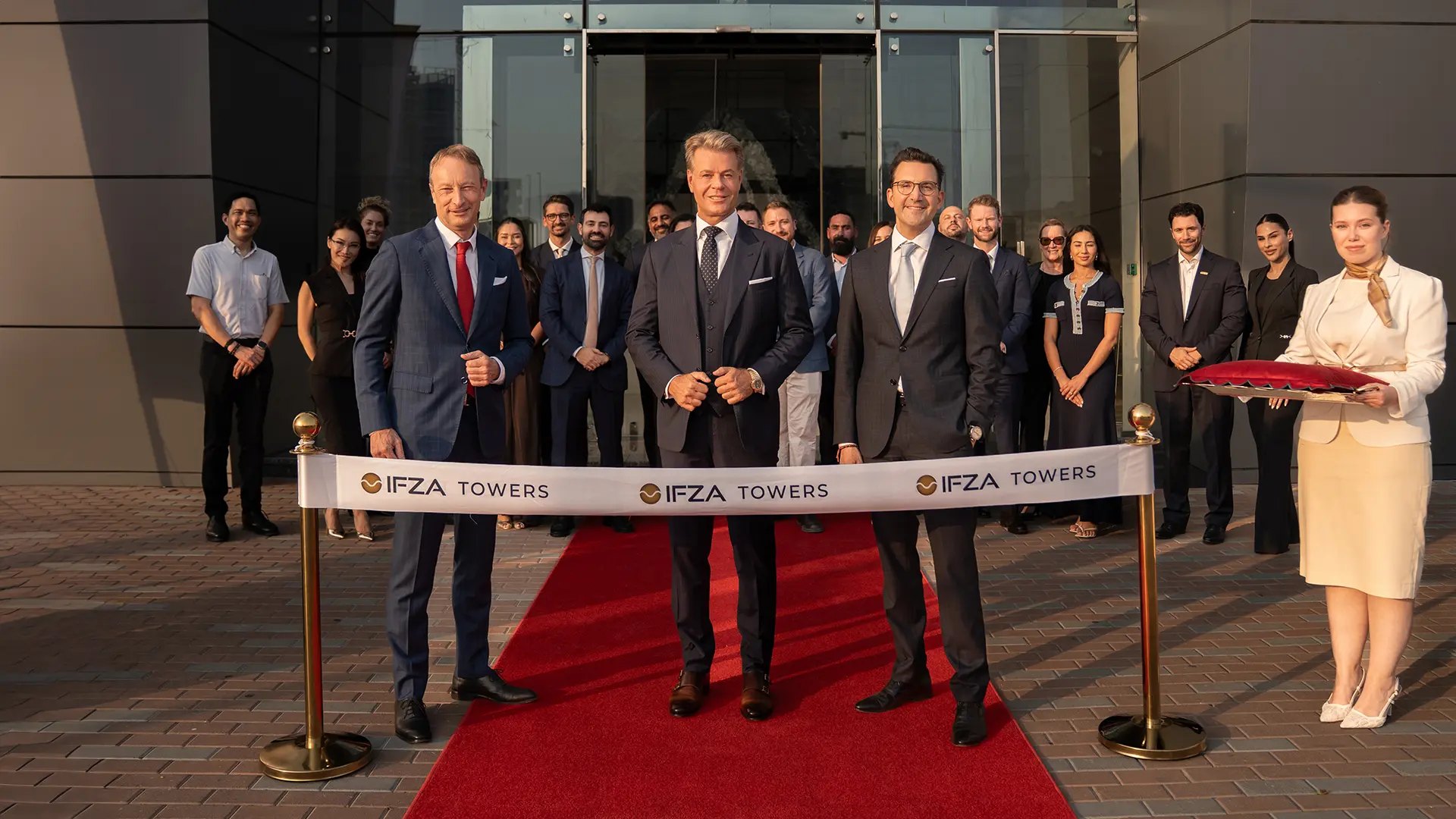
The record
The rest of the record.
These are the standing facts we hold, restated against the authority before any application is filed. Where the authority’s own sheet and this page disagree, the authority wins and this page changes.
- Emirate
- Not recorded
- Regulatory framework
- Free zone
- Premises
- Confirmed against the authority for your package.
- Visa allocation
- Confirmed against the authority for your package.
- Our standing
- Authorized channel partner. The authority pays us when a licence is placed here, and our fee is quoted on its own line.
Packages, fees and visa allocations are set by the authority and revised annually. Nothing on this page is a quotation — we confirm the current position in writing before you commit to anything.
In detail
IFZA is the zone most founders are quoted first, because it is cheap to enter and its partner network is enormous. That is not the same as being the right zone, and the gap between those two things is what this page is about.
What IFZA is, and who actually runs it
IFZA is a privately operated free zone authority. It issues its own licences, keeps its own company list and sets its own fees. It began in Fujairah and moved to Dubai following an agreement with Dubai Silicon Oasis Authority (DSOA) signed on 21 October 2020, and is today based at IFZA Business Park in DSO.
Three distinctions follow, and getting them straight will save you an argument with a bank:
- IFZA is not Dubai Silicon Oasis. DSO is a separate free zone with its own authority. IFZA is a licensing authority hosted within the DSO estate under a partnership.
- IFZA is not part of DIEZ. The Dubai Integrated Economic Zones Authority, created by Law No. 16 of 2021, oversees Dubai Airport Free Zone, Dubai Silicon Oasis and Dubai CommerCity. IFZA companies are licensed by IFZA, not by DIEZ.
- IFZA is not a government-branded zone the way DMCC, JAFZA or DAFZA are. The practical consequence appears at the bank, not on the licence.
Setup normally runs through IFZA's Professional Partner network of licensed agencies. IFZA's own materials present this as one route rather than the only one, but in practice it is how most files move — and it shapes the pricing you are shown.
Ownership is complete, and it has stopped being the reason to pick a zone
An IFZA company can be wholly foreign-owned from the day it is incorporated. There is no UAE national shareholder, no local sponsor and no service agent anywhere in the structure. The shareholders can be individuals or companies, living in the UAE or abroad, and between them they hold every share. IFZA's own materials state full foreign ownership as the position on incorporation, and it is how the FZCO it issues is built.
What changed is the comparison. For years full ownership was the headline reason to choose a free zone, because a mainland company needed a UAE national holding the majority. Federal Decree-Law No. 26 of 2020 removed that requirement, the emirates began applying it in 2021, and the current Commercial Companies Law, Federal Decree-Law No. 32 of 2021, carries the position forward. Most commercial and industrial activities can now be fully foreign-owned onshore as well. What stays restricted is a short list of activities with a strategic impact, and in Dubai some professional licences are still issued against a local service agent, who takes no equity. Our mainland company page sets out both carve-outs.
So put ownership on your checklist as a condition IFZA meets, not as a reason to prefer it. The questions that genuinely separate IFZA from a mainland licence are the ones further down this page: who you can invoice, what the visa package costs, whether your goods get Designated Zone treatment, and whether a bank will open the account.
Who IFZA genuinely suits
IFZA is strong for businesses whose value sits in people and invoices rather than in goods and buildings:
- Consultancies and professional services — management, marketing, IT, HR, design
- Software, SaaS and digital agencies billing clients outside the UAE
- Trading companies that never touch UAE soil — buy in one country, ship to another, invoice from Dubai
- E-commerce selling cross-border or through fulfilment partners
- Holding structures, and founders whose real requirement is a residence visa at a controlled cost
IFZA publishes a broad activity list — commonly cited at over 2,000 activities — and permits several on one licence, chargeable beyond the first few. Confirm your activity is on the current list before committing to the zone, not after.
Licence types and what each permits
Only the industrial licence carries a premises condition, and industrial premises are the one thing IFZA does not let. Every other line on that list sits on a desk, which is why the zone reads as generous until a model needs a floor.
Two exclusions are absolute. IFZA cannot license regulated financial services — that is DIFC or ADGM territory. And an IFZA licence naming a crypto-adjacent activity does not entitle you to conduct virtual asset business: under Law No. 4 of 2022, VARA regulates virtual assets across every zone in Dubai except DIFC, and VARA authorisation is a separate, far heavier process.
What the setup involves, in the order it happens
The sequence is not negotiable, and each step gates the next:
- Fix the activity first. Licence type, cost and bankability all follow from it. Choosing a zone before an activity is the most expensive sequencing error in UAE formation.
- Choose the legal form — FZCO, or a branch of an existing company. Corporate shareholders need attested constitutional documents from the home jurisdiction, usually the longest lead item in the file.
- Reserve the trade name. Names implying regulated activity or governmental association are refused.
- Select the package — at IFZA the package, not the premises, sets the visa ceiling.
- Submit passports, photographs, proof of address, and a shareholder resolution where a corporate shareholder is involved.
- Initial approval and payment, then signing the incorporation documents.
- Licence issue — a few working days from a genuinely complete file, and longer than any package page implies once external approvals or attestations arise.
- Establishment card and immigration file, then entry permit, medical, Emirates ID and stamping, per person.
- Corporate bank account. Weeks, not days — the stage that decides whether the licence was worth buying.
Most of the file moves online; the residence steps do not
IFZA runs the formation file digitally, and for a founder who is not yet in the UAE that matters. Documents are submitted online, the memorandum and articles of association go to each shareholder for electronic signature, and the formation documents and a copy of the licence are issued electronically. IFZA's position is that no physical presence is needed for the incorporation itself, so steps one to seven above can be completed without a flight.
Two qualifications rarely make it into the sales pitch. The first is who the platform is for. The IFZA Portal — quotations, applications, status tracking, and licence, visa and property management — is built for IFZA's Professional Partners, not for the founder. In practice your agent operates it on your behalf, which is one more reason the choice of agent matters as much as the choice of zone. Renewal is handled online as well, and IFZA's own guidance warns that a licence renewed late can attract fines or have its operations suspended. Diarise the expiry date yourself rather than waiting for a reminder from whoever holds the portal log-in.
The second is that a paperless licence is not a paperless company. Step eight needs you in the country: the residence medical and the Emirates ID biometrics are taken in person. Many banks also still want to meet the signatory at step nine. Plan one trip around those two stages, not around the licence. Our guide to forming a UAE company from outside the country covers what a power of attorney can sign for you and what it cannot.
What it costs — indicative ranges, and why they move
Every figure below is indicative. Authority fees are revised without notice, and because most files run through partner agencies, the same IFZA product is quoted at materially different prices by different agents. Treat these as a planning range, not a quotation, and insist on authority fees itemised separately from the agent's margin.
Three lines sit outside those bands because they are not bands. The establishment card is a single charge of around AED 2,000, one per company. Extra activities are chargeable and vary by activity. And the annual renewal is rarely the first-year price, so budget for an increase rather than for a repeat.
The number that catches people is not the licence. It is the second year, and the audit — see below. What recurs, what repeats per person and how the premises line escalates differently on each route are modelled across three years in the three-year cost of a cheap licence.
Visas: the allocation follows the package, not the floor space
This is IFZA's genuinely distinctive mechanic and the honest reason for its popularity. Most zones scale visa entitlement to leased square metres. IFZA scales it to the package tier you buy. A flexi-desk at the upper tiers can carry a materially higher allocation than a comparable flexi-desk elsewhere — commonly cited at up to six, where DMCC and Meydan cap standard flexi-desks lower.
The trade-off is symmetrical. You can hold a small team without leasing an office you do not need — but the cheap advertised licence is a zero-visa product, and adding headcount means upgrading the package tier, not simply paying a per-visa fee. Founders who buy on the headline and hire later pay twice. Count your year-two headcount before choosing a tier.
Premises: the flexi-desk question, answered honestly
IFZA is fundamentally an office and flexi-desk zone: shared workstations, private offices from around AED 18,000 a year, meeting rooms and event space at IFZA Business Park.
Warehousing and light industrial units exist in the surrounding Dubai Silicon Oasis estate — DSO markets units of roughly 3,200 to 5,400 sq ft plus a high-bay industrial building — but those are DSO's facilities, leased through DSO, not IFZA's product. If your model is logistics-led you are looking at the wrong zone with an attractive neighbour, and the VAT point below makes it worse.
That split is not a quirk of the premises page. It runs through the whole file. The body that issues your licence, the body that owns the ground your address stands on, and the body that decides how your goods and your profits are taxed are three different institutions — and only the first of them has anything to sell you.
Read the right-hand column first, because it is the one no package upgrade reaches. A higher tier buys visas. It does not buy Designated Zone treatment for your stock, and it does not remove the audited accounts that follow a 0% claim. The left-hand column is the only one an agent can quote you a price for, and it is the shortest of the three.
Banking: who is receptive, and why applications fail here
IFZA has announced partnerships intended to smooth account opening, including with Mashreq and Commercial Bank of Dubai. A partnership eases the introduction. It does not pre-approve anyone — the decision sits with the bank's compliance function, always.
In our experience — our observation, not an authority statement — digital-first business banks and mid-market local banks are most receptive to IFZA entities, while international banks in the UAE apply the heaviest scrutiny to a flexi-desk company with a non-resident shareholder.
Applications fail for a recognisable profile rather than for the zone itself: a flexi-desk address, no UAE-resident staff, a shareholder abroad, a general trading activity that does not match how the founder describes the business, and projected turnover that footprint could not plausibly produce. Individually each is survivable. Together they read as a shell. Our banking advisory page covers refusals in full.
The compliance that starts the day the licence is issued
Corporate tax enrolment is mandatory regardless of rate or profit. FTA Decision No. 3 of 2024 sets the deadline by the month the licence was issued; the fixed penalty for missing it is AED 10,000.
The 0% rate is conditional, not automatic. A Qualifying Free Zone Person may access 0% on qualifying income under Cabinet Decision No. 55 of 2023, with qualifying and excluded activities now defined by Ministerial Decision No. 229 of 2025, which replaced MD 265 of 2023 retroactively to 1 June 2023. Conditions include adequate substance in the zone. Non-qualifying revenue above the de minimis — 5% of revenue or AED 5 million, whichever is lower — forfeits the status for the current tax period and the following four. That is a five-year consequence for one bad year, and a flexi-desk with no staff is a thin substance story to defend.
Claiming QFZP status obliges you to maintain audited financial statements under Ministerial Decision No. 84 of 2025, irrespective of revenue — a recurring professional fee almost nobody budgets at formation, and for a small consultancy it can approach the cost of the licence itself.
Small Business Relief now runs to 31 December 2029. Ministerial Decision No. 73 of 2023 lets businesses under AED 3 million in revenue be treated as having no taxable income, but it is mutually exclusive with QFZP status. Its sunset was 31 December 2026, and Ministerial Decision No. 131 of 2026, issued 29 July 2026, extended it to tax periods ending on or before 31 December 2029, threshold unchanged. If your plan rests on it, it has three years longer to run than most published guidance still says.
UBO obligations apply. As a commercial free zone entity you fall under Cabinet Decision No. 109 of 2023: maintain a real beneficiary record, updated within 15 days of any change. DIFC and ADGM sit outside this federal regime; IFZA does not.
Economic Substance filings have stopped. Cabinet Decision No. 98 of 2024 ended ESR requirements for financial years ending after 31 December 2022. Any advisor still billing you for a current-year ESR notification is charging for work the Ministry of Finance abolished. Filings for 2019–2022 remain due.
VAT is a separate test: enrol if taxable supplies exceed AED 375,000. A free zone licence does not exempt you.
None of that arrived at once. Every obligation above sits in its own instrument with its own date, and laid on a real calendar the pattern is hard to miss: one rule for most of a decade, then a run of changes from 2023 onward, and one deadline still in front of you.
The date at the end is the one to diarise. Small Business Relief now reaches tax periods ending on or before 31 December 2029, extended from 31 December 2026 by Ministerial Decision No. 131 of 2026, and it is mutually exclusive with Qualifying Free Zone Person status for as long as it lasts.
Where IFZA is the wrong choice
We would rather lose the file than place you here incorrectly.
1. You are moving physical goods and expected free-zone VAT treatment. Dubai Silicon Oasis is not a Designated Zone under Cabinet Decision No. 59 of 2017. JAFZA, DAFZA and Dubai Airport Free Zone are. Goods held at IFZA get none of the designated-zone VAT treatment traders assume they are buying. For import, storage and re-export this is disqualifying, and it is the single most consequential fact on this page.
2. You need warehousing, industrial capacity or port access. IFZA's own product is offices and desks. Choose JAFZA for port logistics, KEZAD or RAKEZ for industrial cost.
3. Your licence has to carry institutional weight. If you are raising institutional capital, contracting with banks, insurers or listed counterparties, or you anticipate a difficult account opening, a DMCC, DIFC or ADGM licence buys credibility that IFZA does not. This is unfair to IFZA and entirely real.
4. Your customers are UAE mainland businesses. No free zone company can invoice mainland customers directly for work delivered on the mainland. You need a distributor, a mainland branch, or a dual licence via the DET. Model that cost before concluding a free zone is cheaper — frequently it is not.
5. You are regulated. Financial services require DIFC or ADGM. Virtual assets require VARA. An IFZA licence substitutes for neither.
6. Your team will commute from Marina, Downtown or Business Bay. DSO sits along the Dubai–Al Ain corridor — a real daily cost that never appears in a package comparison and quietly affects hiring.
Set the two halves of this page beside each other and the question stops being a matter of taste. Five business shapes arrive at IFZA. The rest arrive somewhere with a different name on the licence, and each of them has a name.
Only the first group is IFZA's to win. Every other line points at a licence with a different name on it — JAFZA or DAFZA for goods, KEZAD or RAKEZ for industrial cost, DMCC, DIFC or ADGM for institutional weight, VARA for virtual assets, and the mainland itself for mainland customers. The commute is the one item on the list that no other authority fixes.
One caveat on process rather than substance: because pricing reaches you through an agent, quotes for the identical IFZA product vary. Always ask for authority fees and advisory fees on separate lines. If that variability is what bothers you most, the DUQE profile takes up the same question of who stands between a founder and the price.
How IFZA compares to its two closest alternatives
All three run package-tier visa models and none is a Designated Zone for VAT.
If a central Dubai address matters to your clients, Meydan competes directly. If cost is the only variable, SHAMS undercuts both. IFZA's argument is the balance: a Dubai licence, a generous package-based visa ceiling, and a real business park behind the address.
Decide on the activity, not the advertisement
Tell us what the business does, who it invoices, and how many people you expect to sponsor in year two. We will tell you whether IFZA fits — and if it does not, which zone does.
Compare the free zones · Free zone company formation · Banking advisory
Provenance
How this record is verified.
Everything above is re-checked against IFZA — International Free Zone Authority, Dubai’s own current published material and against the federal rules before any application is filed. Where the two disagree, the authority wins and we tell you.
Frequently asked questions
The short answer comes first in each case, and the sections above carry the detail. Two of the answers below, on tax and on warehouses, correct claims that still circulate in older descriptions of the zone.
What is IFZA, and who stands behind the licence?
IFZA is the International Free Zone Authority, a privately operated free zone authority based at IFZA Business Park in Dubai Silicon Oasis. It issues your licence, holds the official record of your company and sets its own fees. It is not the DSO authority and it is not part of DIEZ. That distinction rarely matters on the day the licence issues, and it matters a great deal on the day a bank asks who licensed you.
What does IFZA do better than most zones?
One thing stands out: the visa allocation follows the package tier you buy, not the office space you lease, so a small team can hold residence visas from a flexi-desk. Around that sit a low entry price, a broad activity list and a formation file that runs almost entirely online. Each comes with a catch this page names: the cheapest package carries no visas, the renewal is rarely the first-year price, and the bank, not the zone, decides whether the licence was worth buying.
Can a foreign founder own all of an IFZA company?
Yes. An IFZA company can be wholly foreign-owned from incorporation, by individuals or by companies, with no UAE national shareholder and no local sponsor. What has changed is that this no longer sets IFZA apart. Since 2021 most mainland activities can be fully foreign-owned as well, with activities of strategic impact the main exception. Treat ownership as a condition IFZA meets, then make the choice on invoicing, visas, VAT and banking.
Do the shareholders need to live in the UAE?
No. Shareholders can be individuals living abroad or companies incorporated abroad. A corporate shareholder needs its constitutional documents attested in its home jurisdiction, and that is usually the longest lead item in the file. Where residence starts to matter is the bank. In our experience, a flexi-desk company whose only shareholder lives abroad draws the heaviest scrutiny, so plan the account opening before you plan the licence.
Is an IFZA company tax-free?
No. An IFZA company sits inside federal corporate tax like any other UAE company, and it must enrol with the FTA whether or not it owes anything. Outside the free zone regime the rate is 0% on taxable income up to AED 375,000 and 9% above it. The free zone 0% is open only to a Qualifying Free Zone Person, and only on qualifying income. It needs adequate substance and audited financial statements, and one year over the de minimis limit costs the status for that year and the four after it. VAT is a separate test that no free zone licence waives.
How long does it take to set up an IFZA company?
The licence itself can issue within a few working days of a genuinely complete file. The whole setup takes longer, and the parts that stretch it mostly sit outside IFZA: attested documents for a corporate shareholder, any outside approval your activity needs, residence visas processed one person at a time, and a corporate bank account measured in weeks, not days. The clock starts when the file is complete, not when the package is paid for; our guide to how long a UAE setup really takes sets out why.
What activities can an IFZA licence cover?
Services and consultancy, trading and general trading, e-commerce, holding activities, and light industrial work where suitable premises are secured. Several activities can sit on one licence, with those beyond the first few charged separately. Two categories stay outside whatever the activity list appears to allow: regulated financial services, which belong in DIFC or ADGM, and virtual asset business, which needs VARA authorisation. Check your exact activity against IFZA's current list before you commit to the zone.
Does IFZA have its own warehouses?
Not as its own product, whatever older descriptions of the zone say. IFZA's premises are flexi-desks, offices and meeting rooms at IFZA Business Park. The warehouses and light industrial units nearby belong to the Dubai Silicon Oasis estate and are leased through DSO. And wherever the stock sits, Dubai Silicon Oasis does not appear on the FTA's list of Designated Zones, so storing goods there brings none of the VAT treatment traders expect from a designated zone.
Can the whole setup be done from outside the UAE?
The incorporation can. Documents go in online, the memorandum and articles of association are signed electronically, and the licence arrives as a soft copy by email, with the original available for collection. The residence visa cannot: the medical and the Emirates ID biometrics are taken in person, and many banks still want to meet the signatory. Running the company from abroad afterwards is a separate question, because a 0% corporate tax claim rests on adequate substance in the zone.
Do I deal with IFZA directly, or through an agent?
Usually through an agent. Most IFZA files move through its Professional Partner network, and the IFZA Portal, where applications are tracked and licences and visas managed, is built for those partners rather than for founders. IFZA presents the network as one route, not the only one. Whichever route you take, ask for authority fees and advisory fees on separate lines, because the same IFZA product is quoted at materially different prices by different agents.
Begin with a clear conversation
Tell us what you intend to build.
A consultant will map the structure, jurisdiction, approvals and likely cost against what you actually described — not against a package.
