
Licensing desk
DIFC — Dubai International Financial Centre
A separate common-law jurisdiction inside Dubai with its own courts and its own financial regulator — outstanding for asset managers, funds and family offices, and an expensive mistake for almost everyone else.
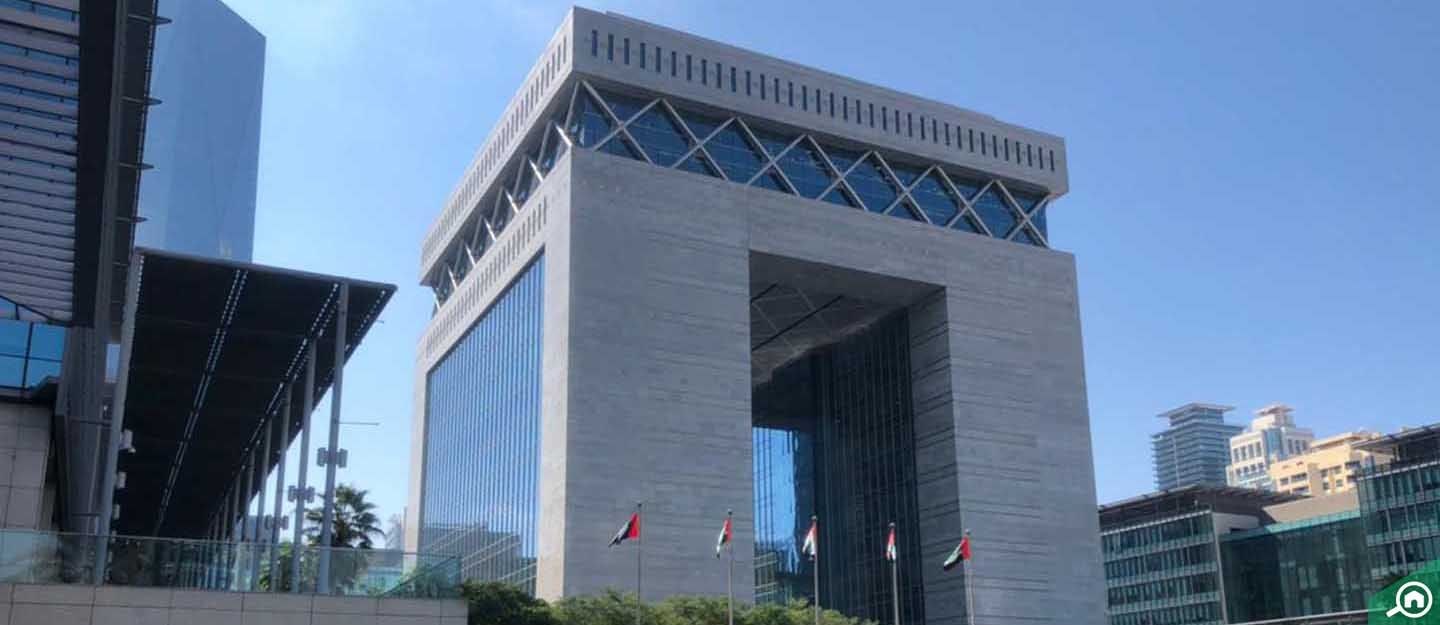
The record
The rest of the record.
These are the standing facts we hold, restated against the authority before any application is filed. Where the authority’s own sheet and this page disagree, the authority wins and this page changes.
- Emirate
- Not recorded
- Regulatory framework
- Free zone
- Premises
- Confirmed against the authority for your package.
- Visa allocation
- Confirmed against the authority for your package.
- Our standing
- Authorized channel partner. The authority pays us when a licence is placed here, and our fee is quoted on its own line.
Packages, fees and visa allocations are set by the authority and revised annually. Nothing on this page is a quotation — we confirm the current position in writing before you commit to anything.
In detail
What DIFC actually is
DIFC is not a free zone in the ordinary sense, and treating it as one is the source of almost every bad decision made about it.
It is a separate legal jurisdiction inside Dubai. Established in 2004 as a Financial Free Zone under the constitutional provision allowing such centres to sit outside federal civil and commercial law, DIFC writes its own companies, employment, insolvency and data protection laws — modelled on English common law — and runs its own English-language courts to enforce them. UAE criminal law and federal tax law still apply; everything commercial in between is DIFC's own. You are not buying a licence, you are buying a legal system your investors already understand. Deciding on Dubai has not yet decided which of its systems you sit inside: the emirate holds four of them, and the licence names one.
Its 2025 annual results reported 8,844 active companies and a workforce above 50,000, including 1,052 regulated firms, 500-plus wealth and asset managers, 102 hedge funds and 290-plus banks and capital markets firms. Your auditor, fund administrator and counterparty's lawyer are all within a ten-minute walk.
Who runs it — three bodies, not one
DIFC Authority operates the district and, through the Registrar of Companies, incorporates entities and issues the commercial licence. Its Government Services Office handles the immigration side. Which body incorporates a company settles which companies law governs it, which court hears a dispute and what leaving costs — the incorporating authority decides more than the price.
The Dubai Financial Services Authority (DFSA) independently regulates financial and ancillary services — authorising firms, approving individuals and supervising anti-money laundering, including for designated non-financial businesses such as law firms.
That authority stops at the edge of the centre. The DFSA licenses financial services carried on in or from DIFC, under DIFC law, and nothing it grants is a permission under federal law. Onshore, the same activities belong to federal regulators: the Central Bank of the UAE for banking, finance, payments and insurance, and the Capital Market Authority — which took over from the Securities and Commodities Authority on 1 January 2026 — for securities and investment business. ADGM, in Abu Dhabi, has a regulator of its own. The consequence falls on the adviser or asset manager who assumes a DFSA licence covers clients across the UAE. It does not. Marketing to, advising or managing money for clients onshore can engage federal licensing and promotion rules that the DFSA has no power to waive, and whether a given onshore relationship needs a federal licence, a recognised promotion route or an onshore affiliate depends on the activity and on how the client was reached. Settle it before the first onshore mandate, not after it.
DIFC Courts are independent common-law courts with an opt-in jurisdiction, so parties outside the centre can choose them for a contract. Which forum ends up reading that contract is decided in a clause signed long before anyone falls out, and the court that reads your contract is chosen before the dispute. A fourth office, the Commissioner of Data Protection, matters more than its profile suggests.
Behind all four sits the federal layer that DIFC's own legislation does not displace. Every obligation set out further down this page belongs to one of the five columns below, and knowing which column owns which obligation is most of the administrative work of being here:
Two columns deserve reading before the rest. The fourth belongs to a single office with one recurring filing, which no setup agent's checklist owns and which is consequently the DIFC obligation most often missed. The fifth is the one that startles people who were told DIFC sits outside UAE law: tax is federal, and none of the common law in the columns to its left moves it.
The first three columns produce the procedural consequence that shapes the rest of this page: a regulated firm runs two approval processes, in sequence, not in parallel. Which of the two comes first is the part founders get wrong, and it is the subject of the setup sequence below.
The businesses DIFC genuinely suits
Asset and wealth management. Funds, particularly Qualified Investor Funds. Family offices and succession structures. Private banking and hedge funds. Insurance, reinsurance and captives. Payments and fintech. Regional headquarters and treasury. Professional services serving that ecosystem.
The honest test is narrower than the marketing. DIFC earns its cost only if at least one of three things is true:
- Your activity needs DFSA authorisation and cannot lawfully be licensed elsewhere.
- Your shareholder agreements, fund documents or employment contracts need common law.
- The address itself is a credential in front of institutional counterparties.
If none applies, you are paying a very large premium for a postcode.
Licence types and entity forms
Regulated firms hold a DFSA licence in one of prudential Categories 1 to 5, determined by what you do rather than what you call yourself. Non-regulated entities — professional services, headquarters and advisory work outside the DFSA perimeter — deal only with DIFC Authority. Retail licences cover food, beverage and retail units in the district.
The Innovation Licence is a subsidised route for technology businesses, published at around USD 1,500 a year and rising toward the standard commercial rate once headcount passes roughly ten full-time employees.
Prescribed Companies and Foundations hold assets and serve succession and SPV work at a fraction of an operating licence, but eligibility is restricted by qualifying-applicant and qualifying-purpose tests. Not every holding structure qualifies.
Entity forms include the private company limited by shares, public company, LLP, limited partnership, branch, and the DIFC Foundation.
Ownership carries no nationality condition. A DIFC company can be wholly foreign-owned, whether its shareholders are individuals or companies, with no UAE national partner anywhere in the structure — so an overseas group can hold its DIFC subsidiary outright, or operate through a branch of the parent instead. What the absence of a nationality test does not remove is scrutiny. A regulated firm's owners and controllers are examined by the DFSA as part of the application, and the banks examine them again; the question in DIFC is never who may own the company, only whether the people who do can be seen clearly.
The setup sequence, in the order it actually happens
A non-regulated entity takes roughly three to six weeks: name reservation through the DIFC client portal, lease signed, incorporation and commercial licence issued by the Registrar, data protection notification, establishment card and visas, then banking and tax enrolment.
For a DFSA-regulated firm the order inverts, and this is what founders get wrong. Regulatory approval comes before the company exists.
- Pre-application engagement with the DFSA.
- Regulatory business plan, financial projections, compliance and AML manuals, and an application for each Authorised Individual.
- DFSA In-Principle Approval — a time-limited window, not a licence.
- Only now: incorporate, sign the lease, deposit capital, confirm the mandated appointments.
- Licence granted, then data protection, visas, banking and FTA enrolment.
Four to nine months for Categories 3 and 4, longer for 1 and 2. You cannot incorporate cheaply now and get regulated later, and you carry premises and salary costs throughout the wait.
Set those five stages against the body holding the file at each one and the reason the order feels backwards stops being an opinion. The file opens with the regulator, crosses to the incorporating authority exactly once, and crosses straight back.
The file changes hands twice across five stages: three with the DFSA, one with DIFC Authority for incorporation, the lease, the capital and the mandated appointments, then back to the DFSA for the licence itself. No duration sits against any single stage, because the only elapsed figures this page can stand behind are for the whole run — four to nine months for Categories 3 and 4, longer for 1 and 2, against three to six weeks for a non-regulated entity end to end.
What it costs
Authority fees change. Treat these as a planning baseline and confirm with the DFSA and the incorporating authority before committing.
DFSA application fees, from the Fees Module of the DFSA Rulebook at the version current at the time of writing:
Two provisions appear on no comparison site. The fee doubles where the applicant has a multi-level corporate structure, group members in two or more jurisdictions outside DIFC, a DIFC holding company, a home regulator with no memorandum of understanding with the DFSA, or where the DFSA acts as consolidated or lead supervisor — most cross-border applicants trigger at least one. And serving retail clients adds USD 20,000.
Annual fees repeat the category fee, add USD 1,000 for the first USD 1 million of expenditure plus USD 1 per additional USD 1,000, and USD 4,000 per extra financial service.
Base capital runs USD 10 million for Category 1; USD 2 million for Category 2, or USD 500,000 as matched principal only; USD 200,000 for Categories 3A and 3D; USD 500,000 for Category 3C, falling to USD 140,000 for asset management and public or credit fund management and USD 40,000 for other fund management; and USD 30,000 for Category 4, or USD 140,000 for crowdfunding and money transmission. These figures changed on 1 July 2026, when the module introduced activity-based capital requirements — most guidance on setup-agent sites predates that and is wrong.
DIFC Authority's non-financial commercial licence has been published at around USD 12,000 a year, incorporation near USD 8,000. Verify against the current Registrar table of fees.
At the pegged rate of AED 3.6725 to the dollar, indicative first-year budgets from our own engagements, not quoted fees. Put on one scale they say what the sentences cannot: DIFC has no price. It has bands running from AED 25,000 a year to AED 1,000,000 and up, and which end of them you stand at is settled almost entirely by whether the DFSA has to authorise you at all.
In figures: a Prescribed Company or Foundation runs AED 25,000 to 60,000 a year; an Innovation Licence startup in the hub AED 60,000 to 120,000; a non-regulated professional firm with a small office and two to three visas AED 150,000 to 350,000; a DFSA Category 4 advisory or arranging firm AED 400,000 to 900,000 to licence; and a Category 3C asset manager AED 1,000,000 and up once capital and premises are counted. Salaries are excluded, and are usually the largest line of all.
Visas, and how they follow your office
There is no package-based visa allocation in DIFC. Quota is set per entity against leased area, administered by DIFC's Government Services Office on behalf of the immigration authority. Flexible and co-working arrangements carry a small fixed allocation.
The consequence is blunt: there is no flexi-desk arbitrage here. If you need ten visas, you lease space for ten people, in the most expensive office market in Dubai. Get the quota confirmed in writing before you sign a lease — reversing that order is the costliest sequencing error in DIFC.
Office and premises requirements
Physical presence inside the district is mandatory. Options run from leased floors in the Gate District, Currency House, Index Tower, Central Park and ICD Brookfield Place, through third-party buildings within the centre, to serviced offices and business centres. Innovation Licence holders operate from the Innovation Hub. Prescribed Companies and Foundations may use an address supplied by a corporate service provider — the only genuine exemption.
Rents are the highest in Dubai and move with the market, so budget from a broker's current number rather than a package sheet.
Banking reality
A DIFC licence opens conversations a low-cost zone does not. It is a starting position, not an outcome.
Emirates NBD, Mashreq, ADCB and Emirates Islamic are generally receptive to mainstream DIFC corporates. HSBC, Standard Chartered, Citi and First Abu Dhabi Bank engage more readily with regulated firms and with subsidiaries of groups that already bank with them elsewhere — an existing group relationship is worth more than any licence.
Applications fail for consistent reasons: a beneficial owner connected to a high-risk jurisdiction; layered offshore ownership the bank cannot see through; a business model that does not match the licensed activity; no UAE-resident senior management; projected flows inconsistent with visible substance.
The DIFC-specific trap is client money. Firms holding client assets need segregated accounts satisfying DFSA requirements, and far fewer banks provide those than will open an operating account. Solve it during the in-principle window, not after authorisation. Allow four to twelve weeks for a clean operating account.
The compliance that follows
Corporate tax. DIFC entities are Free Zone Persons under Federal Decree-Law No. 47 of 2022, and 0% applies only to qualifying income of a Qualifying Free Zone Person. Qualifying and excluded activities now sit under Ministerial Decision No. 229 of 2025, which replaced the 2023 decision retroactively to 1 June 2023. Fund management, wealth and investment management, headquarter services, treasury and financing to related parties, and holding securities for investment, qualify. Banking and insurance activities are excluded — a DIFC bank or insurer does not obtain 0% whatever its address. Non-qualifying revenue must stay below the lower of 5% of total revenue or AED 5 million; breach it and you lose qualifying status for that tax period and the four that follow. Enrolment with the Federal Tax Authority is required either way.
That last condition is a line rather than a slope, and it is worth looking at as one. Nothing tapers at the edge of it. Below, the rate holds; at it, the status goes for five tax periods.
In figures: hold non-qualifying revenue below the lower of 5% of total revenue or AED 5 million and qualifying income is taxed at 0%; reach that figure and qualifying status is gone for that tax period and the four that follow.
Top-up tax. Cabinet Decision No. 142 of 2024 imposes a 15% domestic minimum top-up tax on UAE entities of multinational groups with consolidated revenue of EUR 750 million or more in two of the four preceding years, for financial years starting on or after 1 January 2025. It lands harder on DIFC than anywhere else in the country, because DIFC is where the large groups are.
Economic substance no longer applies. Cabinet Decision No. 98 of 2024 limited the regime to periods ending on or before 31 December 2022 and extinguished penalties for later ones. Any adviser still charging for annual ESR filings is charging for nothing.
Beneficial ownership and AML. DIFC entities file beneficial owner data under the centre's own regime with the Registrar, since the federal decision expressly excludes financial free zones. The DFSA supervises AML for authorised firms and designated non-financial businesses, and compliance and money laundering reporting officers must be UAE-resident.
Data protection. Under DIFC Data Protection Law No. 5 of 2020 every entity notifies the Commissioner of its processing operations and files annually. It is the most commonly missed DIFC obligation.
Employment. Under DIFC Employment Law No. 2 of 2019, end-of-service gratuity is replaced by the funded DEWS scheme: employers contribute 5.83% of monthly basic wage below five years' service and 8.33% thereafter. It is a permanent payroll cost absent from every cost comparison.
UAE and GCC nationals sit outside DEWS, but not outside the cost. A DIFC employer must enrol a UAE national with the General Pension and Social Security Authority and pay the contributions federal pension law requires; a GCC national is enrolled through the same authority, under the GCC insurance protection extension system and on the terms of their home state's scheme. Neither is owed a gratuity on leaving. Where the month's pension contribution falls short of what DEWS would have received for the same employee as an expatriate, the employer pays the difference into a qualifying scheme such as DEWS as a top-up, unless that top-up would fall below a small monthly threshold. The first Emirati or GCC hire does not remove the end-of-service line from a DIFC budget; it moves the line into a different scheme, calculated on different rules.
Personal income tax. There is none. The UAE levies no income tax on individuals and DIFC's own legislation adds none, so the employer withholds no income tax and the salary agreed is the salary paid. That helps with, but does not solve, the cost of the approved individuals described below: candidates weigh net pay, and the roles are still senior, scarce and priced accordingly. Two cautions. Corporate tax, top-up tax and VAT are untouched by it — the company is taxed even though its people are not. And an employee's home country may still tax them on grounds of citizenship or continuing residence; that is theirs to settle, but it can change what a candidate needs to be paid. For UAE and GCC nationals, the salary agreed is not quite the salary paid: each carries an employee share of the pension contribution described above, and for an Emirati the employer deducts it from pay each month and passes it to the pension authority with its own.
Almost none of that is old. Set the dates this page names on a single axis and the shape is a founding year, a long quiet stretch, and then five changes between December 2022 and July 2026 — which is why advice about DIFC written before 2023 still reads confidently and is still wrong.
In order: DIFC is established in 2004; economic substance filings stop after financial years ending on or before 31 December 2022; the qualifying and excluded activity lists reach back to 1 June 2023; the 15% top-up tax applies to financial years starting on or after 1 January 2025; the Capital Market Authority takes over from the Securities and Commodities Authority on 1 January 2026; and DFSA base capital moves to activity-based requirements on 1 July 2026.
Where DIFC is the wrong choice
We publish this because nobody else will, and because it is the most useful section on the page.
You run a consultancy, agency or trading company with no regulatory need. You will pay several times an IFZA or SHAMS licence and receive a postcode. This is the most common expensive mistake made about DIFC.
You move physical goods. There is no warehousing, no industrial land and no designated-zone customs treatment for goods. Trading belongs in JAFZA, DMCC or RAKEZ.
You want inexpensive visas. Quota follows leased area, in the priciest office market in the emirate. No arbitrage is available.
You cannot fund the wait. DFSA authorisation runs months, occasionally fails, and burns rent and salaries throughout. The in-principle approval expires.
You cannot staff it. Senior executive officer, compliance officer, money laundering reporting officer and finance officer must be DFSA-approved, and key roles must be UAE-resident. These are senior salaries, and they routinely exceed every authority fee combined.
You are a bank or an insurer expecting 0% tax. Those are excluded activities, and the address does not change it.
You are part of a large multinational group. The 15% top-up tax sets a floor regardless of free zone status.
Your business is virtual assets in any broad sense. The DFSA permits only crypto tokens it has formally recognised, and the list is short. ADGM's framework, or VARA outside the financial centres, is usually the better home. We say so even though DIFC work pays us better.
You need to sell into the UAE mainland. A DIFC entity cannot invoice mainland customers for onshore work without a distributor, a branch or a dual arrangement — the same constraint as any free zone, and one the prestige does not lift. For a regulated firm the limit runs deeper than invoicing: the DFSA licence itself ends at the DIFC boundary, as set out above, so onshore clients need a lawful route of their own. The UAE customers a free zone licence already reaches are a shorter list than most founders assume.
You wanted a cheap, unrestricted holding vehicle. Prescribed Companies carry qualifying-applicant and qualifying-purpose conditions. Not every structure is eligible.
How to decide
Three questions, in order. Does your activity require DFSA authorisation? Do your contracts and shareholder arrangements need common law? Will the jurisdiction itself change how a counterparty treats you?
Two yeses and DIFC is worth its cost. One yes and it depends which. None, and ADGM may serve you better for structuring, or DMCC for credibility at a fraction of the price.
Tell us what the business does, who it sells to and how many people you intend to employ. We will tell you whether DIFC is right — including when it is not.
Provenance
How this record is verified.
Everything above is re-checked against DIFC — Dubai International Financial Centre’s own current published material and against the federal rules before any application is filed. Where the two disagree, the authority wins and we tell you.
Frequently asked questions about DIFC
Does a DFSA licence let me serve clients elsewhere in the UAE?
No. The DFSA licenses financial services carried on in or from DIFC under DIFC law, and nothing it grants is a permission under federal law. Onshore, the same activities belong to the Central Bank of the UAE for banking, finance, payments and insurance, and to the Capital Market Authority — which took over from the Securities and Commodities Authority on 1 January 2026 — for securities and investment business. Marketing to, advising or managing money for onshore clients can engage federal rules the DFSA has no power to waive, so settle the route before the first onshore mandate rather than after it.
Which DIFC activities actually get the 0% corporate tax rate?
Only qualifying income of a Qualifying Free Zone Person, and the list is narrower than the address suggests. Under Ministerial Decision No. 229 of 2025, fund management, wealth and investment management, headquarter services, treasury and financing to related parties, and holding securities for investment all qualify — while banking and insurance activities are excluded, so a DIFC bank or insurer does not obtain 0% whatever its address. Non-qualifying revenue has to stay below the lower of 5% of total revenue or AED 5 million, and breaching it costs the status for that tax period and the four that follow.
How long does DFSA authorisation take, and can I incorporate first?
Four to nine months for prudential Categories 3 and 4, longer for 1 and 2 — and no, the order inverts for a regulated firm. Regulatory approval comes before the company exists: pre-application engagement, then the business plan, projections, compliance and anti-money-laundering manuals and an application for each Authorised Individual, then a time-limited In-Principle Approval. Only after that do you incorporate, sign the lease, deposit capital and confirm the mandated appointments. You cannot incorporate cheaply now and become regulated later, and premises and salaries run throughout the wait.
Can I get visas in DIFC without leasing a full office?
Barely. Quota is set per entity against leased area and administered by DIFC's Government Services Office on behalf of the immigration authority, and flexible and co-working arrangements carry only a small fixed allocation. Ten visas therefore mean space for ten people, in the most expensive office market in Dubai. Prescribed Companies and Foundations may use an address supplied by a corporate service provider, which is the only genuine premises exemption, and they are not operating licences. Get the quota confirmed in writing before you sign anything.
What is the least expensive way into DIFC?
The Innovation Licence for a technology business, published at around USD 1,500 a year and rising toward the standard commercial rate once headcount passes roughly ten full-time employees, or a Prescribed Company or Foundation for holding and succession work, which our own engagements put at AED 25,000 to 60,000 a year. Both carry conditions — the Innovation Licence expects a technology business in the Innovation Hub, and Prescribed Companies are limited by qualifying-applicant and qualifying-purpose tests. A non-regulated commercial licence has been published at around USD 12,000 a year, with incorporation near USD 8,000.
Do DIFC employees still receive end-of-service gratuity?
Expatriate employees do not. Under DIFC Employment Law No. 2 of 2019 gratuity is replaced by the funded DEWS scheme, with employer contributions of 5.83% of monthly basic wage below five years' service and 8.33% after it. UAE and GCC nationals sit outside DEWS and are not owed a gratuity either, because they are enrolled with the General Pension and Social Security Authority instead. Where a month's pension contribution falls short of what DEWS would have received, the employer pays the difference into a qualifying scheme. The end-of-service line never leaves a DIFC budget; it changes scheme.
Begin with a clear conversation
Tell us what you intend to build.
A consultant will map the structure, jurisdiction, approvals and likely cost against what you actually described — not against a package.
