
Licensing desk
Meydan Free Zone, Dubai
Meydan will licence a company faster than any other jurisdiction in Dubai.
The record
The rest of the record.
These are the standing facts we hold, restated against the authority before any application is filed. Where the authority’s own sheet and this page disagree, the authority wins and this page changes.
- Emirate
- Dubai
- Regulatory framework
- Free zone
- Premises
- Confirmed against the authority for your package.
- Visa allocation
- Confirmed against the authority for your package.
Packages, fees and visa allocations are set by the authority and revised annually. Nothing on this page is a quotation — we confirm the current position in writing before you commit to anything.
In detail
Meydan will licence a company faster than any other jurisdiction in Dubai. That is a genuine advantage, and the thing most likely to cost you money — because a licence issued in sixty minutes is one whose activity codes, legal form and visa count were also decided in sixty minutes.
What Meydan actually is
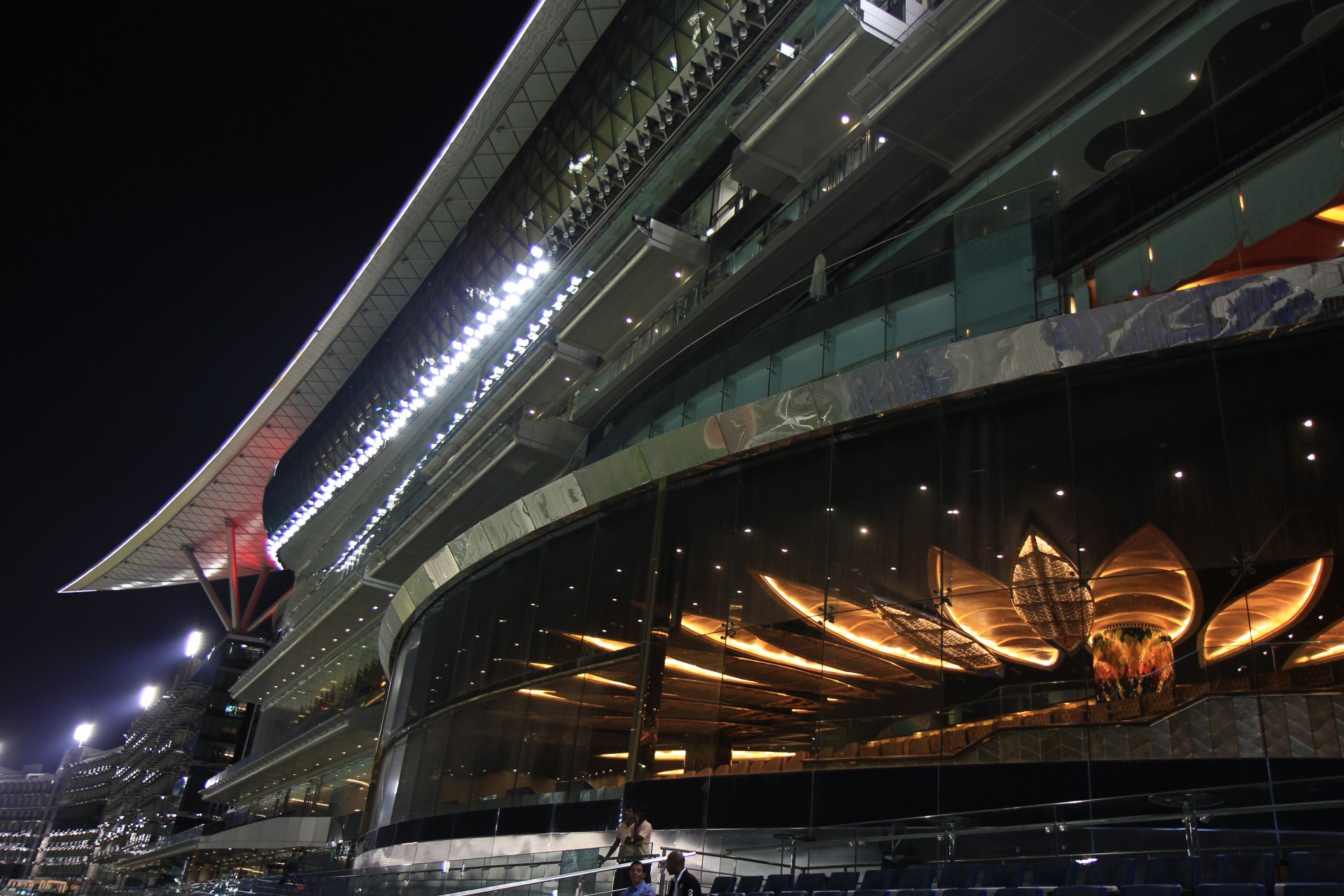
A free zone in Nad Al Sheba, built into the Meydan Grandstand complex beside Mohammed Bin Rashid Al Maktoum City — roughly fifteen minutes from Downtown, and far closer to the working city than Jebel Ali, RAKEZ or KEZAD.
The Ministry of Economy and Tourism classifies it as a mixed-use zone and describes its facilities as open-plan and fully serviced office space alongside residential and hospitality development. That is the most important fact on this page. Meydan is an office jurisdiction: no industrial estate behind it, no warehousing attached to it. Everything in the limitations section follows.
Who runs it
Meydan City Corporation, a public corporation of the Government of Dubai established by Law No. (5) of 2009 and amended in 2021 and 2024. It holds independent legal personality and its own financial and administrative capacity, and acts as incorporating authority, licensor and landlord.
Two consequences. Your counterparty is a government corporation, not a private operator — worth something in a market thick with intermediaries. And incorporation happens under Meydan's own companies and licensing regulations, not under Dubai's Department of Economy and Tourism, so a Meydan licence is a free zone licence in the full sense, with everything that implies about mainland trade.
A foreign founder can hold every share, with no Emirati partner or sponsor
Those same regulations settle ownership. A Meydan company can be 100% foreign-owned from the day it is licensed: no UAE national shareholder, no local sponsor lending a name, no nominee holding shares on anyone's behalf. Meydan states full ownership as the standing position for the companies it licenses, and the Ministry of Economy and Tourism lists full foreign ownership among the terms of the country's free zones. Shareholders can be individuals or companies — the attested documents in step four of the setup sequence are the price of a corporate one — and control sits with whoever holds the shares: who manages the company, and what happens to its profit. Fawri takes a single shareholder only, so founders with partners go the standard route.
Be exact about what that buys. It does not make the owners invisible: the individuals behind the shares are filed with Meydan under the beneficial ownership rules set out below, and a bank traces the chain to a named person before it opens an account. And it no longer separates Meydan from the mainland. Federal Decree-Law No. (26) of 2020 opened most onshore activities to full foreign ownership, a position the current Commercial Companies Law, Federal Decree-Law No. (32) of 2021, carries forward, while the activities listed as having strategic impact under Cabinet Resolution No. (55) of 2021 stay outside it. The reasons to choose Meydan are its price and its speed, and the reasons to avoid it are further down this page; ownership belongs on neither list. Which free zone benefits survived the reforms sorts the rest of the usual brochure the same way.
What it genuinely suits
- Consultancy and professional services billing outside the UAE — management, marketing, IT, engineering design, training, recruitment.
- E-commerce and digital products, where stock never needs a UAE warehouse: drop-shipped, handled by a mainland third-party logistics provider, or intangible.
- Holding structures for shares, IP or overseas subsidiaries.
- Founders needing residency quickly while the operating business sits elsewhere.
- Testing a market. The cost of being wrong here is low — a legitimate reason to choose it.
Licence types and the activity envelope
Meydan issues a free zone LLC licence covering up to three activity groups from a list the zone publishes as exceeding 2,500 activities. The categories are conventional — commercial and trading, professional and consultancy, e-commerce, media, holding company — and combine inside the three-group allowance, so one licence can consult, sell online and trade.
Two routes: the standard licence, issued in one to three working days, and Fawri, an instant licence for a single shareholder issued in under sixty minutes from a narrower list.
What Meydan cannot licence matters more. Banking, insurance and capital markets activity is reserved to DIFC and ADGM under their own regulators. Virtual asset services in Dubai sit with VARA. Anything needing a production, storage or clinical facility is out by definition. Check the activity first and the zone second — the reverse sequence is the most expensive error in free zone formation.
Either counter issues the same free zone LLC licence: the standard route in one to three working days at AED 12,500 with a flexi-desk, Fawri in under sixty minutes at AED 15,000 from a narrower list and for a single shareholder only.
The setup sequence
- Activity selection. What the business actually does, in three groups. Not what sounds broadest.
- Trade name reservation. Names implying regulated activity or government association are refused.
- Package and visa allocation — priced separately, and not retroactively cheap.
- Shareholder documents. Passports and proof of address; for a corporate shareholder, attested constitutional documents from home — the step that adds weeks when left late.
- Licence issue and flexi-desk lease, which together open the immigration file.
- Establishment card, then entry permit, medical, Emirates ID and stamping.
- Corporate bank account. Start immediately; it is the long pole.
- Enrolment with the Federal Tax Authority within three months of incorporation.
What it costs
The figures below are Meydan's own published rates as at August 2026. Authority fees change without notice and packages are restructured regularly — treat every number as indicative and confirm it with the zone on the day you commit.
So the licence is AED 12,500 with a flexi-desk or AED 15,000 through Fawri; each activity past the third adds AED 1,000; an allocation is AED 1,850, against a first investor visa near AED 7,850, employee visas from AED 3,500 and dependants near AED 6,000; and premises run from a dedicated desk at AED 3,500 a month to a shared office at AED 15,000 a year or a private office at AED 30,000, with up to 15% off a multi-year term.
Two worked examples — arithmetic on those published rates, not quotations. A solo consultant with one visa and a flexi-desk lands near AED 20,000–21,000 in year one. Two founders and two employees in a shared office land near AED 50,000–55,000.
No package price includes accounting and audit, VAT compliance, attestation of foreign corporate documents, or renewal — which is not always priced as the first year was. If you want a second published rate card to read this one against, the DUQE profile lays out the same arithmetic for another Dubai zone.
Visas and how allocation works
A Meydan licence carries no visas by default. Allocation is bought at roughly AED 1,850 each, up to a ceiling of six per licence.
Unusually transparent — most zones bundle a quota and let you discover the limit later — but six is the wall. A business expecting ten UAE employees within two years should not incorporate here, because the remedy is not an upgrade, and federal company law gives no general route from one UAE free zone to another: whether a company can move depends on both zones' own rules. Where they do not provide for it, you incorporate elsewhere, move the visas, open a new bank account and wind the first company down. Where headcount is the deciding variable, read the IFZA profile against this one before committing to either.
Allocation is also independent of premises. Upgrading from a flexi-desk to a private office buys space and credibility. It does not buy a seventh visa.
The first six allocations cost roughly AED 1,850 each and are bought independently of premises; a seventh has no price at all, because the ceiling is six per licence and the remedy is a new company in another zone rather than a bigger office.
Premises: the flexi-desk and what it commits you to
The included flexi-desk is an official address plus shared workspace access. It satisfies the zone. It is not, by itself, a persuasive answer to a bank asking where the business operates, nor a strong substance position for corporate tax.
Upgrades run from a dedicated desk to shared and private offices. What does not exist at any price: warehousing, cold storage, industrial units, land, workshop or laboratory space, retail frontage.
Those four words — at any price — are the test worth applying to this zone generally. Meydan's limits divide cleanly into the ones its rate card removes and the ones no cheque touches, and almost every founder who ends up in the wrong place here assumed the whole list was the first kind. Ranked by how far outside the zone the remedy has to travel:
The first two rungs are pricing questions and belong in a quotation. The last four are incorporation questions and belong in the decision you make before anyone quotes you.
Reaching mainland customers
Executive Council Resolution No. (11) of 2025 changed the architecture in Dubai. Free zone establishments — other than financial firms licensed in DIFC (Article 2) — may now operate inside the emirate through one of three routes under Article 4: a branch licensed by the Department of Economy and Tourism within the emirate, a branch licensed to operate out of the free zone, or a permit for specific activities valid up to six months (Article 7).
Read the conditions before treating this as solved. It needs your licensing authority's prior approval and the competent authority's approval for the activity, not every activity code has been approved, and Article 3(b)(2) requires separate financial records for activity outside the zone. Establishments already trading on the mainland got a one-year grace period to regularise, extendable once (Article 13).
There is a tax consequence people miss: mainland-derived income is not qualifying income. Trade enough on the mainland and you do not lose 0% on that slice — you lose it on everything.
Banking reality
Meydan markets banking support, routes completed files to several partner institutions at once, and offers an in-house IBAN facility. Its published partnerships include Dubai Islamic Bank, Abu Dhabi Islamic Bank and Bank of Baroda.
Two qualifications. An IBAN from a payment institution is not a corporate bank account — it moves money, but may not give you a cheque book, trade finance, or a correspondent relationship that clears USD comfortably. And no free zone approves accounts; banks do. The zone's speed is exactly what slows a compliance officer down: a company incorporated in an hour, at an address shared with a very large number of others, no local staff, projected turnover in the millions, is a file that gets read twice.
Applications fail for the usual reasons — activity that does not match the described business, no visible substance, unexplained source of funds, counterparty geography the bank has exited, or an ownership chain that never resolves to a person. Preparation is covered in banking advisory.
What follows the licence
Corporate tax. Every Meydan company must enrol with the Federal Tax Authority whether or not it will pay tax. Under FTA Decision No. 3 of 2024, a company incorporated on or after 1 March 2024 has three months from incorporation to file its corporate tax enrolment with the FTA. Missing it costs AED 10,000.
The 0% question. Meydan companies are not exempt. A Qualifying Free Zone Person may access 0% on qualifying income, and the FTA's Free Zone Persons guide (CTGFZP1, May 2024) requires adequate substance — core income-generating activity in the zone, adequate assets, qualified full-time employees, adequate operating expenditure. Non-qualifying revenue above the de minimis threshold — the lower of 5% of revenue or AED 5 million — forfeits QFZP status for the current tax period and the four that follow.
The trade-off worth modelling. Small Business Relief under Ministerial Decision No. 73 of 2023 treats a resident person with revenue at or below AED 3 million as having no taxable income — but it is not available to a Qualifying Free Zone Person. Its sunset was 31 December 2026, and Ministerial Decision No. 131 of 2026, issued 29 July 2026, extended it to tax periods ending on or before 31 December 2029, threshold unchanged. For many small Meydan companies that is the cleaner answer today, rather than a strained QFZP claim.
Your own salary and dividends. Every rule above applies to the company. There is no personal income tax in the UAE, and that is true of the whole country rather than something Meydan confers: the owner of a mainland company is in exactly the same position. A salary the company pays you counts as wages, and a dividend on shares you hold in your own name counts as personal investment income. The FTA treats neither as a business activity of yours, so neither produces a UAE tax bill in your name. Descriptions of Meydan that list this as a zone exemption granted for a fixed period, alongside "no corporate tax", have both halves wrong — corporate tax applies as set out above, and the personal position was never the zone's to grant or to withdraw. What the UAE actually gives you explains why the absence of a tax is a different thing from an exemption.
The limit sits at home rather than here. The country you came from may still tax the same salary or dividend — because it still treats you as resident, or because it taxes its citizens wherever they live — and a Meydan licence changes neither. UAE tax residency and what your home country still taxes sets out how each test is applied.
VAT. Meydan is not a Designated Zone under Cabinet Decision No. 59 of 2017 — that schedule is confined to fenced, customs-controlled areas, which the Grandstand offices are not. Supplies are treated as made in the UAE, with the standard AED 375,000 mandatory threshold applying as it would to a mainland company. Any adviser claiming a Meydan licence brings customs-suspension benefits is wrong.
Economic substance. ESR notifications and reports were discontinued for financial years beginning on or after 1 January 2023 by Cabinet Decision No. 98 of 2024, and related penalties for those years cancelled. Obligations survive only for FY2019–FY2022. Do not pay anyone to file one.
Beneficial ownership. Cabinet Decision No. (109) of 2023 requires records of beneficial owners, shareholders and, where relevant, nominee directors, filed with the licensing authority and updated within 15 days of any change. Penalties escalate to licence suspension.
AML. If your activity falls within a designated non-financial business or profession category, goAML enrolment and a full AML programme follow. Settle that at activity selection, not after the first notice.
Meydan's own law is Law No. (5) of 2009, and almost everything a licence here now answers to arrived afterwards: the Designated Zone schedule in 2017, full foreign ownership in 2020, the Commercial Companies Law in 2021, beneficial ownership and Small Business Relief in 2023, three months to file corporate tax enrolment for companies incorporated from 1 March 2024, the end of economic substance filings the same year, Dubai's three mainland routes in 2025, and Small Business Relief extended to tax periods ending on or before 31 December 2029.
Where Meydan is the wrong choice
We would rather lose the mandate than place a client here badly. Choose elsewhere if any of the following is true.
You touch physical goods. No warehouse, no yard, no cold storage, no light industrial unit, at any price. If you import, hold and distribute stock, look at JAFZA, RAKEZ, KEZAD or DAFZA and stop reading here.
You need Designated Zone treatment. Meydan gives you no customs advantage a mainland company does not also have.
Your activity is financially regulated. Banking, insurance, asset management, payment services and virtual assets are DIFC, ADGM or VARA questions. Meydan is not a route to them.
Your substance is thin and your margins are fat. A one-person company at a shared desk whose founder works from a home office in Business Bay has a weak claim to adequate substance under CTGFZP1. If the 0% rate is load-bearing in your model, build real substance or choose a structure where the claim is defensible.
You will exceed six visas. The ceiling is hard and the remedy is a new company in a new zone.
You sell to consumers face to face. No retail frontage, no walk-in trade.
Your buyers are institutional. Procurement and compliance teams at large corporates, listed counterparties and some banks apply extra diligence to shared-address free zone entities. If you are raising money or bidding for enterprise contracts, a DMCC or DIFC address does measurable work that a Meydan address does not.
You want to sit inside an industry cluster. Meydan's community is broad rather than sectoral. You get an address, not adjacency to your customers and suppliers.
You are in a hurry. The counter-intuitive one. Fawri's sixty minutes is impressive engineering, and almost every expensive mistake we are asked to unwind began with a wrong activity code chosen quickly. Spend a week on the activity and an hour on the licence.
How it compares to the nearest alternatives
Tell us what the business does
Not which zone you have been quoted for. Describe the activity, the customers and the headcount, and we will tell you whether Meydan fits — and say so plainly when it does not.
Compare the free zones · Free zone company formation · Banking advisory
Provenance
How this record is verified.
Everything above is re-checked against Meydan Free Zone, Dubai’s own current published material and against the federal rules before any application is filed. Where the two disagree, the authority wins and we tell you.
Frequently asked questions
Can a foreign founder own all of a Meydan company?
Yes, from the day it is licensed: no UAE national shareholder, no local sponsor lending a name, no nominee holding shares on anyone's behalf, and shareholders can be individuals or companies. Be exact about what that buys, though. It does not make the owners invisible — the individuals behind the shares are filed with Meydan under the beneficial ownership rules, and a bank traces the chain to a named person before it opens an account. And it no longer separates Meydan from the mainland, where most onshore activities are open to full foreign ownership too.
How fast is a Meydan licence, and is fast an advantage?
Fawri issues an instant licence to a single shareholder in under sixty minutes from a narrower activity list, and the standard route runs one to three working days. That speed is real, and it is also the thing most likely to cost you money, because a licence issued in sixty minutes is one whose activity codes, legal form and visa count were decided in sixty minutes. Almost every expensive mistake we are asked to unwind began with a wrong activity code chosen quickly. Spend a week on the activity and an hour on the licence.
What does the included flexi-desk actually give me?
An official address plus shared workspace access. It satisfies the zone. It is not, by itself, a persuasive answer to a bank asking where the business operates, nor a strong substance position for corporate tax. Upgrades run from a dedicated desk through shared to private offices, and they buy space and credibility rather than quota. What does not exist here at any price: warehousing, cold storage, industrial units, land, workshop or laboratory space, retail frontage.
How many visas can one Meydan licence carry?
Six, and the ceiling is hard. A licence carries none by default; allocation is bought at roughly AED 1,850 each up to that maximum, which is unusually transparent, since most zones bundle a quota and let you discover the limit later. Allocation is also independent of premises, so upgrading from a flexi-desk to a private office does not buy a seventh visa. A business expecting ten UAE employees within two years should not incorporate here, because the remedy is a new company rather than an upgrade.
Can I sell to mainland Dubai customers from Meydan?
Through a route, and with conditions attached. Executive Council Resolution No. (11) of 2025 lets a Dubai free zone establishment operate inside the emirate by a branch licensed by the Department of Economy and Tourism, a branch licensed to operate out of the free zone, or a permit for specific activities valid up to six months. Each needs your licensing authority's prior approval and the competent authority's approval for the activity, not every activity code has been approved, and separate financial records are required. Mainland-derived income is also not qualifying income.
Should I claim the free zone 0%, or Small Business Relief?
Model both rather than defaulting to the 0%. Qualifying Free Zone Person status needs adequate substance — core income-generating activity in the zone, adequate assets, qualified full-time employees, adequate operating expenditure — and non-qualifying revenue above the lower of 5% of revenue or AED 5 million forfeits the status for the current tax period and the four that follow. Small Business Relief treats revenue at or below AED 3 million as producing no taxable income and is closed to a Qualifying Free Zone Person, so for many small companies here it is the cleaner answer. It also has an end date, which makes it a plan rather than a default.
Begin with a clear conversation
Tell us what you intend to build.
A consultant will map the structure, jurisdiction, approvals and likely cost against what you actually described — not against a package.
