
Activity CZ 122
How to Setup a Wool and Animal Hair Trading Business in Dubai
Wool and animal hair is a graded fibre trade, not a commodity sold by the tonne. What greasy and scoured do to your price, and why the buyer at the far end is a spinner or a felt maker.
ConsultZone licensing desk
- Activity code
- CZ 122
- Category
- Trading
- Reviewed
- Read
- 7 min
Listen instead
44 seconds
An audio summary of this guide.
Topic summary
How to Setup a Wool and Animal Hair Trading Business in Dubai
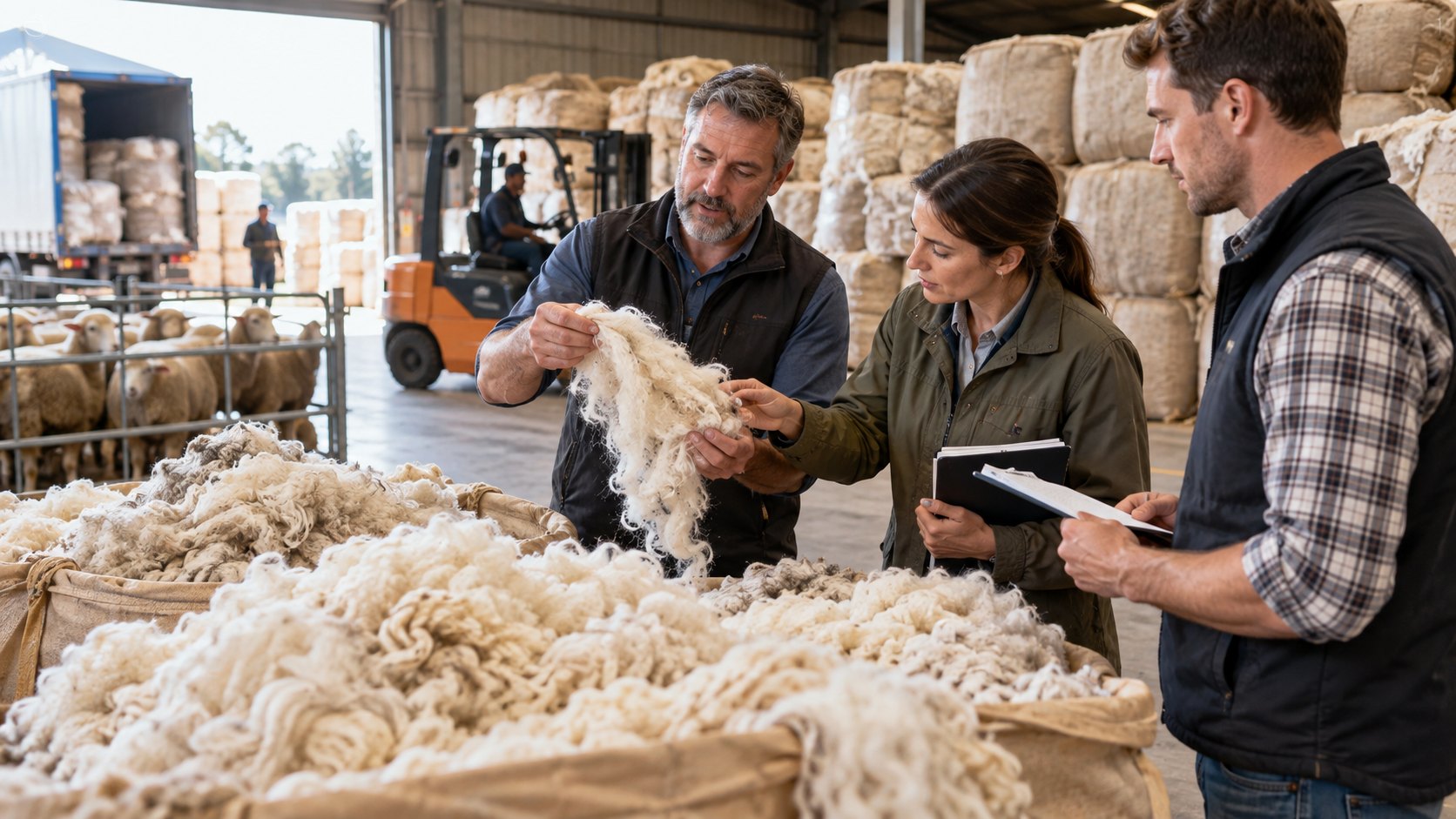
A bale of wool is not a quantity. It is a specification — a diameter measured in microns, a staple length in millimetres, a yield after washing, a colour, a strength, and a vegetable-matter content. Two bales of identical weight from the same country can differ in value by a multiple, and a trader who cannot read the difference is selling by the tonne into a market that buys by the micron.
That is the first thing to understand about this licence line, and it is what separates it from every other animal by-product trade in the catalogue. Bone is bone. Hide is graded, but coarsely. Fibre is graded finely, continuously, and by instruments, because the mill at the far end is buying a spinning input whose behaviour on the machine is predictable from the numbers on the bale ticket. Get the grading right and you have a repeatable business with a technical moat. Get it wrong and you are the cheapest supplier of the wrong thing.
The UAE's role in it is as a trading and transit market rather than a producing one. Local production exists — sheep wool from the flocks, camel hair from herds across the Gulf, goat hair — but it is small relative to what moves through the country between producing regions and the mills of South and East Asia. The business most people are actually describing is buying fibre from one place, grading or having it cleaned, and selling it into a mill order somewhere else.
What the activity covers, and what the grade decides
Under this line you buy and sell animal fibre in its raw and semi-processed states: wool and hair as it comes off the animal, washed, and sorted. It stops before the fibre becomes yarn.
Greasy, and why the discount is not a bargain
Fibre straight off the animal carries lanolin, sweat, dust, sand, dung and plant matter. It is called greasy, and it is cheap because a material fraction of what you bought is not fibre at all. The number that matters is the clean yield — the proportion that survives washing — and it can vary enormously between clips from the same region. Buying greasy without a yield estimate is buying an unknown quantity of sand at the price of wool. Buying greasy with a reliable yield estimate is where a knowledgeable trader makes the spread, because the market prices uncertainty and the trader has removed it.
Scoured, and what you are paying the extra for
Scoured fibre has been washed of grease and dirt. It weighs less, costs more per kilo, ships better and is what a mill closer to the machine wants to buy. It also has a shorter shelf life in a humid climate and is more easily damaged by poor storage. The choice between trading greasy and trading scoured is a choice about where in the chain you want to hold the risk.
The grade itself
Three measurements do most of the work. Fibre diameter, in microns, is the single biggest price driver — finer fibre spins into finer cloth and commands a premium that is not linear. Staple length determines what can be spun at all, and short fibre falls out of the worsted chain entirely. Strength decides whether the staple survives combing. After those come colour, brightness, crimp and contamination, and on the coarser end the presence of coarse guard hair mixed into a fine undercoat.
The seasonality is a shearing calendar
Supply is not continuous. Fibre arrives in clips after shearing, combing or moulting, in a pattern set by the animal and the climate rather than by demand. A trader with storage can buy through the clip and sell through the year; a trader without it is a spot buyer competing at the worst moment.
The buyer is a spinner or a felt maker, and each wants a different fibre
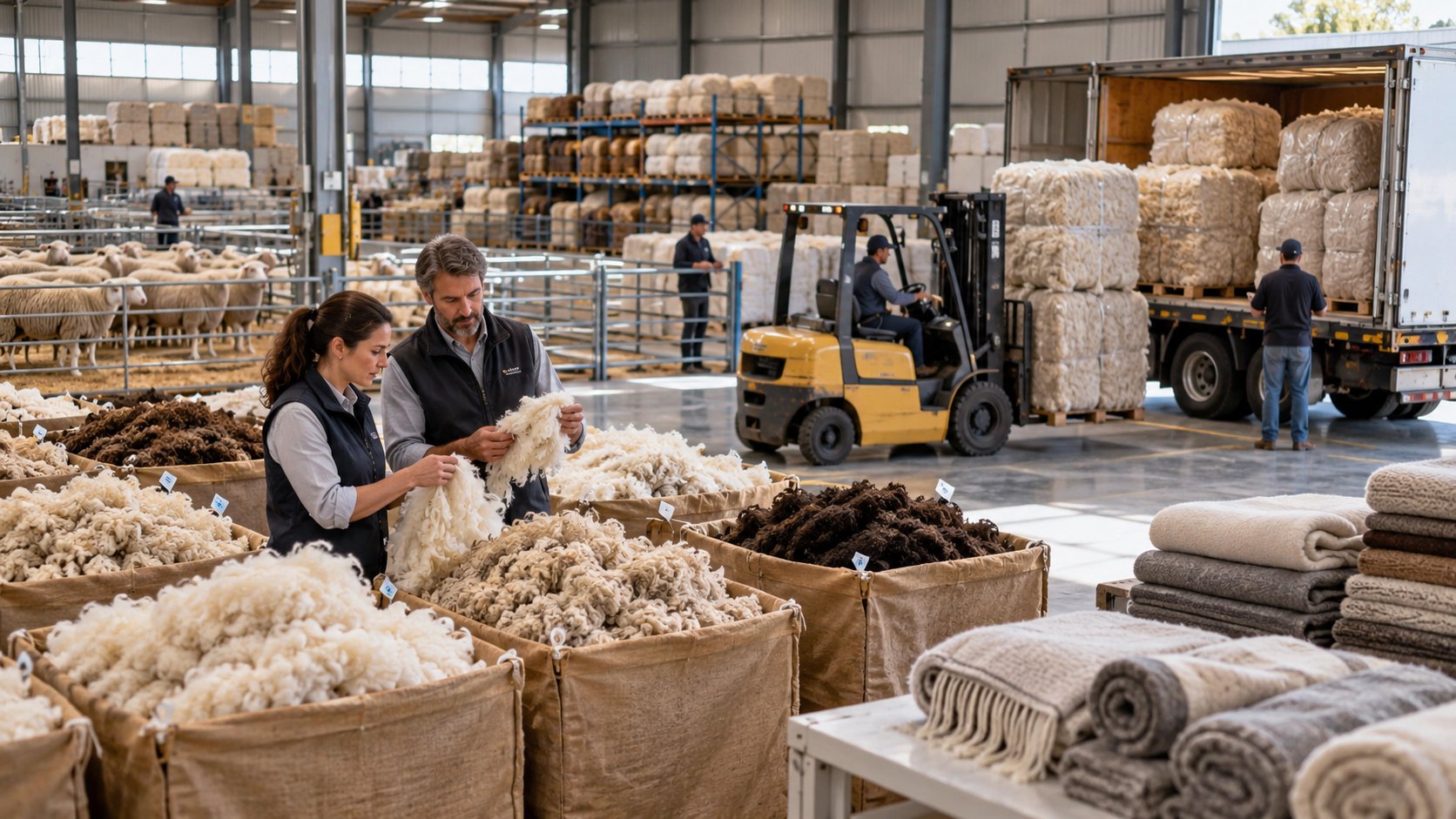
The three fibre families under this activity behave so differently that they are effectively three businesses sharing a licence.
| Sheep wool | Camel hair | Goat hair | |
|---|---|---|---|
| Who buys it | Carpet, blanket and felt mills | Fine coat and suiting weavers | Rug mills and yarn blenders |
| What sets the price | Diameter and staple length | Colour, and the fine down beneath the coat | Lustre, and how clean the pull is |
| How it arrives from the seller | Greasy, in pressed bales | Combed or plucked, in small lots | Mixed with coarse guard hair |
| What has to come out of it | Grease, sand and vegetable matter | The coarse outer hair | Guard hair, and it is slow work |
| Where the volume sits | Imported and traded onward | Regional and seasonal | Imported and thinly traded |
The middle row is the commercial one. How the fibre arrives decides how much work stands between your purchase and a mill order, and that work is either a cost you carry or a discount you accept.
The route to those buyers is narrow and personal. Spinning mills and felt manufacturers buy on specification and on trust, in repeat orders, from a shortlist of suppliers who have not disappointed them. Breaking into that list takes a first consignment that matches its ticket exactly, which is why the grading discipline is the business development strategy. Carpet and felt mills are the most forgiving entry point because they take coarser grades and larger lots. Fine worsted buyers are the most demanding and the most valuable, and camel down is the clearest local opportunity in that direction — a regional fibre with a genuine premium at the fine end, held back mainly by inconsistent collection and sorting rather than by demand.
Conditions that attach to the goods
Wool and hair is an animal product, and that is the whole of the regulatory story on this line. It is cleared on a product basis with veterinary involvement, because raw fibre can carry pathogens off the animal and out of its country of origin. The control attaches to the consignment, not to the company.
Two consequences follow for how you run the business. The first is that a consignment can be held at the border on grounds that have nothing to do with your commercial file, so the health documentation travelling with the goods is part of the trade rather than paperwork behind it. The second is that greasy fibre and scoured fibre are not treated identically, because washing changes the risk — which is another reason the greasy-or-scoured decision is a structural one rather than a price one.
Federally, the Ministry of Climate Change and Environment is the authority for animal health and animal products.¹ Inside Abu Dhabi that ground belongs to the Abu Dhabi Agriculture and Food Safety Authority.² Dubai Customs holds the import and export position, the customs code and the restricted-goods list at the border.³ Premises conditions for storing bales — and they are real conditions, because raw fibre is a fire load, attracts pests and spoils when damp — sit with the municipality.⁴ Dubai Civil Defence has the fire-safety view on a warehouse holding pressed bales at volume.⁵
What each of those bodies asks for depends on the species, the origin country, the state of the fibre and the emirate, and it is confirmed for the specific consignment and the specific warehouse before a purchase is committed. That is the part ConsultZone establishes first, because fibre stopped at a border is fibre accruing storage charges against a mill order with a delivery date on it.
Where this is the wrong purchase. If the plan is to wash, card, comb, spin or felt the fibre, this is a trading licence and the plan is manufacturing — a different activity with a site and a set of conditions this line does not carry. If the plan is to buy finished yarn or cloth, that is a textile trade. And if the plan is to shear your own animals, the fibre is an output of a production activity and the trading line is not what makes it saleable.
References
- Ministry of Climate Change and Environment — the federal authority for animal health and animal products, including raw wool and hair. Ministry of Climate Change and Environment
- Abu Dhabi Agriculture and Food Safety Authority — animal health and animal-product conditions inside Abu Dhabi. Abu Dhabi Agriculture and Food Safety Authority
- Dubai Customs — import and export of animal products, customs codes and the restricted goods position. Dubai Customs
- Dubai Municipality — premises suitability, storage and public health conditions for holding raw animal fibre in Dubai. Dubai Municipality
- Dubai Civil Defence — fire safety approvals for warehousing a combustible baled commodity. Dubai Civil Defence
Elsewhere in Trading
Activities that sit beside this one
Most licences carry more than one activity. Adding a neighbouring line at the application stage costs a fraction of amending the licence afterwards.
Begin with a clear conversation
Tell us what you intend to build.
A consultant will map the structure, jurisdiction, approvals and likely cost against what you actually described — not against a package.
