
Activity CZ 126
How to Start a Fruit and Vegetable Wholesale Business in Dubai
Fruit and vegetable wholesale is a perishability business. The price moves every morning, waste is a line item rather than an accident, and grading decides which buyer takes the box.
ConsultZone licensing desk
- Activity code
- CZ 126
- Category
- Trading
- Reviewed
- Read
- 8 min
Listen instead
41 seconds
An audio summary of this guide.
Topic summary
How to Start a Fruit and Vegetable Wholesale Business in Dubai
Two numbers decide whether a produce wholesaler made money this week: what the market paid on the morning he bought, and how much of the load went into the bin instead of onto a shelf. Everything else in this trade — the buying, the grading, the cold rooms, the delivery rounds, the choice of buyer — exists to move those two numbers in the right direction.
That is what separates this line from the dry-goods trades beside it. A case of tinned tomatoes is worth the same next month. A case of tomatoes is worth less by Thursday and worth nothing by the following week, and no discount rescues it after that point. The stock is depreciating in the warehouse while you are still on the phone about it. Anyone entering produce wholesale from a background in ambient groceries has to unlearn the habit of holding inventory, because here holding is the expense.
Volume, though, is not the problem. The UAE grows a minority of the fresh produce it consumes and brings the rest in, which is why the ports and the airport are the real infrastructure of this trade and why the market is deep enough to support a large number of operators of very different sizes. The demand is there every day of the year. Making a margin out of it is the skill.
The line covers produce that is still produce
Under this activity you buy, import, hold and sell fresh fruit and vegetables in bulk to other businesses. The boundary is easy to state and worth stating: the goods are unprocessed. Washing, sorting, grading, packing and chilling are handling, and they belong here. Cooking, pickling, freezing into a retail product, juicing, drying or canning are processing, and they do not — those produce a manufactured food, made by a manufacturer, with a manufacturer's obligations attached.
Ripening sits on the edge of that line and comes up often, because several of the highest-volume fruits are shipped unripe on purpose and brought on under controlled conditions before release. Serious operators have the rooms for it. It is worth settling in writing with the licensing authority whether the intended handling is inside the trading activity, before the fit-out rather than after it.
Grading is the whole commercial conversation
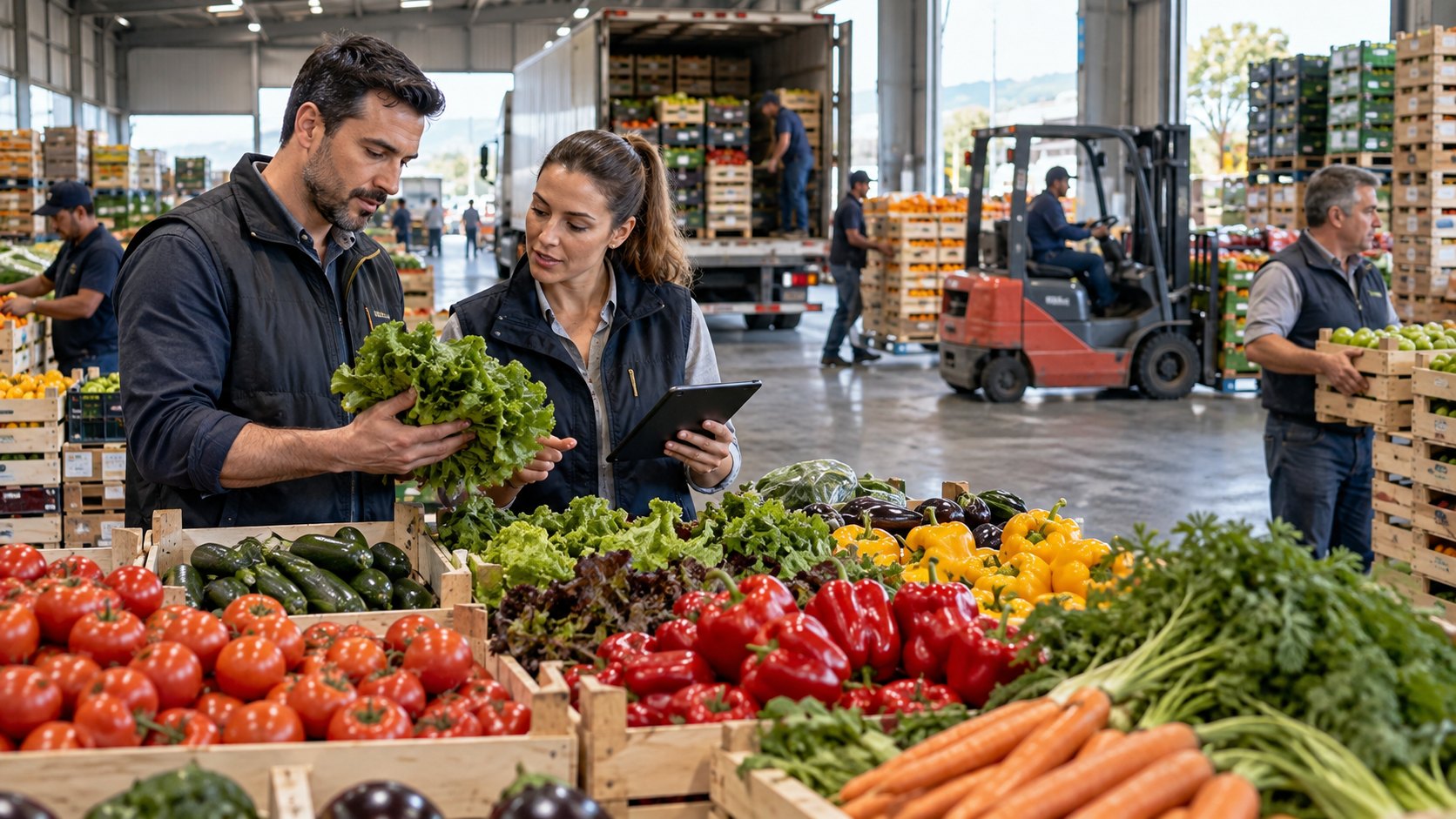
Produce does not have one price; it has a price per grade. Size, colour, firmness, uniformity, count per box and how much visible blemish a buyer will accept are the variables, and the same pallet can contain three grades that go to three different customers at three different prices. A wholesaler who grades carefully sells the top of the load at a premium and finds a home for the tail. A wholesaler who does not sells the whole load at the price of its worst box, and that single habit is the difference between the operators who last and the ones who do not.
Waste follows directly from it. In this trade waste is a budgeted line, not an accident and not a sign of failure: some proportion of every load will not be sellable, and a business plan that assumes otherwise is not a plan. The discipline is to know the number, price it into the buying, and reduce it by turning stock faster rather than by pretending it is zero.
Four buyers, and the route to each one is different
The central market floor
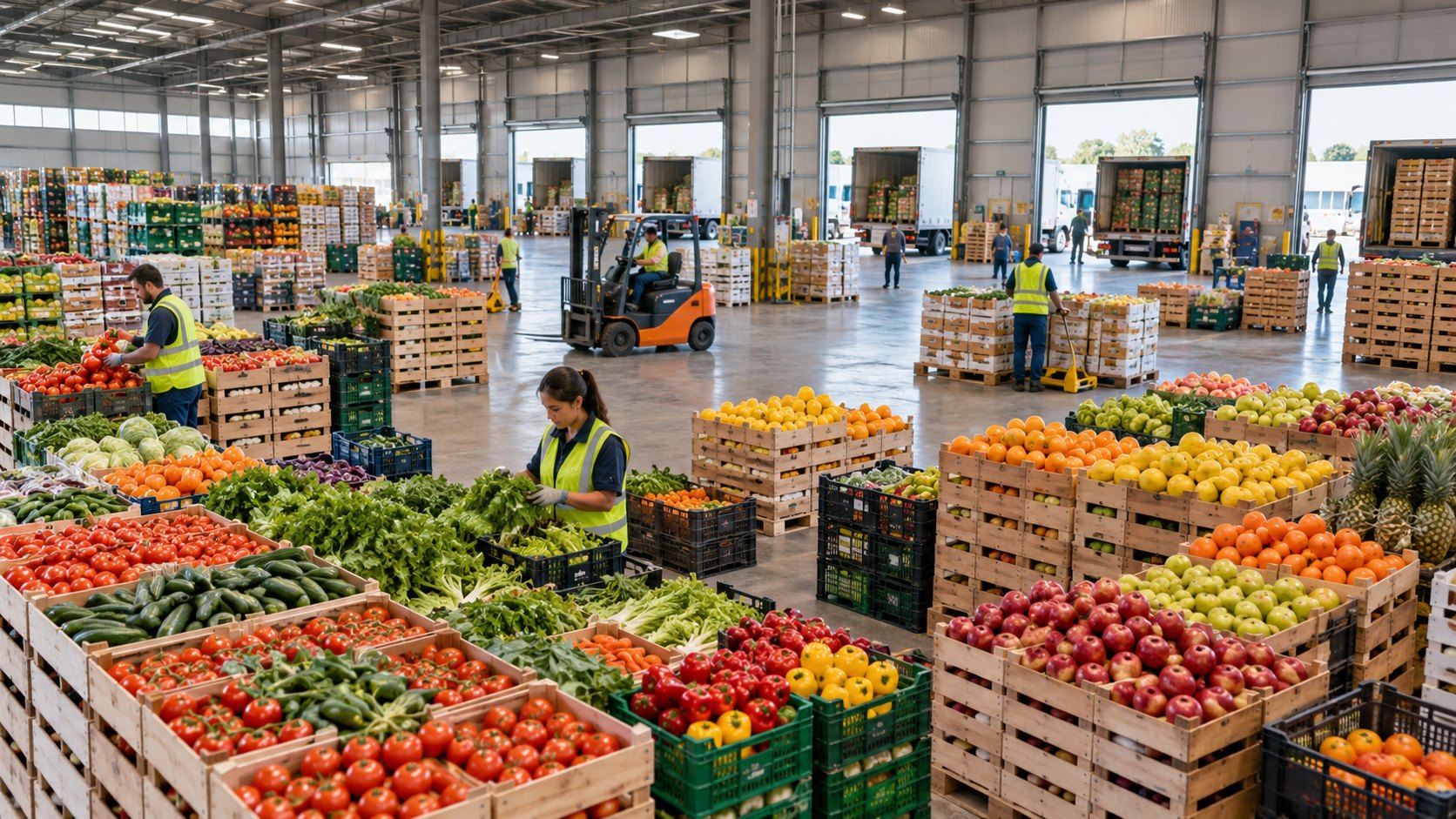
The emirate's central fruit and vegetable market is where a large share of this trade actually happens: buying and selling in the early hours, in cash or on short terms, at a price set that morning by what arrived and who needs it. It is the fastest way into the business and the most competitive, because everyone on the floor sees the same goods at the same time. Margin comes from judgement and speed, not from exclusivity.
Supermarkets and retail chains
A different business with the same goods. Retail buyers want a specification, a volume commitment, a delivery window and consistency week after week — and they want the paperwork behind it. Winning a listing is slow, holding it is demanding, and the payment terms are theirs rather than yours. In exchange you get predictable offtake, which is the one thing the market floor cannot give.
Hotels, caterers and restaurants
The margin end. Chefs buy smaller quantities of higher grades, order late, change their minds, and pay for reliability and presentation more than for price. Service is the product: an early delivery, in good condition, with the substitution agreed in advance rather than discovered at the door. This is the channel where air-freighted and out-of-season lines earn their cost.
Re-export and onward trade
Produce that lands here and leaves again for the region without entering the UAE retail market. It is a logistics and handling business rather than a selling one, the goods may never be broken down, and the structural question — whether the company sits on the mainland or in a free zone — is decided here rather than anywhere else, because it turns on whether the goods are going to be sold into the UAE at all.
Where the produce comes from decides who you can serve
Those four buyers are not reachable from the same supply line, which is the practical reason sourcing gets decided first. Sea freight in refrigerated containers is how volume lines reach a retail listing at a workable cost. Air freight is how a chef gets a soft fruit that cannot survive three weeks at sea. The market floor is how a small operator serves grocers and restaurants without tying up capital. Most established wholesalers run several of these at once, deliberately, and weigh them against the same two questions.
six ways to source, weighed on price against risk
What it givesWhat it costs
- Buying on the central market floor each morningToday's price, today's quality, no clearance exposureThe price you paid is the price everybody paid, so the margin is thin
- Importing by sea in refrigerated containersThe lowest landed cost on anything that travels wellWeeks between paying and selling, and one container arrives at one grade
- Air-freighting premium and out-of-season linesA price the local market cannot compare you againstFreight that can exceed the value of the fruit, charged whether it sells or not
- Contracting a grower for the seasonSupply secured to a written specificationThe obligation runs both ways when the market falls below it
- Holding cold storage of your ownDays of headroom when the price moves against youA cost that arrives every month, full or empty
- Selling into retail on consignmentVolume, and shelf space you could not otherwise holdWaste charged back to you, and payment arriving late
The conditions travel with the produce, not with the company
The licence is issued to the company once. The conditions that matter in this trade attach to each consignment, and they arrive with it.
Fresh produce entering the country is assessed per consignment rather than per trader. Plant-health certification is assembled in the country of origin and travels with the goods, and the receiving side decides whether it is satisfied — including on the question of residues, which is checked here rather than taken on trust. The consequence for a produce importer is sharper than for almost any other food trade: there is no time. A consignment held for checking is a consignment losing value every hour, and a consignment rejected is very close to a total loss, because it cannot be warehoused while somebody argues about it. Operators who import at volume therefore treat the origin paperwork as part of the purchase rather than as an administrative afterthought, and they buy from growers and packhouses who have done it before.
Temperature is the other condition that follows the goods. Chilled produce needs the cold chain held from the packhouse through the vessel or aircraft, through the store, into the vehicle and up to the buyer's door — and a break anywhere in that sequence cannot be undone by cooling the pallet down again. That requirement reaches the store, the cold rooms and the delivery fleet, and it is what the inspecting authority looks at on the premises side.
Traceability closes it. The useful question is where a batch came from and where it went, answerable from records rather than from memory, so that a problem reaches only the pallets it affects.
What the approvals are in detail, which of them apply to a particular store or vehicle, and what the licence costs to hold depends on the emirate, the premises and the range — and on whether the goods are entering the UAE market or passing through it. Those are the points ConsultZone confirms for a specific case, because the conditions and the wording differ between authorities and on this activity the difference changes the business model.
Where this is the wrong purchase. If the plan is a fruit shop or a market stall selling to the public, that is retail. If the plan is juice, jam, frozen vegetables or cut-and-washed salad in a retail pack, that is food production, and it will be assessed as manufacturing however fresh the input was.
References
- Dubai Municipality — food control, store and vehicle suitability, and public health conditions in Dubai. Dubai Municipality
- Ministry of Climate Change and Environment — the federal remit for agriculture, plant health and food security. Ministry of Climate Change and Environment
- Abu Dhabi Agriculture and Food Safety Authority — agriculture and food safety matters within Abu Dhabi. Abu Dhabi Agriculture and Food Safety Authority
- Dubai Customs — import, export and re-export, customs codes and restricted goods. Dubai Customs
- UAE Government portal — national food security strategy and general government information. UAE Government portal
Elsewhere in Trading
Activities that sit beside this one
Most licences carry more than one activity. Adding a neighbouring line at the application stage costs a fraction of amending the licence afterwards.
Begin with a clear conversation
Tell us what you intend to build.
A consultant will map the structure, jurisdiction, approvals and likely cost against what you actually described — not against a package.
