
Activity CZ 124
How to Start a Bird Trading Business in Dubai
Birds trading is three markets under one line: poultry as production stock, cage birds as pets, and falcons. What the licence permits, and why the premises decide it.
ConsultZone licensing desk
- Activity code
- CZ 124
- Category
- Trading
- Reviewed
- Read
- 7 min
Listen instead
46 seconds
An audio summary of this guide.
Topic summary
How to Start a Bird Trading Business in Dubai
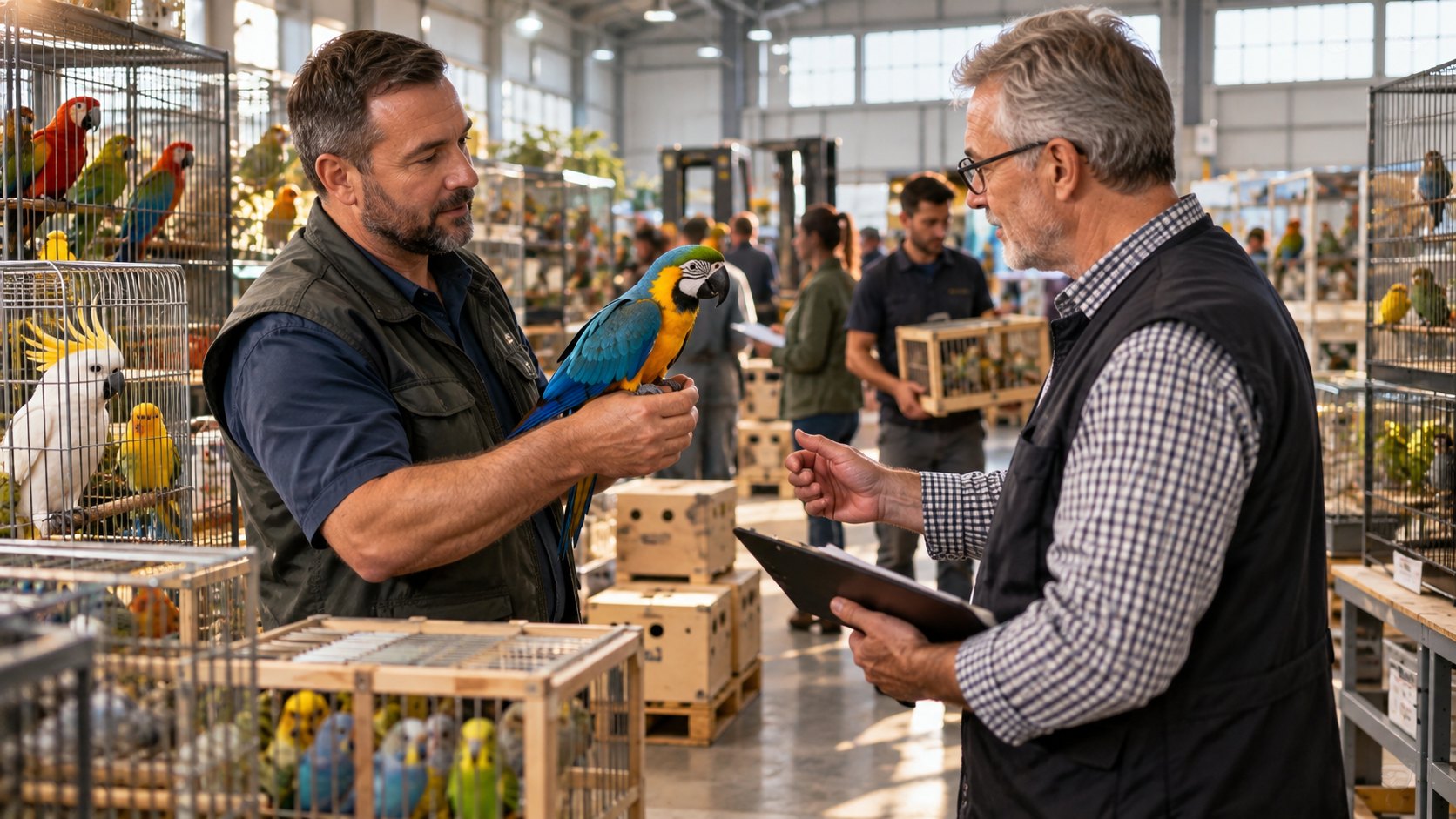
Three businesses answer to this one activity name and they have almost nothing in common. One sells day-old chicks and pullets by the thousand to farms, on a schedule, at a margin measured in fils. One sells a cockatiel to a family on a Friday afternoon and makes more on that single bird than the first business makes on a crate. The third sells falcons, at prices and to a clientele that neither of the other two would recognise, with a veterinary and documentary culture built up over generations around the hunting season.
The licence does not care which of the three you are in. Everything else does — the premises, the supplier relationships, the working capital, the staff and the failure modes. So the first useful thing anyone can do with this activity line is decide which of these markets is the actual plan, because a unit fitted out for one of them is close to useless for the other two.
The people who take this line are rarely in only one market
Poultry suppliers
The volume end. Day-old chicks, growing pullets, breeding stock and table-bird replacements sold to farms and to production operations. It is a logistics business with birds in it: the order is placed in advance, the delivery window is narrow, and the buyer is technical enough to inspect what arrives and reject it. The upside is repeat, scheduled offtake, which is rare in the pet trade. The downside is that the price is set by the market and not by you, and that your customer's own economics leave him no room to pay more.
Pet-trade retailers and breeders
Budgerigars, cockatiels, lovebirds, canaries, finches, parrots. Margin per bird is good, volumes are small, and the buying decision is made at the cage by somebody who has already fallen for a particular bird. That is a retail skill and a display skill, and it needs a unit the public can walk into. Breeders who move into trading do so because their own production cannot keep pace with what they can sell.
Falcon dealers, and the veterinary culture around them
A serious regional market with its own conventions. Buyers know bloodlines and condition in detail, the season concentrates demand into part of the year, and the standard of care expected around a valuable bird is closer to equine practice than to a pet shop. A falcon that travels carries documentation in its own name rather than as part of a shipment, and species that are protected under international wildlife-trade rules cannot be moved on the strength of a trading licence alone. Anyone entering this end of the market without an adviser who already works in it is taking a risk that has nothing to do with company structure.
Importers serving all three
The trade that sits behind the other three: bringing consignments in and selling on in small lots to shops, farms and dealers. It is the most capital-hungry version and the one where a single rejected consignment hurts most.
Where this is the wrong purchase. If the plan is to breed birds on your own land and sell the output, that is animal production, CZ 01, and this trading line will not carry it. If the plan is to board, groom or treat birds other people own, that is a service, not a trade in goods.
What the line permits, and the four things it does not
The line lets you buy, import, hold and sell live birds. That is the whole of it, and the boundaries are tighter than they look.
It does not let you treat them. Veterinary work on a bird belongs to a licensed practice and a licensed veterinarian, and the fact that valuable birds arrive needing attention does not change that. Serious dealers solve it with a relationship, not with a licence amendment.
It does not let you process them. Slaughter, dressing, chilling and packing are food production, and the goods that come out the other end are somebody else's activity line — CZ 130 for meat and meat products, CZ 128 for eggs and egg products. A bird sold live is a live bird; a bird sold as food is food, and the controls that attach to it are entirely different.
It does not let you feed the market around you. Fodder is CZ 117 and feed for pet animals is CZ 137. Shops that carry seed, grit and cages alongside the birds are carrying more than one activity, and that is a conversation to have before the licence is issued rather than after an inspection.
And it does not override species protection. Whether a particular parrot or raptor may be traded at all is decided by its listing under the international convention on trade in endangered species and by the conditions the UAE applies to listed species — not by what the licence says the company may sell. A trader who buys first and checks afterwards can end up holding stock that cannot lawfully move in either direction.
Live stock is a premises problem before it is a trading one
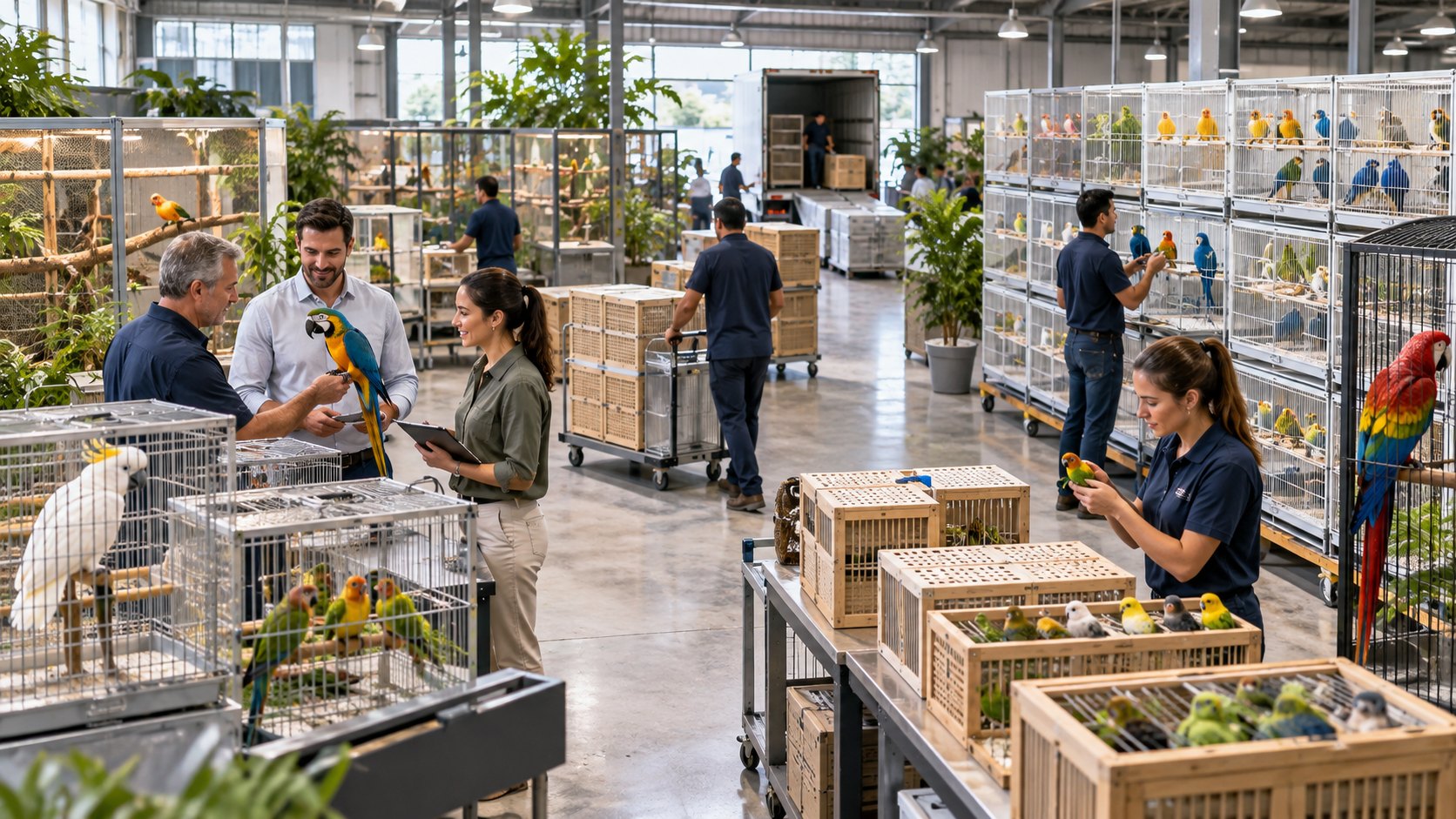
Almost every question about this activity that looks like a licensing question is a premises question wearing a licence's clothes. Birds are alive, they are noisy, they produce waste, they are vulnerable to each other and they cannot wait. A unit that cannot ventilate, cool, clean and isolate is a unit that will lose stock, and losing stock is the fastest way this business fails.
Newly arrived birds need somewhere to be kept apart from established stock before they join it. That is not an optional refinement; mixing an untested consignment into a full aviary is how one sick bird becomes forty. Ventilation and cooling matter more here than in almost any other trading line, because heat kills crated birds quickly and a delivery vehicle standing in the sun is a total loss in progress. Waste, cleaning and vermin control are what an inspector actually looks at, and they are also what a customer smells on the way in.
The premises class differs sharply by market, which is the practical version of the first section. A retail unit the public can enter, in a location with footfall, suits cage birds and suits nothing else. Poultry stock wants holding space, loading access and room for crates on industrial or agricultural land. Falcons want quiet, shade, perches and a clinical standard of hygiene. Take the unit that fits the market you actually chose, and let the site narrow the list of jurisdictions rather than the other way round — a free zone gives you a company and an address, and only some of them have anywhere to put living animals.
The other constraint that sits on the goods is disease status at the source. Movement of live birds follows the animal health position of the country they come from, and an avian influenza outbreak in a source market can close it with no notice and no warning to a trader who has already paid. The operators who survive that hold more than one source and do not have their whole season sitting in one consignment.
six ways in, weighed against the same two questions
What it givesWhat it costs
- Importing your own consignmentsChoice of bloodline, and the whole marginHealth paperwork on every shipment, and the mortality is yours
- Buying from a UAE importerSmall lots, and no clearance exposureA cut of the margin, and somebody else's choice of stock
- Keeping live birds on displayA walk-in sale can close the same afternoonFeed, cleaning and losses run daily whether anything sells
- Ordering against a customer's requestNo holding cost and no mortalityA deposit conversation on every sale, and a slower yes
- Adding falcons to a general bird tradeValue per bird a cage-bird shop cannot reachDocumentation and veterinary care no budgerigar ever needed
- Supplying poultry as production stockRepeat volume on somebody else's scheduleThin margin per bird, and a buyer who inspects what lands
Which approvals attach to the premises, and what the licence costs to hold, depends on the emirate, the site and the activity mix — and on whether the plan includes retail to the public. Those are confirmed case by case rather than quoted, because the wording and the conditions differ between authorities, and on this activity the difference decides whether a unit is usable at all.
References
- Ministry of Climate Change and Environment — the federal authority for animal health, livestock and protected species. Ministry of Climate Change and Environment
- Abu Dhabi Agriculture and Food Safety Authority — animal health and agriculture matters within Abu Dhabi. Abu Dhabi Agriculture and Food Safety Authority
- Dubai Municipality — premises suitability, public health and waste conditions in Dubai. Dubai Municipality
- Dubai Customs — import and export, and goods subject to restriction or prohibition on entry. Dubai Customs
- UAE Government portal — federal law and general government information on animal welfare and wildlife trade. UAE Government portal
Elsewhere in Trading
Activities that sit beside this one
Most licences carry more than one activity. Adding a neighbouring line at the application stage costs a fraction of amending the licence afterwards.
Begin with a clear conversation
Tell us what you intend to build.
A consultant will map the structure, jurisdiction, approvals and likely cost against what you actually described — not against a package.
