

Activity CZ 136
How to Start a Tobacco Products Wholesale Business in Dubai
Tobacco is the most controlled consumer trade in this catalogue. Excise tax, a digital stamp on duty-paid stock and prescribed packaging make the compliance function larger than the sales one.
ConsultZone licensing desk
- Activity code
- CZ 136
- Category
- Trading
- Reviewed
- Read
- 6 min
Listen instead
48 seconds
An audio summary of this guide.
Topic summary
How to Start a Tobacco Products Wholesale Business in Dubai
Most wholesale businesses hire a salesperson first. This one hires somebody to account for stock.
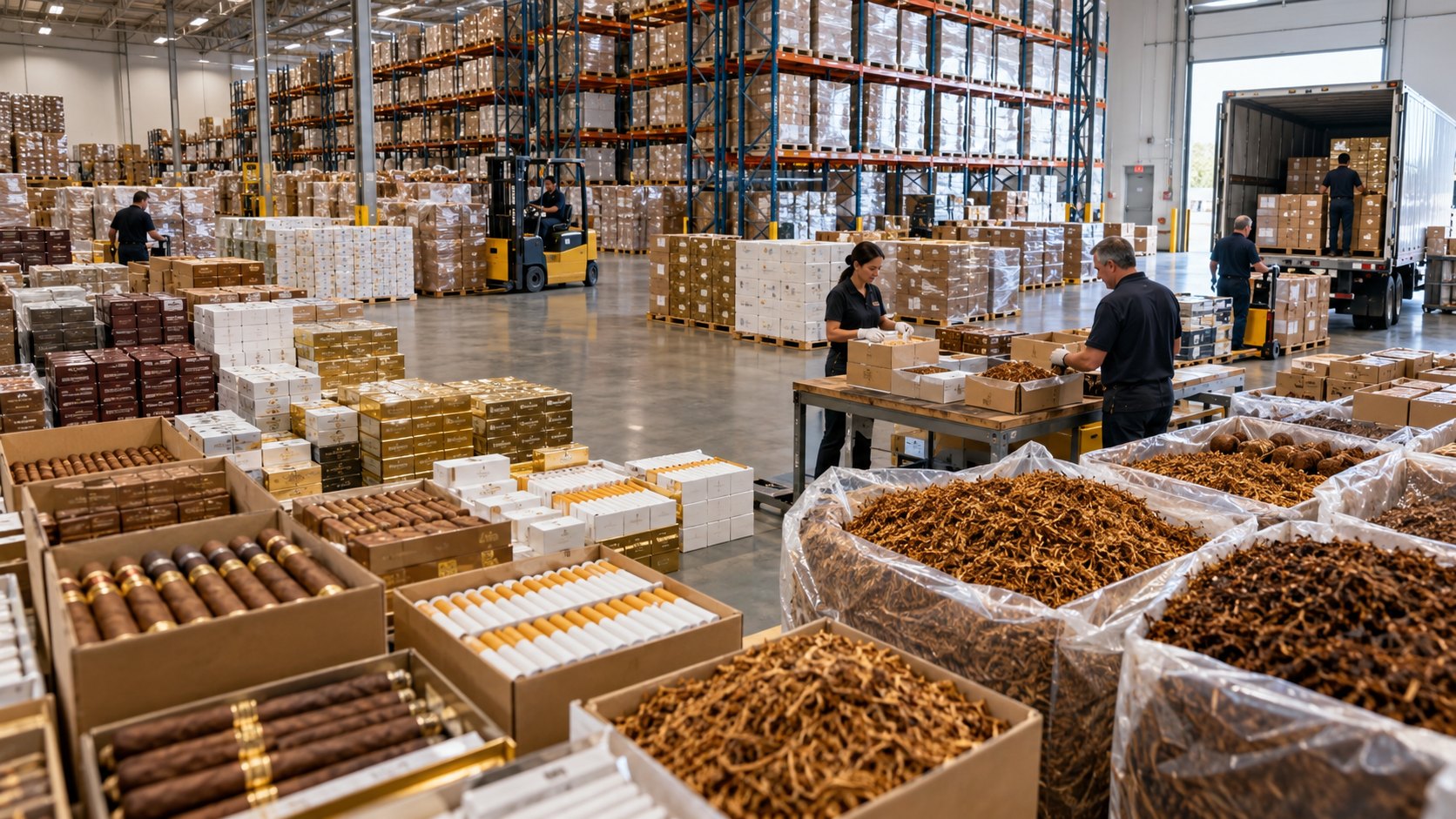
That is the honest summary of what separates tobacco from every other line in the trading catalogue, and anyone planning this business should test the plan against it before anything else. Tobacco is an excise good, administered federally by the Federal Tax Authority, and the excise regime is not a tax that is calculated once a quarter and paid.¹ It is a tax that attaches to individual packs, and the state's way of knowing which packs have paid is a digital stamp applied to them — so duty-paid stock can be told apart from stock that is not. The consequence for a wholesaler is structural rather than administrative. Your inventory is not a number in a spreadsheet that can be reconciled at month end. It is a set of individually identifiable items whose movement has to agree with what you have declared, and a discrepancy is not a stock-take variance.
Layer on top of that a second control that has nothing to do with tax. What a tobacco pack looks like is prescribed — the health warnings, their share of the surface, and what the pack may and may not say about the product are set out for the manufacturer rather than chosen by a marketing department.² A wholesaler does not design packs, but he does refuse them, because a pack that does not meet the requirement is stock he cannot lawfully move. Most trades treat packaging as the supplier's problem. Here it is a goods-inwards check.
The commercial upside is the mirror of all that. Demand is unusually stable, the customer base is defined and finite, and the compliance burden is itself the barrier that keeps the field small. Nobody enters this trade casually, which is precisely why the operators who are in it stay in it.
What sits inside the line, and what quietly does not
The activity covers the wholesale supply of tobacco products: cigarettes, cigars and cigarillos, pipe and rolling tobacco, waterpipe tobacco and its molasses preparations, and chewing and oral tobacco. It is the buying in of those goods and the selling of them on to businesses.
Two boundaries matter more than the list does.
The first is the newer product category. Electronic smoking devices and the liquids used in them are treated as excise goods in their own right rather than as an accessory to a tobacco range, so the excise position has to be established product by product with the Federal Tax Authority before a price list is written.¹ A range that mixes conventional tobacco with devices and liquids is not one product family for these purposes, and assuming otherwise is the commonest planning error on this line.
The second is the end of the chain. This is a wholesale activity, which means the customer is a business. Selling to the person who will smoke the product is retail and sits under its own licence; running premises where the product is consumed on site is a hospitality activity again, with food-and-beverage conditions and municipal approvals of its own. Manufacture is a third thing entirely, under an industrial licence on approved premises.³ The line also does not reach duty-free or travel-retail supply as a matter of course, because those are supply relationships into a controlled environment rather than open wholesale, and they are negotiated separately.
Who this line suits, and who it defeats
An operator who already runs a controlled warehouse. The differentiator here is not a customer list; it is a stock system that can account for identifiable items, a store that can be secured, and somebody whose job is the reconciliation rather than the selling. A company that already does this for another regulated good is most of the way there.
A distributor holding a manufacturer's appointment. Tobacco brands do not appoint on enthusiasm. An appointment is the substantive asset in this trade and it is granted to businesses that can demonstrate compliance discipline and reach, so the licence is the beginning of that conversation rather than the end of it.
A re-export operator moving goods to other markets. Where the goods never enter the local market, the shape of the file is different and the jurisdiction question becomes the first question rather than the last. That is the case in which a free zone answer is genuinely the better one.
Where this is the wrong purchase. If the intention is to add a broad trading licence and pick up tobacco as one line among many, this is the wrong activity to reach for. The compliance overhead does not scale down with volume — a small tobacco range carries close to the same obligations as a large one, and it will consume management attention out of all proportion to the revenue it contributes. If the intention is a shisha café, a vape shop or a corner retail counter, none of those is this line.
Where it sits between the mainland and a free zone
For most trading activities the mainland-or-free-zone question is answered on ownership, cost and who the customer is. On this line it is answered almost entirely by where the goods are going, because the tax treatment turns on whether they are released into the local market.
judged on the same six rows
| Judged on | Mainland | Free zone |
|---|---|---|
| Sell to UAE retailers and wholesalers directly | Yes | Through a mainland distributor |
| Goods intended to leave again without being sold here | They clear in, then clear out | They stay outside the local market throughout |
| When the excise question has to be answered | Before the stock is sold on | When the goods are released into the local market |
| Hold a customs code in the company's own name | Yes | Yes |
| Bid to supply an institutional or government buyer | Yes | Generally not |
| What the activity wording is judged against | The emirate's own activity schedule | The zone's permitted activity list |
The pattern in that drawing is worth stating plainly. A business whose customers are UAE retailers belongs on the mainland, because the alternative inserts a distributor between it and its own market and gives away the margin that justified the trade. A business whose customers are outside the country has a real choice, and the free zone route keeps the goods out of the local market until somebody decides otherwise. What it is not is a way of avoiding the excise position — it changes when the question is asked, not whether.⁴
Either way, the customs treatment of the specific cargo sits with the emirate's customs authority, and tobacco appears on the controlled-goods side of that assessment rather than the routine side.⁵ Premises conditions sit with the municipality and, where flammable stock or a secure store is involved, with the civil defence authority as well.
What the licence costs to hold, which conditions attach to a particular product, how excise enrolment applies to a specific range, and what the stamp obligations mean in practice all depend on the emirate, the premises and the goods themselves. ConsultZone confirms those against the chosen jurisdiction and the actual product list before anything is committed — and on this line, unlike most, that confirmation should happen before the first purchase order, not after the licence.
References
- Excise tax on tobacco and electronic smoking products, the digital tax stamp scheme, and excise enrolment and filing. Federal Tax Authority
- Federal framework for tobacco control, including prescribed packaging and health warnings. UAE Government portal
- Industrial licensing and national standards for manufacture and conformity. Ministry of Industry and Advanced Technology
- Premises suitability, public health conditions and municipal approvals in Dubai. Dubai Municipality
- Import and export of controlled goods, customs codes and restricted and prohibited lists. Dubai Customs
Elsewhere in Trading
Activities that sit beside this one
Most licences carry more than one activity. Adding a neighbouring line at the application stage costs a fraction of amending the licence afterwards.
Begin with a clear conversation
Tell us what you intend to build.
A consultant will map the structure, jurisdiction, approvals and likely cost against what you actually described — not against a package.
