
Activity CZ 137
How to Start a Pet Food Wholesale Business in Dubai
Pet food is handled as animal feed rather than as groceries, so it clears product by product. Who the four kinds of buyer are, and what a wholesale licence on this line stops short of.
ConsultZone licensing desk
- Activity code
- CZ 137
- Category
- Trading
- Reviewed
- Read
- 7 min
Listen instead
42 seconds
An audio summary of this guide.
Topic summary
How to Start a Pet Food Wholesale Business in Dubai
A supermarket buyer treats a bag of kibble as a grocery item. It sits two aisles from the breakfast cereal, it is bought on price per kilo and promotional depth, and it is reordered by the same system that reorders pasta. The paperwork behind it does not agree. Pet food is animal feed, and feed is controlled as feed — which means the product clears on its own file, on its own composition and its own claims, rather than arriving inside a general grocery consignment.
That gap between how the trade thinks about the goods and how the goods are actually handled is where new entrants lose time. It has one very practical consequence: on this line, the width of the catalogue is a cost. A distributor who wants forty products across six brands has forty product positions to establish, and a new flavour or a reformulated recipe is not automatically covered by the file that cleared the last one. Nobody plans for that, because in groceries a new flavour is a new line on an invoice.
The commercial picture is more encouraging than the paperwork. Pet ownership in the UAE has been rising and, more importantly for a wholesaler, it has been premiumising: the same household that used to buy the cheapest available bag now buys a life-stage formula, a grain-free line, a dental treat and, if the animal has a condition, a diet prescribed by a vet. A premiumising market is a wholesaler's market, because the margin per pallet rises while the logistics stay the same.
The four operators this line rewards
The brand distributor. The substantive asset is an appointment from a manufacturer, and the licence is what makes the company eligible to hold one. Brands want a distributor who can clear their products, hold stock properly and reach both channels — and they grant exclusivity reluctantly and remove it quickly.
The veterinary-channel specialist. A business that supplies clinics rather than shops is selling to a technically literate buyer who recommends rather than merchandises. Volumes are smaller, price is defended, and the relationship is sticky in a way a supermarket listing never is.
The own-label operator. Contracting a manufacturer to produce under your own brand puts the margin of the brand owner and the margin of the wholesaler in the same company. It also puts the product file, the composition claims and the labelling squarely on your side of the table rather than the supplier's.
The online seller who is really a wholesaler. Subscription and marketplace models for pet food work because the demand is genuinely repeating — an animal eats the same thing every week. The stock, the storage and the product files are wholesale work whatever the shop front looks like.
Where this is the wrong purchase. If the plan is a pet shop, a grooming salon, a boarding kennel or a veterinary clinic, none of those is this activity: they are retail, personal-service or health lines with their own conditions and their own premises approvals. And if the plan is to manufacture, extrude or blend the feed, that is an industrial undertaking on approved premises rather than a trade.
CZ 137 — Wholesale Of Feed For Pet Animals
Feed, not groceries
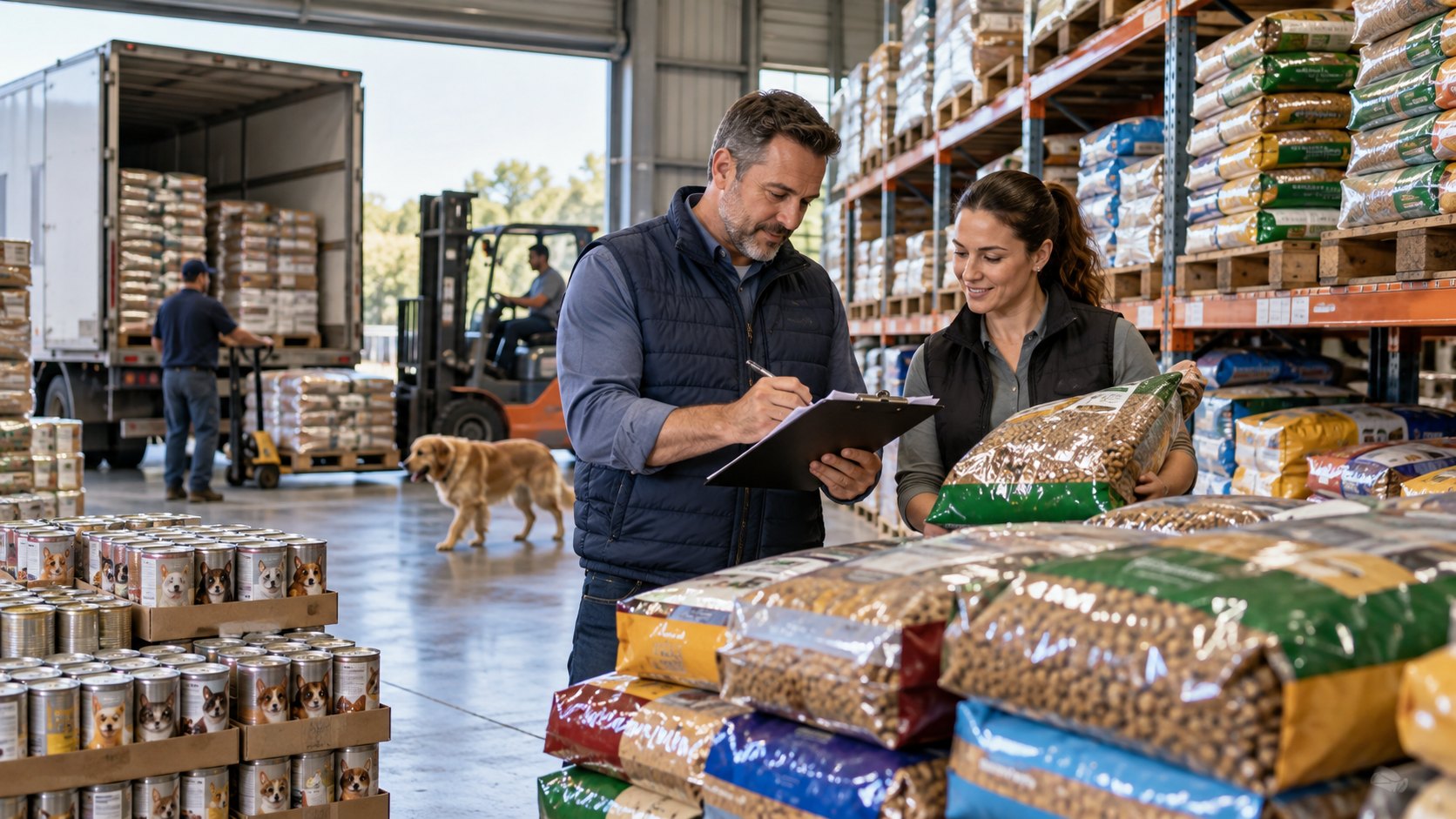
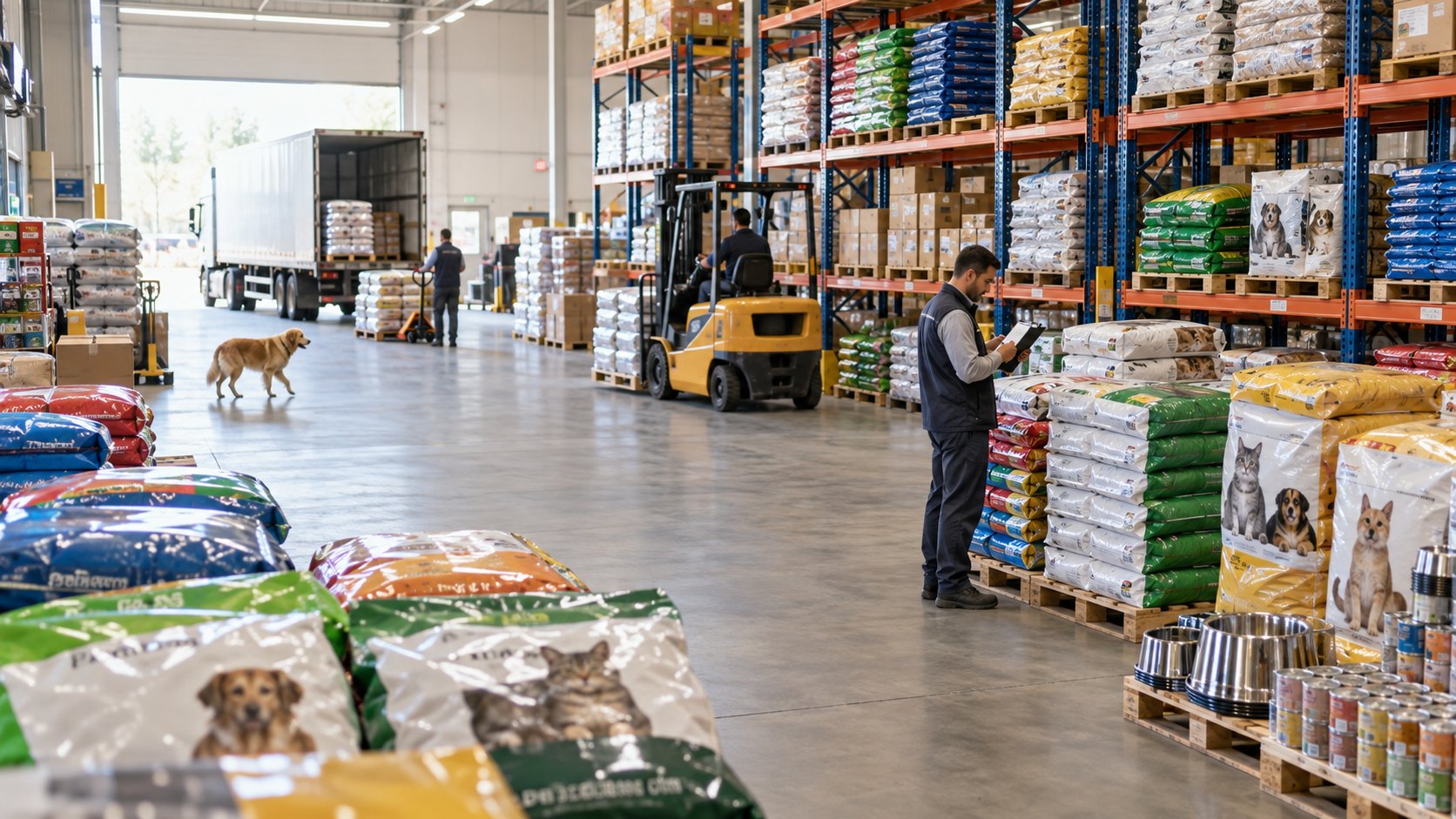
The line covers prepared feed for companion animals: complete and complementary dry food, wet food, treats and chews, and the supplementary products sold alongside them for dogs, cats, birds, small mammals, fish and reptiles. What it does not cover is anything intended for animals kept for production, which is a separate line with separate buyers — a feed mill and a pet shop do not shop in the same place.
Feed and food products are cleared on a product basis by the federal agriculture and animal health authorities and by the emirate's food control, which is why the product file is the real gate on this business rather than the licence.¹ ² The composition, the species the product is intended for and the claims on the pack are all part of what is assessed, and a claim is the part most likely to cause trouble: a bag that says it supports joint health is making a different kind of statement from one that says it contains chicken.
The two demand curves under one warehouse roof
Everyday feed and clinical diets look like one business from the loading bay and behave like two from the sales desk. They are worth separating in the plan before they are separated in the stockroom.
- Fix the catalogue before the customer listEvery product clears on its own file, so range breadth is a cost rather than a free option
- Separate everyday feed from clinical and prescription dietsThey share a warehouse and almost nothing else — buyer, price point and adviser all differ
- Is the product a veterinary or prescription diet
- YesThe clinic is the customer and the vet is the adviser: low volume, price holds, and the range turns slowly
- NoThe shelf is the adviser: chains and pet shops order deep, contest price, and drop a listing as readily as they grant it
- Choose the channel the working capital can actually fundChains order in volume and pay late; clinics and independents order shallow and pay sooner
- Online is a route to both, not a third kind of buyerA marketplace or a direct subscription reaches the same two demand curves without a buying office in between
The branch is the decision, and it is a funding decision as much as a commercial one. Retail chains give volume and take payment terms, so the business is financing the channel; clinics and independents give margin and pay sooner, so the business finances itself but grows slowly. Most operators eventually hold both, and the ones who do it well enter through the clinic side, because the cash cycle is survivable while the product files are still being built.
What the licence does not cover
Veterinary medicines. A prescription diet and a veterinary medicine are not the same category, however similar the channel looks. Medicines and treatments sit under a health-product control regime with their own product files and their own authorised sellers, and a feed licence does not reach them.¹ The boundary is worth drawing early, because a distributor supplying clinics will be asked for both.
Feed for production animals. Feed for livestock and poultry is the neighbouring line, and the separation is real rather than administrative. That trade sells to farms and feed mills in tonnes against a nutritional specification; this one sells to retailers and clinics in pallets against a brand and a pack. A company intending to do both should say so at the outset rather than discover the gap on a first shipment.
Manufacture, and retail. Extruding, blending, cooking or packing the feed is an industrial activity on approved premises with conformity obligations of its own.³ Selling to the animal's owner over a counter is retail. This line is the middle of that chain and only the middle.
Live animals, and everything that is not feed. Collars, litter, cages, toys and grooming products are general goods rather than feed, and a range that drifts into them is drifting across a licence boundary. Trading in the animals themselves is a different activity again, with animal-welfare conditions attached.²
What the licence costs to hold, which approvals attach to a specific product or species, and how a given consignment is cleared all depend on the emirate, the premises and the goods themselves. Premises suitability for feed storage is answered with the tenancy by the municipality rather than afterwards, and the customs treatment turns on the classification of the actual cargo.⁴ ConsultZone confirms those conditions against the chosen jurisdiction and the real product list before anything is committed.
References
- Animal health, veterinary products and the federal framework for feed and food safety. Ministry of Climate Change and Environment
- Agriculture, animal health and food safety controls, including feed products, in Abu Dhabi. Abu Dhabi Agriculture and Food Safety Authority
- Industrial licensing, national standards and conformity for feed manufacture. Ministry of Industry and Advanced Technology
- Import and export of feed and food cargo, customs codes and restricted goods. Dubai Customs
- Food and feed premises suitability, storage conditions and public health in Dubai. Dubai Municipality
Elsewhere in Trading
Activities that sit beside this one
Most licences carry more than one activity. Adding a neighbouring line at the application stage costs a fraction of amending the licence afterwards.
Begin with a clear conversation
Tell us what you intend to build.
A consultant will map the structure, jurisdiction, approvals and likely cost against what you actually described — not against a package.
