
Activity CZ 184
How to Start a General Machinery and Equipment Wholesale Business in Dubai
Other machinery and equipment is the line that lets one supplier quote a whole list instead of half of it. What it genuinely covers, and why a broad line never overrides what a specific machine attracts.
ConsultZone licensing desk
- Activity code
- CZ 184
- Category
- Trading
- Reviewed
- Read
- 8 min
Listen instead
46 seconds
An audio summary of this guide.
Topic summary
How to Start a General Machinery and Equipment Wholesale Business in Dubai
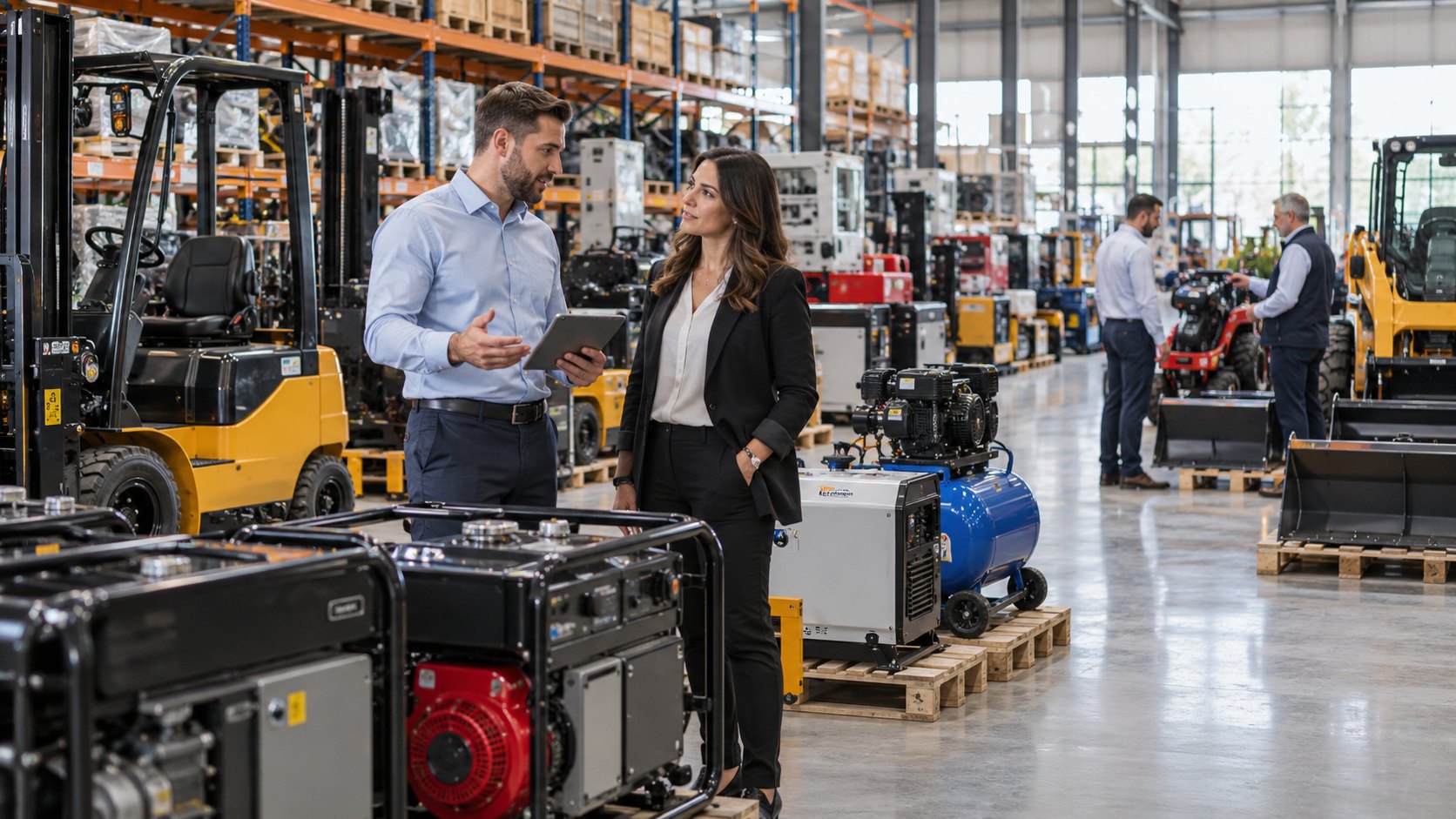
A supplier who sells conveyors gets asked for the pump at the end of the conveyor. A supplier who sells pumps gets asked for the compressor that drives the valve, and then for the packing machine at the end of the line, and then for the spare gearbox nobody ordered. That is the ordinary experience of selling industrial equipment in a market where a customer would rather deal with one company than four, and it is the situation this activity exists to answer. It is the line that lets a supplier quote the whole list rather than the part of it that happens to match a narrower trade description.
Read as a business, that is a real advantage and it is worth having. Read as a licence, it invites one expensive misunderstanding, which is the belief that because the line is broad it is also permissive. It is not. A general machinery line describes what a company may trade in. It says nothing whatsoever about what an individual machine has to satisfy before it can be sold, and that is a different question answered in a different place.
CZ 184 — Wholesale Of Other Machinery And Equipment
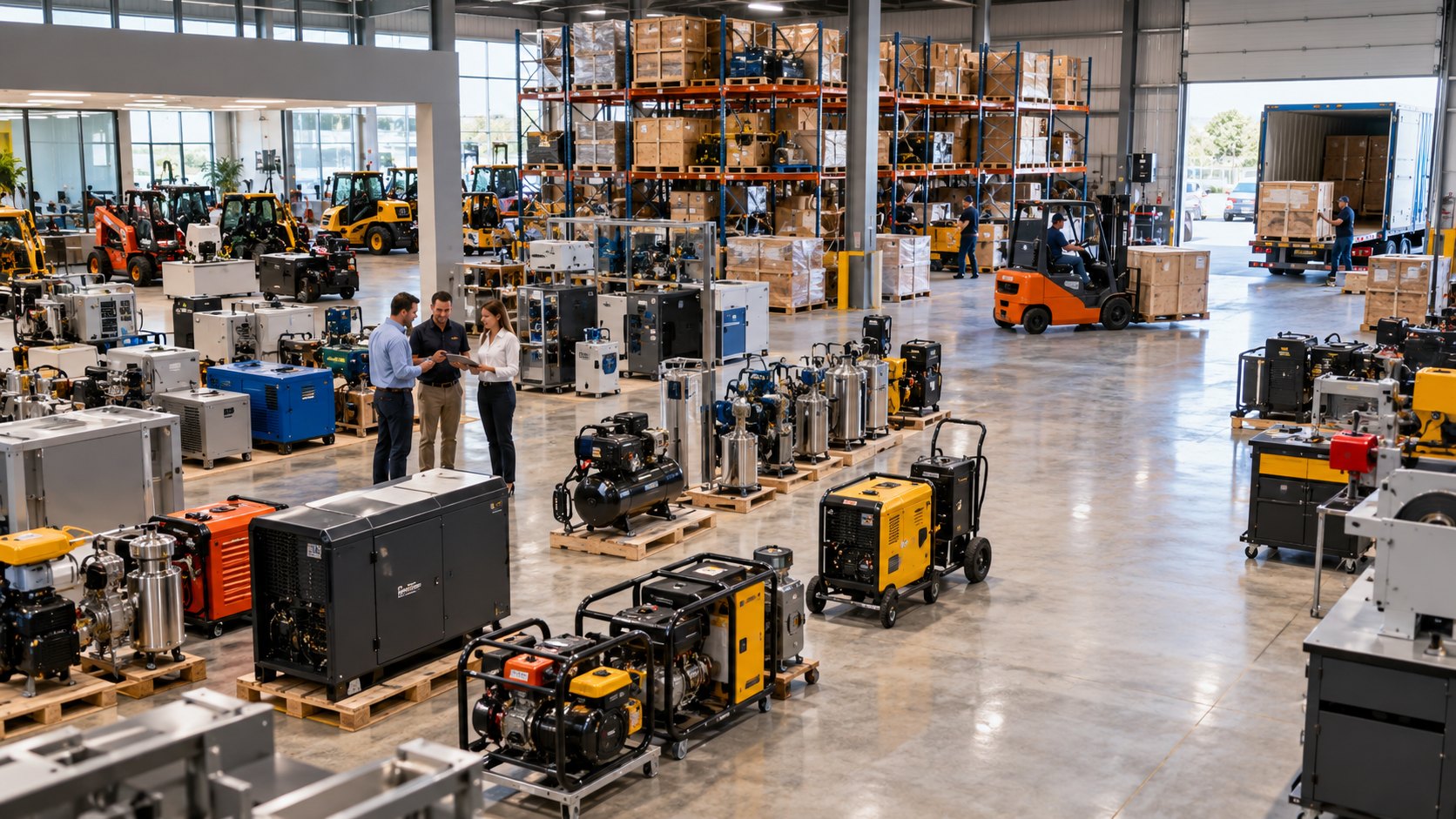
The line is the bulk trade in machinery and equipment for commercial and industrial use, sold on to businesses rather than to consumers, and sold in the condition it arrived in. In practice that means general-purpose plant and the equipment around it: pumps, compressors, fans and blowers, valves, gearboxes and drives, motors and generating sets, conveyors and material-handling gear, lifting and hoisting equipment, hydraulic and pneumatic components, process and packaging machinery, welding and workshop plant, measuring and testing instruments, and the spares and consumables that go with all of it.
Two operating models sit under one description and they are not the same business. The agency model carries one or several manufacturers' ranges, invests in product knowledge and after-sales, and earns on being the route into the UAE for a brand. The sourcing model carries almost no fixed range, works from a customer's enquiry or drawing, buys against an order and earns on procurement and delivery. The first ties up capital in stock and training; the second ties it up in credit and in the risk of quoting a machine it has never handled. Deciding which one the company is doing sets the working capital, the premises and the hiring plan, and it should be decided before a licence is applied for rather than drifted into.
The gates are not all in the same place, and that is the point of this page
Most of the file is straightforward and sits with the licensing authority. What catches people out is that the obligations which actually delay a first sale are attached to a particular machine rather than to the trade, and they are held by bodies that never look at the licence at all.
six gates, four bodies
The emirate's economic department
- The trade licence with this machinery line recorded on itFirst, and nothing else moves until it is cut
- Which activity lines the licence may carry togetherAt the same moment — easier to ask for than to add later
The emirate's customs authority
- A customs code held in the company's own nameOnce the licence exists, before the first consignment
The federal ministry responsible for national standards
- Conformity evidence for the specific machinePer model, at the product rather than at the licence
- A conformity mark where one applies to that productBefore the machine is offered, not after a buyer asks
The civil defence authority
- Fire safety of the building the machines are stored inWith the tenancy, not after the fit-out
Two of those six sit with the same body, and it is not the licensing authority. That is the shape of the drawing and the argument of the whole page: the licence is the quick part, and the questions that decide whether a specific machine can lawfully be offered belong to whoever governs the product.
Four conditions that follow the machine, whatever the licence says
Anything with a radio in it. A great deal of modern industrial equipment is connected — a pump with a telemetry card, a crane with a remote control, a monitoring sensor on a gearbox. Radio and telecommunications equipment offered in the UAE needs type approval on the specific model from the federal telecommunications authority, and a machinery licence does not substitute for it.¹
Pressure equipment. Vessels, receivers, boilers, accumulators and the fittings that go with them are governed because of what they do when they fail, and the evidence a buyer or an inspector will want is the manufacturer's certification for that item.²
Lifting equipment. Cranes, hoists, slings and jacks come with load certification and inspection expectations that attach to the individual piece of equipment and are renewed over its life, not granted once at import.²
Machines with an emissions or fuel story. Generating sets, engine-driven pumps and compressors are engine products, and the conformity and emissions documentation travels with the model.²
None of those is made easier by holding a broad line. A catch-all describes the breadth of the trade; it does not override a product-specific requirement, and a supplier who quotes a pressure vessel or a remote-controlled hoist as if it were a gearbox will find that out at the worst possible moment, which is after the customer has paid a deposit.
Adjacent lines people confuse with this one
This is where a broad description does real damage, because a customer's enquiry very often spans two activities and only one of them is on the licence.
Installing the machine is not selling it. Getting a machine off the truck, onto a base, anchored, connected and commissioned is industrial installation work, with its own activity and its own conditions. A supplier who includes commissioning in a quotation without the activity to support it has sold something the licence does not cover.
Repairing and maintaining it is a third line again. Service contracts, overhauls and workshop repair of industrial machinery sit separately from the trade, and so do dismantling, relocation and rigging — the specialist work of taking large plant apart and moving it.
Renting it out is not wholesale. Equipment hire is a different activity with a different balance sheet: the machine stays on your books and earns by the day.
Specialised machinery has its own lines. Where the catalogue names a category, that category governs. Office machinery and equipment is separately named and excludes computers and their peripherals; office furniture is its own line; agricultural and grounds-care machinery is named separately too, which is why grounds equipment as ordinary as a mower has an entry of its own rather than living here. The rule to hold on to is simple: this line is what is left after the named ones, so if the catalogue names your machine somewhere else, that is where it belongs.
Selling to the public is retail. A counter taking payment from walk-in customers is a retail activity, frequently held alongside wholesale and still a second activity.
Who this line is actually built for
It suits four kinds of company, and it suits none of them as a first guess.
A manufacturer's regional agent with a mixed portfolio, where the ranges are genuinely unrelated and no narrower line would cover them all. A trader who already holds a specific line and keeps turning away the adjacent half of every enquiry — for that company the broad line is an expansion decision with revenue already attached to it. An engineer or former distributor employee going out alone, whose asset is a set of customer relationships across several equipment types rather than one brand. And an exporter or consolidator assembling equipment packages for projects in nearby markets, where the goods may never be sold into the UAE at all.
That last case is the one where the structural choice between a mainland licence and a free zone one genuinely bites. Selling machinery to UAE businesses on UAE soil is mainland work. Landing containers, consolidating them and shipping them out again without selling into the local market is exactly what a free zone store was designed for. A company that does both usually needs to be honest that it is running two operations rather than one.
What the licence costs to hold, which lines may sit together on it, what conformity evidence a particular machine needs and what conditions attach to a specific store all depend on the emirate, the premises and the equipment itself. ConsultZone settles those against the chosen jurisdiction and the real product list before anything is committed.
References
- Type approval for radio and telecommunications equipment, including connected and remotely operated machinery. Telecommunications and Digital Government Regulatory Authority
- National standards, conformity marks and product conformity evidence for industrial machinery, pressure equipment and lifting gear. Ministry of Industry and Advanced Technology
- Import and export, customs codes and the classification of machinery consignments. Dubai Customs
- Fire safety approvals for commercial and industrial storage premises in Dubai. Dubai Civil Defence
- General federal government information on trade, industry and commercial activity in the UAE. UAE Government portal
Elsewhere in Trading
Activities that sit beside this one
Most licences carry more than one activity. Adding a neighbouring line at the application stage costs a fraction of amending the licence afterwards.
Begin with a clear conversation
Tell us what you intend to build.
A consultant will map the structure, jurisdiction, approvals and likely cost against what you actually described — not against a package.
