
Activity CZ 111
How to Start an Oleaginous Fruits Wholesale Business in Dubai
Oleaginous fruits are an industrial input, so the wholesale margin sits in oil yield rather than in appearance. What the line covers, who is really at the other end, and the lines next door.
ConsultZone licensing desk
- Activity code
- CZ 111
- Category
- Trading
- Reviewed
- Read
- 7 min
Listen instead
55 seconds
An audio summary of this guide.
Topic summary
How to Start an Oleaginous Fruits Wholesale Business in Dubai
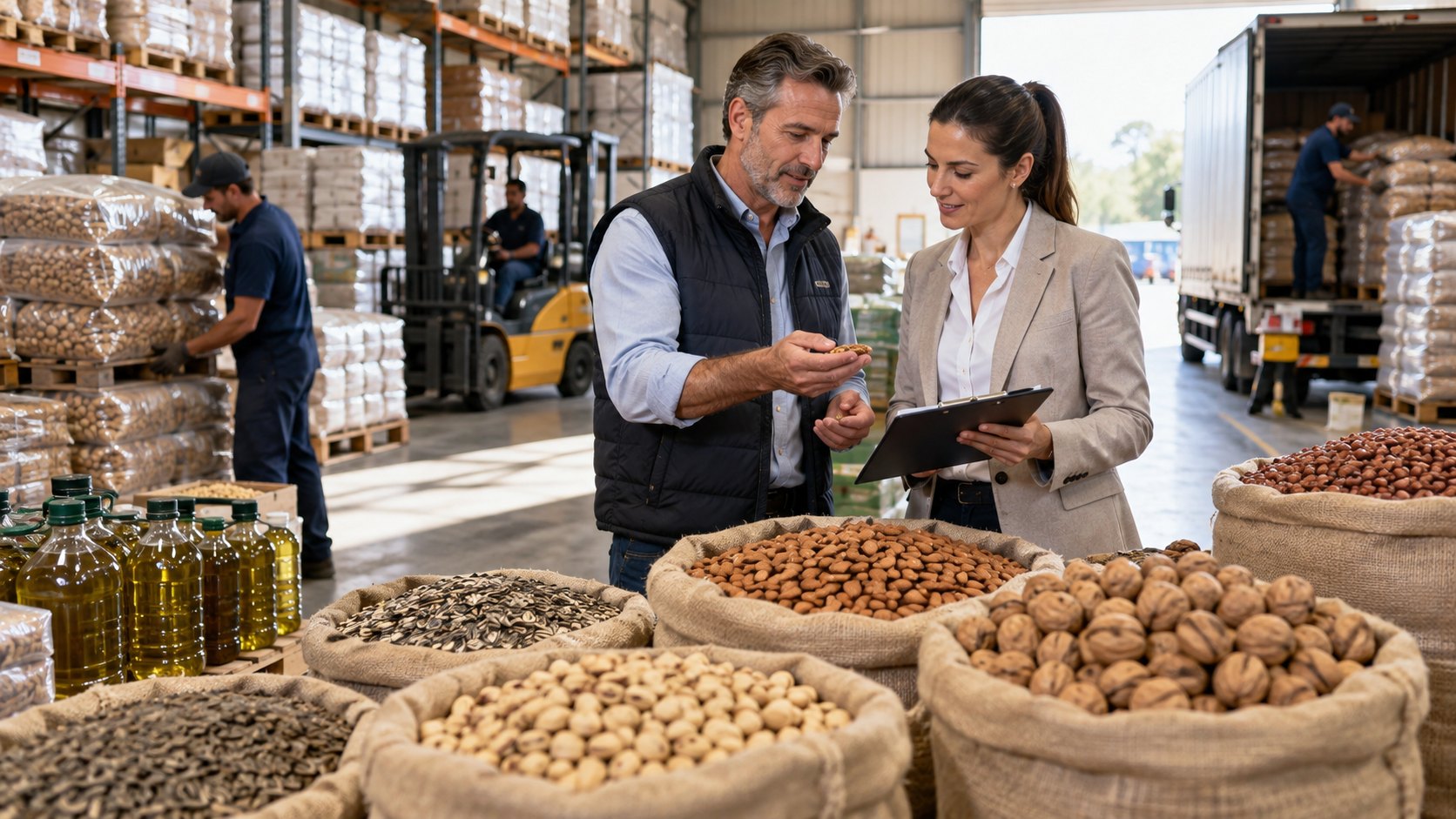
A sack of sesame and a sack of rice look like the same trade from the outside. They are not. Rice is sold on grain length, moisture and how much of the parcel has broken; sesame is sold on oil content and free fatty acid, because the buyer at the far end of the transaction is not going to eat it. He is going to press it.
That single fact sets the character of this activity. Oleaginous fruits are the oil-bearing crops — olives, oil palm fruit and palm kernel, coconut and copra, sesame, groundnut, sunflower, safflower, cottonseed and rapeseed. Wholesaling them means buying in bulk and selling on in bulk, largely unchanged. What separates the line from general food trading is that its price is set somewhere else and can be settled in a laboratory. Vegetable oil is a globally traded commodity, and a parcel of oilseed is valued as a fraction of the oil it will release. The wholesaler works inside a spread he does not set, on goods whose quality is a number rather than an opinion.
Dubai's place in that trade is positional rather than agricultural. The UAE grows a minority of the food it consumes and buys the rest in, which is the stated premise of its own National Food Security Strategy.¹ Around that standing import requirement sit crushing, refining and packing operations, and a port and customs system built to move cargo onward as readily as inward.² So a wholesaler here is working two markets from one address: plants and manufacturers that will consume the parcel, and regional buyers who want it moved on untouched.
Who is actually at the other end
The buyer is almost never a shop. Sort this trade by who takes delivery and it collapses into three kinds of customer — and the weight falls heavily on one of them.
five kinds of parcel, three kinds of buyer
- Bulk copra, palm kernel and groundnut in container lotsThe plant is buying oil yield and pays against a certificate of analysis
- Parcels carrying high free fatty acid or damaged kernelAcidity and damage are refinable, so the loss is a discount rather than a rejection
A crushing or refining plant
- Clean, uniform sesame and sunflower seedBakery, confectionery and tahini lines buy to a written specification and reject on it
- Seed sold for sprouting, bird mixes and blendingCleanliness and screen size set the price, not oil content
A food or feed manufacturer
- Seed and kernel bought to move on unchangedNothing enters the local market, so the value added is handling and paperwork
A buyer outside the UAE
Read the concentration rather than the rows. Most of what passes through this line ends at a plant that will change the physical form of the goods, and that has two consequences for a new entrant. The first is that the customer is technically competent and will test what arrives — a claim on a specification sheet counts for nothing beside a certificate of analysis a laboratory will stand behind. The second is more encouraging: a poor parcel is rarely a total loss, because refining exists precisely to deal with acidity and damage, so the penalty arrives as a discount. Food-grade selling is the mirror image. There the specification is narrow, rejection is absolute, and the margin is better for exactly that reason.
CZ 111 — Wholesale Of Oleaginous Fruits
The crops, and the form they arrive in
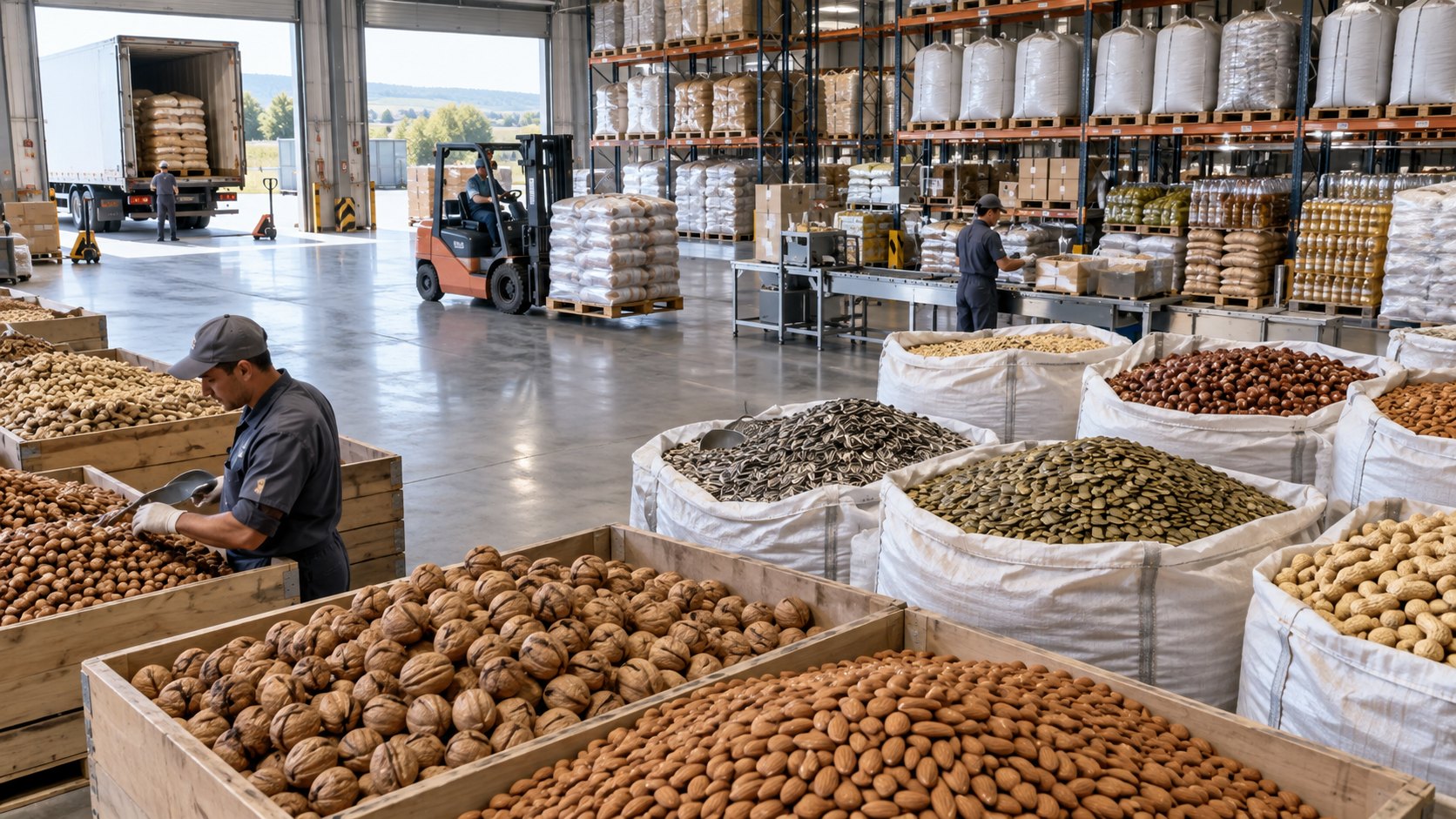
Copra and palm kernel come dried, in bags or in bulk, and they arrive already partly degraded because drying in the origin country is rarely perfect. Sesame, sunflower, safflower and rapeseed move as clean seed and are graded on purity as much as on oil. Groundnut arrives in shell or shelled, and is the most closely watched of the family because of the mould toxins that develop in poorly dried nuts — which is why food authorities test groundnut consignments rather than waving them through. Olives are the outlier: in this region they are traded overwhelmingly as food rather than as a crushing feedstock, and a parcel of table olives behaves commercially like a grocery item, not like an industrial input.
What the grade sheet decides
Four measurements do most of the work in a negotiation on this line: how much oil the parcel will give, how much of that oil has already broken down into free fatty acid, how wet it is, and how much of the weight is dirt, stones and stalk. Moisture is where inexperienced buyers lose money, because water is bought at the price of seed and then evaporates in store. None of these is a licensing question. They are the reason two parcels of the same crop from the same origin can be worth materially different amounts on the same day, and the reason working capital in this trade is heavier than the volumes suggest.
What the licence line stops short of
The activity is the buying and selling of the fruit and the seed. Pressing, expelling, solvent extraction and refining are manufacturing, done under an industrial licence on approved premises, and they are a different undertaking with different capital needs.³ Selling the edible oil that comes out of that process is a further trade again — a bottled or bulk oil is a food product with its own labelling and food-control file, not an oil-bearing fruit. The practical test is whether the goods leave in the same physical form they arrived in. If they do, this line covers them.
The three lines next door, and where the boundary falls
This family of activities is where classification errors cluster, because a reader looking at a spreadsheet sees four rows that all mention seeds.
CZ 110 — Wholesale Of Grains And Seeds
Cereals and pulses: wheat, rice, maize, barley, lentils. The overlap is real and narrow. Sesame and sunflower sold as a food seed for direct human consumption sit close to the boundary, and the same physical goods can read either way depending on how the trade describes them. The safe route is to fix the intended buyer first and let the activity follow, rather than choosing the line that sounds broader.
The edible oils and fats trade
Once the seed has been crushed, the product is oil, and oil is bought and sold under its own trade line with food labelling and shelf-life obligations attached. Plenty of operators eventually hold both, because a crusher's customer and a seed supplier's customer are the same people. They are still two activities.
CZ 116 and CZ 117 — what is left after crushing
Crushing leaves meal and cake, which are protein feeds rather than waste, and they are traded as agricultural by-products and fodder. A wholesaler who starts in oilseed often finds the by-product trade easier to enter than the oil trade, because the buyers are farms and feed mills rather than food manufacturers, and the specification is looser.
Who should take this licence
A trader who already has a crushing customer
The strongest version of this business starts from a confirmed offtake and works backwards to origin. Plants buy repeatedly, in volume, on terms — and a single plant relationship can carry a young company.
A manufacturer buying its own raw material
Food and feed producers who are tired of paying an intermediary. The licence lets them import directly and hold the parcel in their own name, which changes the landed cost and the control of supply at once.
A re-export operator
Companies whose value is movement rather than consumption: buying at origin, holding briefly, selling onward to a regional buyer. Here the jurisdiction question matters most, because goods that never enter the local market are handled differently from goods that do.
Where this is the wrong purchase. If the intention is to press the seed, refine the oil or bottle a branded product, this is not the activity to buy. It permits the trade and not the transformation, and discovering that after a plant has been fitted out is an expensive way to learn it.
What the licence costs to hold, which approvals attach to a specific crop, and how a consignment is cleared all depend on the emirate, the premises and the goods themselves. Agricultural and food products are cleared on a product basis by the federal agriculture and food authorities and by the emirate's food control, and the customs treatment turns on the classification of the specific cargo.² ConsultZone confirms those conditions against the chosen jurisdiction and the actual product list before anything is committed.
References
- National Food Security Strategy 2051 — the UAE's own statement of its import dependence and domestic production aims. UAE Government portal
- Import and export of agricultural cargo, customs codes and the treatment of restricted goods. Dubai Customs
- Industrial licensing and national standards for processing and conformity. Ministry of Industry and Advanced Technology
- Agriculture, food security and the federal framework for plant and food products. Ministry of Climate Change and Environment
Elsewhere in Trading
Activities that sit beside this one
Most licences carry more than one activity. Adding a neighbouring line at the application stage costs a fraction of amending the licence afterwards.
Begin with a clear conversation
Tell us what you intend to build.
A consultant will map the structure, jurisdiction, approvals and likely cost against what you actually described — not against a package.
