
Activity CZ 114
How to Start a Hides and Skins Wholesale Business in Dubai
Raw hides and skins decay, so this wholesale line is decided by salt, drainage and speed rather than by sales skill. What it covers, who it suits, and why the yard settles the jurisdiction.
ConsultZone licensing desk
- Activity code
- CZ 114
- Category
- Trading
- Reviewed
- Read
- 7 min
Listen instead
45 seconds
An audio summary of this guide.
Topic summary
How to Start a Hides and Skins Wholesale Business in Dubai
The commercial problem on this line is not finding a buyer. Tanneries want raw material and have wanted it consistently for as long as anyone has been counting. The problem is that the goods begin to rot on the day you take them in, and every decision in the business — the premises, the staffing, the cash cycle, the choice of emirate — follows from that single physical fact.
A hide is a by-product. It comes off an animal at slaughter, and at that moment it is wet, heavy, covered in flesh and fat, and biologically active. Left alone in this climate it is worthless within hours. Cured properly, it is a stable commodity that can sit in a container for weeks and cross an ocean. The entire value a wholesaler on this line adds sits in the gap between those two sentences: collecting the material before it spoils, curing it, grading it honestly and moving it to somebody who will tan it.
What the activity actually covers: raw material, not leather
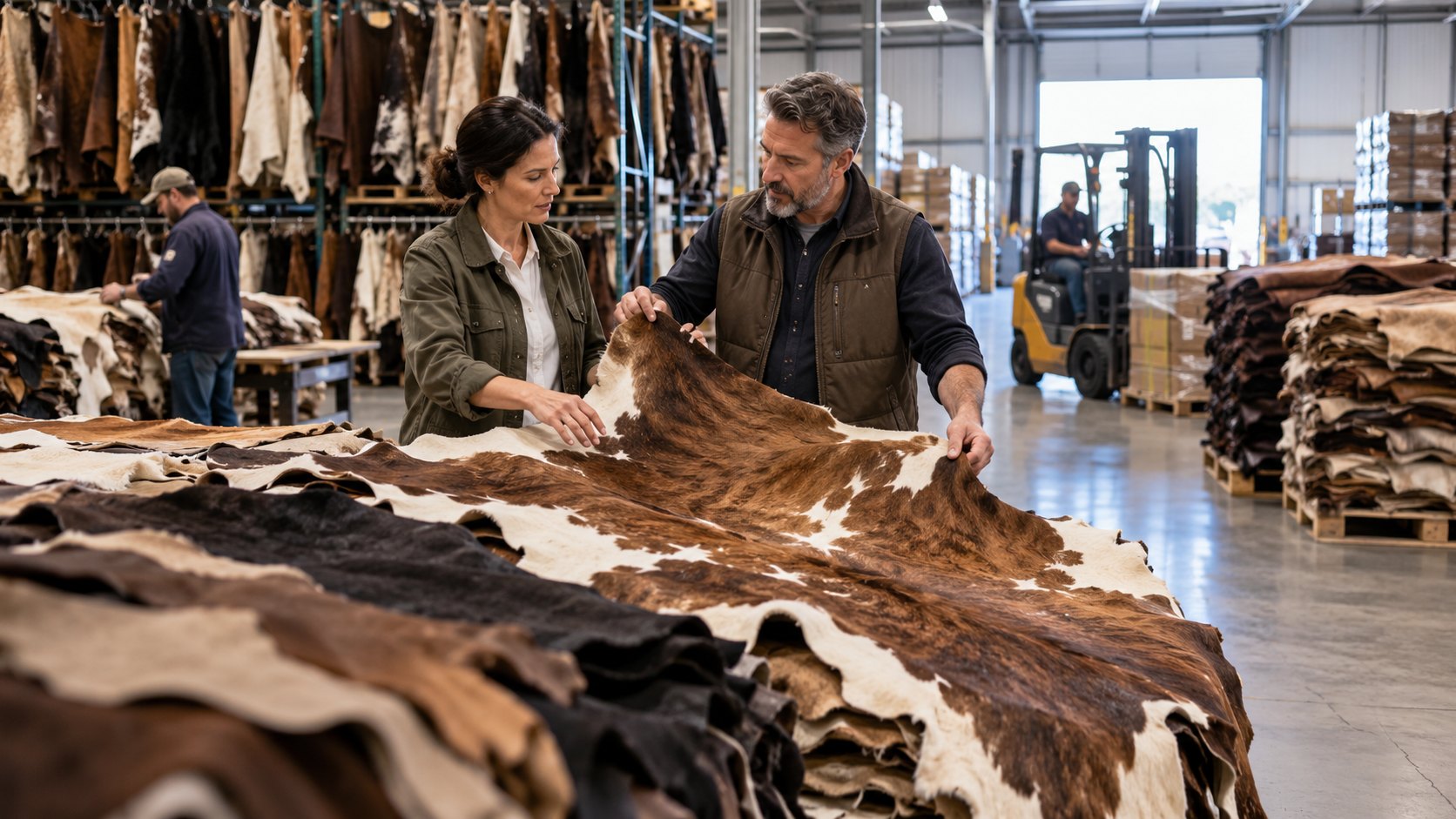
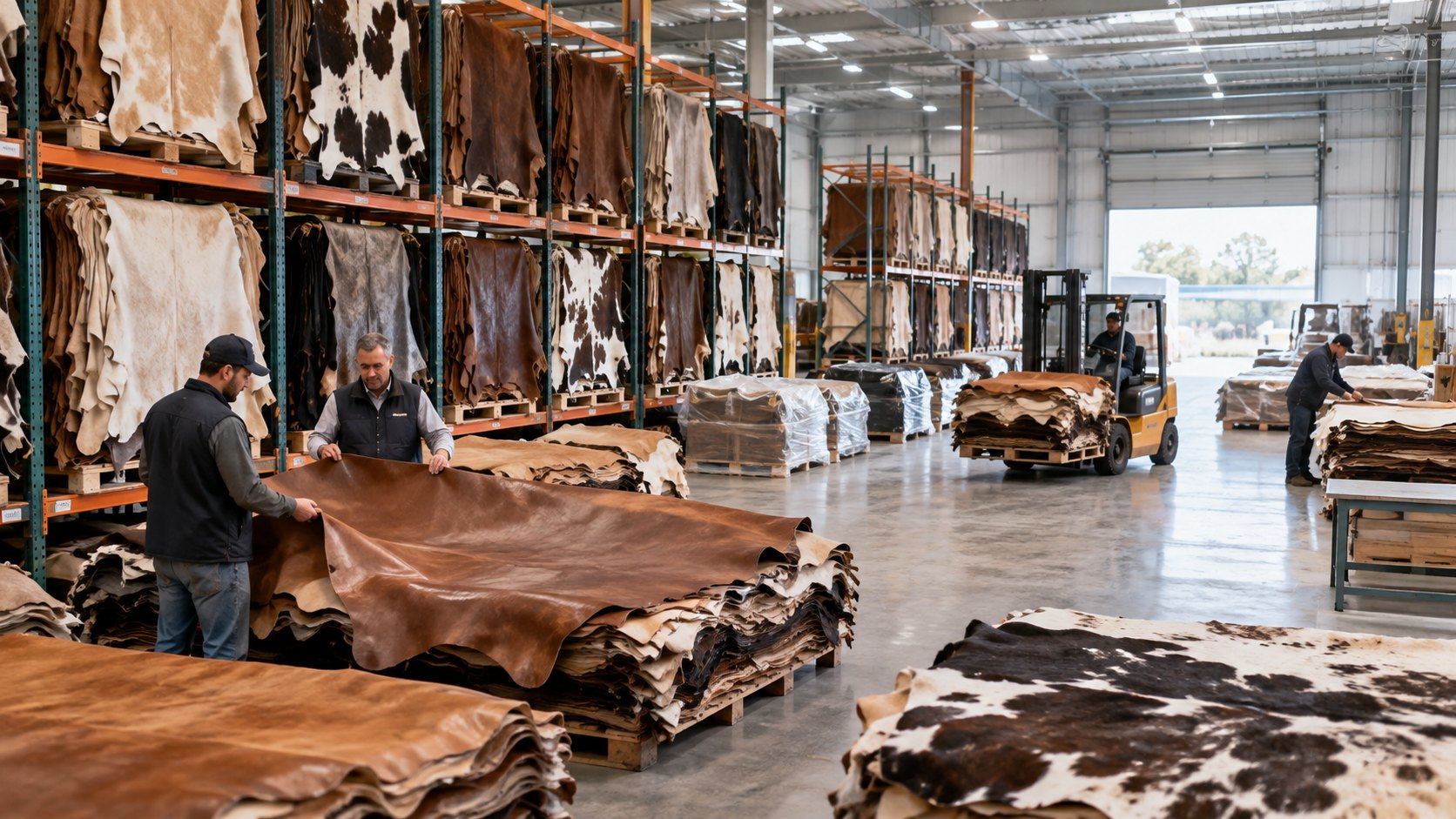
This is the wholesale trade in untanned animal hides and skins — cattle and buffalo hides, sheep and goat skins, camel hides, and the salted, dried, brined or wet-blue material derived from them before tanning proper. It covers buying them at source, curing and storing them, grading and baling, and selling them on in commercial quantity, usually to a tannery and usually for export.
Where the material comes from
Supply is not something you order; it is something you collect. It comes from abattoirs, from butchers, from the by-product streams of meat processing, and from aggregators who have already done the collecting and want a margin for it. Volume therefore tracks slaughter volume, which means this trade has the same seasonal shape as the meat trade — the sacrifice season and the religious calendar produce far more raw material in a short window than the rest of the year does, and the operators who profit from that are the ones with the salt, the space and the labour already standing by.
Curing is the whole trade
Salting or brining within hours of the hide coming off is the operation. Do it properly and grading, packing and shipping are ordinary logistics. Do it late or badly and the material downgrades irreversibly — hair slip, putrefaction, stains that a tanner will find and price. There is no recovery step. That is why an experienced buyer inspects on arrival and why a new supplier is bought from cautiously until a few consignments have arrived as described.
The file itself moves in a fixed order, and one question in the middle of it changes what the rest of it looks like.
- Fix where the raw material will actually come fromAn abattoir, a group of butchers, or an aggregator who already collects
- Cure it before it moves, never afterSalt or brine within hours; a hide that has begun to spoil is priced as waste
- Is the tannery inside the UAE or abroad
- AbroadMost of it is, so this becomes an export file: a customs code, a species declaration and a buyer who inspects on arrival and pays on grade
- Inside the UAEA shorter chain, and the argument moves from shipping to grading accuracy and delivery reliability
- Take premises that can hold salt, wet hides and effluentDrainage, odour and waste handling are what decide the address, and they decide it early
- A graded, cured consignment with paperwork the buyer will acceptThe only thing the tannery is actually paying for
The question in the middle is the real fork in the business. An export-led operation is a collection and consolidation business whose customers are abroad, whose working capital is tied up in containers and whose paperwork is a customs matter. A domestic-supply operation is a grading and delivery business with a much shorter cash cycle and a far smaller ceiling. Most new entrants find themselves in the first category whether they planned it or not, because the tanning industry sits mainly outside the country.
What this line stops short of
Tanning is manufacturing, not trading — it is a chemical process carried out on industrial premises with its own effluent obligations, and it is not permitted by a wholesale activity. Once the material has been tanned, it is leather, and the trade in finished and semi-finished leather is the separate line at CZ 115 — Wholesale Of Leather. The boundary is worth stating rather than blurring, because the two activities look alike on paper and behave nothing alike: leather is a clean, stable, warehouse-friendly product sold to manufacturers, while raw hides are a perishable by-product collected from slaughter. A company that intends to do both should hold both lines deliberately.
One further limit belongs here. Skins of species protected under the international convention on trade in endangered species cannot be dealt with as ordinary goods at all, whatever the licence says, and the federal environment authority is the body concerned with protected species.¹ Exotic and wild-animal skins are not a wholesale question; they are a permissions question, and the answer is frequently no.
Who this line actually suits
It suits people with a stomach for an unglamorous operation and a genuine relationship at both ends. In practice that is three groups.
Operators already inside the meat chain are the most natural fit: an abattoir, a meat processor or a livestock trader is standing on the supply already and is currently giving it away or selling it cheaply to somebody else. Converting a waste stream into a traded product is the easiest version of this business to start.
Exporters with a tannery relationship are the second group. If a buyer abroad will take graded, salted material consistently, the trade is essentially a collection and consolidation exercise, and the skill is in sourcing rather than selling.
The third group is smaller and more interesting: operators who want to move up the chain later. Raw hides are the entry point to a leather business, and a company that has learned to grade material accurately has learned the thing the rest of that industry is built on.
Where this is the wrong purchase. If the intention is to tan, finish, dye or manufacture, this activity does not permit any of it. And if the appeal was a clean trading company run from an office, this is not that — it is a yard, a smell, a salt bill and a labour requirement, and the licence is the smallest part of it.
The yard settles the mainland or free zone question
On most trading lines the choice between a mainland licence and a free zone one is a commercial calculation about who the customers are. Here it is a physical one, and it is usually settled before anyone gets to the calculation.
Raw hides need premises that can take wet, salted, odorous material: sealed floors, drainage that goes somewhere lawful, waste handling for trimmings and fleshings, and separation from anything food-related. Those conditions are municipal and environmental rather than commercial, and they are not available at every address.² An industrial or agricultural-industrial plot with the right approvals is a shorter list than a prospective owner expects, and it narrows the jurisdiction far more sharply than any fee comparison.
The commercial layer then sits on top of the physical one. If nearly everything is exported and the tannery is abroad, a free zone position can suit the trade flow well, because the goods are not entering the local market. If the material is being collected from UAE abattoirs and sold to UAE buyers, a mainland licence is generally the straightforward answer. In Abu Dhabi the environmental conditions attaching to a site of this kind are a matter for the emirate's environment agency and should be established before a lease is discussed, not after.³
What the licence costs to hold, which environmental and municipal conditions attach to a particular plot, and how a specific export consignment is treated at the border all depend on the emirate, the site and the goods.⁴ ConsultZone establishes those against a named site and a real product list before anything is signed.
References
- Animal health, environment and protected species, including the convention on trade in endangered species. Ministry of Climate Change and Environment
- Premises suitability, public health, odour and waste handling conditions in Dubai. Dubai Municipality
- Environmental permits and site conditions in Abu Dhabi. Environment Agency Abu Dhabi
- Export documentation, customs codes and the treatment of restricted goods. Dubai Customs
Elsewhere in Trading
Activities that sit beside this one
Most licences carry more than one activity. Adding a neighbouring line at the application stage costs a fraction of amending the licence afterwards.
Begin with a clear conversation
Tell us what you intend to build.
A consultant will map the structure, jurisdiction, approvals and likely cost against what you actually described — not against a package.
