
Activity CZ 110
How to Start a Grains and Seeds Wholesale Business in Dubai
Nobody in this trade sets the price. A grains and seeds wholesaler earns on freight, storage and timing instead, and seed for planting is a separate trade from grain for eating.
ConsultZone licensing desk
- Activity code
- CZ 110
- Category
- Trading
- Reviewed
- Read
- 7 min
Listen instead
42 seconds
An audio summary of this guide.
Topic summary
How to Start a Grains and Seeds Wholesale Business in Dubai
A grain trader does not set the price of grain. It is set on exchanges thousands of kilometres away, by weather in countries the trader will never visit, and it arrives at the desk as a number that cannot be argued with. Everything a wholesaler in this line actually earns comes from the three things it does control: what it pays to move the cargo, what it costs to keep it, and when it chooses to sell.
The UAE version of the business has a particular shape. Domestic cereal production is small and the country buys in the overwhelming majority of what it mills, feeds and eats — the premise behind its own national food security policy. So this is not a producer's market being served by distributors; it is an import-and-redistribute market, and the real infrastructure is the ports and the silo, sheds and bagging plants behind them. A trader's competitive position here is mostly a question of how close it sits to a berth and how cheaply it can hold a tonne once it is off the ship.
What a grains and seeds licence actually covers
The line covers buying cereals, pulses and seed in bulk and selling them on to businesses. In practice that is a handful of quite different products moving through the same store.
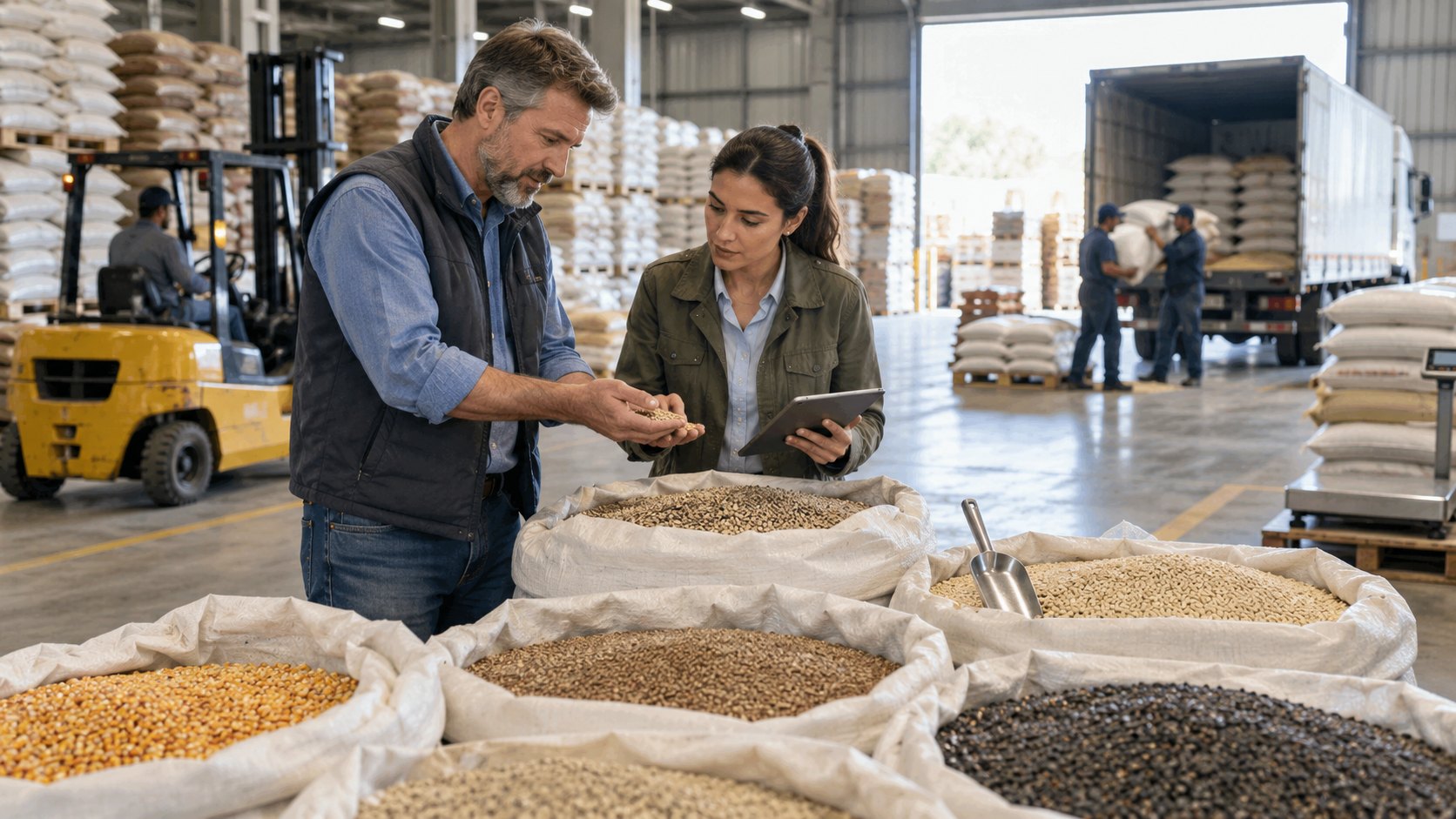
Cereals for food. Wheat, rice, maize, barley, sorghum and oats — bought against a specification, sold to mills, food manufacturers, institutional caterers and re-exporters. Volume is large, margin per tonne is small, and the buyer is technically literate about quality.
Feed grains and pulses. The same commodities graded for animals rather than people, plus beans, lentils and chickpeas. The customer is a feed mill, a feedlot, a dairy or a distributor serving them, and the purchasing rhythm follows livestock numbers rather than retail demand.
Oilseeds and specialty grains. Sesame, sunflower seed, quinoa and similar lines, generally in smaller lots at better margins, often for further processing rather than direct consumption.
Seed intended for planting. This sits inside the same activity name and outside the same business. It is discussed on its own below, because treating it as a variety of grain is the single most common error on this line.
The store is the business
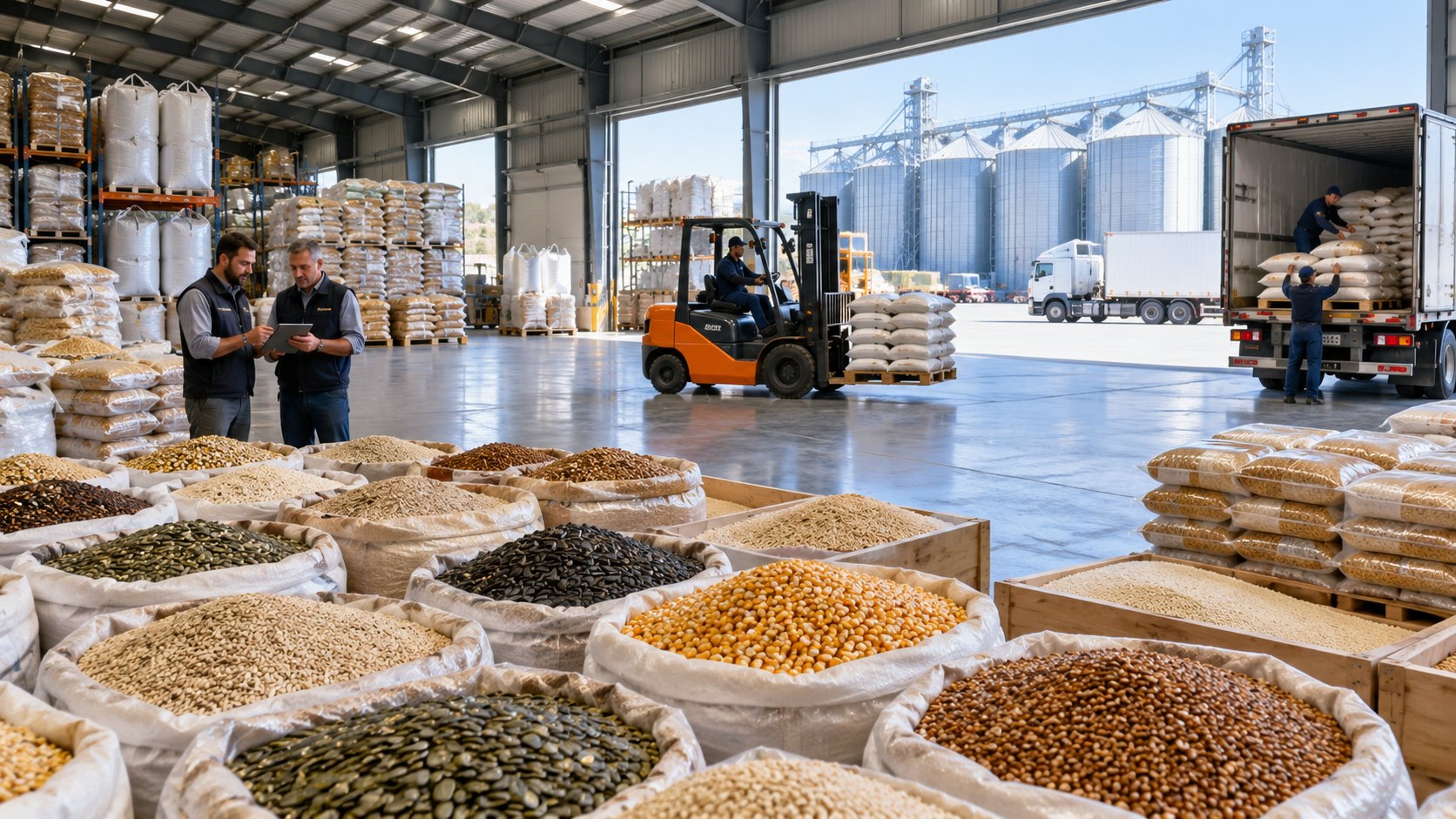
A trader with no storage is a broker with stock risk. A trader with the right storage has a product the buyer cannot assemble himself: a known grade, in a known quantity, available on the day it is wanted. Grain arriving in good condition will not stay that way on its own — heat, humidity, insects and rodents all work against a lot from the hour it is unloaded, and in this climate the humidity is the one that does the quiet damage. Sampling on arrival, lot separation, ventilation, temperature checks and a pest programme are the difference between a store and a write-off, and they are also the evidence a trader produces when a mill disputes a delivery.
That is also where the hardest commercial decision sits, because holding a tonne is both the source of the margin and the source of the risk.
five ways to hold the same tonne, weighed against the same rule
What it givesWhat it costs
- Importing a full cargo direct from originA landed price nobody further down the chain can matchCapital and price exposure locked into a vessel for weeks
- Buying ex-store from a UAE importerSmall lots, no clearance exposure, and stock you can inspectA share of the margin gone, and no say in what arrives next
- Holding inventory in a silo or shedThe ability to say yes the day a mill callsWeight loss, insects and humidity working against you every week
- Selling back to back against a signed orderNo inventory risk and no storage billA thin handling fee, and nothing to offer when the market turns short
- Bagging and blending before deliveryA product the buyer cannot source as cheaply himselfA plant, labour, and a food-grade premises that has to stay clean
The pattern in that drawing is the whole trade. Every route that improves the margin puts either capital or condition at risk, and every route that removes risk hands the margin to somebody else. Most durable operations in this line run two of them at once — back-to-back business to cover the overhead, and held stock to earn.
The buyers are few, large and price-aware
The customer list on this line is short, which is the good news and the bad news together. Flour mills, feed mills, food manufacturers, institutional and camp caterers, animal-feed distributors, re-exporters serving neighbouring markets and the wholesale market traders who serve smaller retailers. That is close to the whole universe, and a trader can name every serious one of them.
Two consequences follow. First, every one of those buyers knows the international price as well as the seller does, so nobody is winning business on a story. Second, because there are so few of them, a relationship is worth more than a deal — a mill that trusts a supplier's grade and delivery will pay for reliability, and it will stop answering the phone permanently after two bad lots.
The route to them is unglamorous and works. Sell on specification, deliver against it, document what was sent, and be the supplier who calls before the shortfall rather than after it. Re-export deserves a separate thought: goods that arrive and leave without entering the UAE market are a different commercial and customs proposition from goods sold to a mill in Dubai, and which of the two the business is really doing should be settled before the jurisdiction is chosen, because it is the one factor that genuinely argues for a free zone over a mainland licence rather than the reverse.
The conditions on grain, and the separate ones on seed
Grain moving toward the food chain is treated as food. Consignments are cleared on a product basis by the federal agriculture and food authorities together with the emirate's food control, and the premises that hold the goods are inspected for suitability by the municipality — so the store is examined for what it is used for, not merely leased. Feed destined for animals is controlled on the same principle, since what an animal eats reaches the food chain by another route. A customs code held in the importing company's own name is what allows the company to bring a cargo in at all.
Seed intended for planting is a different matter and should be planned as one. A live seed is a plant-health question rather than a nutritional one: what travels with it is the risk of introducing a pest or a disease into the country's agriculture, and that concern sits with the federal authority for agriculture and plant health rather than with a food inspector. A trader already moving feed wheat should expect an entirely different conversation the first time it ships seed wheat, and should not assume any part of its existing product file carries across.
None of the specific permits, conditions, documents or costs on either side can be stated generically, because they turn on the product, its origin and the emirate. ConsultZone confirms them against the actual product list and the actual port and premises before a cargo is bought.
References
- Ministry of Climate Change and Environment — agriculture and plant health, the clearance of agricultural consignments, and national food security policy. Ministry of Climate Change and Environment
- Dubai Customs — import and export, customs codes held in the importer's own name, and restricted and prohibited goods. Dubai Customs
- Dubai Municipality — food control and the suitability of premises used to store food and feed in Dubai. Dubai Municipality
- UAE Government portal — the National Food Security Strategy and the country's stated dependence on imported food. UAE Government portal
Elsewhere in Trading
Activities that sit beside this one
Most licences carry more than one activity. Adding a neighbouring line at the application stage costs a fraction of amending the licence afterwards.
Begin with a clear conversation
Tell us what you intend to build.
A consultant will map the structure, jurisdiction, approvals and likely cost against what you actually described — not against a package.
