
Activity CZ 115
How to Start a Leather Wholesale Business in Dubai
Leather is bought by specification, not by the piece. What the wholesale line covers once the hide has been tanned, who buys graded material, and where the licence stops.
ConsultZone licensing desk
- Activity code
- CZ 115
- Category
- Trading
- Reviewed
- Read
- 7 min
Listen instead
54 seconds
An audio summary of this guide.
Topic summary
How to Start a Leather Wholesale Business in Dubai
A tannery sells a material. An abattoir sells a by-product. That distinction is the whole of this licence line, and it settles everything downstream — what the goods are worth, how long they keep, who buys them, and what a complaint sounds like when one arrives.
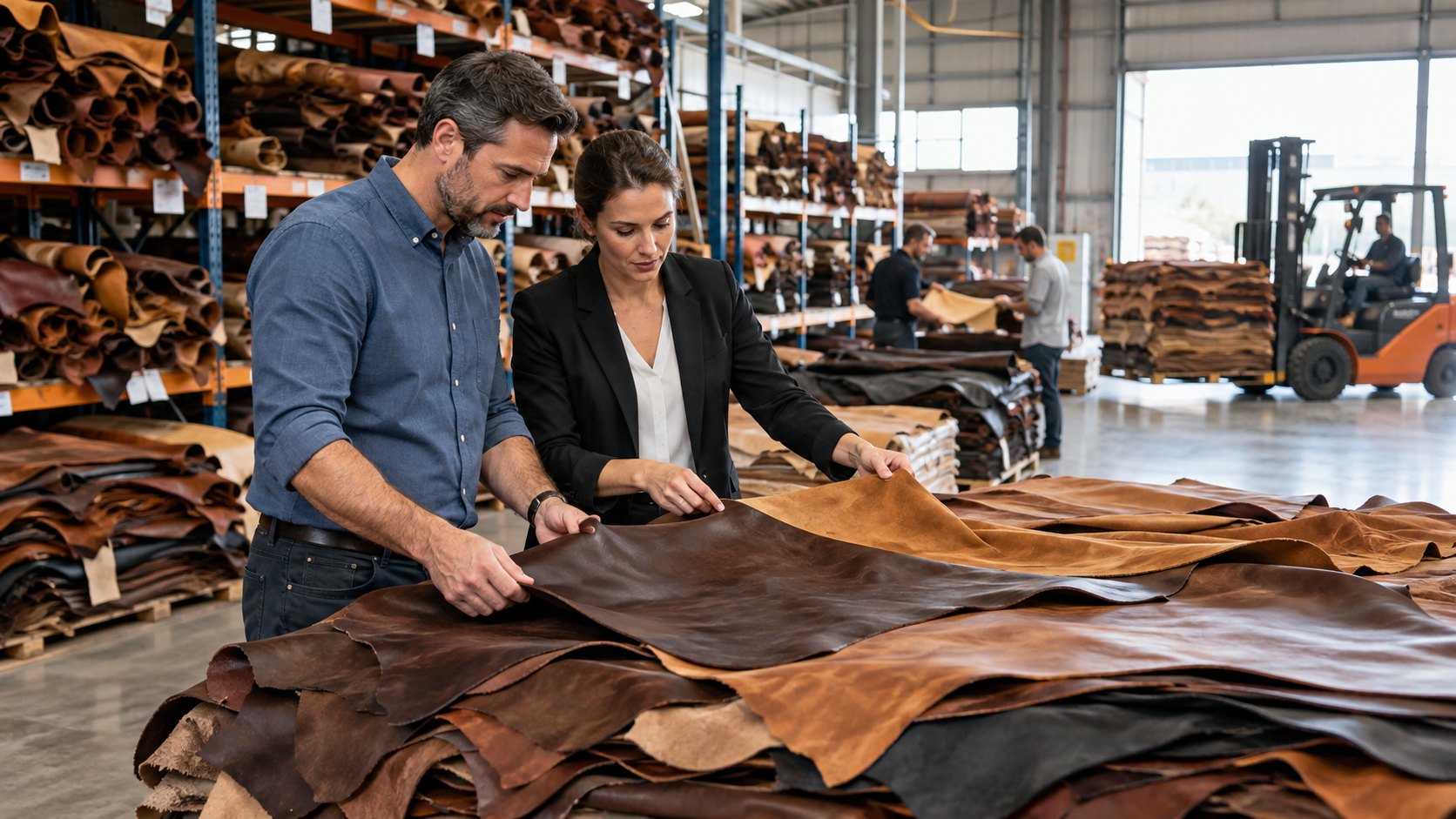
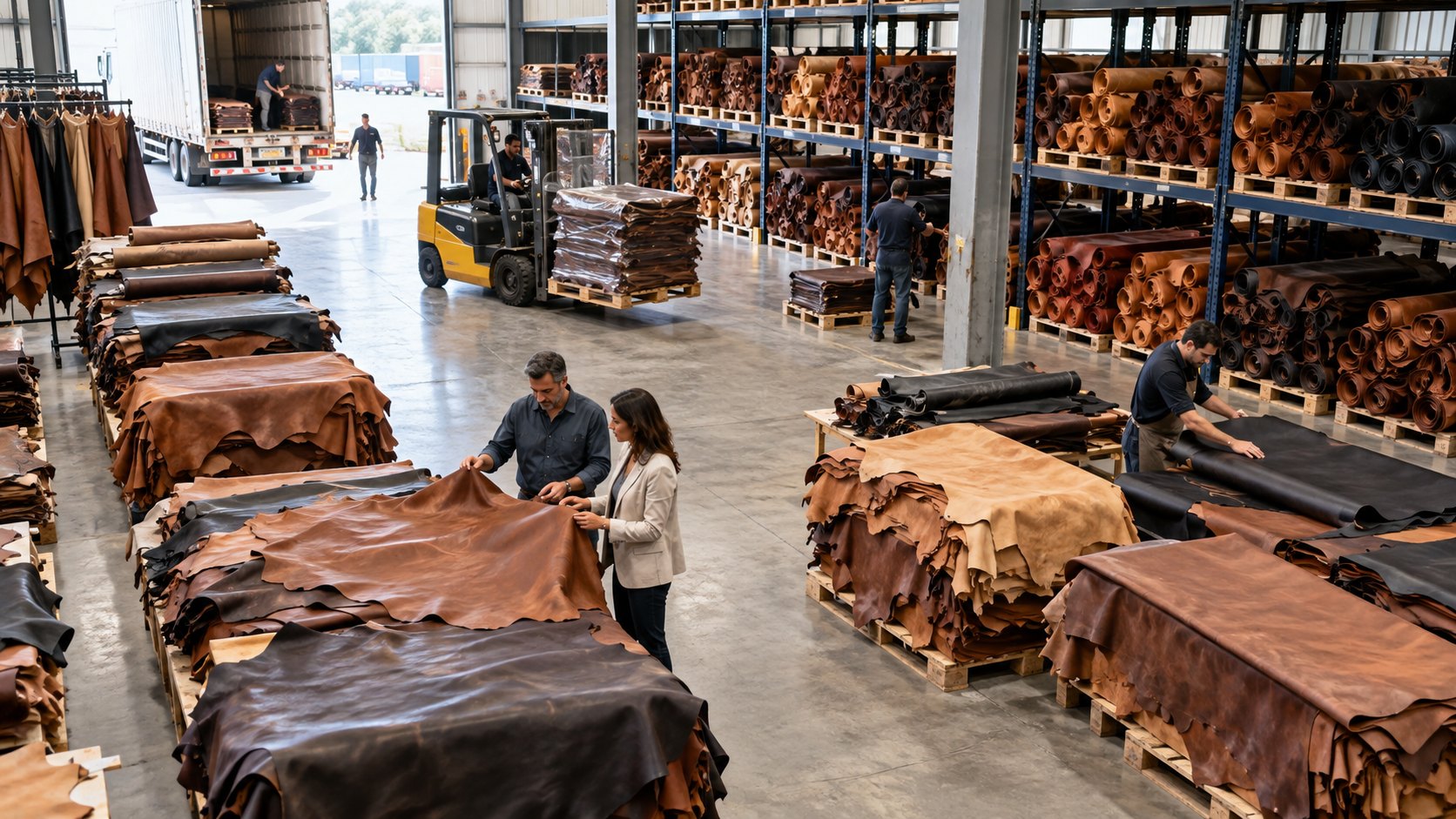
Leather has already been through the process that makes it stable. It has been limed, tanned, split to thickness, dyed, finished and graded, and it reaches a warehouse in bundles with an area stamped on the flesh side of each piece. It does not putrefy. It does not have to be moved within days of arriving. It is priced against a written specification, and it is bought almost entirely by people who intend to cut it up: shoemakers, upholstery workshops, bag and belt makers, saddlers, and the trim shops that line car interiors, majlis seating and aircraft cabins.
That makes leather wholesale an industrial supply business rather than a commodity one. The customer is not buying leather. He is buying the ability to cut fifty matching panels out of what arrives, and to do it again in three months when the order repeats. A supplier who can promise that keeps a customer for years. One who cannot has a long series of first orders.
Who buys a leather wholesale licence, and what each of them is solving
Suppliers to furniture and interiors workshops
The largest group, and the one the region's fit-out work feeds. Upholstery shops working on hotel, villa and office contracts need hides in a specified colour and thickness, in quantity, on a date fixed by somebody else's project programme. They rarely want to import a container themselves, because the order in front of them is two hundred square metres and a container is not.
Footwear, bags and small leather goods
A fragmented trade of small makers, each buying modest quantities of many articles. The margin here is in holding the range — several tannages, several thicknesses, a shelf of colours — so a maker can take eight hides of one thing and six of another without meeting a tannery's minimum order from abroad.
Automotive and transport trim
A narrower and far more demanding customer. Trim leather is bought to a technical specification and the buyer wants the tannery's own documentation travelling with the goods. Volumes are steadier and the tolerance for variation is close to zero.
Traders serving the wider regional market
Operators using a UAE warehouse to supply makers across the Gulf and beyond, where what they add is breaking bulk and holding stock nearer the customer than the tannery sits.
CZ 115 — Wholesale Of Leather
What the goods actually are
Under this line you buy and sell finished and semi-finished leather: full-grain and top-grain hides, corrected grain, splits, suede and nubuck, patent and other coated finishes, and the sheep, goat and calf skins that clothing and lining work uses. Chrome-tanned and vegetable-tanned material both sit here. So do sides and shoulders sold by weight rather than as whole hides, and so do the offcuts and short lots a wholesaler sells on to small makers. Wet-blue and crust leather belong here too, because the tanning has already happened — they are unfinished, not raw.
Four variables describe almost every order: grade, thickness, finish and colour. Grade is about the surface, meaning how much of the natural grain survived and how many scars, brands and insect marks the buyer will have to cut around. Thickness is decided at the splitting machine and it dictates what the material can be used for at all. Finish decides how it wears and how it takes light. Colour is the one the customer will argue about.
The lot is the product
Two hides tanned in different drums are not the same hide. Shade drifts, temper varies, and a cutter who receives half his order from one lot and half from another cannot put both into the same sofa. This is the most common reason a leather supply relationship ends. The honest way to run the business is to sell what is physically in front of you as a lot, keep that lot together, and tell the buyer plainly when the next one will differ.
| Raw hides and skins | Finished leather | Leather goods | |
|---|---|---|---|
| What is being sold | A perishable by-product of slaughter | A graded, stable industrial material | A finished article with a name on it |
| Who the buyer is | A tannery | Cutters: shoes, bags, upholstery, trim | A retailer, or the public |
| What sets the price | Weight, and how fast it was cured | Area, grade, thickness and finish | Design, and the label |
| What goes wrong | The load spoils before it is treated | The lot varies and the cutter cannot use it | Stock ages in a shape nobody wants |
| Which licence line it is | Wholesale of hides and skins | Wholesale of leather | Manufacturing, then retail |
Read the focus row as the business plan. Everything else on this page is detail; the reason a leather wholesaler earns a margin at all is that somebody further down the chain cannot afford an inconsistent lot.
Where the money sits, and where it goes
Leather is bought in packs and held. That is working capital standing in a rack, and it ages in a particular way — the material stays sound while the colour and the finish stop being what the market wants. A wholesaler carrying twenty colours will sell four of them well, six slowly, and the rest at a discount two years later. The discipline is a narrow, deep range rather than a wide, shallow one, plus a second income from remnants and short lots that turns the tail of every pack into cash instead of dead stock.
Where the leather line stops
Raw material is a different licence. Untanned hides and skins — green, salted or pickled, moving from an abattoir towards a tannery — belong to the hides and skins trade, which is a perishable business with its own storage and animal-health conditions. If the plan is to buy off the killing floor and sell to tanneries, this is the wrong line to take.
Tanning is not in it either. Liming, tanning, splitting, dyeing and finishing are manufacturing, and they carry industrial premises and effluent conditions that a warehouse licence does not contemplate. Making finished articles is manufacturing too, and selling those articles to the public is a retail line on top of that.
Exotic leathers are a separate proposition again. Crocodile, python, lizard, ostrich and stingray come from species controlled under the international convention on trade in endangered species, which the UAE applies through its federal environment ministry. The documentation travels with the skin, and a buyer or a customs officer is entitled to ask for it. The safe assumption is that an exotic skin is not an ordinary hide with a pattern on it.
And leather is still an animal product at the border. Consignments are cleared on a product basis by the federal authorities responsible for agriculture and animal health, alongside the emirate's customs authority, and the conditions that apply turn on the material, its origin and how far it has been processed rather than on the company holding the licence. What those conditions are for a particular tannage from a particular country, and whether they differ between a mainland warehouse and a free zone one, is the part ConsultZone confirms for the actual case before anyone commits to a lease.
References
- Ministry of Climate Change and Environment — animal products, animal health and the federal controls on trade in protected species. Ministry of Climate Change and Environment
- Dubai Customs — import and export of goods of animal origin, customs codes, restricted and prohibited goods. Dubai Customs
- Convention on International Trade in Endangered Species — the framework behind the documentation an exotic skin carries. UAE Government portal
- Dubai Municipality — premises suitability and public health conditions on a storage unit. Dubai Municipality
Elsewhere in Trading
Activities that sit beside this one
Most licences carry more than one activity. Adding a neighbouring line at the application stage costs a fraction of amending the licence afterwards.
Begin with a clear conversation
Tell us what you intend to build.
A consultant will map the structure, jurisdiction, approvals and likely cost against what you actually described — not against a package.
