
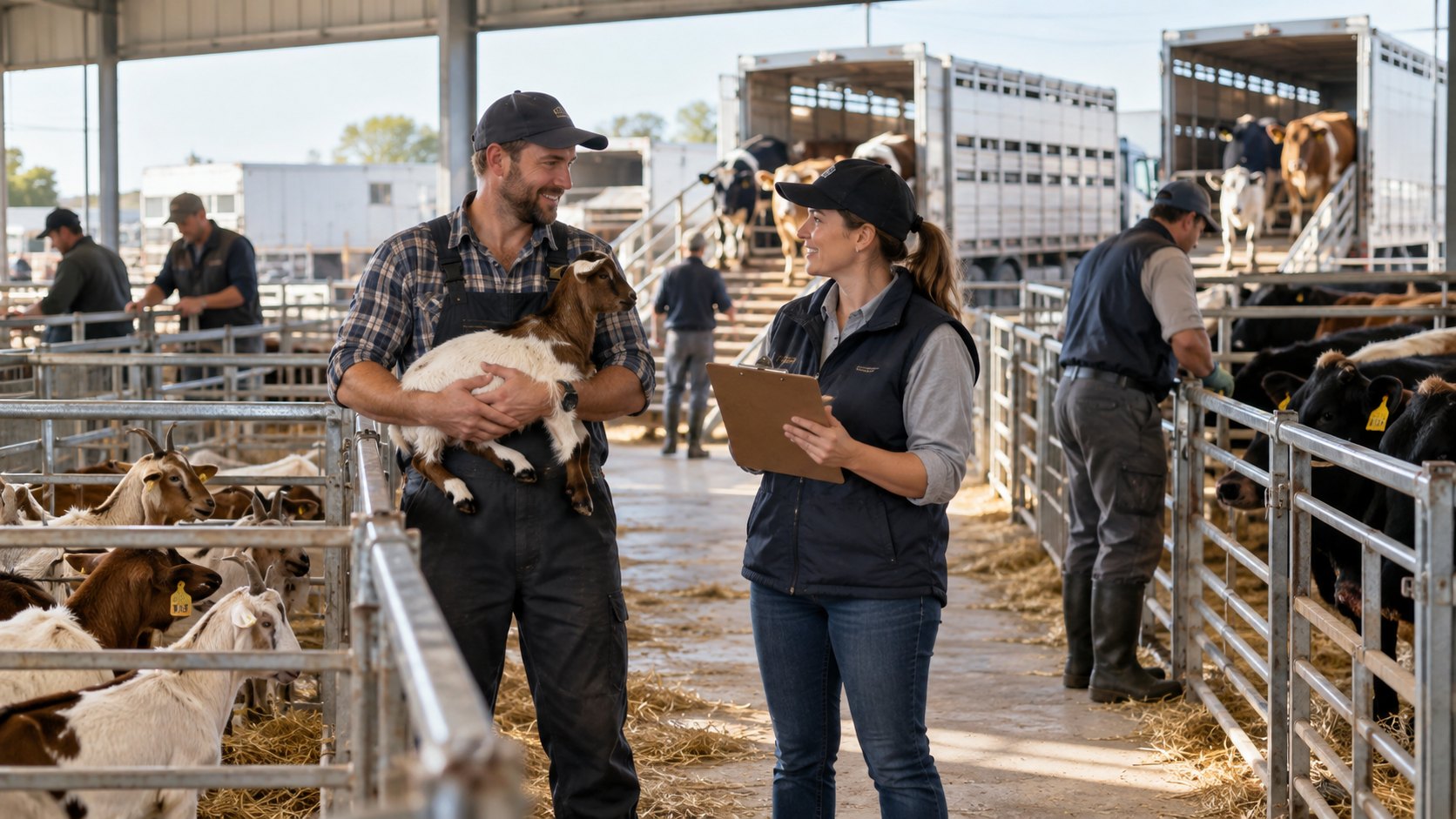
Activity CZ 113
How to Start a Live Animal Wholesale Business in Dubai
In live animal wholesale the stock eats twice a day and can die in transit. Why a calendar sets the demand, what the activity covers, and the veterinary and welfare conditions that travel with the consignment.
ConsultZone licensing desk
- Activity code
- CZ 113
- Category
- Trading
- Reviewed
- Read
- 6 min
Listen instead
46 seconds
An audio summary of this guide.
Topic summary
How to Start a Live Animal Wholesale Business in Dubai
Every other trading line lets you lock the warehouse and go home. This one does not. The inventory breathes, eats twice a day, needs water in heat that will kill it without, and arrives in worse condition than it left if it is loaded badly. Wholesaling live animals is the only activity in this catalogue where the goods can be lost to nothing more than a delay.
That is not a reason to avoid the trade. It is the reason the trade is defensible. A business whose operational risk is biological rather than commercial is a business that competitors cannot enter on price alone, and the operators who do it well are not the ones with the cheapest supply — they are the ones whose animals arrive fit.
The demand is set by a calendar, not by a catalogue
Most wholesale lines forecast from economic activity. This one forecasts from the religious and social year, and the pattern is stable enough to plan against. Eid al-Adha concentrates demand for sheep and goats into a short, sharply defined window, because the sacrifice is the observance. Ramadan raises household meat consumption for a month. Weddings, National Day and the winter season all lift it again. Around those peaks sits a steady baseline of institutional demand — abattoirs, catering, live markets and the farms that buy breeding and replacement stock.
The supply side of that equation is the other half of the case. The UAE's climate makes feed, water and cooling the three most expensive inputs in animal production, so the country raises a minority of the animal protein it consumes and imports the rest, which its own food security strategy states plainly.¹ A trade that exists to close a structural gap in a market with predictable seasonal peaks is about as legible as wholesale gets.
What is not legible is the operational exposure, and that depends entirely on how the trade is structured. There are three honest ways to run it, and they distribute the risk very differently.
one trade, three routes, judged on the same five rows
| Judged on | Importing live | Buying from UAE farms | Selling to order, no stock held |
|---|---|---|---|
| Animals stand in your care between purchase and sale | Yes | Yes | No |
| Mortality and loss of condition fall on you | Yes | Yes | Shared with the supplier |
| Veterinary clearance and quarantine sit on your own file | Yes | No | Only if you import |
| Capital is out before a single head is sold | Yes | Yes | Limited |
| You choose the breed, age and weight you sell | Yes | Partial | No |
The marked column is not the most profitable route. It is the one a first file should usually take, because it separates learning the market from carrying the market. Back-to-back selling — the animals moving from supplier to buyer without standing in your yard — lets a new company build the buyer list, the pricing instinct and the reputation for arriving on time while somebody else owns the mortality risk. Importing is where the margin is, and it should be entered once the buyer side is proven, not before.
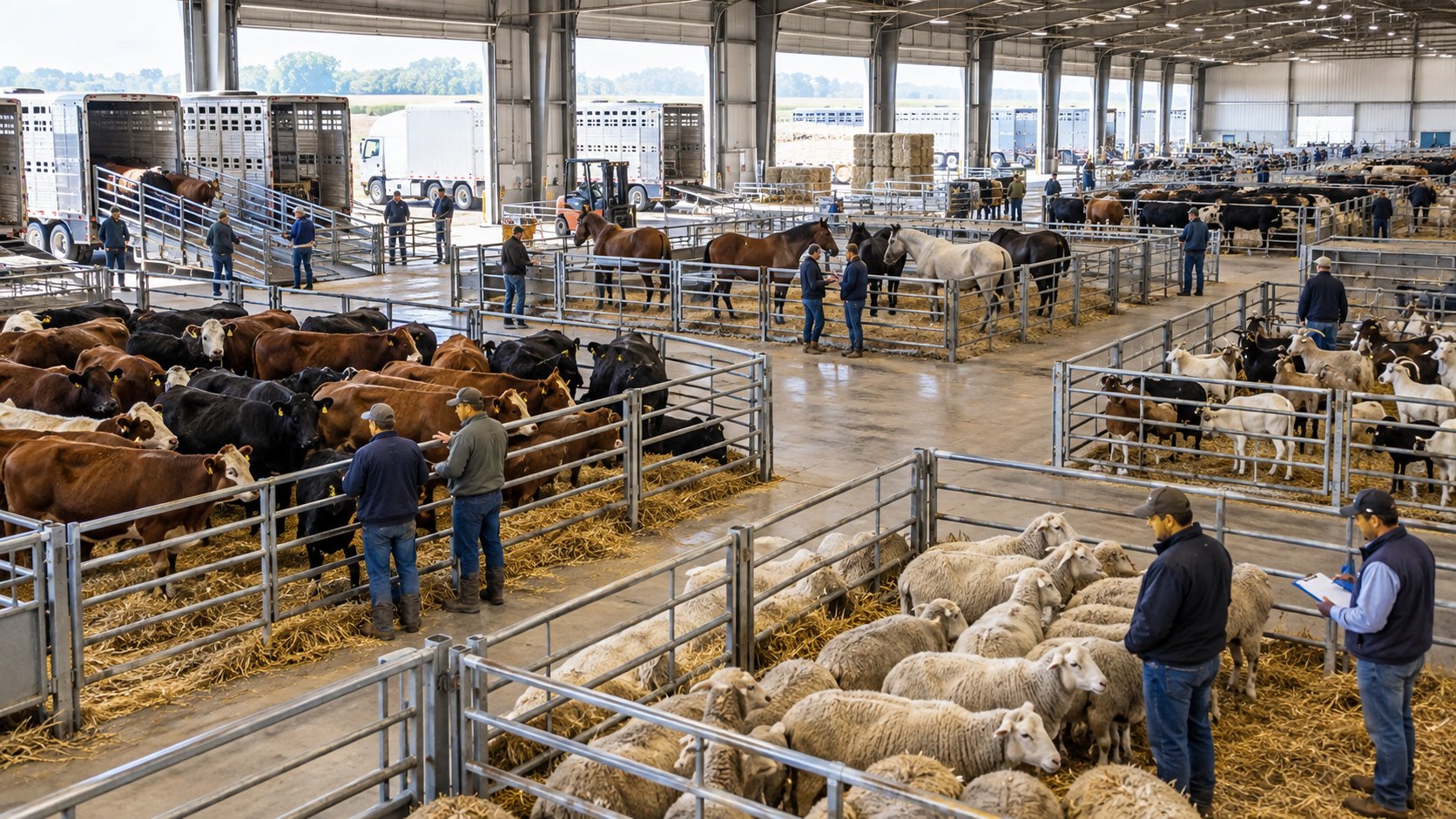
CZ 113 — Wholesale Of Live Animals
What the activity covers
The buying and selling of live animals in commercial quantity to business buyers: sheep, goats, cattle, camels, buffalo, poultry and the working and breeding stock that go with them. It covers importing them, holding them while a sale completes, sorting and grading a consignment by weight and condition, and delivering them on. The product is the animal itself, alive, and the value is in its condition on arrival rather than in any processing.
Grading matters more on this line than newcomers expect. A buyer is not purchasing a head count. An abattoir is buying yield, a farm is buying breeding potential or growth capacity, and a live market is buying appearance. The same pen of animals is worth different money to each of them, and a wholesaler who cannot sort a consignment accurately gives that difference away.
What it does not cover
The line ends where the animal does. Slaughter, cutting and packing are separate activities carried out on approved premises; trading chilled or frozen meat is a food trading line with its own controls; and veterinary treatment, insemination and animal transport sold as a service are each their own undertaking. Raising the animals is not covered either — breeding and growing stock is a farming activity that needs agricultural land approved to hold animals, which is a different licence and a different business.
There is genuine neighbouring ground with CZ 119 — Live Stock Trading, and it is more useful to draw the boundary than to pretend the two are unrelated: livestock trading is the narrower commercial trade in farm animals, while this line is the broader wholesale activity across live animals generally. Where a plan sits close to that line, the activity should be settled against the actual species and buyers before the application rather than after it.
What attaches to a living consignment
This is the part of the file that has no equivalent in ordinary trading, and it is worth understanding in shape even though the specifics belong to a named case.
Animal health is a federal matter. The Ministry of Climate Change and Environment is the authority for agriculture and animal wealth and administers the federal animal health framework, which is what governs the movement of live animals into and around the country.² In Abu Dhabi, the Agriculture and Food Safety Authority carries the equivalent responsibility for animal health locally, and its requirements are read alongside the federal ones rather than instead of them.³ Live animals therefore involve veterinary clearance on import, and animals arriving from abroad are subject to quarantine before they enter the market — a period during which they must be housed, fed, watered and observed, and during which they are your cost.
Welfare is not advisory. Federal Law No. 16 of 2007 on the Protection of Animals sets standards for feeding, housing, treatment and transport, and transport is where a wholesaler meets it most often: fitness to travel, stocking density on the vehicle, ventilation, water and journey time are all conditions on how the goods may lawfully move.⁴ A consignment that is loaded to maximise a truck rather than to keep animals standing is both a welfare failure and a commercial one, because animals that arrive stressed weigh less and sell for less.
Premises are the third element. Holding pens, shade, water, feed storage, effluent handling and somewhere for veterinary inspection are physical requirements of the operation, and in practice they are what decides where the company can be incorporated at all. A free zone licence supplies a company and an address; it does not supply land approved to hold animals, and most zones have none to give. Settle the site, then choose the jurisdiction — not the other way round.
Exactly which clearances apply, on what conditions, and what the arrangement costs to hold differ by emirate, by species and by the country the animals come from.⁵ Those are answerable questions for a specific plan, and ConsultZone confirms them against the intended species list and site before anything is committed.
References
- National Food Security Strategy 2051 — the UAE's statement of its dependence on imported food and its domestic production aims. UAE Government portal
- Agriculture, animal wealth and the federal animal health framework governing the movement of live animals. Ministry of Climate Change and Environment
- Animal health and food safety requirements applying in Abu Dhabi. Abu Dhabi Agriculture and Food Safety Authority
- Federal Law No. 16 of 2007 on the Protection of Animals — feeding, housing, treatment and transport standards. UAE Government portal
- Import and export of live consignments, customs codes and restricted goods. Dubai Customs
Elsewhere in Trading
Activities that sit beside this one
Most licences carry more than one activity. Adding a neighbouring line at the application stage costs a fraction of amending the licence afterwards.
Begin with a clear conversation
Tell us what you intend to build.
A consultant will map the structure, jurisdiction, approvals and likely cost against what you actually described — not against a package.
