
Activity CZ 191
How to Start a Machine Tool Wholesale Business in Dubai
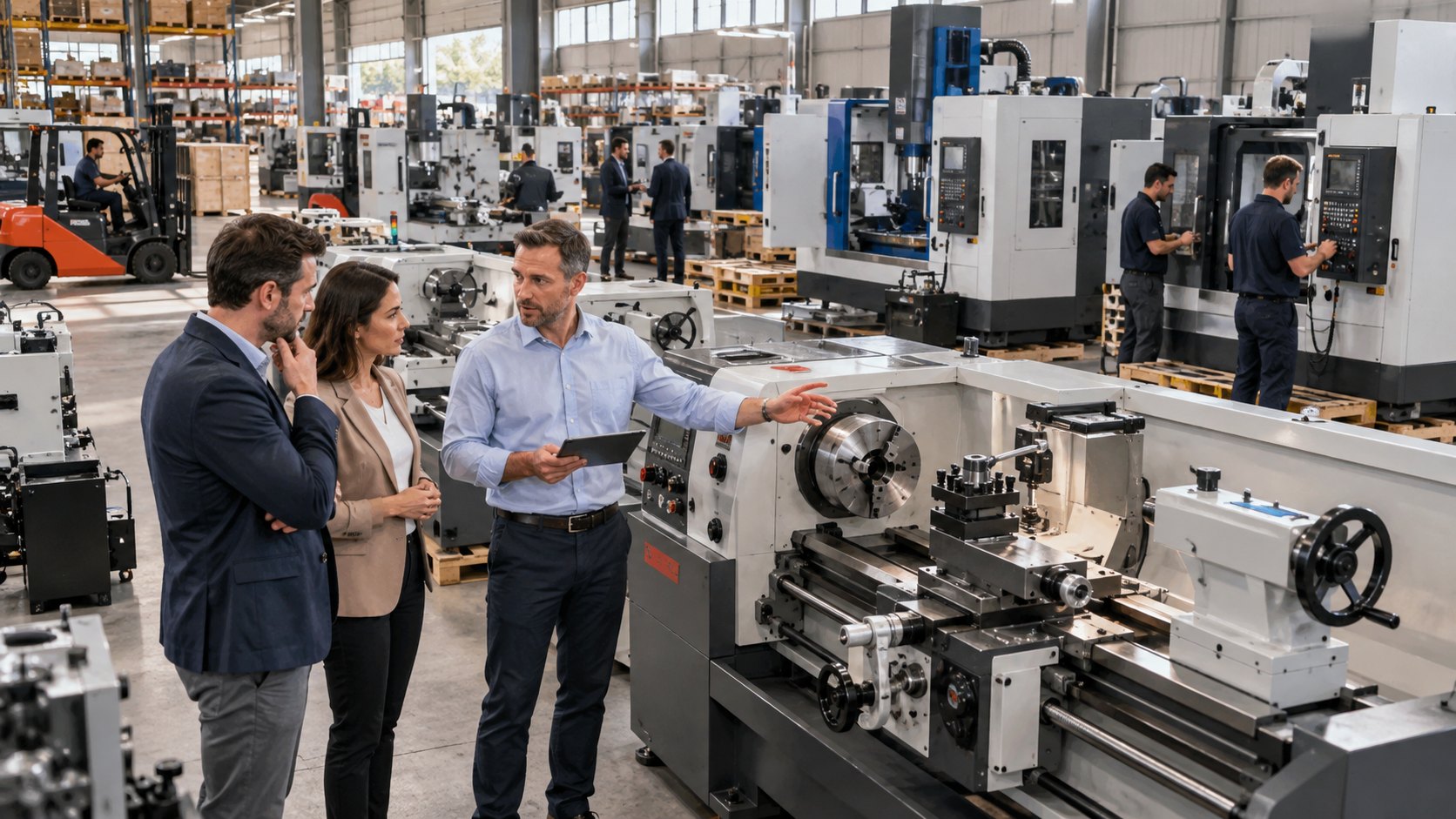
A machine tool is bought against a part the customer needs to make, not for itself. That is why this wholesale line is a technical sale, and why service cover decides the order.
ConsultZone licensing desk
- Activity code
- CZ 191
- Category
- Trading
- Reviewed
- Read
- 8 min
Listen instead
53 seconds
An audio summary of this guide.
Topic summary
How to Start a Machine Tool Wholesale Business in Dubai
Nobody orders a lathe. They order the ability to turn a shaft to a tolerance their present machine cannot hold, in a material already sitting in the yard, at a rate that makes the job worth quoting for. The machine is only the means. Every question that decides a sale in this trade comes back to the part: what it is made of, how large it is, how accurate it has to be, and how many are wanted a week.
That is what separates this line from the rest of the wholesale catalogue. A trader in cutlery or lighting sells a product and lets the buyer judge whether it suits. A machine tool trader has to understand the customer's work well enough to say which machine will do it, which will not, and when to refuse an order that will end badly. Get that wrong and the machine stands on a customer's floor, fully paid for, producing scrap.
The buyer is a workshop with a job it cannot take yet
Demand in this trade almost never begins with a machine. It begins with an enquiry a workshop had to turn down.
General engineering and job shops are the backbone of it. They quote repairs, one-offs and small batches for whoever walks in, and they buy a machine when the work they are refusing becomes more valuable than the machine costs. They buy pragmatically, they buy used as readily as new, and they care more about whether a spare part can be had on a Thursday afternoon than about the brochure.
Manufacturers bringing a process in-house are the opposite. A plant that has been subcontracting its machining wants predictability and capacity, has a costed business case, and will run a machine hard on two shifts. They buy specification and support, and they will pay for both.
Oil, marine and heavy repair workshops in the UAE buy for size rather than precision: long shafts, large flanges, big-bore work, often on hard or corrosion-resistant alloys that punish a light machine. The constraint here is swing, bed length and rigidity, and a machine that is under-specified for the work destroys its own tooling.
Fabricators and sheet metal shops are buying presses, brakes, shears and saws rather than turning and milling equipment, and they think in tonnage and sheet width.
Technical institutes and training workshops buy conventional machines deliberately, because an apprentice who has never cut metal by hand reads a controlled machine badly. This is a quiet but genuine segment, and it buys on tender and on service terms rather than on price alone.
Other dealers and exporters are the last group, and in this region they matter. Machines are consolidated here and moved onward to markets across the Gulf, East Africa and South Asia, which is trading stock rather than selling capability, and it is a different business wearing the same activity wording.
What sits inside this line, and what quietly does not
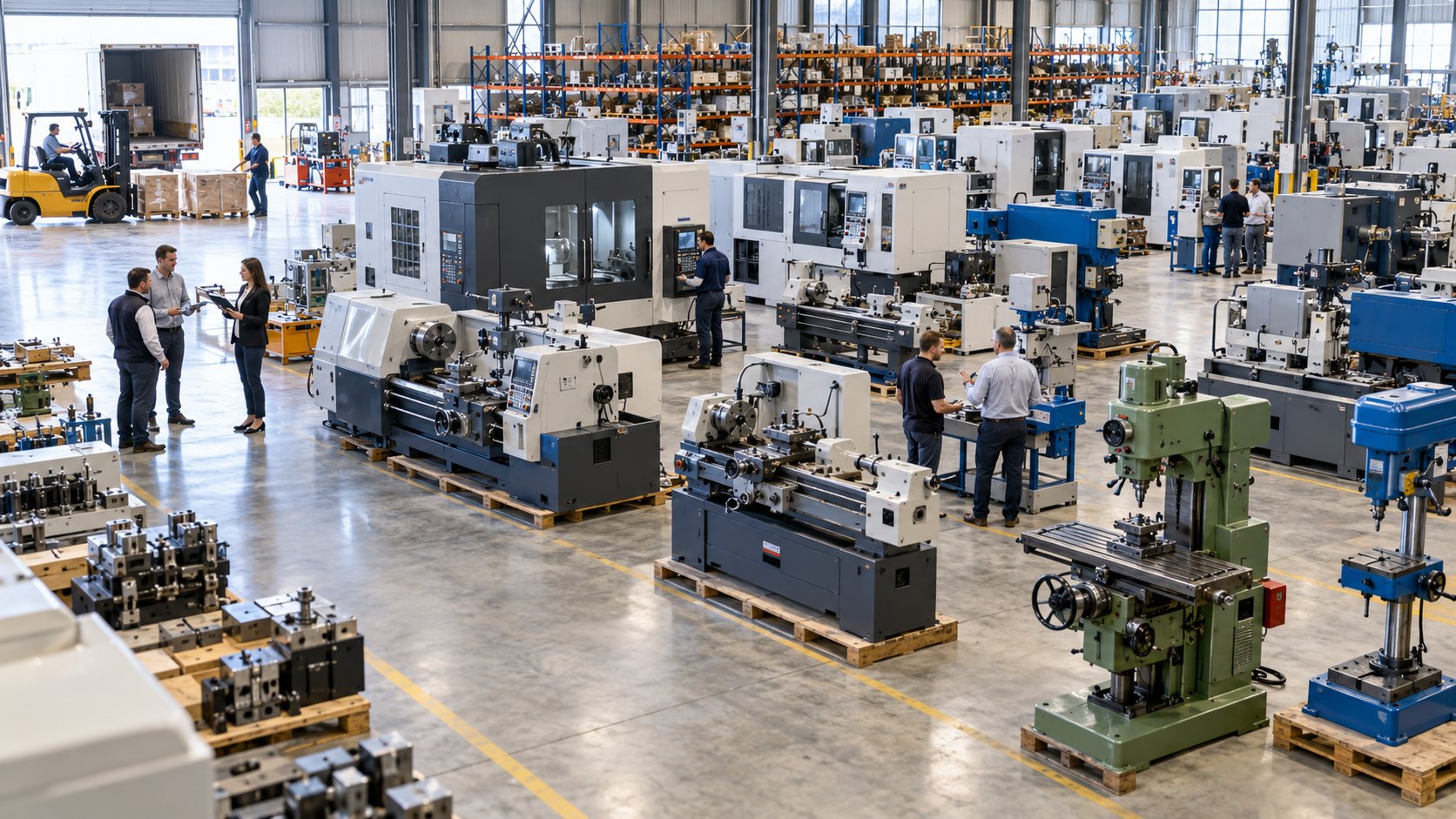
The wording is unusually generous: any type of machine tool, for any material. In practice that reaches metal-cutting equipment first — centre and turret lathes, milling machines, drilling and boring machines, surface and cylindrical grinders, saws, gear-cutting machines — and then metal-forming equipment: presses, press brakes, shears, rolls and punches. Because the wording says any material, it also reaches woodworking machinery, stone and glass working equipment, and machines for plastics and composites. The tooling and workholding that make those machines useful sit naturally alongside them: chucks, vices, collets, cutters, arbors and fixtures.
Two things it does not reach, and both are found out late.
Installing and commissioning machines for a fee is a separate activity, and so is repairing and maintaining industrial machinery. A wholesaler who delivers a machine, levels it, wires it and hands over a signed acceptance sheet is doing service work, and the honest moment to have that on the licence is when it is first drawn, not when an inspector asks who did the installation.
Computer-controlled machine tools sit at CZ 193, and that is not a filing technicality. A conventional machine is sold on iron and a controlled one is sold as a system, with programming, software support and trained operators behind it. Traders who intend to do both should say so at the outset; the two lines want different stock, different staff and different aftersales, and this page and the CZ 193 page are worth reading together before the activity wording is fixed.
The used machine trade is not a sideline, it is half the market
A well-built machine tool outlives several owners, which makes second-hand equipment a permanent parallel market rather than a discount option. Plant closures, factory relocations and fleet upgrades release machines that are mechanically sound and priced far below new, and a large share of the workshops described above buy exclusively this way.
It is a different business with the same licence. The stock is bought before there is a buyer for it, so the working capital is committed and illiquid. Value sits in things a photograph cannot show: spindle condition, wear on the ways and slides, backlash, whether the machine has been rebuilt and by whom, and how it was used for the years nobody can account for. The trader who wins here is the one whose inspection can be trusted, because the buyer cannot make his own. That reputation is the asset, and it is built machine by machine.
The premises are a crane, a floor and a power supply
This is the part of the plan most often underestimated, because the constraints are physical and they are decided by the lease rather than by the licence.
A machine tool is heavy, and it concentrates its weight on a small footprint. Floor loading, the height and width of the roller door, and whether the unit has a gantry crane or enough clear height for a forklift to work are the questions that determine whether stock can be taken in at all. A machine that cannot be got through the door is not stock. Power is the second constraint: industrial machines expect a three-phase supply, and voltage and frequency have to match what the machine was built for. A demonstration machine also needs compressed air, somewhere for coolant and swarf to go, and a floor flat enough for the machine to be levelled properly, because a badly levelled machine will not hold a tolerance however good it is.
six gates, and only one of them is the licence
The emirate's economic department
- The activity wording the licence carriesWith the initial approval, and awkward to change later
The landlord, before anyone official looks
- A floor, a door and a crane that will take the machinesAt the lease, and it cannot be fixed afterwards
The municipality
- Suitability of the unit for storing and running machineryWith the tenancy, not after it
The emirate's customs authority
- Clearance of each machine at the borderOn every import, every time
The landlord and the electricity provider
- A three-phase supply into the unitBefore a machine can be run in front of a customer
The machine builder, and no authority at all
- Whether a builder will appoint you for this territoryBefore a demonstration machine is bought
The marked row is marked because it is the gate no government body controls and the one that most often decides whether the business has anything to sell. Machine builders appoint dealers by territory and they appoint on evidence: a workshop, a trained service engineer, a spares holding and a demonstration machine. A trader without an appointment can still buy and resell, but he does so at open-market prices, with no factory backing when a machine arrives faulty, and no protection when the builder appoints somebody else next year.
Service capability is the same argument from the customer's side. A workshop that has stopped production is losing money by the hour, and it will buy from whoever can get an engineer and a part to the floor fastest. That, far more than the discount, is what a second order depends on.
What the licence costs to hold, which emirate suits the plan, and what any specific machine needs before it clears the border all depend on the product list, the premises and the licensing authority. Those are settled case by case against the actual plan rather than quoted from a table, and on this activity the size and weight of the machines decide more of the answer than anything on the licence.
References
- Ministry of Industry and Advanced Technology — industrial licences, national standards and conformity marks for machinery and equipment. Ministry of Industry and Advanced Technology
- Dubai Customs — import and export, customs codes, and restricted or prohibited goods on entry. Dubai Customs
- Dubai Municipality — premises suitability, industrial storage and public health conditions in Dubai. Dubai Municipality
- Ministry of Human Resources and Emiratisation — work permits and labour contracts for service engineers and technical staff. Ministry of Human Resources and Emiratisation
- UAE Government portal — federal law, industrial strategy and general government information. UAE Government portal
Elsewhere in Trading
Activities that sit beside this one
Most licences carry more than one activity. Adding a neighbouring line at the application stage costs a fraction of amending the licence afterwards.
Begin with a clear conversation
Tell us what you intend to build.
A consultant will map the structure, jurisdiction, approvals and likely cost against what you actually described — not against a package.
