
Activity CZ 194
How to Start a Computerised Sewing and Knitting Machine Wholesale Business in Dubai
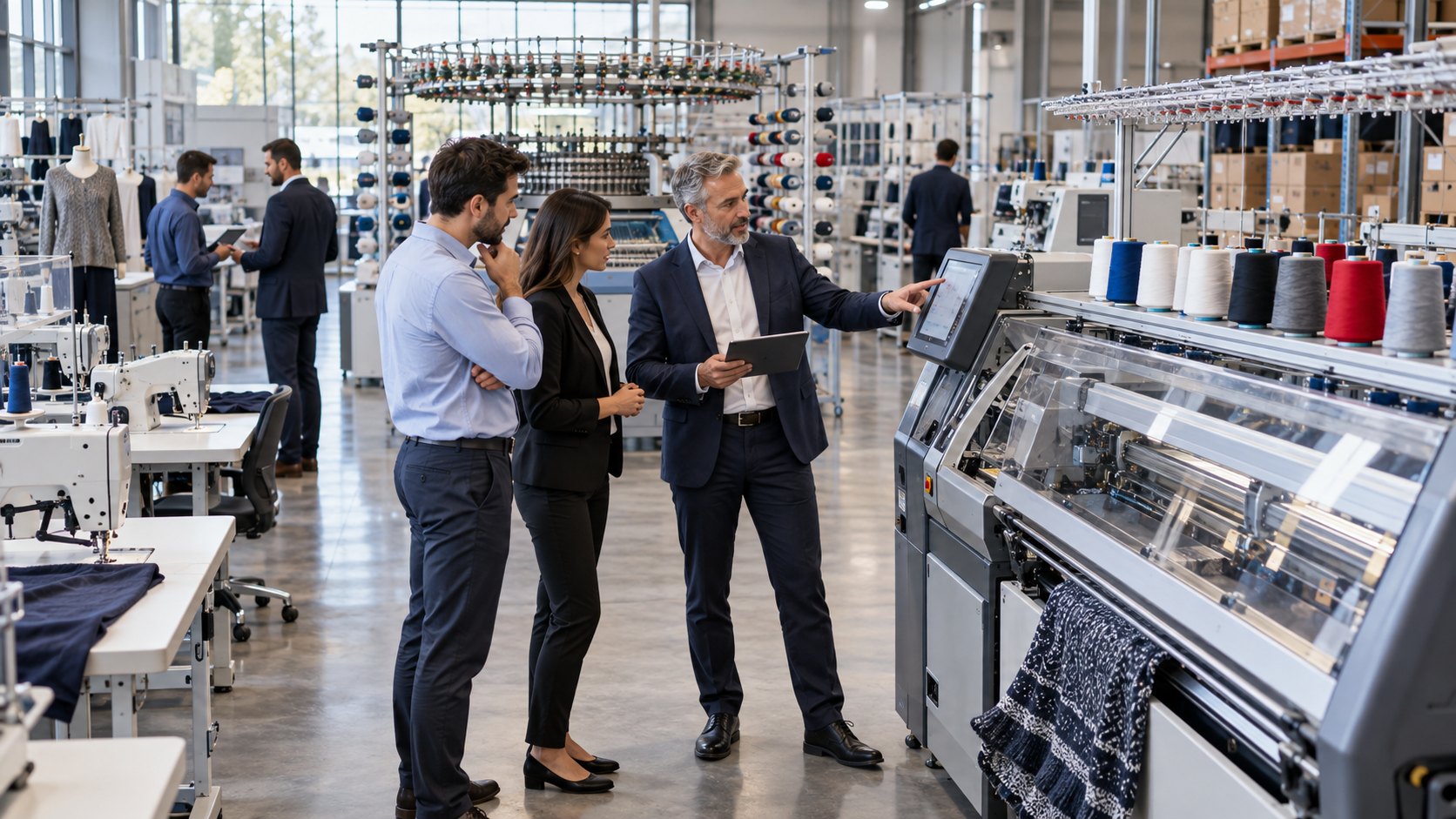
The tailoring and embroidery workshops at the front of this catalogue are the buyers for computerised sewing and knitting machines. The machine is the easy part; training and servicing win the repeat order.
ConsultZone licensing desk
- Activity code
- CZ 194
- Category
- Trading
- Reviewed
- Read
- 7 min
Listen instead
39 seconds
An audio summary of this guide.
Topic summary
How to Start a Computerised Sewing and Knitting Machine Wholesale Business in Dubai
This is the narrowest wording in a catalogue of two hundred, and the narrowness is the opportunity. Everything else in the machinery family describes a market; this one describes a customer. Turn back to the front of the same catalogue and the customer is sitting there in plain sight: Arabic men's wear tailoring, Arabic gowns, ladies' gowns, men's tailoring, ladies' wear tailoring and embroidery, and two separate entries for embroidery workshops. Those workshops exist in numbers in every emirate, they compete on finish and turnaround, and the machines on this page are what they buy when they decide to stop competing on hours.
There is a second buyer behind them that is easy to overlook — the printing and branding trade. A workshop that puts logos on uniforms, caps, towels and corporate gifts is running multi-head embroidery machines all day, and it buys on head count, hoop size and uptime rather than on romance about garments.
The buyer is a workshop that has run out of hands
A tailoring business grows until it hits a wall that hiring cannot fix. The wall is always the same: the finishing work that takes the longest and pays the least. Embroidery on a thobe cuff or an abaya panel done by hand is hours of skilled labour per piece, and it does not scale, because the skilled hands are scarce and they are already busy.
That moment is when a machine becomes interesting, and it explains why the sale is emotional as well as commercial. The owner is not buying equipment; they are buying their way past a ceiling they have been pressed against for a year.
Established tailoring houses buy a first computerised machine to take over the repetitive part of a design they already sell. They are cautious, they buy on the recommendation of somebody who already owns one, and they will judge the purchase on whether their existing customers notice a difference in finish.
Embroidery and branding workshops are the volume buyers. They think in heads, stitches per minute and how many garments a shift produces, and they replace and expand rather than start from nothing. They are the most informed buyers in the market and the least sentimental.
Uniform and workwear manufacturers buy for consistency across thousands of identical pieces and for the paperwork that goes with a corporate or government contract.
Knitwear and fabric producers are a smaller group here but a real one, and they buy heavier controlled machinery — flat and circular knitting machines, and the equipment behind them — where a single unit is a significant capital decision.
Training and vocational workshops buy small numbers and expect the machines to be taught as well as delivered.
CZ 194 — Wholesale of computer-controlled textile machinery
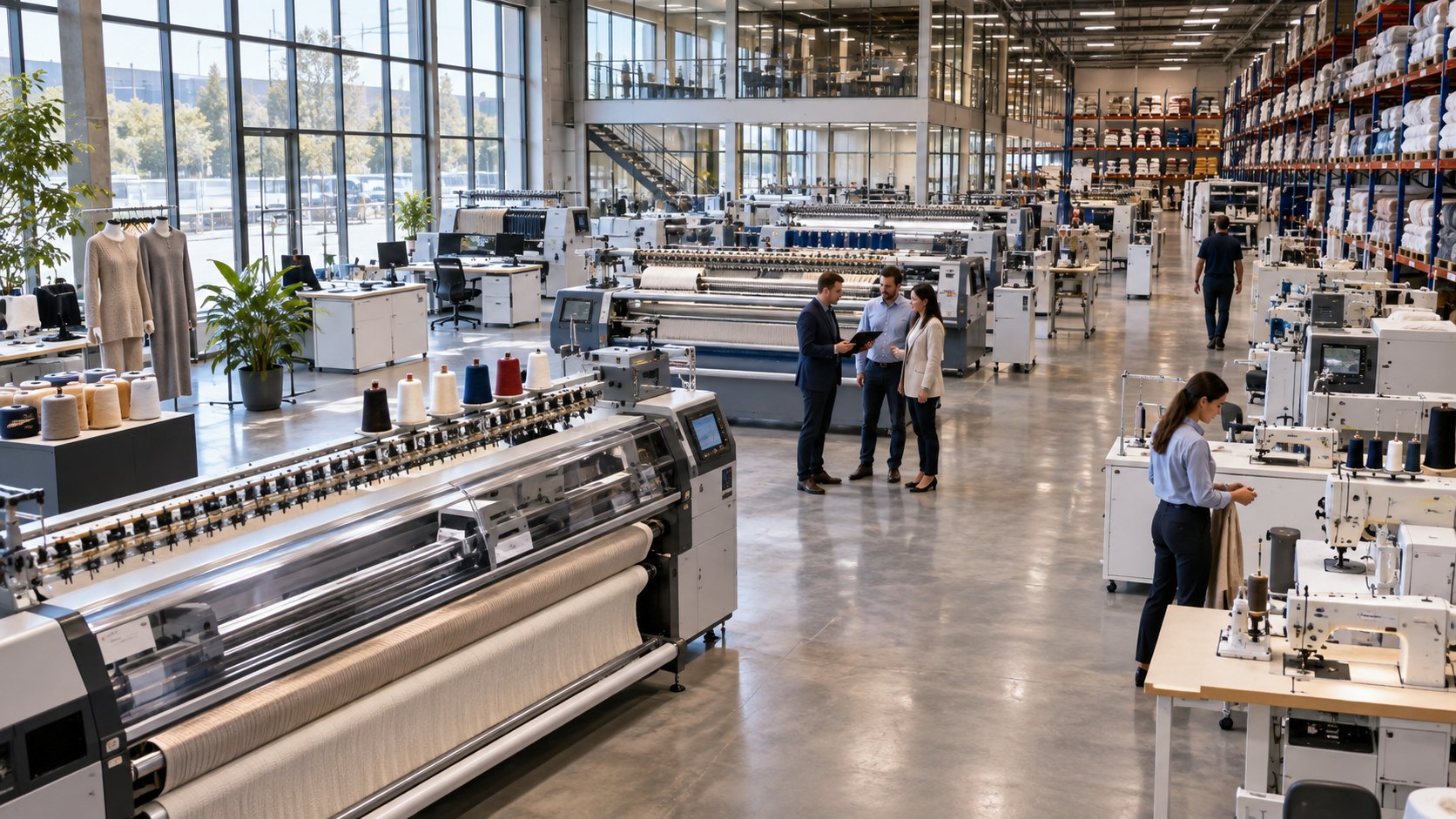
The wording covers two overlapping families. First, computerised sewing and knitting machines: single and multi-head embroidery machines, programmable pattern sewers and bar tackers, computerised straight stitch and overlock machines, automated buttonhole and button attach units, flat and circular knitting machines. Second, computer-controlled machinery for the textile industry more broadly: automatic cutters and spreaders, fusing and pressing equipment, and the digital pattern and marker equipment that feeds them.
The thread that runs through all of it is that the design arrives as a file. An embroidery machine does not know what a logo is; it reads a stitch file that somebody has digitised, with a stitch order, thread changes and density decided in software. A cutter reads a marker generated from graded patterns. This is why the trade has a character the rest of the machinery catalogue does not have: the supplier who understands files sells more machines than the supplier who understands motors.
Which brings the problem into focus. A workshop can buy a good machine, install it correctly and still produce nothing worth selling, because nobody on the premises can digitise a design, choose a backing, set a thread tension or fix a bird's nest under the plate. The gap between owning the machine and running it is measured in weeks of somebody's attention, and the supplier who closes that gap is the one the workshop tells its neighbours about.
- Specification fixed against a sample garment, not a brochureStops a machine arriving that cannot make the product
- Order placed and a delivery window agreed with the factorySets every date after it
- Clearance at the border and inland transport to the workshopReleases the machine to the floor
- Power, air and floor prepared before the crate is openedDecides whether installation happens that day or a month later
- Installation, calibration and a first sample sewn offProves the machine against the garment, not the specification sheet
- Operator training and the pattern library handed acrossTurns a working machine into output
The marked stage is marked because it is the one nobody owns and everybody assumes. A multi-head machine wants a stable floor, the right electrical supply and, on many models, clean compressed air. Arriving to install into a workshop where none of that is ready turns a one-day commissioning into a second visit, and the workshop remembers the delay as the supplier's fault. Asking about power and floor at the quotation stage, not the delivery stage, is the cheapest habit in this business.
The last stage is where the money actually is. Thread, needles, backing, bobbins, hoops and spare parts are bought every month for years by a customer who bought one machine once, and the supplier who trained the operators is the supplier the workshop calls. Machine margin is a transaction; consumables and service are an annuity.
What this licence does not put you in charge of
It does not let you make garments. Stitching, embroidering or knitting for a customer is manufacturing, and the tailoring and apparel activities at the front of this catalogue are where that sits. A supplier who takes in embroidery work to keep a demonstration machine busy has quietly started a second business on the wrong wording.
It does not cover repair as a paid service. Maintaining and repairing industrial machinery is a service activity in its own right. Most suppliers in this line will end up doing service work, charged or free, and the honest time to have it on the licence is when the wording is first drawn.
It does not cover the consumables and materials trade. Needles, thread and haberdashery sit at CZ 143, fabrics at CZ 141, and textiles, clothing and footwear at CZ 139. Since consumables are where the recurring revenue lives, this is the most commonly needed addition on the whole activity, and it is far cheaper to ask for at the outset than to add after an inspection.
It does not cover the software separately. Digitising and pattern software supplied with a machine is part of the machine; selling design software as a product of its own belongs to the software wholesale line.
It does not give you any rights over designs. Stitch files and patterns belong to whoever created them. Handing a customer a library of digitised logos taken from somewhere else is somebody else's intellectual property leaving your building, and it is the kind of favour that turns into a claim.
And it is specific to computer-controlled machines. A catalogue that also carries plain mechanical industrial sewing machines is not fully described by this wording, which is worth raising when the activity list is drawn rather than after the first mixed consignment arrives.
What the licence costs to hold, which emirate suits the plan and what any specific consignment needs on entry depend on the product list, the premises and the licensing authority, and ConsultZone confirms those against the real catalogue before a supplier agreement is signed.
References
- Ministry of Industry and Advanced Technology — national standards, conformity assessment and industrial machinery requirements. Ministry of Industry and Advanced Technology
- Dubai Customs — customs codes, classification and clearance of imported machinery and spare parts. Dubai Customs
- Ministry of Human Resources and Emiratisation — work permits and labour contracts for installation and training technicians. Ministry of Human Resources and Emiratisation
- Dubai Municipality — premises suitability for storage, showroom and demonstration space in Dubai. Dubai Municipality
- UAE Government portal — federal law, intellectual property and general government information. UAE Government portal
Elsewhere in Trading
Activities that sit beside this one
Most licences carry more than one activity. Adding a neighbouring line at the application stage costs a fraction of amending the licence afterwards.
Begin with a clear conversation
Tell us what you intend to build.
A consultant will map the structure, jurisdiction, approvals and likely cost against what you actually described — not against a package.
