
Activity CZ 117
How to Start a Fodder Trading Business in Dubai
Fodder is finished feed, not an ingredient. Trading it here means serving stables and camel yards that reject a bale on its smell, alongside farms that argue the price down to the freight.
ConsultZone licensing desk
- Activity code
- CZ 117
- Category
- Trading
- Reviewed
- Read
- 7 min
Listen instead
42 seconds
An audio summary of this guide.
Topic summary
How to Start a Fodder Trading Business in Dubai
A bale of hay is largely irrigation that has already been spent. Growing forage takes water on a scale a desert cannot spare, so most of what is fed to animals in this country arrives in a container rather than off a field down the road. Fodder trading lives in that gap, and the gap is structural rather than seasonal.
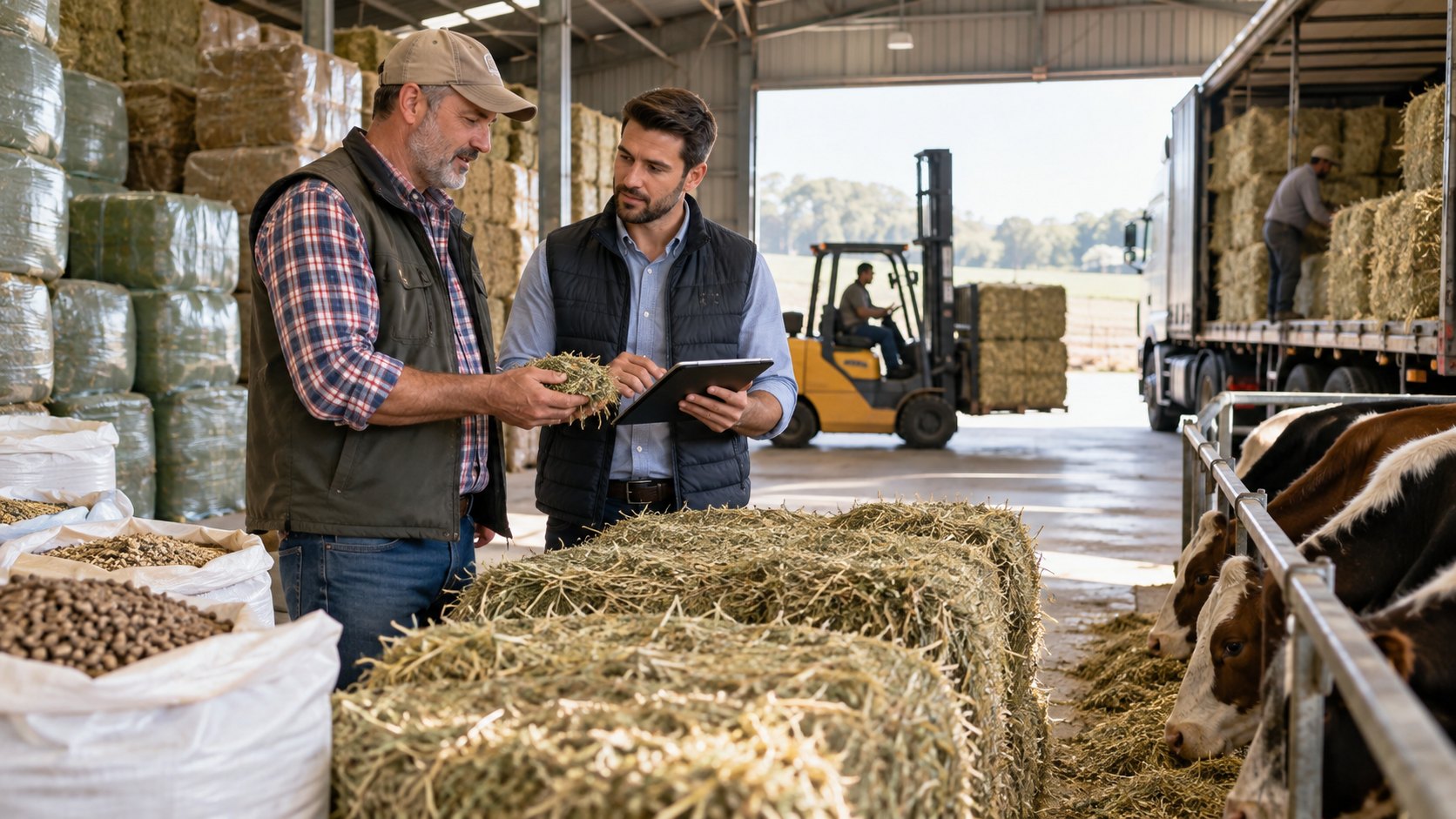
What makes the UAE version of the trade unusual is the buyer. In most markets forage is a bulk agricultural commodity sold on tonnage and freight. Here a substantial share of it goes to racing stables, endurance yards, private equestrian establishments and camel operations — buyers who inspect a bale the way a chef inspects fish, reject it on colour, smell, stem and leaf, and pay a premium for the same quality arriving every month of a season. Two different businesses share one licence: a commodity trade and a quality trade. The second one is where the margin is, and it is the one that takes longer to earn.
CZ 117 — Fodder Trading
What the line covers
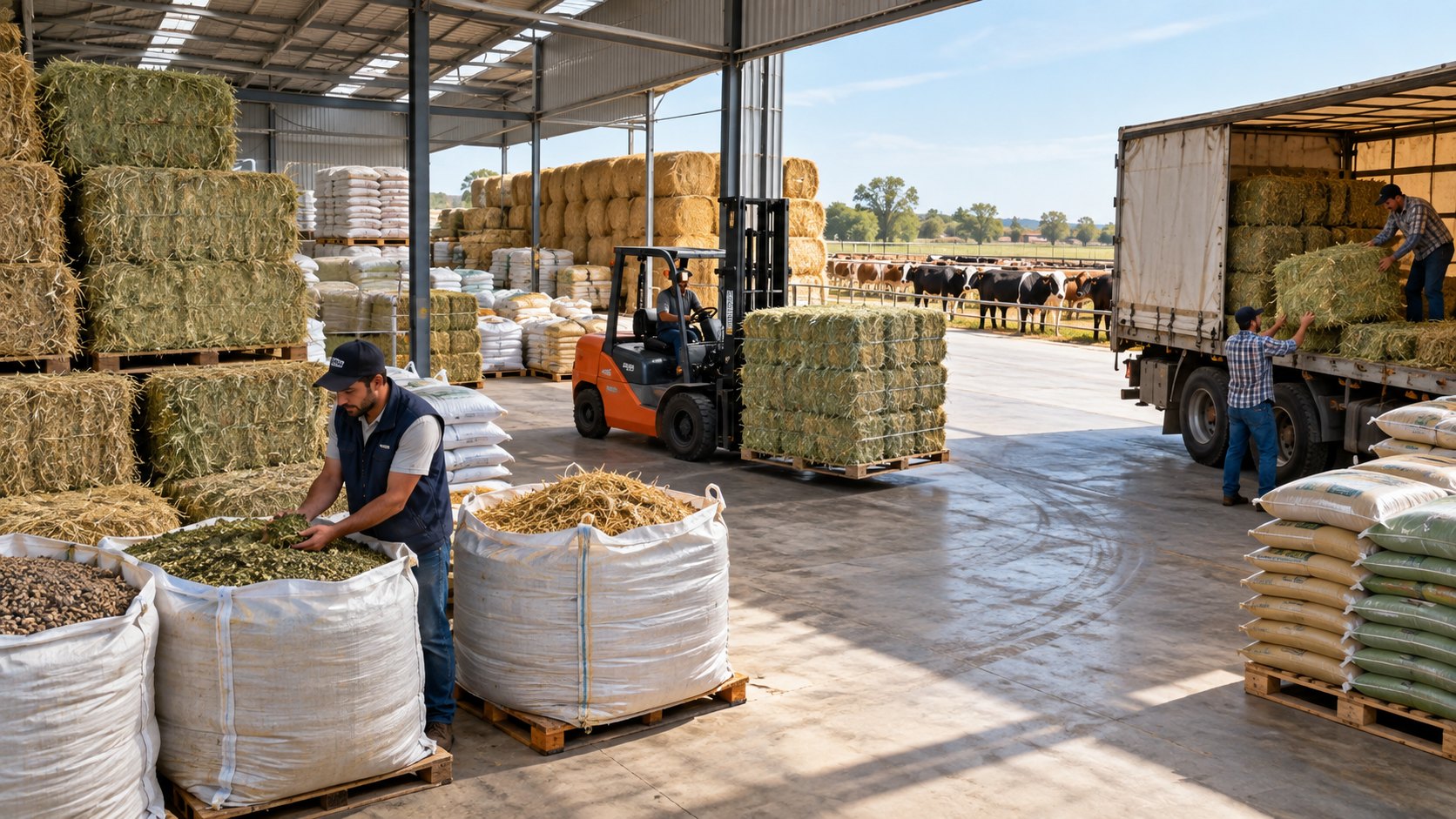
Finished feed, ready to put in front of an animal. Baled forage is the bulk of it — Rhodes grass, alfalfa and other lucerne, oaten and wheaten hay, timothy and other grass hays — in conventional bales, big bales and the double-compressed bales that exist for no reason other than getting more forage into a container. Beside it sit chopped and bagged forage, chaff, haylage and silage, and straw sold both as bedding and as roughage. At the compounded end of the range are pelleted and cubed rations, coarse mixes, bran and barley mixes, beet pulp sold as a feed in its own right, and the mineral licks and blocks that go out on the same delivery note.
The common thread is that the product is complete. Nothing on that list is bought to be mixed into something else by the person buying it; it is bought to be fed. That is the test which separates this line from the ingredient trade sitting immediately next to it.
The store is a fire risk before it is a warehouse
Forage is bulky, light and unforgiving. It occupies volume rather than weight, which is why freight dominates the landed cost and why compression is worth paying for. Once it lands it has to stay dry. A bale that takes up moisture heats from the inside, moulds, loses its feed value and turns from a stock item into a hazard. So a hay store is a dry, ventilated, weather-tight building with its stacks planned rather than piled, and it is a building a fire-safety authority has a legitimate interest in, because baled forage in quantity is a fuel load whatever else it is.
Where the money is made, and the risk that eats it
Not on the bale. The margin sits in the shed and the truck — in having the right forage landed when a yard needs twenty bales tomorrow, and in being the supplier who did not run out during the week everybody else did. Against that sits the structural exposure of the trade: the price of forage is set by harvests and freight rates in countries you cannot see, while the buyer wants a fixed price for a whole season. Whoever absorbs the distance between those two facts is carrying the business, and pricing a season badly can cost more than a year of good trading earns.
six ways to trade the same bale
What it givesWhat it costs
- Importing containers direct and storing themThe full margin, and a price you set for the seasonCapital standing in a shed, and the weather's opinion of your roof
- Buying landed stock from another importerSmall lots, and no exposure to a harvest you cannot seeA cut of the margin, and no answer when your supplier runs dry
- Supplying racing and endurance stablesA buyer who pays for consistency and returns every monthA rejection standard set by a trainer's hands, not by a specification
- Supplying dairy and poultry farmsTonnage, and an order you can plan a year aroundA price argued down to the freight, every single season
- Delivering small lots to private yardsThe best margin per bale in the businessA truck, a driver, and a route that only pays when it is full
- Holding a compounded range beside the forageTwo products on one deliveryShelf life, and stock that ages inside the bag
The focus row is where most new entrants begin, and it is the right place to begin. Buying landed stock from an established importer gives away margin and buys time — time to learn which yards pay, which reject, and what a season actually does to demand before there is a container of somebody else's harvest sitting on the water.
Three lines sit beside this one, and only one of them is fodder
Feed ingredients and by-products. Bran, oilseed meals and cakes, husks, spent grain and the other residues of milling and crushing are a separate activity, sold to feed mills that compound them into rations. The boundary is the buyer rather than the sack: an ingredient trader sells to a factory, a fodder trader sells to whoever owns the animal. The two lines are complementary and plenty of operators end up holding both, but they are not one activity worn loosely.
Growing the forage. Cultivating and baling is agriculture, carried out on agricultural land, with the water question firmly attached. It is not a trading licence, and in this climate the two are rarely done well by the same operation.
Pet food, supplements and veterinary preparations. Bagged dog and cat food is a consumer trade with a different buyer, a different shelf and a marketing problem fodder does not have. Supplements, medicated feed and veterinary products move further still, into health-product territory where the controls are tighter and the product file matters more than the price does.
Who buys this licence, and what each of them is short of
Importers building a direct line to a grower
Operators who want the whole margin and are willing to carry the whole risk. What they are short of is a store and a customer list, in that order — a container with nowhere to go is worse than no container.
Distributors serving the equestrian and camel sector
The specialists. They are short of consistency, because their buyers will forgive a price before they forgive three bad bales in a row, and holding one grade of one grass across a season is harder than it sounds.
Farm, stable and transport operators adding a trading line
Businesses that already buy forage in quantity for their own animals and decide to supply their neighbours as well. They have the shed and the truck already; what they are short of is the licence that makes the second activity lawful.
Regional traders using a UAE store
Operators staging forage through this country for markets nearby. They are short of nothing except a jurisdiction, and their whole question is whether the goods will ever enter the local market — because cargo that lands and leaves without being sold here is the case a free zone store was designed for, while anything sold to a UAE yard or farm is a mainland proposition.
The conditions that follow the goods
Fodder is feed, and feed is the first link in the food chain, so the goods carry conditions the company does not. Consignments are cleared on a product basis by the federal authorities responsible for agriculture and food safety, with the emirate's food control taking its own view of the store. And because forage is plant material, an imported load is simultaneously a pathway for weed seeds, insects and soil, which is inspected as a plant-health matter rather than a feed-quality one. That second control is the one that surprises people, and it is the one most likely to hold a container that looks perfectly clean. What applies to a specific forage from a specific origin, and how it differs between a mainland store and a free zone one, is the part ConsultZone establishes for the real case before a purchase order goes out.
References
- Ministry of Climate Change and Environment — animal feed, animal health, plant health and agricultural imports. Ministry of Climate Change and Environment
- Abu Dhabi Agriculture and Food Safety Authority — agriculture, animal health and food safety control in Abu Dhabi. Abu Dhabi Agriculture and Food Safety Authority
- Dubai Civil Defence — fire safety requirements for a store holding a large fuel load such as baled forage. Dubai Civil Defence
- Dubai Customs — import and export, customs codes, restricted and prohibited goods. Dubai Customs
Elsewhere in Trading
Activities that sit beside this one
Most licences carry more than one activity. Adding a neighbouring line at the application stage costs a fraction of amending the licence afterwards.
Begin with a clear conversation
Tell us what you intend to build.
A consultant will map the structure, jurisdiction, approvals and likely cost against what you actually described — not against a package.
