
Activity CZ 118
How to Start an Agricultural Crops Selling Business in Dubai
Selling agricultural crops is a logistics business holding a trading licence. What you can do under this line, who the buyers are, and why the cold store decides the whole operation.
ConsultZone licensing desk
- Activity code
- CZ 118
- Category
- Trading
- Reviewed
- Read
- 7 min
Listen instead
43 seconds
An audio summary of this guide.
Topic summary
How to Start an Agricultural Crops Selling Business in Dubai
A crop begins losing value the moment it leaves the plant, and nothing in this trade reverses that. Everything a crops seller does — the pre-cool, the truck, the grading bay, the phone call placed before the pallet has even landed — is an argument with a clock that is already running. That is why a produce business is a logistics business holding a trading licence, and why people who treat it as buying and selling lose money quietly for about a year before they notice.
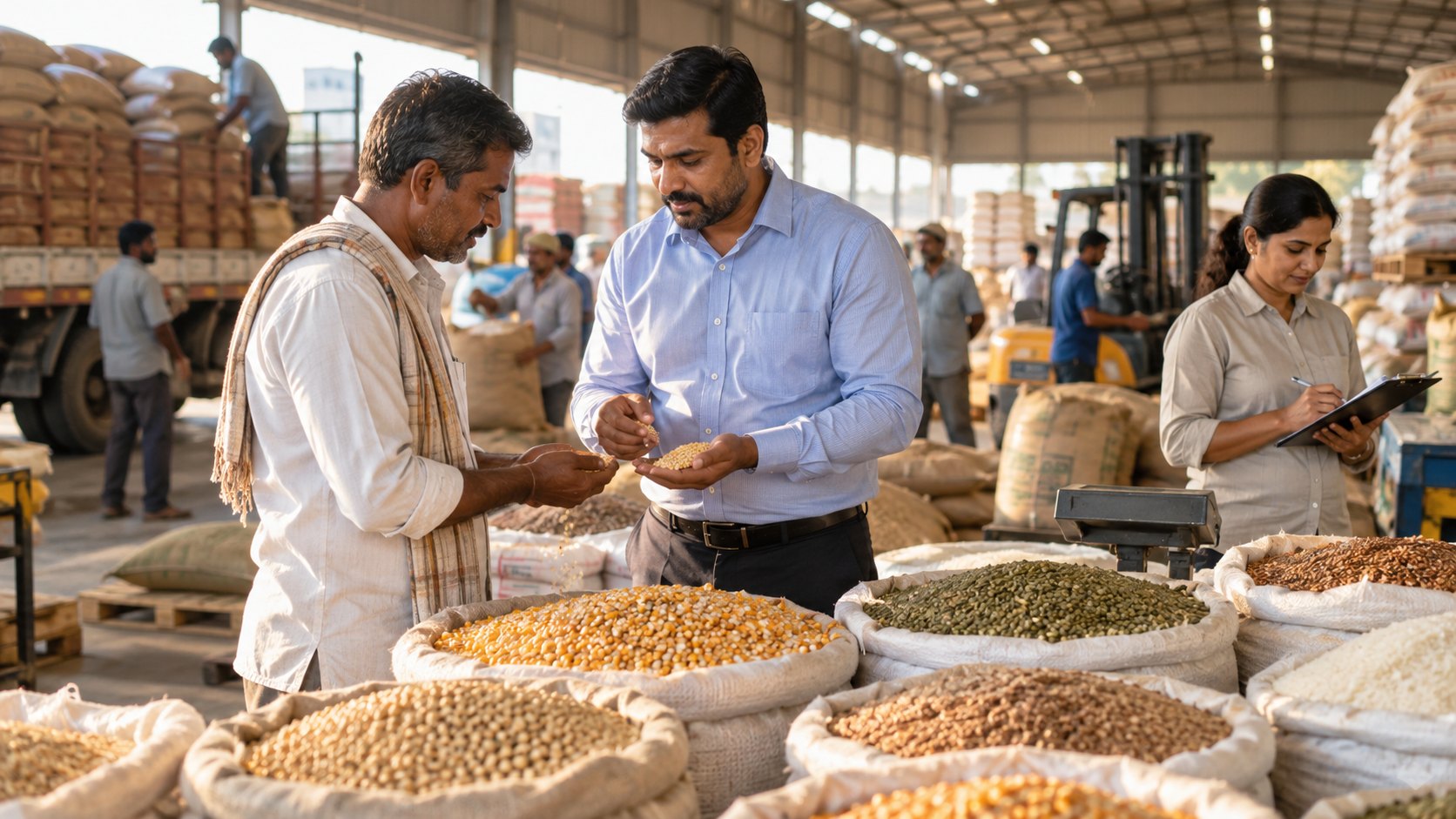
The second thing worth understanding is where the seller sits in the chain. A crops seller is usually nearer the farm than the shop: between a grower or an importer on one side and a market trader, a supermarket buyer, a caterer or a processing plant on the other. What the business adds is aggregation and grading rather than branding. A field or a container does not produce a product; it produces a spread of sizes, colours and qualities, and the trade consists of sorting that spread into the grades different buyers will pay for, then finding a home for the tail nobody wants.
Who buys this licence, and which problem each of them has
Importers and consolidators
Bringing produce in from origin countries and selling it into the UAE market. The problem they solve is the supply window: no single origin produces year-round, so the trade rotates between countries and the skill is knowing when to switch before the price tells everyone else.
Suppliers to hotels, caterers and restaurant groups
The most demanding buyer and the steadiest. A kitchen orders small quantities of many lines several times a week and judges a supplier on one question only — whether the box that arrived is the box that was ordered.
Suppliers to the grocery and supermarket trade
Volume, a written specification, and a price fixed further ahead than the market actually moves. The margin per kilo is thin and the relationship is long, which makes it good business for an operator with scale and a poor first customer for one without.
Growers and farm operators adding a selling line
An operation that already produces and would rather sell its own crop, and its neighbours', than hand both to a middleman. The licence is often the only missing piece.
Buyers for processors
Juice, canning, drying and freezing plants that buy on yield and sugar content rather than on appearance, and will take the grade a retailer has rejected. For a produce trader this is the single most valuable outlet there is, because it turns waste back into revenue.
What you can and cannot do under this line
Inside it
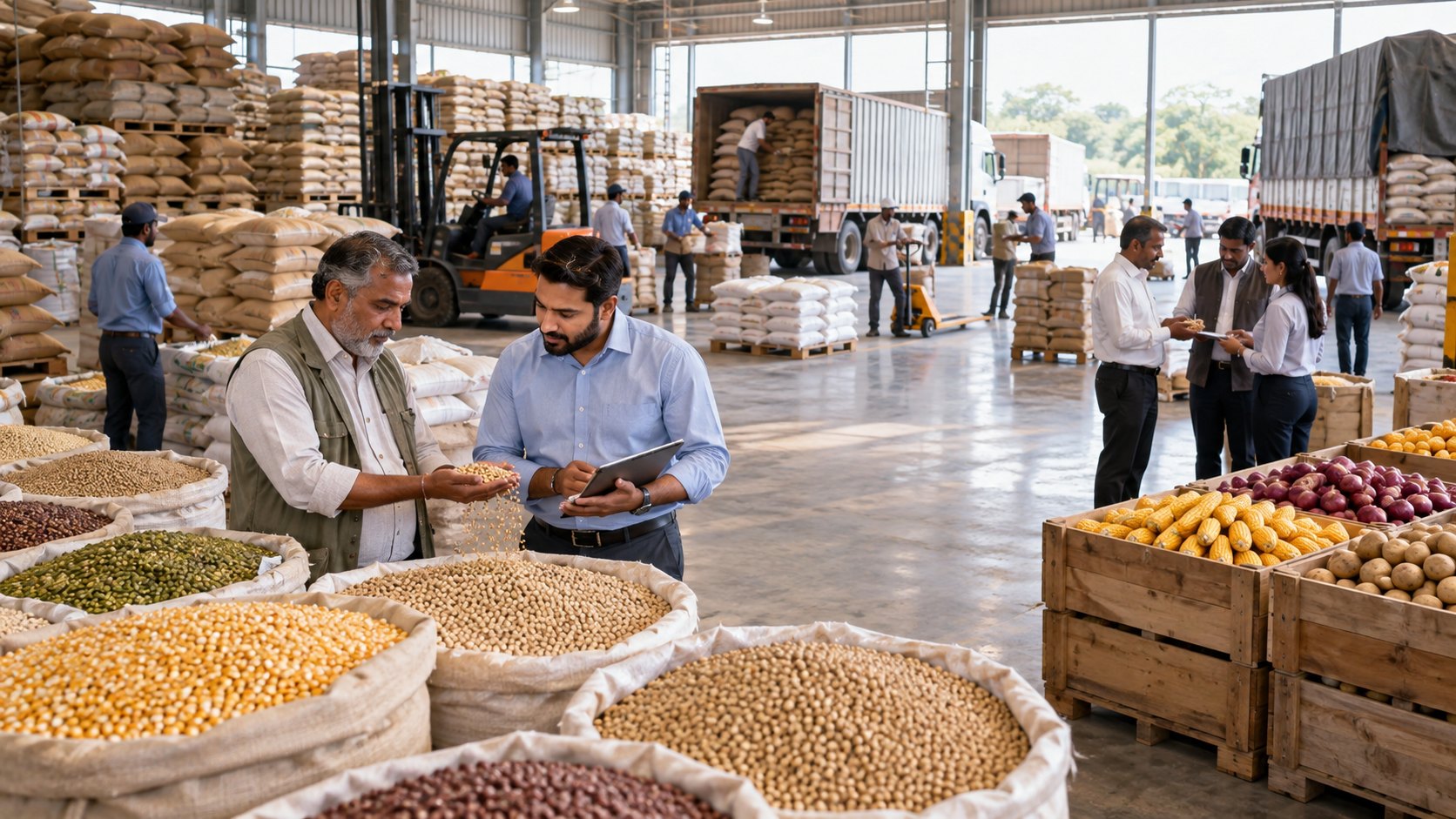
Buying and selling unprocessed agricultural crops: fresh fruit and vegetables, dates, grains and cereals, pulses and legumes, fresh herbs, roots and tubers, and nuts in their raw state — whether the goods come off a UAE farm or out of a container. Sorting, grading, pre-cooling, packing into cartons or punnets, palletising, storing and delivering all belong inside a selling line, because none of them change what the crop is.
Outside it
The boundary is processing. Cutting and bagging salad, juicing, drying, pickling, canning, freezing or cooking turns a crop into a manufactured food product, and food manufacturing carries premises and process conditions a distribution unit does not have and cannot easily acquire. Selling from a shop to the public is a retail line. Growing the crop is agriculture, on agricultural land. And selling the inputs rather than the output — seed, fertiliser, plant-protection products — is a controlled trade of its own, and one of the more common classification mistakes made on a farm-adjacent licence.
six buyers, two destinations
- Supermarket and grocery chains with UAE storesGoods sold into the UAE market to a UAE business
- Hotels, caterers and restaurant groupsOne UAE company invoicing another for food delivered here
- Traders at the emirate's wholesale produce marketTrading on UAE soil, to buyers standing on it
- Juice, canning and freezing plantsA UAE factory buying an input that has already cleared
Mainland licence
- Cargo staged for re-export to nearby marketsThe crop never clears into the UAE market at all
- Consolidating other growers' fruit for onward shipmentThe work is done on goods that are still in transit
Free zone licence
Read that split as a question about where the goods end up rather than where the company would prefer to be. The pattern holds across the whole trade: produce sold to a buyer inside the UAE market is a mainland proposition, and cargo that lands and leaves without being sold here is the case a free zone store was designed for. Which of the two a specific plan needs, and whether it needs both, is worth settling before a lease is signed.
The cold store decides the operation
There is more than one temperature
A single-temperature room forces compromises that come back as shrinkage. Leafy greens want cold and humid. Bananas want a ripening room and controlled gas. Dates, onions and potatoes want dry ambient and will rot in a chiller. Tropical fruit chills badly and shows the damage days later, in somebody else's shop. Deciding which of those rooms the business needs is the first real capital decision, and it is made before a single crate is bought.
The building, and who forms a view of it
A receiving dock, a grading and packing bay, chilled and ambient rooms, a dispatch bay, waste handling for the tail of every pallet, and food-handling conditions for the people working in it. The emirate's food-control and municipal authorities take a view on all of that as a food premises, and the view is taken on the building as it is actually fitted out — which is the reason the lease and the approval should be looked at side by side rather than in sequence.
The delivery is part of the product
A refrigerated body, a driver who understands that the door stays shut at every stop, and a route that only pays when the vehicle leaves full. Vehicle and transport permissions are an emirate matter and sit with the transport authority rather than with the body that issued the trade licence, which catches operators who assumed one approval covered the whole operation.
Two kinds of control follow the crop
Fresh produce is food, and it is simultaneously plant material, so an imported consignment meets two different regimes. As food it is cleared on a product basis by the federal food-safety authorities with the emirate's food control alongside them, where pesticide residue is the substantive question. As plant material it is inspected for pests, disease, soil and packaging, which is a plant-health matter and the reason a clean-looking pallet can still be held at the border. Which of those applies to a specific crop from a specific origin, and what an individual emirate asks for beyond the federal position, is what ConsultZone confirms for the actual case rather than infers from a general rule.
Where this is the wrong purchase. If the plan is to process what you buy — juice it, dry it, cut it, or pack it as a ready product under your own name — a selling line will not carry it. Finding that out after the cold store has been fitted is an expensive way to learn where the boundary sits.
References
- Ministry of Climate Change and Environment — agriculture, plant health and the federal food-security framework. Ministry of Climate Change and Environment
- Abu Dhabi Agriculture and Food Safety Authority — agriculture, plant health and food safety control in Abu Dhabi. Abu Dhabi Agriculture and Food Safety Authority
- Dubai Municipality — food control and food-premises suitability in Dubai. Dubai Municipality
- Dubai Customs — import and export, customs codes, restricted and prohibited goods. Dubai Customs
- Roads and Transport Authority — vehicle and transport permits for refrigerated delivery in Dubai. Roads and Transport Authority
Elsewhere in Trading
Activities that sit beside this one
Most licences carry more than one activity. Adding a neighbouring line at the application stage costs a fraction of amending the licence afterwards.
Begin with a clear conversation
Tell us what you intend to build.
A consultant will map the structure, jurisdiction, approvals and likely cost against what you actually described — not against a package.
