

Activity CZ 119
How to Start a Live Stock Trading Business in Dubai
Live stock trading is a dealing business, not an import one. Where the spread sits, what shrinkage takes out of it, and why the holding pen decides how much of the trade you can carry.
ConsultZone licensing desk
- Activity code
- CZ 119
- Category
- Trading
- Reviewed
- Read
- 8 min
Listen instead
49 seconds
An audio summary of this guide.
Topic summary
How to Start a Live Stock Trading Business in Dubai
An animal is the only commodity that eats while you own it, loses weight while you move it, and can die before it sells. Live stock trading is the business of buying and selling farm animals — sheep, goats, cattle, camels — as animals, and the whole skill of the line sits in the days between the purchase and the sale.
Separate it from the activity it is most often confused with. Wholesaling live animals is an import-and-distribute business: a standing arrangement with an overseas supplier, vessels or containers, a clearance file at the port, and a distribution list waiting on the near side. Live stock trading is dealing. You buy what is available, at the price it is available at, from farms, auctions, other dealers and importers, and you sell to butchers, abattoirs, hotels, caterers, feedlots and households. One line is logistics with a licence attached. The other is a trading position in something that breathes.
The demand behind it is real rather than notional. The UAE consumes far more red meat than it produces, which is the premise of its own food-security work,¹ so there is a continuous flow of animals arriving in the country that somebody has to move on. And that demand is not flat across the year. Eid al-Adha concentrates a large part of annual sheep and goat sales into a handful of days; Ramadan, the National Day period and the wedding season each have their own shape. A dealer who can hold stock into a rising market and release it at the peak is doing something a straight importer cannot do from a schedule fixed months earlier.
The commercial case is a spread, and shrinkage is what eats it
The gross margin on a head of livestock is the difference between what you paid and what you sold it for. The net margin is that spread minus everything the animal costs you while it is yours, and the second number is the one that decides whether the business works.
Four costs sit in that gap. Feed and water run every day the animal is unsold, and in a hot climate water and shade are not optional extras. Shrinkage is the weight an animal loses in transport and in the first days of a new environment — real weight, off an animal sold by weight, and the reason a dealer who buys well at origin can still lose on the sale. Mortality is a small percentage of a large number and it is never zero. Labour is a fixed cost, because animals need handling seven days a week whether the market is moving or not.
That cost structure explains why the trade rewards turnover over holding. A dealer who buys on Monday and sells on Thursday earns a thin spread many times over; a dealer who buys for the peak and holds for six weeks is paying feed, water, labour and shrinkage against a price bet. Both are businesses. Only the second one needs a balance sheet that can absorb being wrong.
Where the working capital goes
Almost all of it goes into animals. Unlike most trading lines there is no inventory that will wait patiently in a warehouse — the stock deteriorates, the carrying cost runs daily, and a buyer who defers a collection by a week has quietly taken a week of feed off your margin. Deposits from buyers against the seasonal peak are the usual defence, and they are worth negotiating before the animals are bought rather than after.
Where the trade is genuinely hard
Price discovery. There is no published screen for a mixed lot of local sheep, so the price is what the last comparable lot fetched and what the person in front of you knows about it. The dealers who last are the ones who can read condition, age and fitness off an animal in a few seconds, because that judgement is the entire edge. It is also why this is a poor absentee business: an owner who is never at the pen is buying on somebody else's eye.
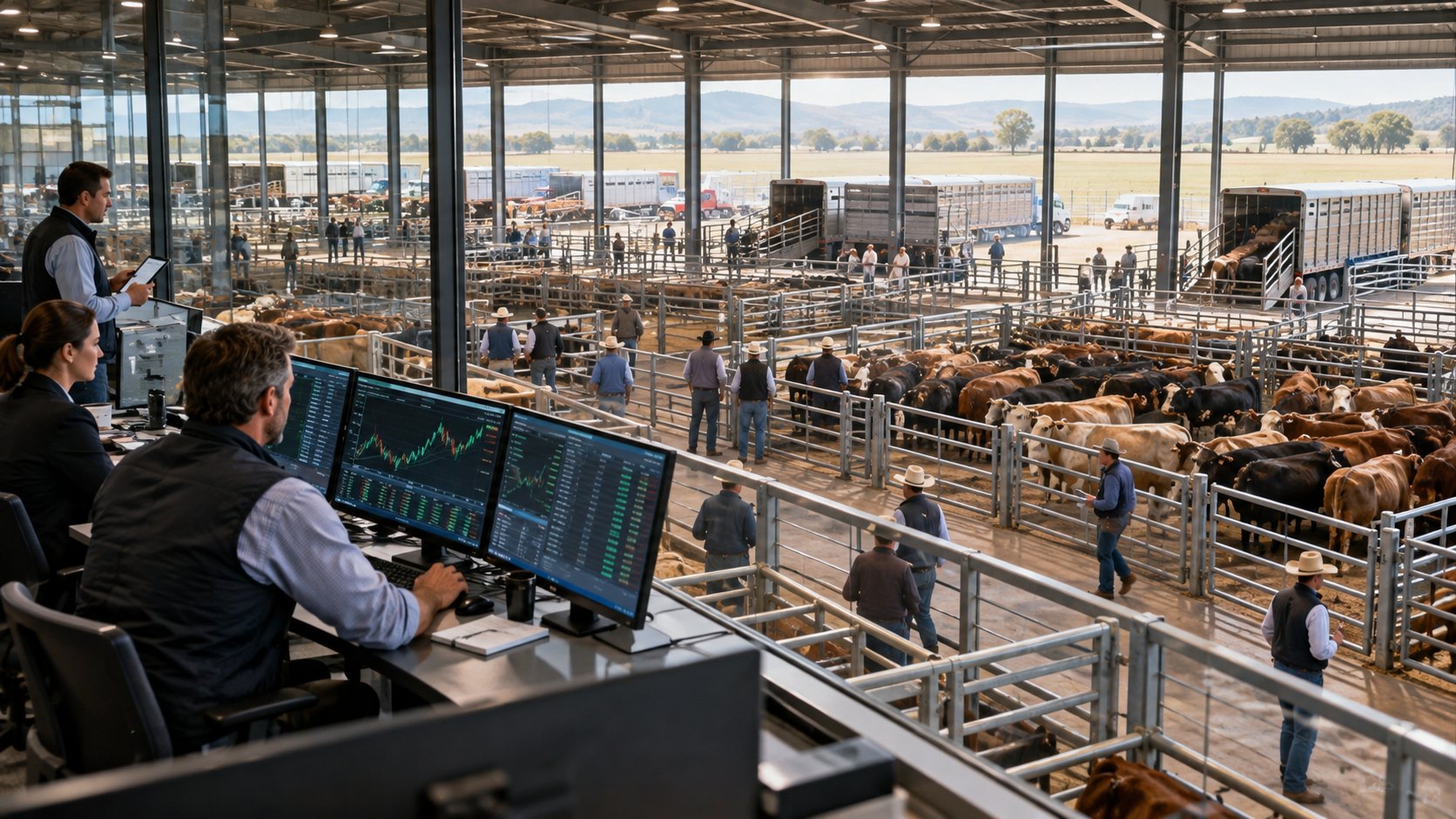
CZ 119 — Live Stock Trading
Under this line you buy live farm animals and sell them on as live animals. In practice that is four overlapping trades.
Dealing between farms. Buying surplus stock from one producer and placing it with another — breeding females moving to a herd that wants them, young stock moving to somebody with feed to spare.
Supplying the meat chain. Selling finished animals to abattoirs, butchers and the caterers behind them. The buyer here is judging finish and yield, not pedigree.
Seasonal retail. Selling directly to households for Eid and other occasions, which carries the best margin in the line and the shortest window in it.
Feedlot trading. Buying store animals lean, feeding them to a target condition and selling on the gain. This is the version of the business that is really farming with a trading licence in front of it, and it is worth establishing early whether the plan needs a production activity instead.
What the line does not reach matters, because a misclassified activity is corrected by amending a licence rather than by using it. Slaughter, cutting and packing belong to their own activities. Selling meat, chilled or frozen, is a food trade and not this one. Veterinary treatment sold as a service, boarding animals somebody else owns, breeding and insemination services, and the trade in hides, wool or bones once the animal is gone are all separate lines — several of them neighbouring entries in this same catalogue.
Approvals and conditions that attach to a living animal
This is the part of the file that surprises people who have traded other goods. With most commodities the licence is the gate and the shipment follows behind it. With live animals the animal itself carries a condition at every stage, and the sequence below is the order the trade actually happens in.
- Trade licence carrying the live stock trading lineCreates the company; nothing has moved yet
- Health status established at origin, before you commitTells you whether the animal may lawfully move at all
- Fitness to travel, read animal by animal at loadingDecides which head go and which stay behind
- Arrival inspection and the holding period that followsWhere shrinkage, mortality and your margin are settled
- Pens, feed, water and shade for the days in betweenFixes how many head you can carry at one time
- Sale and movement to the buyer's premisesEnds your exposure to the animal
Two federal bodies frame all of that. The Ministry of Climate Change and Environment is the federal authority for agriculture, livestock and animal health, and the movement and health of live animals sit with it.² Inside Abu Dhabi the same ground is held by the Abu Dhabi Agriculture and Food Safety Authority.³ The local municipality covers the site itself — housing, waste, effluent, odour and anything that leaves the premises.⁴ Animals arriving from outside the country meet the customs position on restricted goods before they reach any of this.⁵
Federal Law No. 16 of 2007 on the Protection of Animals sets the standards for housing, feeding, handling and transport that all of it has to meet,⁶ and welfare is not a formality in a trade where an animal arriving badly is worth less to everybody in the chain. The specific conditions, holding requirements and permitted movements differ by emirate and by the site you take, so they are confirmed against the authority concerned before a pen is leased or a lot is bought — the part of this file ConsultZone does first, because a signed order for stock you have nowhere lawful to hold is worse than no order.
Where this is the wrong purchase. A plan built around one overseas supplier and container-scale volume is a wholesale business, and the wholesale activity will serve it better and read more honestly to a bank. A plan built around feeding animals to weight is production. This line is for the dealer who buys and sells inside the UAE market and needs the freedom to do both on the same day.
References
- National Food Security Strategy 2051 — the UAE's dependence on imported food, including red meat, and the domestic production it targets. UAE Government portal
- Ministry of Climate Change and Environment — the federal authority for agriculture, livestock and animal health, and for the movement and health status of live animals. Ministry of Climate Change and Environment
- Abu Dhabi Agriculture and Food Safety Authority — animal health and livestock conditions inside Abu Dhabi. Abu Dhabi Agriculture and Food Safety Authority
- Dubai Municipality — premises suitability, waste and public health conditions for holding animals in Dubai. Dubai Municipality
- Dubai Customs — import of live animals, customs codes and the restricted and prohibited goods position. Dubai Customs
- Federal Law No. 16 of 2007 on the Protection of Animals — housing, feeding, handling and transport standards. UAE Government portal
Elsewhere in Trading
Activities that sit beside this one
Most licences carry more than one activity. Adding a neighbouring line at the application stage costs a fraction of amending the licence afterwards.
Begin with a clear conversation
Tell us what you intend to build.
A consultant will map the structure, jurisdiction, approvals and likely cost against what you actually described — not against a package.
