
Activity CZ 129
How to Start an Edible Oils and Fats Wholesale Business in Dubai
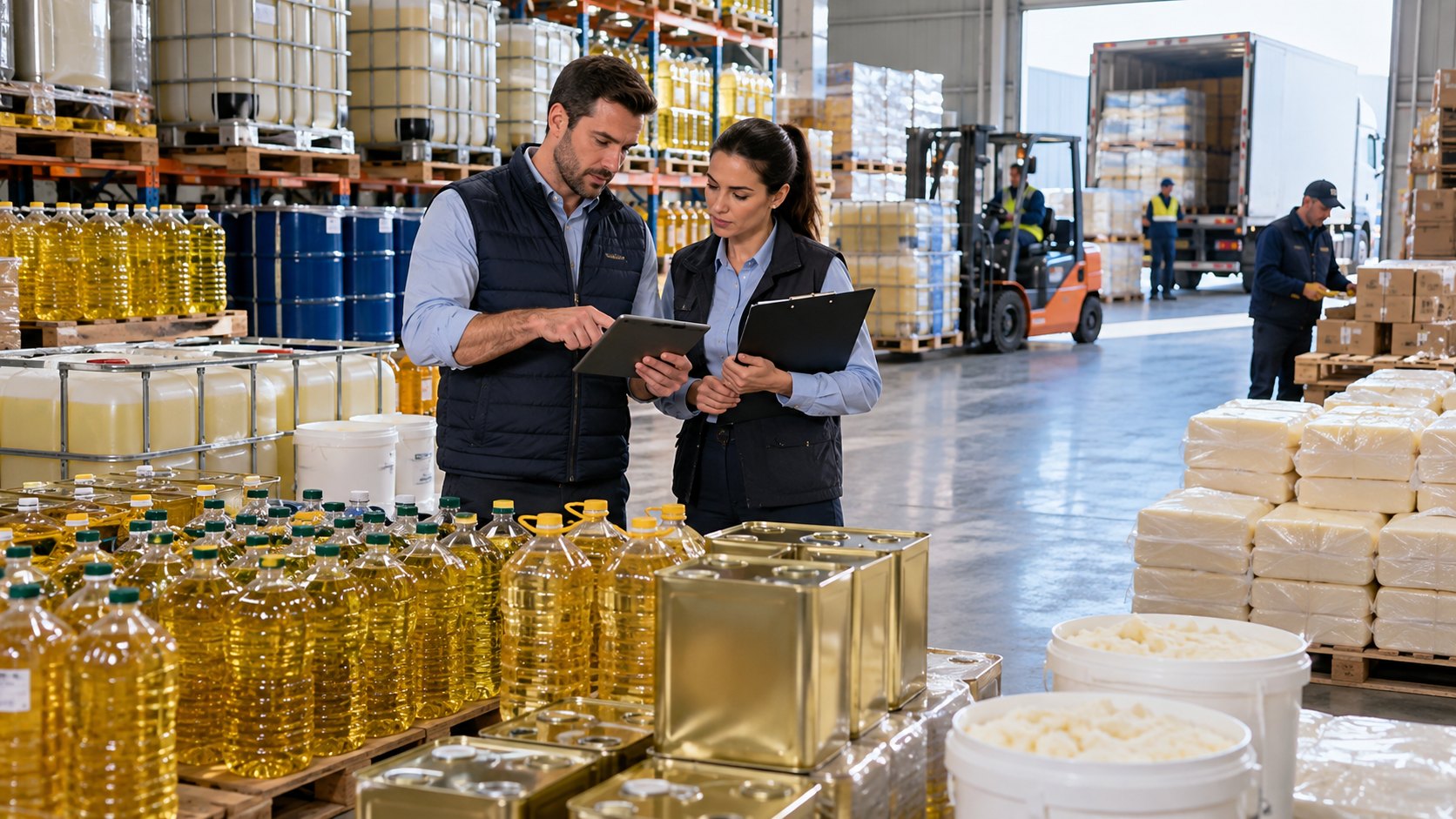
Edible oils are a world-priced commodity, so the trade is won on storage, origin documentation and timing rather than on selling. Bulk liquid and packed cases are two different businesses.
ConsultZone licensing desk
- Activity code
- CZ 129
- Category
- Trading
- Reviewed
- Read
- 8 min
Listen instead
45 seconds
An audio summary of this guide.
Topic summary
How to Start an Edible Oils and Fats Wholesale Business in Dubai
An edible oil wholesaler is a commodity trader who happens to hold a food licence. The product is fungible, the reference price is set thousands of miles away, and no customer in this market can be persuaded that one supplier's refined sunflower oil is worth ten per cent more than another's. What separates operators is not the selling. It is where they buy, how cheaply they can hold the volume, how well they can document what is in the tank, and whether they bought before or after the market moved.
That last point is the one that surprises people arriving from other food lines. In dairy or meat the enemy is time, because the product decays. Here the product is stable for months and the enemy is price. A container of oil bought at the top of a rally and sold into a falling market loses money while sitting perfectly safe in a warehouse — and the same container bought well earns a margin no amount of salesmanship could have produced. Position is the product.
Origin is the other thing that behaves differently here, and it is commercially heavier than it looks on a customs document. Animal and vegetable fats are not interchangeable to a buyer in this market. Tallow, lard and animal-derived fats carry dietary and religious consequences that decide whether a product can be used at all, and a manufacturer putting fat into a food it sells here has to be able to prove what that fat is and where it came from. So documentation of origin and of treatment is not administrative tidying. It is the thing that makes the goods saleable, and a consignment whose paperwork is thin is a consignment that becomes somebody's problem rather than somebody's stock.
The margin lives in storage and timing, not in the sale
Three things decide whether this trade works for a given operator.
Storage cost per tonne. Oils are held in shore tanks, in flexitanks inside containers, in intermediate bulk containers, or in drums and jerricans on pallets. Each step down that list costs more per tonne to hold and opens a smaller minimum order. A trader with access to tank capacity can take a full parcel at a commodity price; a trader working from a pallet rack is buying in drums at a premium and competing against people who are not. The storage decision sets the buying price before any negotiation happens.
Working capital, and how long it is immobilised. A bulk parcel is a large single cheque, and it stays written until the last tonne is sold. The cash cycle here is measured against a price that is moving, which means the risk is not merely that payment is slow — it is that the value of unsold stock falls while the buyer takes their time. Terms matter as much as price.
Refined against crude, and who the buyer is. Crude and semi-refined oils are sold to refiners and processors who will treat them further; refined oils go to food manufacturers, catering suppliers and packers. The first route deals with fewer, larger, more technical buyers and thinner margins. The second deals with more buyers, smaller lots, and a price that includes the work of making the product usable.
Most people entering the line have to choose between two quite different versions of it, and the honest comparison is not close for a first-time operator.
judged on the same six rows
| Judged on | Bulk liquid | Packed cases |
|---|---|---|
| Working capital sits in one large parcel at a time | Yes | No |
| Price can move against you while the stock is in hand | Yes | Partial |
| Needs tank or flexitank capacity rather than pallet racking | Yes | No |
| The buyer can be a refiner or a manufacturer | Yes | Indirect |
| A brand and a label carry part of the margin | No | Yes |
| Entry is possible without commodity trading experience | No | Yes |
Packed cases is the marked route for a reason that has nothing to do with ambition. It lets an operator learn the customers, the seasonality and the documentation on small lots, with the price risk broken into pieces, and it can be run from ordinary warehousing. Bulk liquid pays better and is a genuinely different business: it needs tank access, a real view on the market, and enough capital that one badly timed parcel is survivable. Plenty of operators run both, in that order.
CZ 129 — Wholesale Of Edible Oils And Fats Of Animal Or Vegetable Origin
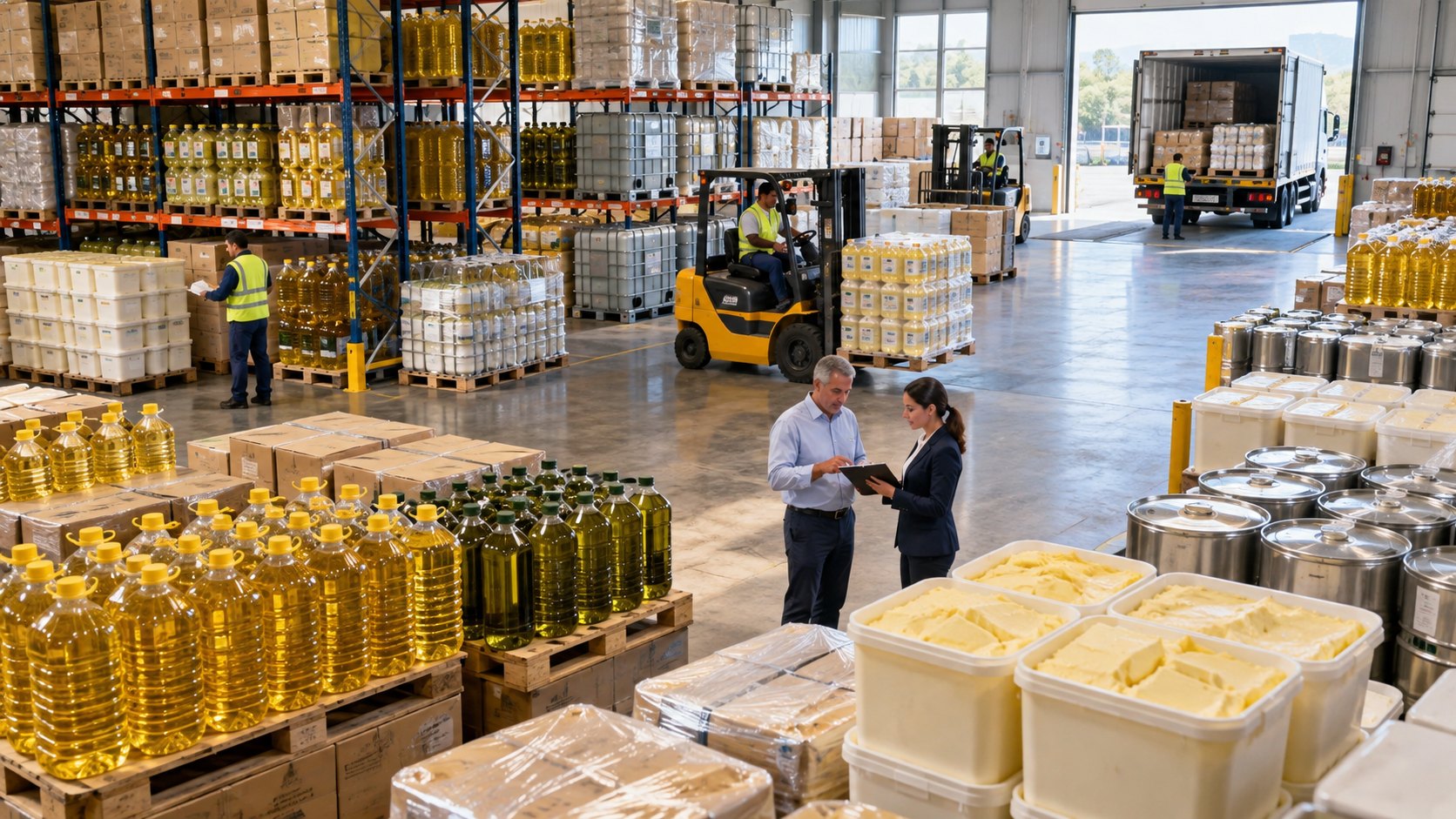
The line covers buying edible oils and fats in bulk and selling them on to businesses: vegetable oils such as sunflower, corn, soya, palm, canola, olive, sesame and groundnut; vegetable fats including palm-based shortenings, margarine and bakery fats; and animal-derived fats such as tallow, lard and ghee where they are traded as fats rather than as dairy. It covers holding the stock in tanks, flexitanks, drums or cases, breaking bulk into the pack sizes buyers use, and delivering to trade customers.
Three things sit outside it.
Refining, blending and hydrogenating are manufacturing. Neutralising, bleaching, deodorising, fractionating, hydrogenating or blending oils to a specification are processing operations needing their own plant, their own premises approvals and their own product files. Buying refined oil and selling it on is this line; making refined oil is not. Filling drums or bottles under your own label is packing, which is also a production activity rather than a trading one.
Selling to the public is retail. Supplying a supermarket is wholesale. Operating the shelf is not.
Non-edible and technical oils are a different trade. Lubricating oils, biodiesel feedstock, technical tallow for soap or oleochemicals, and used cooking oil collected for processing are not food, answer to different controls, and in the case of waste oil collection sit under environmental rather than food supervision. The fact that a tank can hold either does not make them the same licence.
What actually attaches to the goods
Edible oils and fats are food, and food entering or moving in this market is cleared per product and per source establishment by the federal food authorities working with the emirate's food control. In practice that means the product itself has a file — what it is, where it was made, what it contains, how it is labelled — and that file is settled before a consignment is released rather than after a customer has been promised a date. Labelling is part of the substance here, not decoration: what the oil is, its origin, and its treatment are the facts a buyer's own compliance depends on.
Animal-origin fats attract the additional question this market always asks, which is whether the product satisfies halal requirements. That is a requirement of the market rather than a marketing angle, and it is settled by the documentation travelling with the goods and the standing of the source establishment. A trader who intends to deal in animal fats should treat that evidence as part of the cost of the consignment.
Premises and equipment are inspected for what they will actually be used for. Tank storage brings questions about the tank's history and what was previously in it, about cleaning between parcels, about pumps, lines and hoses dedicated to food use, and about temperature where a fat needs to stay pourable or a solid fat needs to stay solid. Drummed and cased stock brings more ordinary warehouse questions about a clean dry floor, pest control, segregation from chemicals and odorous goods, and stock rotation. Bulk handling also brings fire safety into the conversation, because quantities of oil held in one place are of interest to civil defence.
Customs sits alongside all of it. An importer needs its own customs code, consignments are declared against the correct classification, and the classification of an oil is not always obvious — crude against refined, edible against technical, and the pack form can each change it. Getting that wrong produces delay and cost at the port rather than a polite correction.
What each of those approvals requires, which of them applies to a particular product and origin, and what the whole file costs to assemble depend on the emirate, the premises and the product mix. Those are confirmed for the specific case before stock is committed, because in a trade where the margin is thin and the parcel is large, a consignment held at the port is not an inconvenience — it is the year's profit.
References
- Ministry of Climate Change and Environment — food safety and food security policy, and federal control of food consignments entering the country. Ministry of Climate Change and Environment
- Dubai Municipality — food control, labelling and premises suitability for the storage and handling of edible oils in Dubai. Dubai Municipality
- Dubai Customs — customs codes, classification of imported goods, and restricted and prohibited goods procedures. Dubai Customs
- Abu Dhabi Agriculture and Food Safety Authority — food safety control over food products traded and stored in Abu Dhabi. Abu Dhabi Agriculture and Food Safety Authority
- Ministry of Industry and Advanced Technology — national standards and conformity marks applying to products placed on the UAE market. Ministry of Industry and Advanced Technology
- Dubai Civil Defence — fire safety approvals for the bulk storage of flammable and combustible materials. Dubai Civil Defence
Elsewhere in Trading
Activities that sit beside this one
Most licences carry more than one activity. Adding a neighbouring line at the application stage costs a fraction of amending the licence afterwards.
Begin with a clear conversation
Tell us what you intend to build.
A consultant will map the structure, jurisdiction, approvals and likely cost against what you actually described — not against a package.
