
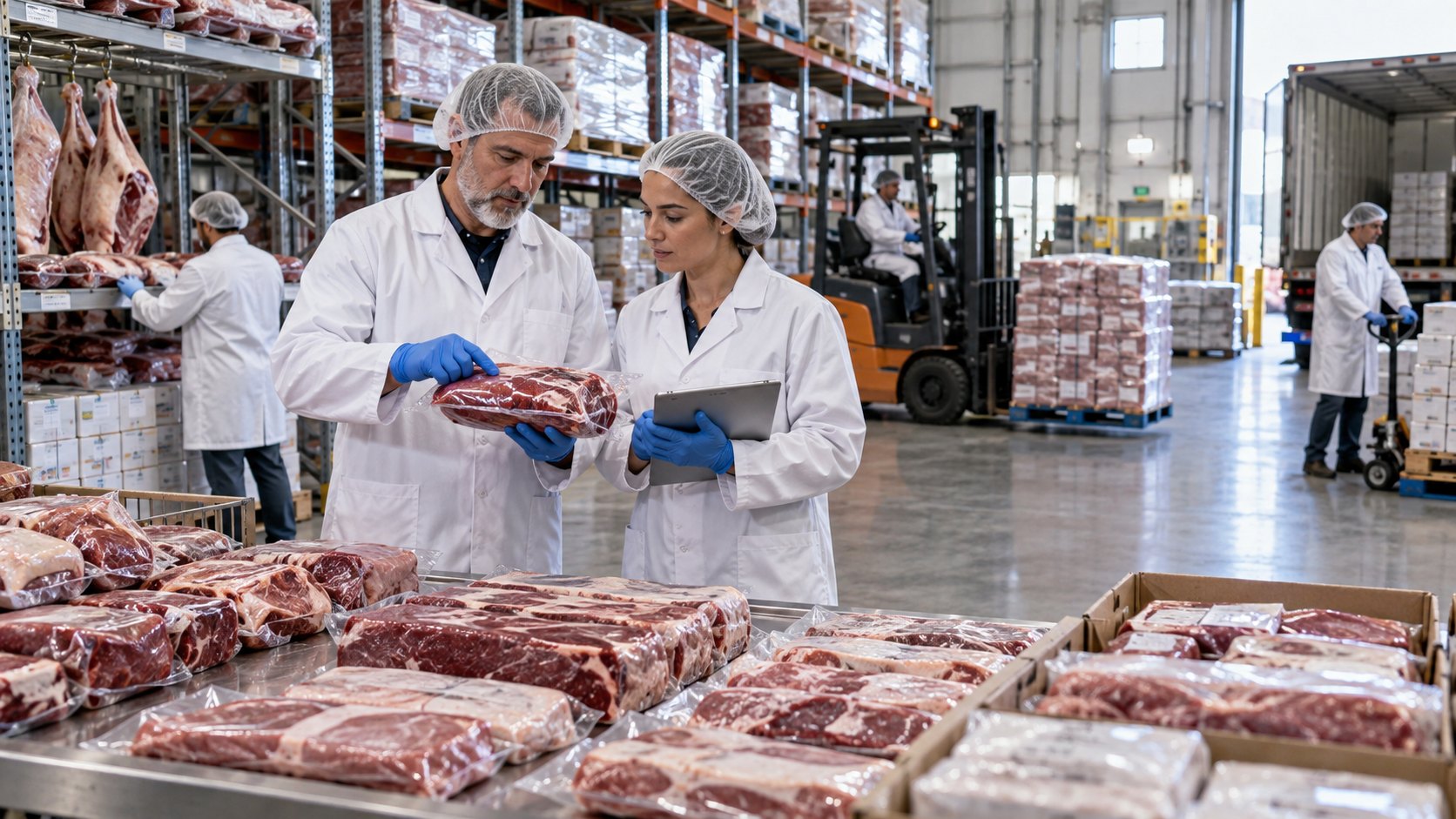
Activity CZ 130
How to Start a Meat and Meat Products Wholesale Business in Dubai
Meat is the most controlled wholesale trade there is: the approved source plant and the halal chain decide what may be sold at all. Chilled air freight and frozen sea freight are two different businesses.
ConsultZone licensing desk
- Activity code
- CZ 130
- Category
- Trading
- Reviewed
- Read
- 8 min
Listen instead
43 seconds
An audio summary of this guide.
Topic summary
How to Start a Meat and Meat Products Wholesale Business in Dubai
In most trades a supplier is chosen. In meat, a supplier is qualified first and chosen second. Before anything is discussed about price, cut or volume, one question settles whether a conversation can continue at all: is that plant an approved source establishment for this market, for this species, for this product. If it is not, the commercial terms are irrelevant, because the goods cannot lawfully arrive. Nothing else in the food catalogue puts a gate that absolute in front of the first phone call.
Halal integrity sits beside it and works the same way. It is not a marketing position a wholesaler may adopt or skip depending on the customer. It is a condition of this market, evidenced by the standing of the slaughtering plant and by the documentation that travels with every consignment, and it is a condition the buyer's own compliance rests on. A hotel group, a supermarket chain or a catering contractor is not taking a supplier's word for it; they are taking the file, and a file with a gap in it makes the whole load unusable rather than merely awkward.
The third thing to understand before anything else is that temperature divides this line into two separate businesses. Chilled meat arrives by air, lives for a short and precisely counted number of days, sells at a premium to restaurants and premium retail, and punishes any delay with a total loss. Frozen meat arrives by sea, keeps for months, moves in volume to caterers, institutions and processors, and forgives a slow week but ties up a great deal of cash in a container. The customers are different, the margins are different, the working capital profile is different and the failure modes are different. Both are called meat wholesale.
What the line actually covers
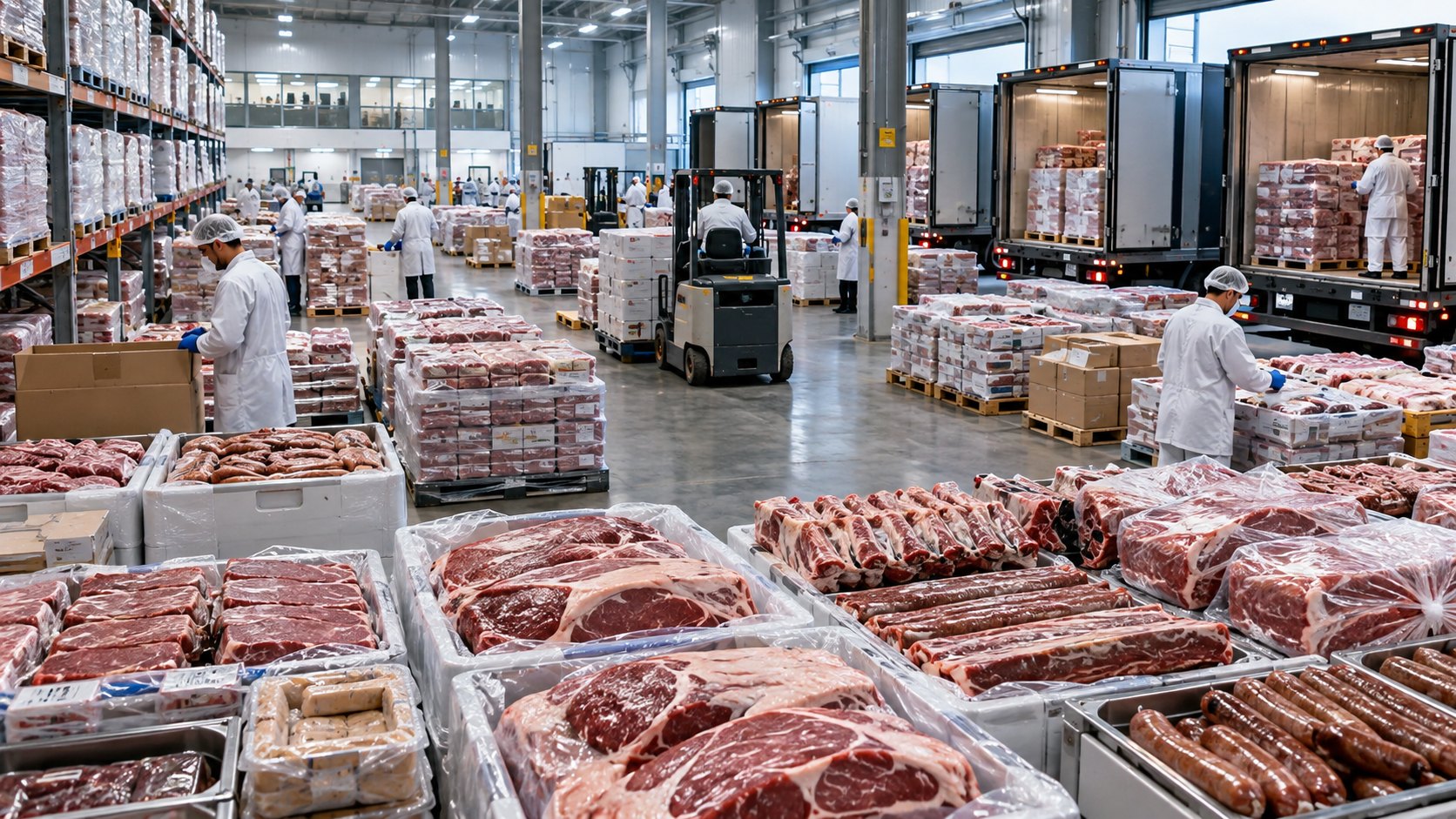
The activity covers buying meat and meat products in bulk and selling them on to businesses: beef, veal, lamb, mutton, goat, camel and poultry; chilled and frozen carcasses, primal cuts and portioned cuts; offal and edible by-products; and processed meat products such as sausages, burgers, cold cuts and canned meat bought finished from a manufacturer. It covers holding the stock at its correct temperature, breaking bulk into the cases and cut specifications each buyer orders, and delivering to trade customers.
What it does not cover is worth setting out with equal care, because three of these are the most common reasons a file has to be reopened after a licence is already held.
Slaughtering is not wholesale
Slaughter is a controlled operation carried out in an approved abattoir under veterinary supervision, and it is a different activity in every sense — premises, approvals, oversight. A wholesaler buys from a plant. A wholesaler that begins slaughtering has become something else.
Cutting and processing sit on a line worth drawing carefully
Breaking a carton into portions for a customer's order is part of wholesale. Running a cutting room that produces made-up products — mincing, marinating, forming burgers, curing, smoking, sausage-making, cooking — is food manufacturing, with its own premises conditions, its own product files and its own process controls. The boundary is not the knife. It is whether a new product is being created. Many wholesalers do cross it deliberately, because portioning and value-added preparation is where the margin improves; it is a second licensing decision rather than an operational upgrade.
Retail is a separate line
Supplying a butcher's shop or a supermarket is wholesale. Operating the counter is retail, and a wholesaler who opens a shop front has added an activity rather than a door.
Live animals and pet food are different trades again
Importing or trading live animals is an agricultural and animal health matter with its own conditions. Animal by-products destined for pet food or rendering are not food for people and answer to their own controls, however similar the freezer looks.
The route from an enquiry to a load a buyer will sign for runs in a fixed order, and the temperature decision near the top of it changes everything below.
- Fix the product precisely: species, cut, chilled or frozen, and the specification in writing
- Confirm the source plant is approved for this market, this species and this product
- Is the product chilled or frozen
- ChilledAir freight, a shelf life counted in days, a delivery window with no slack, and premium buyers
- FrozenSea freight, months of cover, volume buyers, and a great deal of cash inside one container
- Match the cold store, the vehicle and the handling to the temperature the product needs
- Settle the product and source documentation, halal evidence included, before a date is promised
- A consignment the buyer's receiving bay will actually sign for
The order matters more than it looks. Almost every expensive mistake in this trade is a step taken out of sequence — a price agreed before the plant was qualified, a delivery date promised before the documentation was settled, or chilled product sold to a customer whose receiving hours cannot meet an air freight arrival.
Who this suits
An operator who already holds cold storage. Freezer and chill capacity is the entry cost of this trade and it is substantial. Anyone already running temperature-controlled storage for another food line is starting with the expensive part solved, and can afford the months before volume covers the overhead.
A supplier to kitchens, with the relationships already built. Hotels, restaurant groups, catering contractors, institutional caterers and central kitchens buy meat continuously and buy on reliability and specification consistency rather than on the lowest quote. A distributor already delivering to those kitchens is selling into trust that exists, and meat is the highest-value line most of them buy.
Someone with a qualified source, not merely a cheap one. The scarce asset here is an approved plant that will allocate volume at an agreed price and delivery frequency. A trader with that relationship starts from the part that stops most entrants, and a trader without it is quoting on availability they do not control.
A processor moving upstream. A company already making burgers, sausages or ready meals knows the specifications, the yields and the documentation, and often buys enough raw material to justify holding stock for others too.
Who should be careful is the operator planning to compete on price into premium chilled. That market buys on consistency of cut and certainty of arrival, and a cheaper chilled supplier who misses one air freight window has spent the relationship, not the margin.
Where it sits between the mainland and a free zone
The structural choice is decided by who the buyer is, and for most meat wholesalers the answer is not finely balanced.
A mainland licence is what serves customers inside this market: supermarket chains, hotels and restaurant groups, catering contractors, institutional and camp catering, butchers' shops, and government or semi-government supply. That is where the overwhelming majority of meat volume in this country is bought, and it is bought by UAE entities taking delivery on UAE soil. A mainland licence also allows an importer to hold its own customs code and to invoice UAE businesses directly without a distributor sitting in the margin.
A free zone licence is the right instrument for a genuinely different business: frozen product brought in, held in bonded cold storage and re-exported to other markets without clearing into the UAE, or traded between two parties neither of which is here. That trade exists in real volume, it suits the frozen side of the line rather than the chilled side, and the zone's limitations on selling into the local market do not bite because nothing is being sold into it.
The mistake to avoid is choosing a free zone licence on price and then discovering that the customer list is domestic. Which zones and which mainland authorities carry this activity, what the premises must provide, what the cold storage must satisfy and what the whole file costs are matters of the specific emirate, the product mix and the buyer profile — and they are established for the actual case before a cold store is leased, because cold storage is the one commitment in this trade that cannot be unwound cheaply.
References
- Ministry of Climate Change and Environment — animal health, approved source establishments, veterinary control and federal food safety policy on meat consignments entering the country. Ministry of Climate Change and Environment
- Dubai Municipality — food control, slaughterhouse and premises oversight, and cold store suitability for meat handling in Dubai. Dubai Municipality
- Abu Dhabi Agriculture and Food Safety Authority — food safety, animal health and meat controls in Abu Dhabi. Abu Dhabi Agriculture and Food Safety Authority
- Dubai Customs — import and re-export of meat consignments, customs codes, and restricted goods procedures. Dubai Customs
- UAE Government portal — the federal food safety and food security framework, and halal requirements applying to products placed on the market. UAE Government portal
- Ministry of Industry and Advanced Technology — national standards and conformity marks applying to products placed on the UAE market. Ministry of Industry and Advanced Technology
Elsewhere in Trading
Activities that sit beside this one
Most licences carry more than one activity. Adding a neighbouring line at the application stage costs a fraction of amending the licence afterwards.
Begin with a clear conversation
Tell us what you intend to build.
A consultant will map the structure, jurisdiction, approvals and likely cost against what you actually described — not against a package.
