
Activity CZ 141
How to Start a Fabric Wholesale Business in Dubai
Fabric is sold on shade, width and weight, and the argument with a customer is almost always the dye lot. Who buys cloth by the roll, what the wholesale line permits, and what the unit has to hold.
ConsultZone licensing desk
- Activity code
- CZ 141
- Category
- Trading
- Reviewed
- Read
- 7 min
Listen instead
41 seconds
An audio summary of this guide.
Topic summary
How to Start a Fabric Wholesale Business in Dubai
The argument in a cloth warehouse is almost never about price. It is about shade.
Two rolls of the same article, from the same mill, dyed a month apart, are not the same cloth. Put them side by side under a shop light and most people see nothing; cut a kandura with a sleeve from one roll and a body from the other and the customer sees it immediately, in daylight, once. That single risk shapes everything about how this trade is run — how stock is bought, how an order is agreed, how a delivery note is written, and who pays when something goes wrong three weeks later.
This is the best-known textile trade in Dubai and the one with the longest local history, and it sits in the middle of the chain. Upstream is yarn, sold by count to factories. Downstream are finished garments and made-up household textiles, sold in sizes and specifications. Here the goods are piece goods — cloth on a roll, sold by the metre or by the kilo to people whose next act is to cut it.
The customers are people who cut, not people who wear
Four buyers carry this trade, and they want different things from the same shelf.
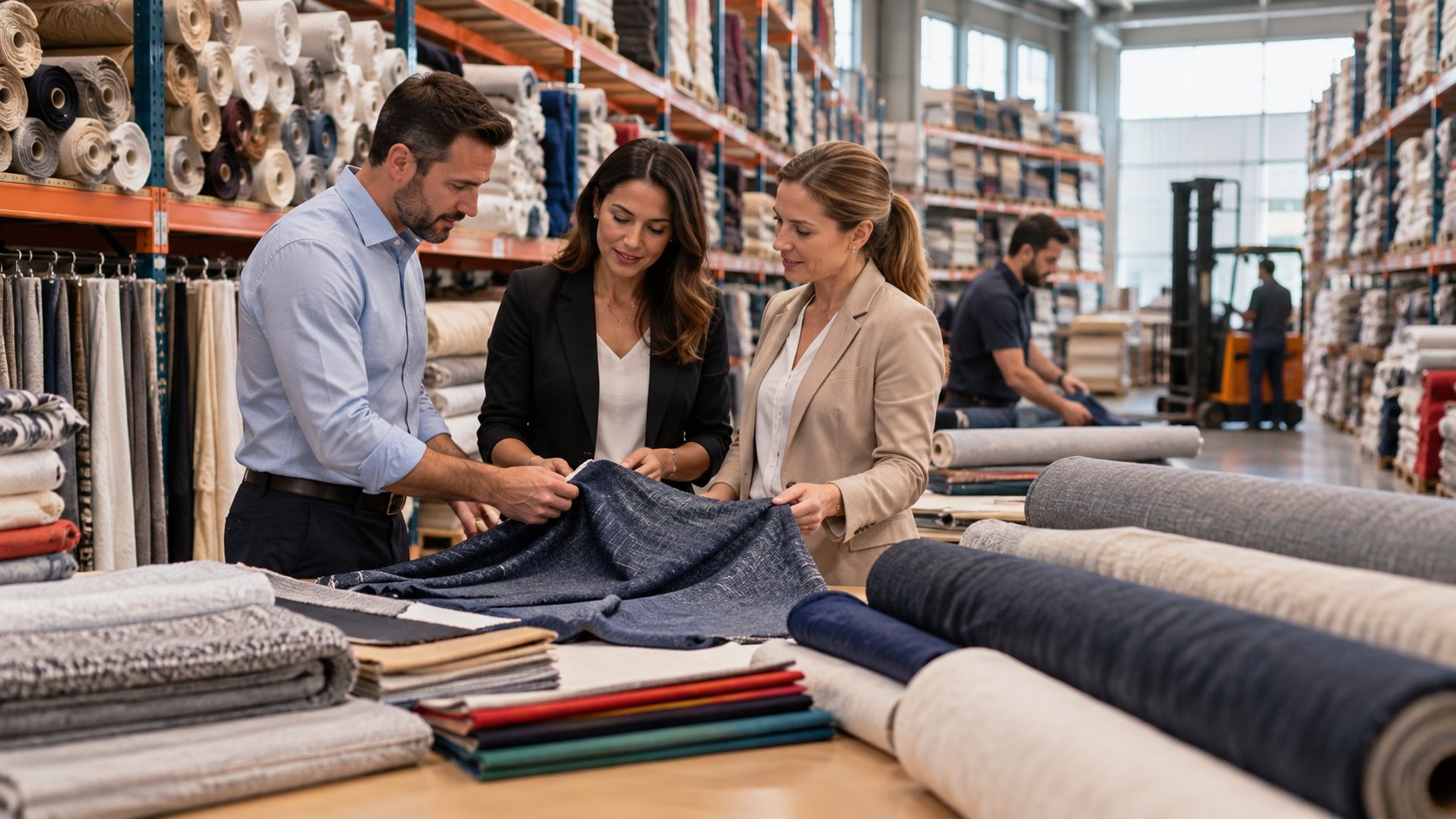
Tailoring workrooms are the backbone: kandura and abaya workrooms, gents' and ladies' tailors, alteration shops. They buy small quantities very often, they are ferociously shade-sensitive because their own customer is standing in front of them, and they value a supplier who can produce three more metres of the exact lot a week after the first cut. Depth in a narrow range beats breadth in a wide one for this buyer, every time.
Uniform and workwear suppliers buy the opposite way: one specification, one colour, large quantities, and then the same thing again next year. A school, a hotel group or a contracting company standardises and stays standardised, so the order is dull and long-lived, and the supplier who can guarantee the same shade across successive years wins it.
Interior fit-out and hospitality contractors buy against a drawing rather than a taste. Curtains, blinds, upholstery and banqueting drapes are specified by a designer, ordered by a contractor and installed against a programme. Fabric destined for a hotel or a public interior also has to satisfy fire-performance conditions for the premises it is going into, which is a question for the fire-safety authority and not for the supplier's opinion.¹
Garment units and sampling rooms take short cut lengths for samples and then place a bulk call-off if the sample is approved. Low value first, real volume later, and the second order only exists if the first metre matched.
Every one of those orders is agreed in the same sequence, and the sequence is where the money is protected.
- Enquiry made against a physical cutting, not a descriptionFixes the article, the width and the handle before a price means anything
- Shade approved on a signed swatch taken from the lot in stockDecides the whole order, and settles who pays if it is disputed later
- The lot reserved and the full quantity confirmed as one pieceTells the customer whether the whole order exists in one shade
- Cut, measured and invoiced with the lot noted on the documentMakes metreage and lot provable instead of remembered
- A short window after delivery for shade and flaw claimsCloses the order, or opens a credit on evidence
The marked stage carries the commercial weight. A swatch cut from the actual roll and signed by the buyer converts an argument about colour into a document, and a fabric wholesaler who skips it is carrying every customer's eyesight as a liability. It costs nothing and it is the one habit that separates the warehouses that survive a bad lot from the ones that do not.
What the line permits, and what it stops short of
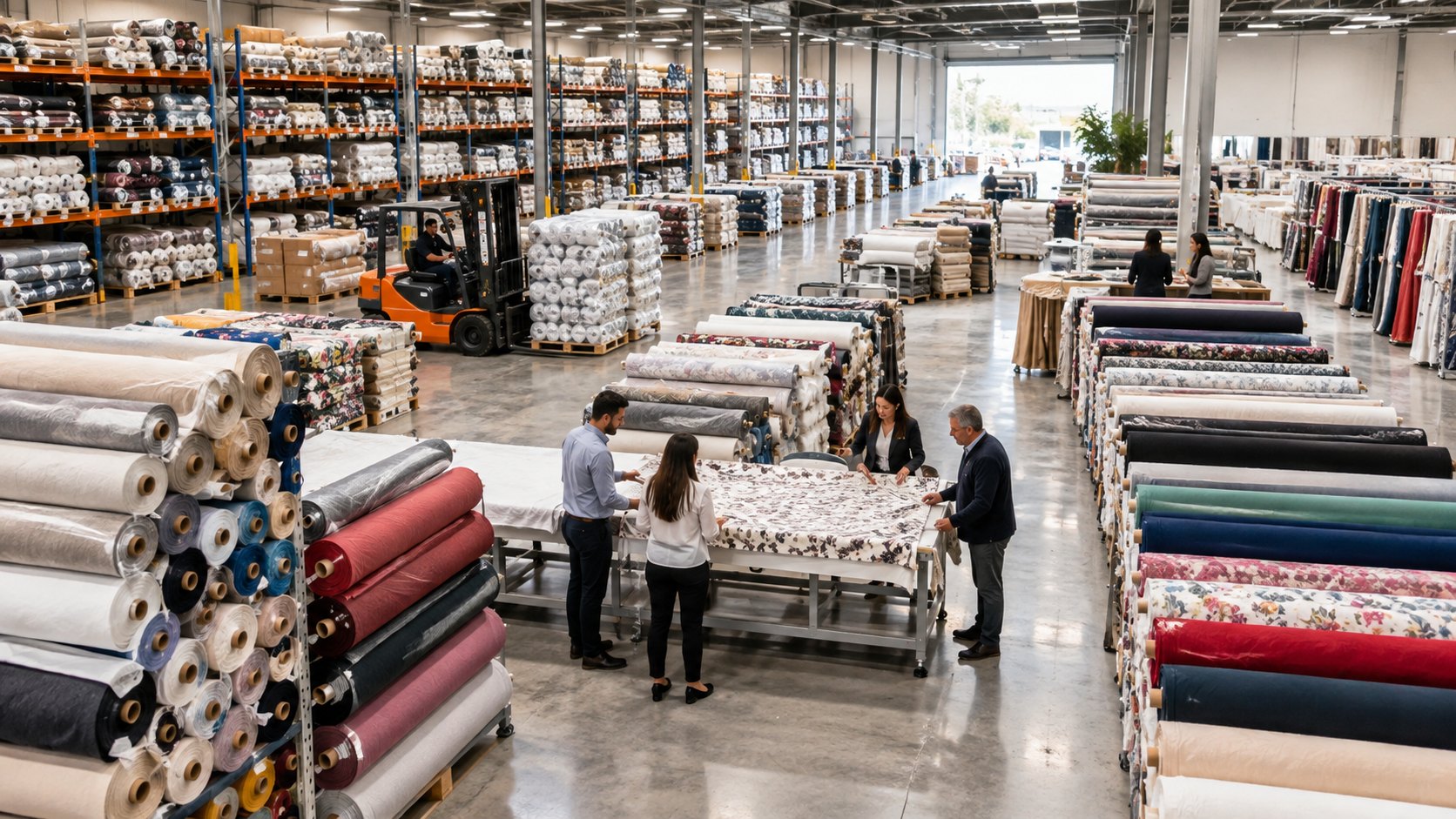
The activity is the holding and selling of piece goods: woven and knitted cloth as roll stock, greige or finished, plain, dyed or printed, in full pieces or cut lengths, sold to the trade.
What it does not cover is everything that changes the cloth. Weaving and knitting are manufacturing. So are dyeing, printing and finishing — printing directly onto textiles is a line of its own, under an industrial licence on approved premises, and the standards and conformity side of it is federal.² Cutting and sewing cloth into garments is a further manufacturing activity again. The working test is whether the goods leave in the same physical form they arrived in, only shorter.
Three neighbouring trade lines are also outside it. Yarn is upstream and sells to factories on count rather than on shade. Haberdashery — needles, thread, zips, elastic and trims — is the workroom's other shopping list and carries its own line. Made-up household textiles such as sheets, towels and table linen are finished articles sold on a specification, not cloth sold by the metre. A business that genuinely does two of these things needs both activities on the licence rather than the one that sounds closest.
And a wholesale line is written for selling to the trade. A counter open to the public is retail, licensed as retail, and the distinction is worth settling in the activity wording before the licence is cut.
The unit decides more than the stock does
Roll stock is a storage problem before it is a sales problem, and the premises drive the cost of this business more than most.
Height, not floor. Cloth is stored on its side in racking, and the money is in cubic metres rather than square ones. A unit with usable height and a clear aisle for a roll trolley holds several times the stock of a wide, low shop at the same rent, and a cutting table with room behind it is not optional.
Light that does not lie. Shade is judged by eye, so it has to be judged under a consistent light source. Warehouses that assess cloth under mixed daylight and fluorescent tubes generate their own disputes.
Fire safety. Cloth in bulk is combustible, and a unit packed with it is treated accordingly: how stock may be stacked, how it must be separated and how the unit is protected are conditions set by the fire-safety authority in the emirate concerned.¹ They are decided with the fit-out, not after it.
Premises suitability and the tenancy. The municipality's view of the unit, and an Ejari-recorded tenancy in Dubai, sit underneath the licence rather than beside it.³ The unit is chosen first in practice, because it settles the licence, the staff allocation and the rent line together.
People. Cutters, loaders and counter staff need work permits and written contracts, which is a labour matter rather than a licensing one.⁴
The mainland-or-free-zone question turns on where the cloth is going. Selling to tailors and contractors on UAE soil is local trade and sits naturally on a mainland licence; cloth bought to be moved onward without entering the local market sits naturally in a free zone. Most real businesses have some of both, which is exactly the point at which the structure should be designed rather than guessed.
What the licence costs to hold, which approvals a specific unit attracts and how a consignment is classified all depend on the emirate, the premises and the goods. ConsultZone confirms those with the licensing authority for the actual case before anything is signed.
References
- Fire safety and storage conditions for combustible stock in a warehouse unit. Dubai Civil Defence
- National standards, conformity and the industrial licensing line that separates processing cloth from trading it. Ministry of Industry and Advanced Technology
- Premises suitability, public health and municipal conditions on a commercial unit in Dubai. Dubai Municipality
- Work permits, labour contracts and wage protection for warehouse and counter staff. Ministry of Human Resources and Emiratisation
- Import and export clearance, customs codes and restricted goods. Dubai Customs
Elsewhere in Trading
Activities that sit beside this one
Most licences carry more than one activity. Adding a neighbouring line at the application stage costs a fraction of amending the licence afterwards.
Begin with a clear conversation
Tell us what you intend to build.
A consultant will map the structure, jurisdiction, approvals and likely cost against what you actually described — not against a package.
