
Activity CZ 159
How to Start a Bicycle and Cycle Parts Wholesale Business in Dubai
A bicycle leaves the factory in a box, part-built. Whoever finishes the machine is the last person who can make it safe, and in a wholesale line that duty belongs in the supply agreement.
ConsultZone licensing desk
- Activity code
- CZ 159
- Category
- Trading
- Reviewed
- Read
- 8 min
Listen instead
51 seconds
An audio summary of this guide.
Topic summary
How to Start a Bicycle and Cycle Parts Wholesale Business in Dubai
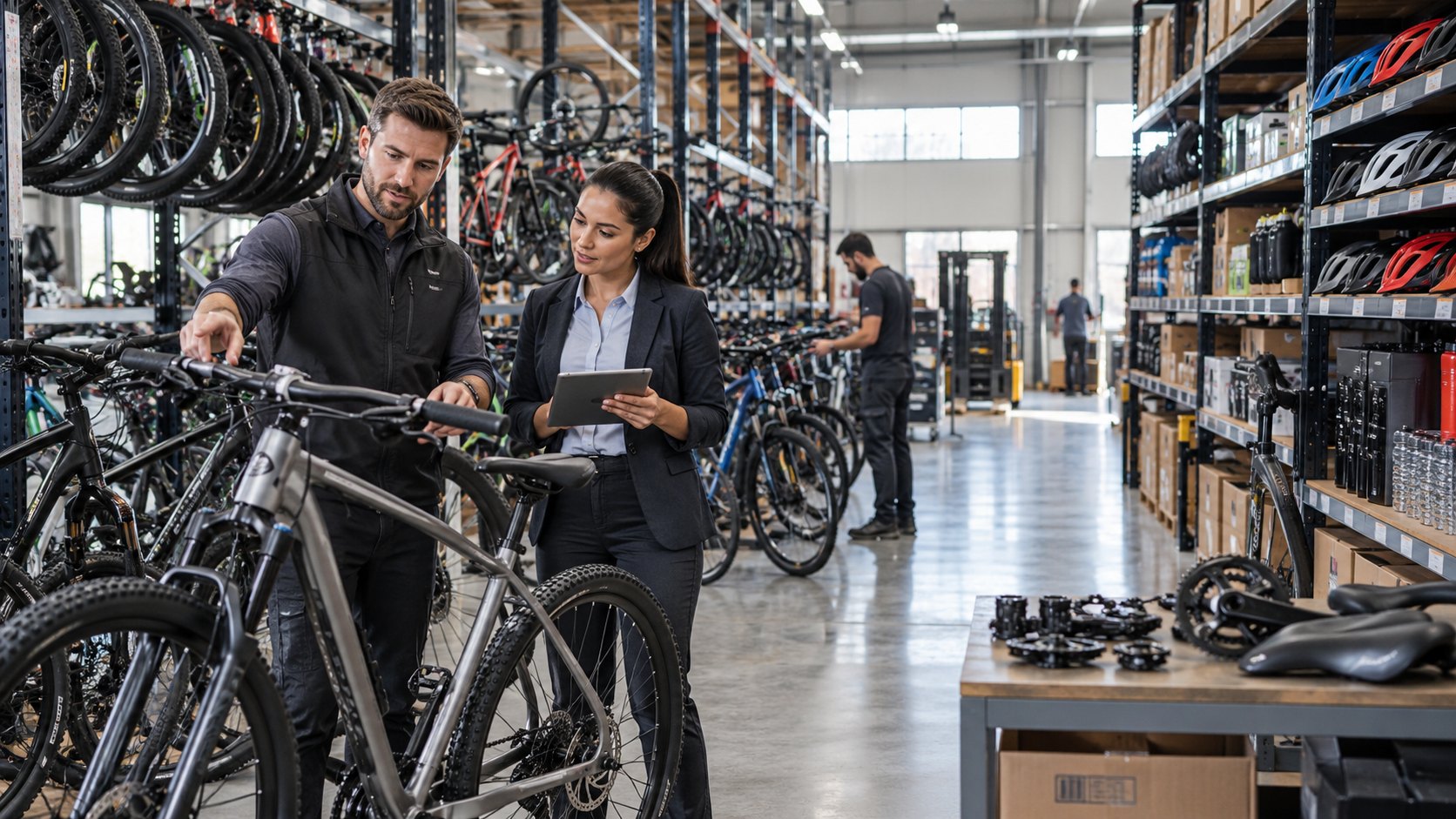
A bicycle leaves the factory with the front wheel out, the handlebar turned sideways, the pedals in a plastic bag and the brakes untouched. Between that carton and a rider on a road, somebody has to build the machine: seat the headset, torque the stem, true the wheels, centre the brakes, index the gears and ride it round the yard before it is sold. In a shop that person is the mechanic behind the counter. In wholesale it is a question the supply agreement has to answer, because the dealer unpacking the carton may have a proper workshop, a part-time mechanic, or nobody at all.
That one question shapes the whole trade. Bicycles look like commodities on a purchase order and behave like machinery in the field. A crank that was never tightened comes back as a claim against the brand rather than against the shop that fitted it, and a marque that acquires a reputation for arriving badly built loses dealers faster than it loses margin. Distributors who understand the line therefore sell a service alongside the goods: a pre-delivery build for dealers who cannot do one, torque figures and training for those who can, and a spares pipeline quick enough that no bike sits on a shop floor waiting for a derailleur hanger. The ones who ship only cartons compete on discount, which is a shrinking place to stand.
The market underneath it is real and it is not one market. Dedicated cycle tracks have been built out across the emirates, road and mountain riding has a substantial resident following, and the heat creates a genuine season rather than a flat year — a planning problem and an opportunity at once, since stock ordered late lands after the season it was ordered for. Beneath the sport end sits a far larger and much less glamorous one: utility machines for workers, and the delivery riders who are now a permanent feature of the street. That second market buys on durability and unit price, consumes parts continuously and cares nothing for carbon frames. Most of the volume in this line lives there.
CZ 159 — Wholesale Of Bicycles And Their Parts And Accessories
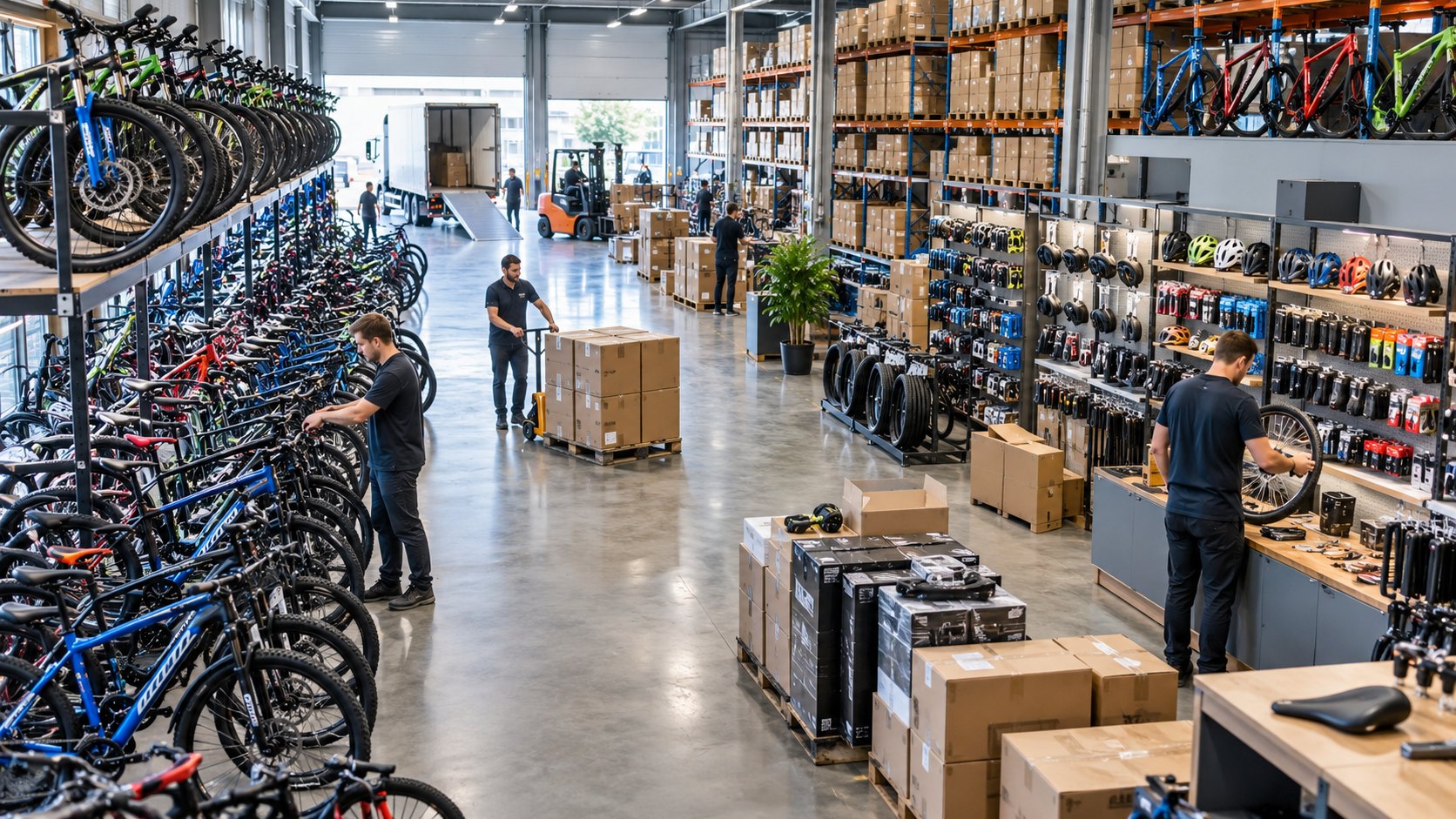
The line covers buying and selling complete bicycles, the parts fitted to them and the accessories sold beside them, in trade quantities to other businesses rather than over a counter to riders. On the sheet it is one activity. Handled honestly it is five kinds of goods, and they do not behave alike.
Complete machines
Road, mountain, gravel, hybrid, city, folding and children's bicycles, and the cargo bikes that carry goods rather than people. Bulky, low in value per cubic metre, shipped part-assembled, and the item the brand relationship actually rests on.
Parts, which are the profitable half
Tyres, tubes, chains, cassettes, brake pads, cables, bearings, saddles, bars and hangers. Consumables on a predictable replacement cycle, a fraction of the freight cost of a frame, and a margin that holds. A dealer who buys one bicycle a month buys parts every week. The difficulty is range rather than volume: a cassette is not simply a cassette, and the wrong eleven-speed ratio is dead money on a shelf for a year.
Accessories
Lights, locks, pumps, bottles, racks, bags, mudguards, computers and clothing. Fast-moving, bought on impulse at a shop counter, and the easiest place in the catalogue to build a house label with a margin nobody can price-check.
Protective equipment
Helmets, gloves, pads and cycling eyewear. These are bought to absorb an impact or shield an eye, and that is what separates them from everything else on the invoice — the standard a helmet meets is not a marketing line, it is the product. Conformity marking of protective goods is a national standards matter rather than a licensing one, so a serious distributor keeps the maker's test evidence on its own file instead of trusting that it exists somewhere in a factory. Cycling eyewear sits close to the optical goods line, CZ 161, and the boundary is the lens: the moment one is made to a prescription it has stopped being sports equipment.
Electric bicycles
A machine with a motor and a battery is where this line becomes two lines. A motor can take a bicycle out of the bicycle category and into the rules that govern powered vehicles, which changes where it may lawfully be ridden and who may ride it. The battery is a separate matter again: lithium cells are a recognised hazard in transit and in store, and the carrier and the fire authority both take a view on them that has nothing to do with the trade licence.
So the goods on a single bicycle invoice do not all arrive at the same place.
six kinds of goods, four destinations
- Pedal-only machines, from children's bikes to carbon road framesNothing on the machine is powered, so it is a bicycle and is stocked like one
- Frames, wheels, drivetrain, tyres and cablesSpare parts follow the machine they are made to fit
- Lights, locks, bags, racks and clothingAn accessory carries no separate control of its own
Handled as ordinary traded goods
- Helmets, pads and cycling eyewearBought to absorb an impact, so the standard it meets is the thing being sold
Handled as safety equipment
- Electric bicycles with a motor and a batteryA motor changes where the machine may be ridden and how it is treated at the border
Handled as a powered vehicle, not a bicycle
- Battery packs, chargers and spare cellsThe cell is the risk, and the carrier and the fire authority govern it, not the licence
Handled as a hazard in transit and in store
The marked row is the one that catches people. An importer who prices a consignment of electric machines as though they were bicycles has priced the freight, the storage and the road position of something else, and the difference is not recoverable on a container that has already sold out. Which rules attach, on what conditions and at what cost varies by emirate and by licensing authority, and those are items to confirm against the specific product before a purchase order is raised rather than after it.
Four lines that share a customer with this one
Retail of bicycles
Selling to a rider over a counter is a different activity with a different address, a different rent and a different reason for existing. Plenty of businesses hold both, and the ones that do have to decide early whether their own shop competes with their dealers — a question that has ended more distribution agreements than pricing has.
Repair, servicing and mobile mechanics
Labour sold by the hour, not goods sold by the carton. A workshop is a natural neighbour to a parts business and a natural customer of one, but it earns from diagnosis and time, holds almost no stock, and lives or dies on how many machines pass through a stand in a day.
Motorcycles and powered two-wheelers
Once a machine is a motor vehicle it belongs to the motor trade, with its own licence line, its own approvals and its own aftermarket. The temptation to treat fast electric machines as a bridge between the two is exactly the trap described above.
Sporting goods generally
A broad sports wholesaler carries bicycles as one line among twenty and buys them the way it buys footballs. It is a real business and it is not this one: the depth of spares, the technical support and the seasonal ordering a cycle dealer needs are the things a general sports catalogue cannot supply.
Who is this for?
The brand's regional distributor
The most common entrant and the one with the clearest plan. A manufacturer wants coverage across the Gulf without opening its own subsidiary, and appoints somebody to hold stock, support dealers and defend the brand. What is being bought is territory and a duty of care; what is being risked is an agreement that turns out to be exclusive in one direction only.
The shop owner going upstream
A retailer who has spent years buying at local wholesale prices and can see the landed cost underneath them. The instinct is sound and the capital requirement is the shock: a shop turns its stock several times a year, while a distributor holds a season of it on behalf of everybody else.
The fleet supplier
Whoever equips delivery operators, hotels, resorts, tour companies and community developments. Orders are larger, often tender-driven and entirely unromantic, the specification is durability rather than performance, and the money is in the maintenance and the spares that follow the first delivery.
None of the three escapes the shape of the money, and that is the honest last point on this activity. Stock is the business: a season of machines and a working spread of spares are committed before the first invoice goes out, freight is bulky rather than heavy so it is priced by volume, and a bicycle that does not sell this year sells next year at a discount. Corporate tax applies as it does to any UAE business, and enrolment and filing with the Federal Tax Authority follow from whatever structure is chosen — worth reading beside the stock plan rather than after it.
References
- Ministry of Industry and Advanced Technology — national standards and conformity marks applying to consumer products, including protective helmets and eyewear. Ministry of Industry and Advanced Technology
- Roads and Transport Authority — where cycles and powered two-wheelers may be used in Dubai, and the permits attaching to them. Roads and Transport Authority
- Dubai Customs — import and export, customs codes, and the treatment of restricted goods and battery consignments. Dubai Customs
- Dubai Civil Defence — fire safety approvals for premises storing flammable or hazardous stock. Dubai Civil Defence
- Federal Tax Authority — VAT and corporate tax enrolment and filing obligations. Federal Tax Authority
Elsewhere in Trading
Activities that sit beside this one
Most licences carry more than one activity. Adding a neighbouring line at the application stage costs a fraction of amending the licence afterwards.
Begin with a clear conversation
Tell us what you intend to build.
A consultant will map the structure, jurisdiction, approvals and likely cost against what you actually described — not against a package.
