

Activity CZ 69
How to Start a Used Automobile Trading Business in Dubai
Used automobile trading is a buying business with a showroom attached. What decides whether it works is the discipline applied before the money leaves, not the selling that happens afterwards.
ConsultZone licensing desk
- Activity code
- CZ 69
- Category
- Trading
- Reviewed
- Read
- 6 min
Listen instead
39 seconds
An audio summary of this guide.
Topic summary
How to Start a Used Automobile Trading Business in Dubai
Profit in this line is set at purchase and merely collected at sale. That single sentence explains most of what follows, and it is why the trade rewards temperament over enthusiasm. A yard that buys ten cars well and sells them at the market price will beat a yard that buys ten cars badly and sells them brilliantly, because the second yard has no room left to be brilliant in.
This is the volume end of the motor trade and it is meant to be unglamorous. Nobody here is making a quarter's income on one car. The company earns on stock turn — how many cars move through the same capital in a year — and stock turn is a function of buying cars that people actually want at prices that leave room. The UAE is a good place to attempt it: the fleet is young, owners change cars often, fleets and leasing companies dispose on a cycle, and anything roadworthy that the local buyer rejects has a regional market behind it.
The difficulty is that the market is completely transparent to the buyer. Anyone can see what your car and eleven others like it are advertised at, in about ninety seconds. Selling price is therefore not something a trader controls. Buying price is.
The people this line suits are patient rather than passionate
Traders who like a routine. The work is repetitive by design: source, check, cost, offer, prepare, advertise, sell, repeat. The businesses that scale are the ones that made that loop boring and then ran it more times.
Anyone with a sourcing edge. A relationship with a fleet or leasing company that disposes regularly, access to auction, a workshop that sees cars before they are for sale, or a reputation among private owners. A sourcing edge is worth more than a better showroom, because it changes the price at which stock enters.
Owners of a small yard who want to grow properly. The step from six cars to sixty is a step in administration, not in salesmanship. Whoever keeps the paperwork clean at volume is the person who makes it possible.
Part-exchange takers. Traders who understand that a car accepted in part-exchange is a purchase decision disguised as a sales concession, and price it accordingly.
It does not suit a founder who wants a forecourt of cars he personally admires. Those cars are usually slow, and slow stock is the thing that kills a yard. The luxury end of the market, where the cars are chosen for what they are, is a different activity and is covered on the used-luxury-automobiles-trading page.
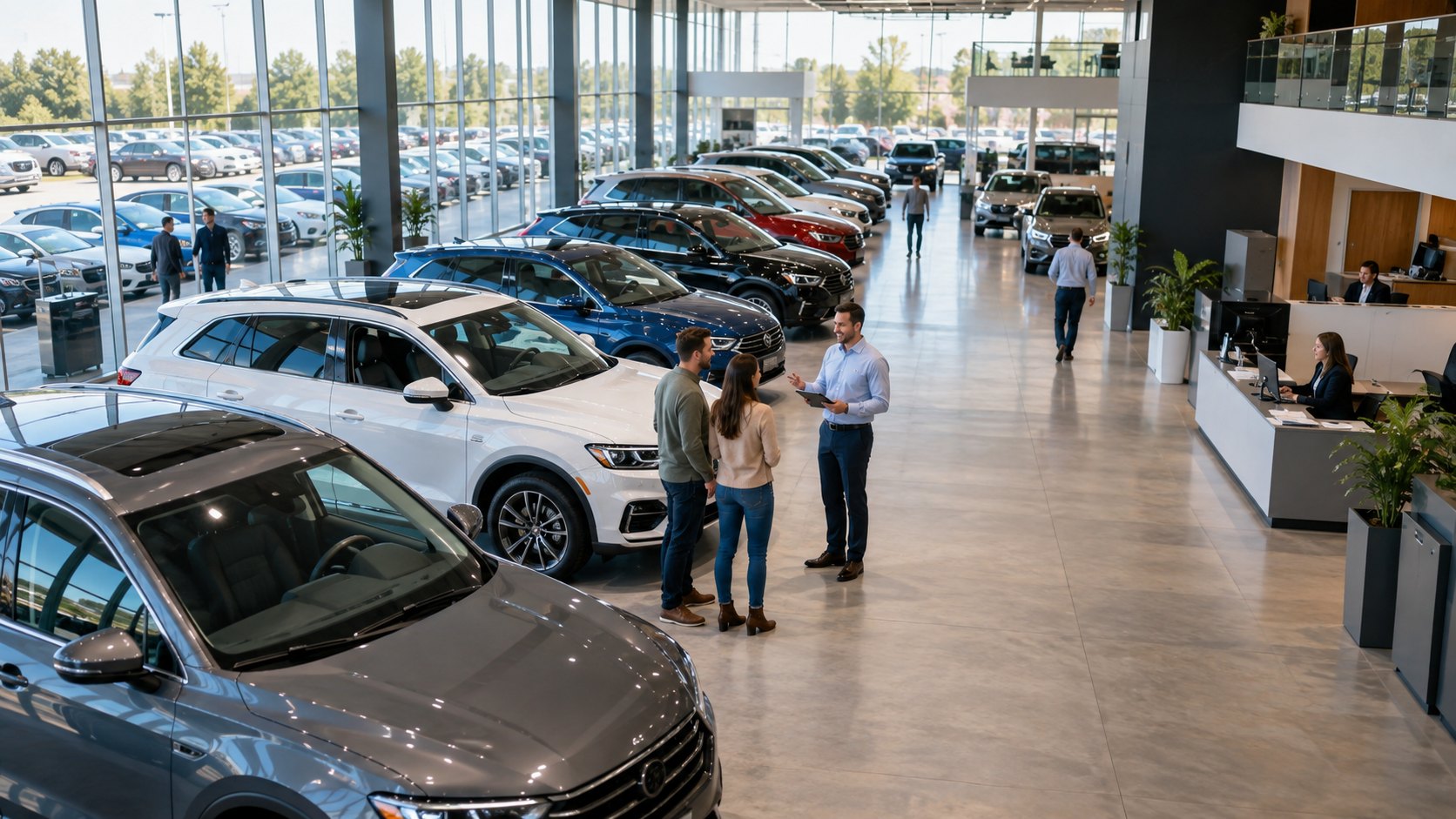
CZ 69 — Used Automobile Trading
Under this line a company buys and sells used passenger vehicles on its own account — wholesale to other traders, retail to the public, or both. Stock comes from private owners, from fleet and leasing disposals, from auction, from part-exchange against a retail sale, and from other traders clearing what has not moved.
Premises and the combined new-and-used licence are covered on the sale-of-motor-vehicles and wholesale-and-retail-sale-of-unused-and-used-vehicles pages, so this page does not repeat them.
What is worth setting out here is the buying routine, because it is the only part of the business a trader fully controls, and because one question in it decides whether a car is stock at all.
- Fix the price you will pay before you go and look at itDecided from the market, not from the conversation with the seller
- Read the car's record: owners, service history, accident entries, what is owed
- Is anything still owed against the vehicle
- YesThe seller's lender releases it or the purchase stops. A car you cannot pass clean title on is not stock — it is a loss you have already paid for
- NoTitle can pass, and the only remaining question is what the car is actually worth
- Inspect it mechanically and structurally, or have somebody competent do it
- Cost the preparation and subtract it from your offer, not from your hopesTyres, brakes, service, bodywork and detailing, quoted before the offer
- Buy at your number or walk awayThere is always another car, and the trader who cannot walk pays for that inability on every purchase
The encumbrance question sits where it does deliberately. It is asked early because a negative answer ends everything, and asking it last means having already spent money on an inspection for a car that could never have been sold. In a yard buying regularly from private sellers it is the single most common source of real loss, and it is entirely avoidable.
Four things the licence does not reach
It does not give you clean title. The licence permits trading in used vehicles. It says nothing about whether the particular car in your yard is free of a lien or a dispute, and no authority checks that on your behalf when you buy privately. That is the trader's own work, on every car.
It does not make you a warranty provider or an inspection authority. A dealer's own assessment of a car is not the buyer's, and a retail customer is entitled to have it looked at independently. A business model that relies on the buyer not checking is not a business model. Where a trader chooses to offer a guarantee of his own, that is a commercial promise he funds himself, not something the licence supplies.
It does not arrange the customer's finance. A large share of retail used-car purchases are credit purchases, and the credit decision belongs to a bank. Introducing a customer to a lender is normal practice; lending, leasing or writing insurance is regulated financial activity and is not part of this line.
It does not cover the workshop. Servicing, repair and bodywork are a separate activity in this catalogue, at CZ 71. Almost every used-car yard needs that capacity, and the decision is whether to hold the licence for it or to buy the work in — which is a question about volume and about how much preparation the stock actually needs.
What it costs, and why the honest answer is a range
The licence fee, the yard or showroom the activity requires, how many cars that space will hold, the staffing and the mix of other activities on the same licence all vary by emirate and by licensing authority. A trader working from a shared bay in a used-car complex and a company taking a standalone site are doing the same activity at completely different cost. We put real figures against a real plan — where, how many cars, what preparation is done in-house — rather than quoting an average that describes neither.
References
- Roads and Transport Authority — the vehicle's own record, ownership transfer and the inspection regime in Dubai. Roads and Transport Authority
- UAE Government portal — the general basis for commercial licensing and the federal instruments behind it. UAE Government portal
- Ministry of Human Resources and Emiratisation — work permits, labour contracts and wage protection for yard and sales staff. Ministry of Human Resources and Emiratisation
- Federal Tax Authority — value added tax on used-vehicle sales and corporate tax enrolment and filing. Federal Tax Authority
Elsewhere in Trading
Activities that sit beside this one
Most licences carry more than one activity. Adding a neighbouring line at the application stage costs a fraction of amending the licence afterwards.
Begin with a clear conversation
Tell us what you intend to build.
A consultant will map the structure, jurisdiction, approvals and likely cost against what you actually described — not against a package.
