
Activity CZ 73
How to Start a Tyre Fitting and Repair Business in Dubai
A tyre bay lives on drivers who had no intention of stopping, so the site decides the takings before the stock does. What the fitting line covers, the lines confused with it, and who it suits.
ConsultZone licensing desk
- Activity code
- CZ 73
- Category
- Trading
- Reviewed
- Read
- 7 min
Listen instead
39 seconds
An audio summary of this guide.
Topic summary
How to Start a Tyre Fitting and Repair Business in Dubai
Almost nobody sets out in the morning planning to buy tyres. They stop because a warning light came on, because something on the hard shoulder went into a sidewall, or because somebody at a service told them the fronts would not last. That single fact shapes everything about this trade: the customer is unplanned, in a hurry, within a short radius of wherever the trouble started, and choosing between whichever bays are visible from there. A tyre business is not really a retailer with a workshop attached. It is a place, and the place is most of the asset.
Which is why the order of work in this business is unusual. In most licensed trades the founder decides what to sell, then finds premises that suit it. Here the site is the business case, and a lease on the wrong road cannot be fixed by better buying, sharper pricing or a smarter brand. Corner plots on a route that carries commuting traffic, positions inside or beside an established automotive cluster, and units with kerbside access a driver can pull straight into are worth paying for. A cheap unit down a service road behind a compound is cheap for a reason.
CZ 73 — Tyre And Tube Repair, Fitting Or Replacement
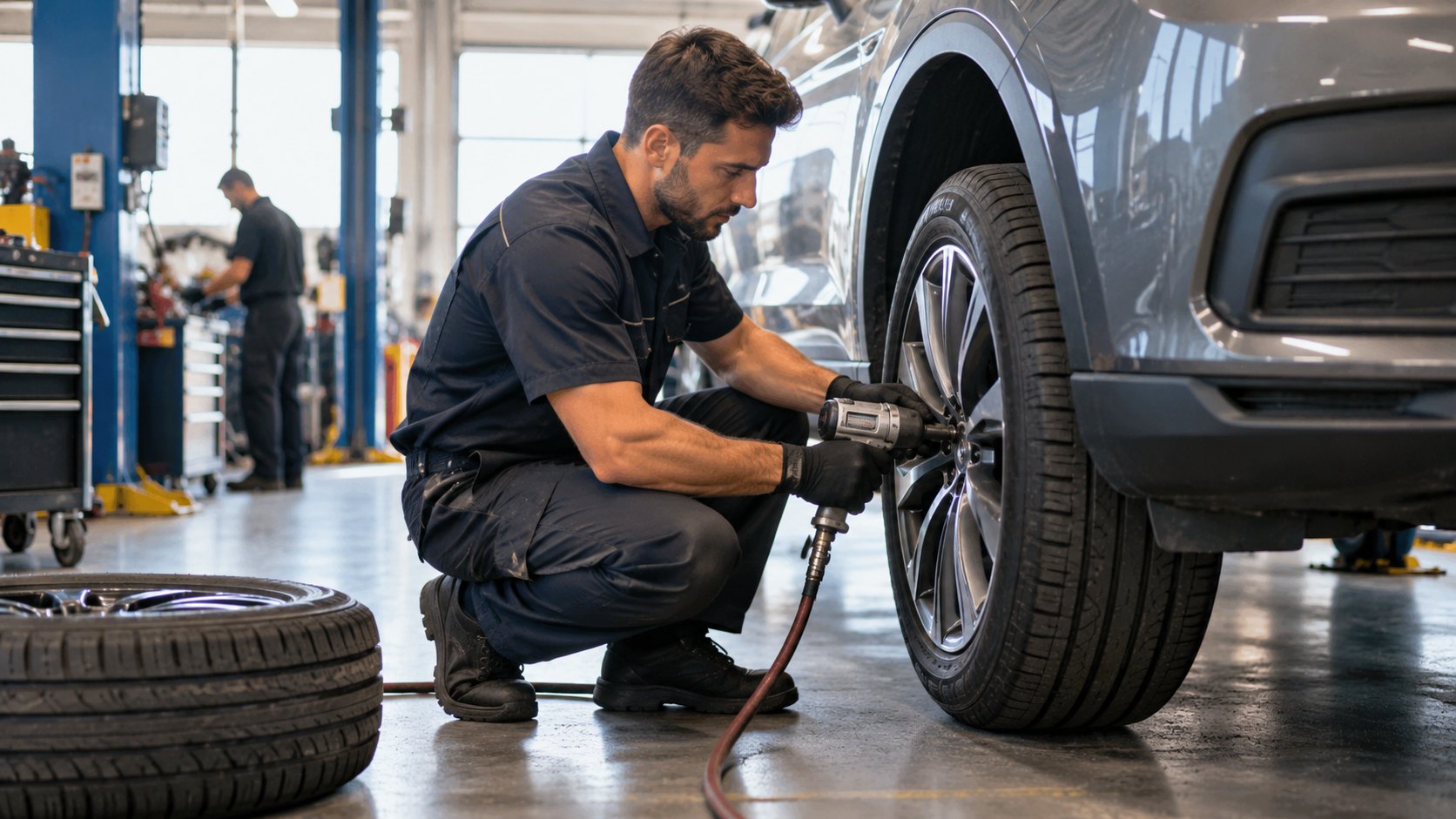
The line covers work on the tyre itself: taking a wheel off, breaking the bead, repairing a puncture where the damage permits it, patching or replacing a tube, mounting a new tyre, balancing the wheel and putting it back on. It reaches passenger cars, and in most shops light commercials, trailers and the occasional heavy vehicle if the equipment can take the rim size.
Three characteristics of the line are worth understanding before the money goes in.
The ticket is small and the footfall is high. A puncture repair is minutes of labour. Four tyres on a family car is a bigger sale but still a single visit that closes in under an hour. Nothing here resembles the invoice a gearbox generates, so the model is volume — cars through the bay per day — and the discipline is throughput rather than craft. Two well-drilled fitters who never leave a customer waiting will out-earn a slower shop with better equipment.
The product is a commodity and the customer knows it. The same tyre, in the same size, from the same maker, is available from the shop across the junction, and a driver can check the price on a phone while standing in your reception. Margin is therefore not defended by being better at fitting. It is defended by having the size in stock when the car is already on the jack, by fitting it now rather than tomorrow, and by the labour and balancing that come with it.
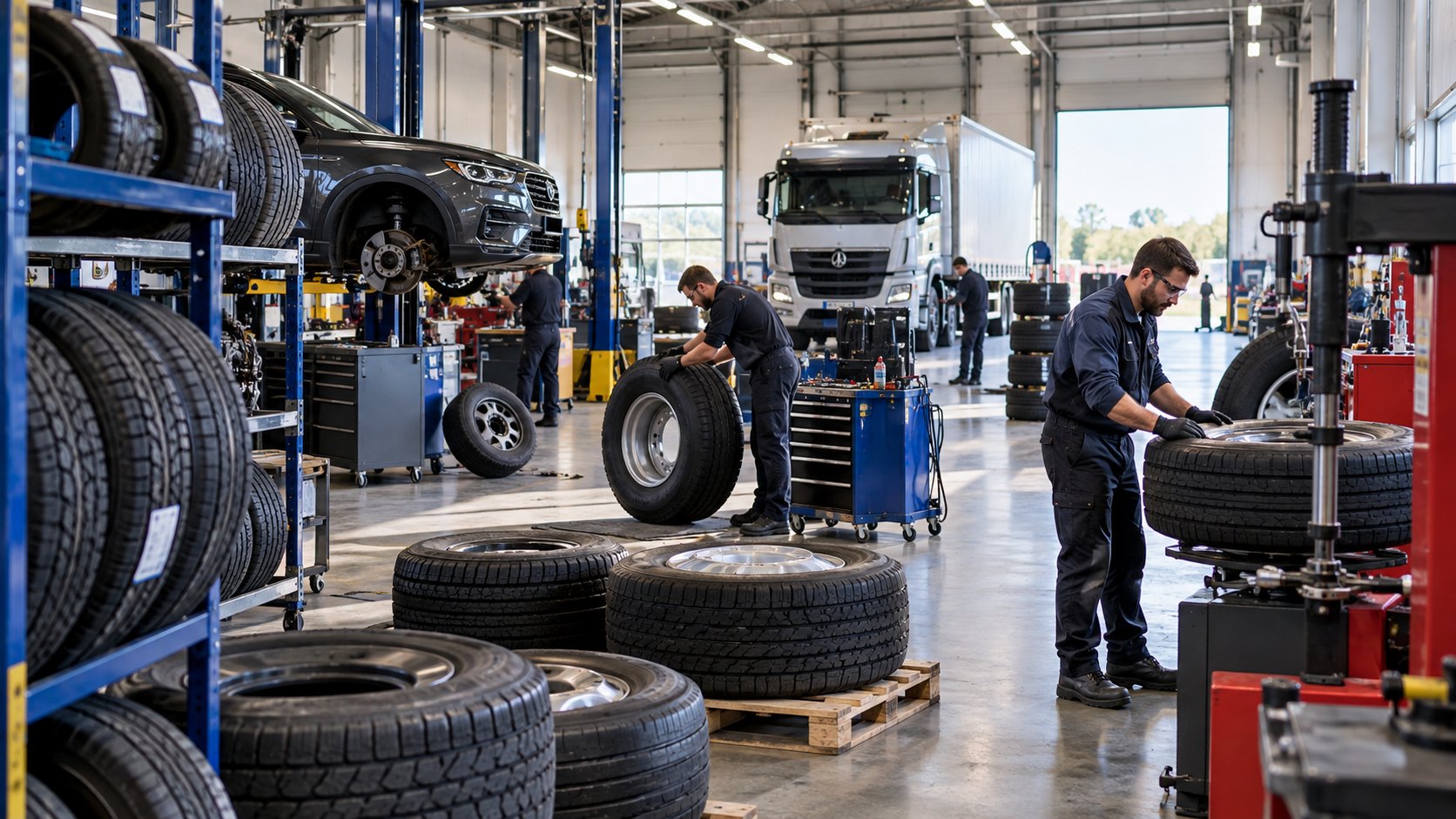
Stock is the constraint, and it is unforgiving. A size you do not hold is a sale you do not make, and the driver will not come back tomorrow for it — they will drive to the next bay. But holding every size in every brand is capital standing on racking, in a business whose sales are individually small. The working-capital judgement in a tyre shop is which sizes actually roll past your door, and it is learned locally rather than read off a catalogue.
Two conditions attach to this line that a founder should plan for rather than react to. A tyre is a safety-critical product subject to national standards and conformity marking, which is a control on the goods themselves rather than on the bay — it decides what may lawfully be sold and fitted, not how the shop operates. And a tyre shop generates a bulky, awkward controlled waste stream: the old casings do not go into the building's bins, and where they go is a question the municipality asks of the site.
who drives in, and where that puts the licence
- Drivers pulling in off the road with a flatThe sale happens on UAE soil, to whoever is standing in the bay
- Taxi, delivery and rental fleets on a fitting contractOne UAE company invoicing another for work performed here
- Workshops and dealers sending wheels out to be doneTrade-to-trade supply inside the local market
- Plant and site operators wanting tyres changed on their own premisesMobile work inside the UAE still serves a UAE buyer
Mainland licence
- Bulk casings bought in and held for onward sale outside the countryThe goods never clear into the UAE market at all
Free zone licence
The imbalance in that drawing is not an accident. Four of the five customers who matter to a fitting business are standing on UAE ground when they buy, which puts this trade firmly on the mainland side. The free zone answer belongs to a different business that happens to involve the same object — buying casings in volume and moving them out again, where the warehouse matters and the bay does not. A founder who takes a zone licence intending to serve local motorists has bought the wrong instrument, and usually finds out after signing a tenancy. Which conditions attach in a given emirate, and what a licence costs to hold there, depend on the jurisdiction, the premises and the activity mix, and ConsultZone confirms all three for the specific case.
Three lines a tyre bay is confused with
Tyre fixing and wheel alignment
The same catalogue carries a separate services line pairing tyre fixing with wheel alignment. The distinction is real and it is about equipment: alignment is measurement work on a calibrated rig, correcting geometry, and it is a different purchase, a different bay and a different skill from mounting a tyre. Most tyre shops want both, because a driver replacing worn fronts is exactly the driver whose geometry is out. Whether both belong on one licence in a particular emirate is a question to settle with the authority before the trade name is reserved.
Fitting parts and accessories
Installing components and accessories on a vehicle outside a manufacturing process is its own line here. A tyre bay that starts fitting alloy wheels, suspension parts, lighting or trim has moved into it. The boundary matters more than it sounds: shops drift into accessory work because the customer is already there, and drift is how a licence and a business stop describing each other.
Trading tyres rather than fitting them
Selling tyres as goods — importing, wholesaling, supplying other shops, holding stock for onward sale — is a trading activity, not a service one. A fitting bay obviously buys and holds tyres to fit them. A business whose income is the margin on the tyre rather than the labour on the wheel is trading, and should be licensed for that. Most substantial operators eventually hold both, deliberately, once the volume justifies buying by the container rather than from a local wholesaler.
Who should be taking a tyre bay
Operators who understand throughput. The people who do well here come from businesses measured in transactions per day rather than in projects — quick-service work, retail, delivery. The instinct that matters is the one that hates a queue.
Existing workshops adding a bay. A general repair shop already has the cars, the yard and the customers. Adding fitting captures a sale it currently hands to the shop next door, and it fills time between longer jobs. For an established workshop this is one of the easier extensions in the catalogue.
Fleet operators with enough wheels of their own. Taxi, delivery and rental businesses consume tyres continuously and predictably. Bringing the work in-house converts a recurring bought-in cost into an internal one, and the bay then has spare capacity to sell outward.
Investors backing a location rather than an operator. This is the one case where the site genuinely can carry the business, because demand is passing traffic rather than reputation. It still needs a fitter who will not keep a driver waiting, and a manager who knows which sizes to hold. The location buys the visits; the bay has to convert them.
References
- Ministry of Industry and Advanced Technology — national standards and conformity marking for tyres as a regulated product. Ministry of Industry and Advanced Technology
- Dubai Customs — import of tyre stock, customs codes for the importer, and restricted or prohibited goods. Dubai Customs
- Dubai Municipality — premises suitability for a fitting bay and the disposal route for used casings as a controlled waste stream. Dubai Municipality
- Roads and Transport Authority — vehicle testing and roadworthiness in Dubai, where tyre condition is assessed. Roads and Transport Authority
Elsewhere in Trading
Activities that sit beside this one
Most licences carry more than one activity. Adding a neighbouring line at the application stage costs a fraction of amending the licence afterwards.
Begin with a clear conversation
Tell us what you intend to build.
A consultant will map the structure, jurisdiction, approvals and likely cost against what you actually described — not against a package.
