
Activity CZ 88
How to Start a Motor Vehicle Parts and Accessories Business in Dubai
The hard part of a motor vehicle parts business is not selling the part. It is owning the right several thousand part numbers, and being clear about which of genuine, aftermarket and used you are actually in.
ConsultZone licensing desk
- Activity code
- CZ 88
- Category
- Trading
- Reviewed
- Read
- 7 min
Listen instead
46 seconds
An audio summary of this guide.
Topic summary
How to Start a Motor Vehicle Parts and Accessories Business in Dubai
Ask a parts dealer what he sells and he will name components. Ask him what he actually owns and the answer is a catalogue: several thousand part numbers, of which a few hundred pay the rent, a few thousand sit on a shelf for a year, and some number he would rather not calculate will never sell at all. The skill in this trade is not negotiation and it is not mechanical knowledge. It is knowing which numbers to hold, at what depth, for which vehicles — because the customer who cannot get a part from you today buys everything else somewhere else tomorrow.
That is the frame worth carrying through the rest of this page. The licence takes a morning to think about. The catalogue takes years, and it is where the money is either made or quietly buried.
The four owners who hold this licence, and the one who should not
The specialist who knows one range deeply
The strongest version of this business. One or two manufacturers, or one class of vehicle — German saloons, Japanese pickups, American engines, commercial trucks — held in real depth. The customer comes because you have the awkward item nobody else stocks, and pays without shopping around. Narrow and deep beats broad and shallow in this trade almost every time.
The workshop adding a counter
A garage that is already buying parts for its own jobs and decides to sell them to walk-in customers and to smaller workshops as well. The stock is partly there, the demand is visible from the service bay, and the margin on the part frequently exceeds the margin on fitting it. This is usually an added activity rather than a new company.
The accessories retailer
A different business wearing the same licence. Floor mats, seat covers, audio, lighting, alloy wheels, roof boxes, car care chemicals, dash cameras, tint film. Demand is driven by fashion and by season rather than by failure, stock turn is faster, and the buyer is a consumer making a discretionary purchase — which means presentation and display matter in a way they never do at a spare-parts counter.
The used and salvage dealer
Buying serviceable components out of written-off and end-of-life vehicles and selling them on. Genuinely useful: for an older vehicle a sound used part is often the only economic repair. It is also the version of this trade with the most conditions attached, because the source of each item and its condition are the whole question, and what is permitted differs between emirates.
Where this is the wrong licence. A founder whose real plan is to supply workshops and retailers in volume, on credit, by the pallet, is describing a wholesale operation rather than a counter. That is the neighbouring line in this catalogue — the wide wholesale and retail activity covering parts, components, supplies, tools and accessories including tyres and inner tubes — and it is built for a different buyer, a different cash cycle and different premises. Choosing the counter licence and then trying to trade wholesale under it is an amendment nobody enjoys paying for.
CZ 88 — Sale Of Motor Vehicle Parts And Accessories
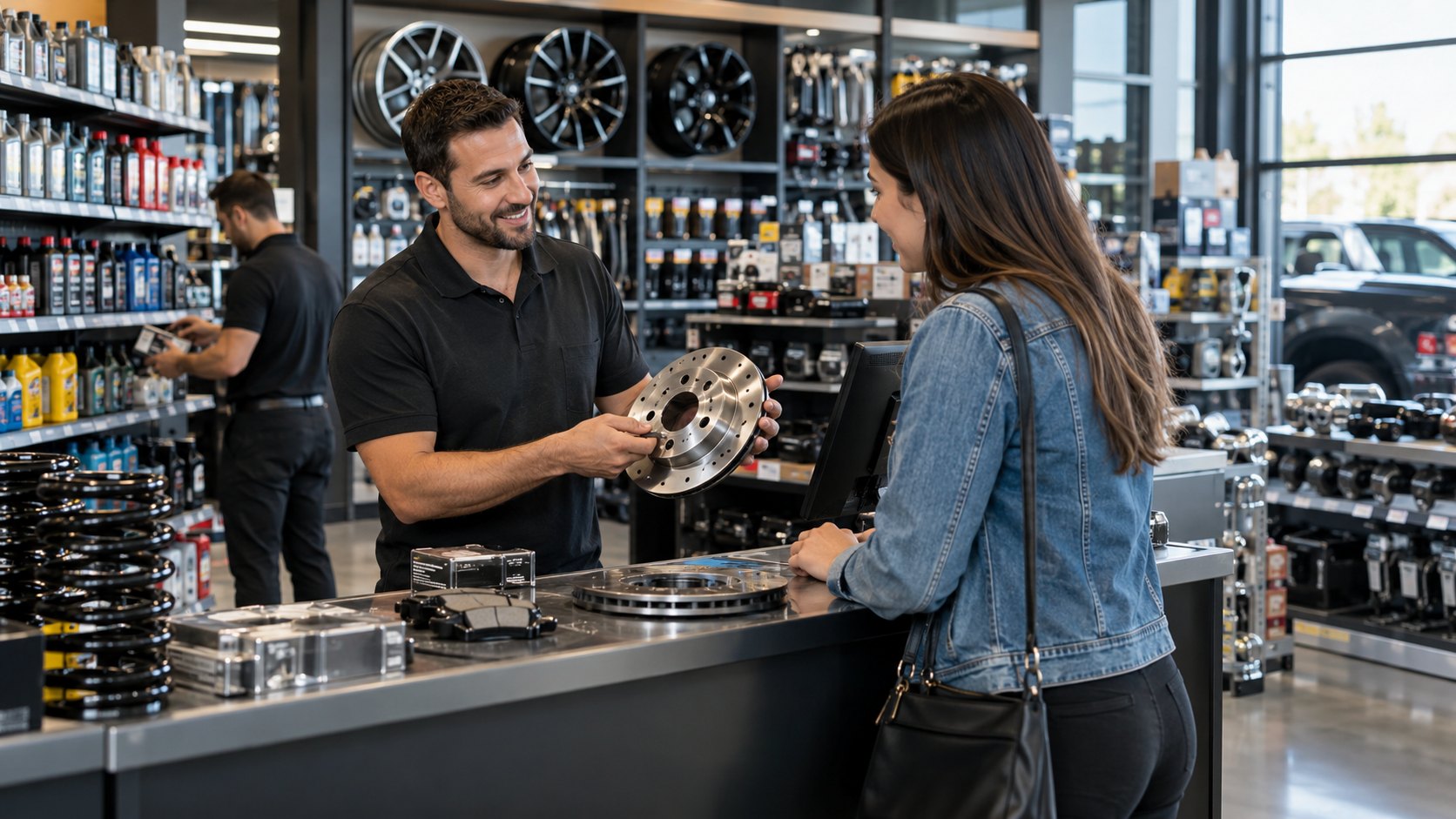
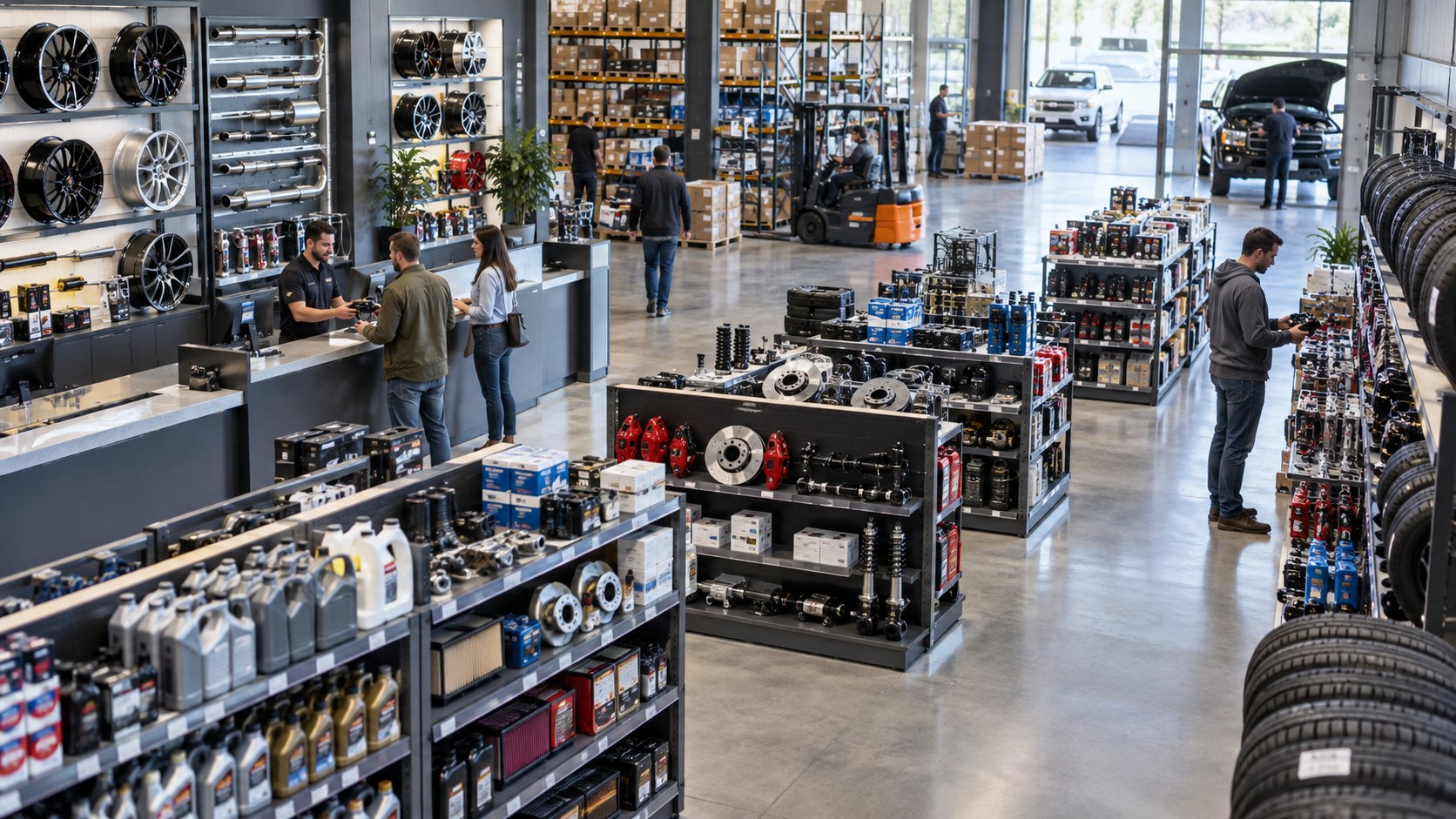
The line covers selling components and accessories for motor vehicles: mechanical and electrical parts, service items, body and trim components, and the accessories fitted to a vehicle after it leaves the factory. New or used, genuine or aftermarket, over a counter or delivered to a workshop.
Three commercial realities sit inside that plain description, and none of them is obvious from the activity name.
Genuine, aftermarket and used are three businesses, not three price points. A genuine part carries the vehicle maker's own number and the buyer is usually a dealership, an insurer or an owner protecting a warranty position. An aftermarket part is made by an independent manufacturer and the buyer is a workshop weighing quality against cost on behalf of a customer who will never see the box. A used part comes out of another vehicle and the buyer is keeping an older car economically alive. The margin structure, the supply relationship and the customer's tolerance for risk are different in all three. Most counters that struggle are trying to be all three without admitting it.
The catalogue has to be searchable by vehicle, not by part. Nobody walks in asking for a part number. They arrive with a car, a year and a symptom, and the counter's job is to convert that into the correct number first time. Cross-referencing between maker numbers, aftermarket equivalents and the vehicles each one fits is the operating system of this business, and a counter that keeps it in one person's head has a single point of failure it cannot insure.
Not every part is just a box. Most components are ordinary goods. A minority are safety-critical — tyres, brake friction material, lighting and glazing among them — and that class carries conformity requirements before it may be offered for sale in the UAE, set nationally rather than by the emirate that issued your licence. The control is on the product, not on the shop, and it is assessed per product line.
That is why the gates on a parts file are not where a newcomer expects them.
five gates, four deciding bodies
The emirate's economic department
- Trade licence carrying the parts and accessories activityFirst, and every other gate waits behind it
The municipality
- Shop or store premises recorded against the licenceWith the tenancy, not after it, because the space decides the stock
The emirate's customs authority
- Importer code in the company's own nameOnce the licence is cut, before any consignment is bought
- Clearance of each imported consignmentEvery shipment, for as long as the business exists
The federal standards and conformity authority
- Conformity of safety-critical lines such as tyres, brake friction and lampsPer product line, before it is offered for sale
The concentration is the lesson. Two of the five gates belong to customs, and they are the two that recur: the licence is obtained once, the premises are settled once, and then every container generates its own file with a body that did not issue your licence. Note also what is absent. In vehicle sales the traffic authority holds a gate on every single car, because ownership of a vehicle is recorded. A brake disc has no such record, and that is the structural reason a parts counter is administratively lighter per transaction than a showroom — and heavier per shipment.
Four things the parts licence will not carry
It does not let you fit what you sell. Selling a clutch and installing it are separate activities. Plenty of businesses hold both deliberately, and a counter that agrees to "just fit it quickly" for a customer has stepped outside its licence for the sake of one job.
It does not make you an agent. Holding this activity confers no right to represent a manufacturer, use its marks, or describe the business as an authorised distributor. That relationship is granted commercially by the maker and governed by the UAE's commercial agency framework, and it is worth understanding before any signage is designed.
It does not cover remanufacturing. Rebuilding an alternator, reconditioning a cylinder head or re-cutting brake drums is manufacturing or repair work with its own activity, its own premises requirements and its own conditions. Selling a rebuilt unit somebody else produced is trade; producing it is not.
It does not settle where you may sell. A mainland licence and a free zone licence are both real routes into parts trading and they do different things. One sells into the UAE market directly, to workshops and to consumers standing in front of you. The other is built for holding stock, consolidating and re-exporting into the wider region, where the goods never enter the UAE market at all. A parts business serving UAE workshops belongs on the first; a regional distribution operation may well belong on the second. Which conditions attach, what the licence costs to hold, and what a specific product class requires all depend on the emirate and the jurisdiction — ConsultZone confirms them for the actual case rather than in the abstract.
References
- Dubai Customs — importer codes, consignment clearance and the treatment of restricted goods entering or leaving through Dubai. Dubai Customs
- Ministry of Industry and Advanced Technology — national standards and conformity marks applying to safety-critical vehicle components. Ministry of Industry and Advanced Technology
- Dubai Municipality — premises suitability for retail and storage space in Dubai. Dubai Municipality
- UAE Government portal — the commercial agency framework and the general basis on which trading activities are licensed. UAE Government portal
- Federal Tax Authority — VAT enrolment and the treatment of domestic sales against exports. Federal Tax Authority
Elsewhere in Trading
Activities that sit beside this one
Most licences carry more than one activity. Adding a neighbouring line at the application stage costs a fraction of amending the licence afterwards.
Begin with a clear conversation
Tell us what you intend to build.
A consultant will map the structure, jurisdiction, approvals and likely cost against what you actually described — not against a package.
