

Activity CZ 24
How to Start an Industrial Machinery Maintenance Business in Dubai
Industrial maintenance and plain repair are the same hands sold on opposite commercial models. Pricing a contract here means underwriting a machine's reliability for a year.
ConsultZone licensing desk
- Activity code
- CZ 24
- Category
- Manufacturing
- Reviewed
- Read
- 8 min
Listen instead
42 seconds
An audio summary of this guide.
Topic summary
How to Start an Industrial Machinery Maintenance Business in Dubai
Maintenance is sold before the machine breaks. That one difference in timing is the whole activity, and everything downstream of it changes: how the revenue arrives, what has to sit on a shelf doing nothing, how many technicians you must be able to put in a van on a Thursday afternoon, and — the part most new entrants miss — what risk you have quietly agreed to carry.
Repair on failure is a transactional trade. The customer calls, the price is whatever the moment will bear, the cash is lumpy and there is no forward book. Maintenance is closer to underwriting. You quote a figure for a year of a machine's behaviour, and the machine does not consult you before behaving. If it fails more often than your price assumed, the difference comes out of your margin, not the customer's. That is why this line is written around the word maintenance rather than around repair, and why it belongs in a different mental category from the general machinery workshop next door to it.
The customer buys it for a reason worth understanding, because it sets your ceiling. On a production line, an hour of stoppage can cost more than the annual service agreement. The buyer is not purchasing labour hours or spare parts. They are purchasing the absence of that hour. Once you see the sale that way, the pricing conversation stops being about day rates and starts being about response times, spares availability and who absorbs the cost of a part arriving late.
Who should hold this licence
Engineers who have already carried the pager
Plant and maintenance managers who have run a planned servicing schedule inside a factory and know, from memory, which machines fail and when. They arrive with the one asset nobody can buy: failure history. It is the difference between pricing a contract and guessing at one.
Established repairers converting a customer list
A workshop already taking call-outs from forty industrial customers is sitting on a forward book it has not sold yet. Turning the best twenty of those into scheduled agreements smooths the revenue and, more usefully, makes the spares holding rational instead of reactive.
Equipment suppliers and their appointed agents
A company that sold the machine is the natural party to service it, has the technical documentation and the parts channel, and can price a contract against the manufacturer's own service intervals. The commercial advantage here is real and it is structural — but an appointment from the maker is something granted, not something claimed, and it should be in writing before it appears in a proposal.
The contract you cannot price yet
The dangerous agreement is the first one on an unfamiliar machine. No history, no failure pattern, no idea what the wear parts cost or how long they take to arrive. Firms that survive their first two years start with equipment they already know and widen the catalogue as the data accumulates. Widening it first, on price, is how this business fails.
What the contract lets you promise, and what it does not
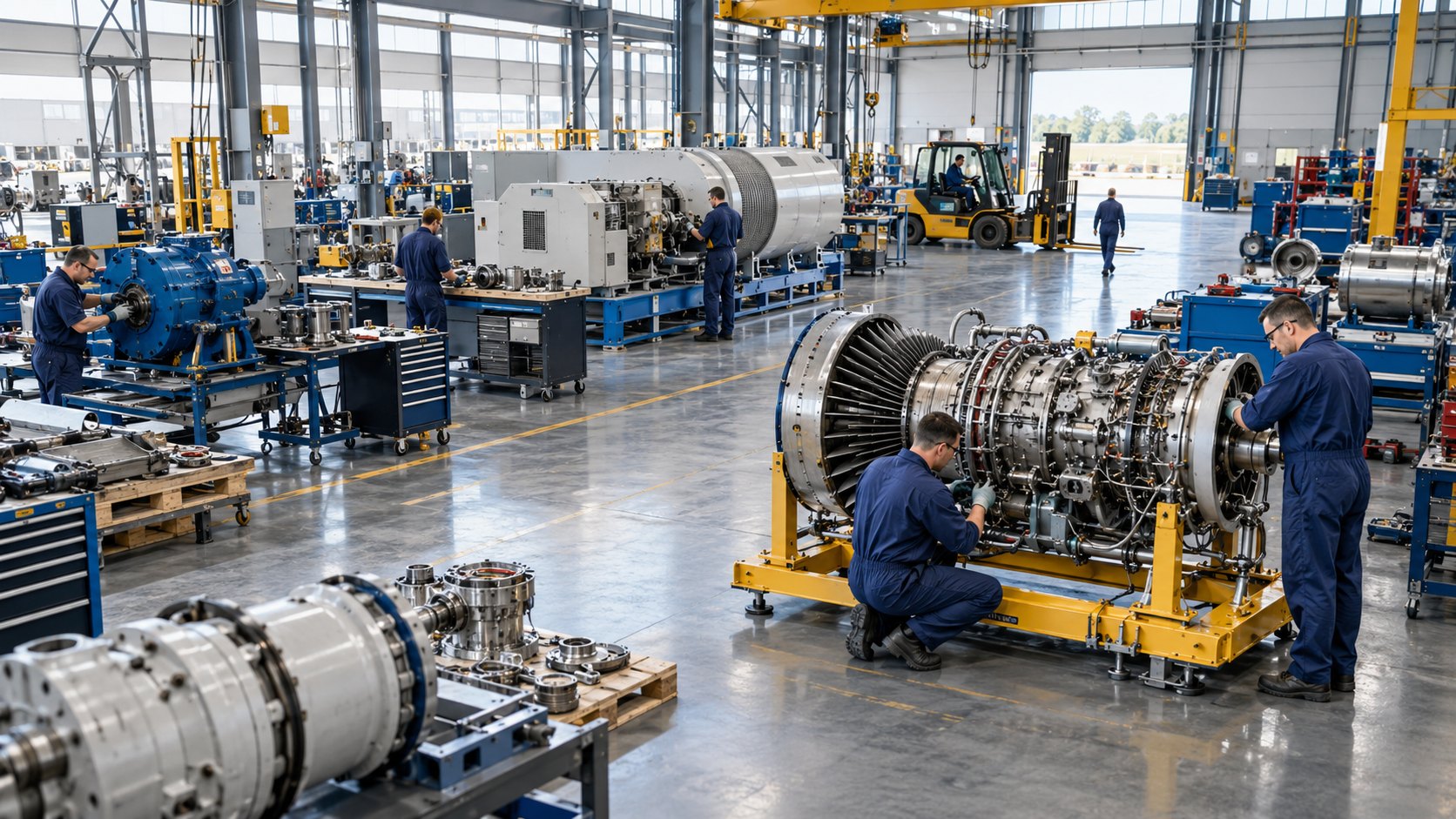
Under this line you carry out planned and corrective work on industrial plant: scheduled servicing at set intervals, inspection and condition monitoring, lubrication and fluid changes, alignment and adjustment, replacing wear components before they fail, breakdown attendance, and stripping and rebuilding an assembly when it has reached the end of a cycle. The scope is the machine and the systems bolted to it.
What a response-time promise really commits you to
Two things, and only one of them is within your control. The first is a technician available at the hour you promised, which is a staffing and rostering problem you can solve by hiring. The second is the part in his hand, which is a supply chain problem you very often cannot. If a component comes from overseas, a four-hour response promise on a machine that needs that component is a promise about somebody else's logistics. The trade answers this by holding critical spares locally — and that inventory is working capital standing still, which is the single largest hidden cost in this activity. It is why the contract must say plainly which parts are included, which are passed through at cost, and which are excluded outright.
Exclusions are the contract, not the fine print
The agreements that go wrong are the ones that never defined the edges. Wear and consumable items, damage caused by misuse or by running the machine outside its rating, obsolete equipment for which parts are no longer made, work arising from a fault that existed before you took the machine on — each of those needs a stated position. So does what happens when the customer's own operators cause the failure, because on older plant that is a large share of the call-outs.
Where the line stops
Making components in quantity is manufacturing, not maintenance. Selling machines, spares or consumables as a business in their own right is a trading activity with its own permissions. Vehicles are not here at all. Electrical, instrumentation and automation work is a separate specialism and a general maintenance permission should not be assumed to reach it. And statutory or third-party examination of certain equipment — lifting gear and pressure equipment are the usual examples — is an accredited function in its own right: holding a maintenance licence is not the same as holding that appointment, and it should be confirmed before it is written into an agreement.
Where this is the wrong purchase. If the intention is to answer breakdown calls and invoice each one, the plain machinery repair line describes that better and carries less obligation. This activity earns its keep when there is a recurring agreement behind it. Buying it to do one-off work adds the expectation of a contract business without any of the revenue.
Premises, spares and the practical conditions
The physical footprint of a maintenance company is different from a repair workshop's, and it is usually underestimated. You need bays for overhauls, a secure and orderly store for spares, and vehicles configured for site work. The store is the part that surprises people: it is rent paid on stock that exists only so a promise can be kept. Sizing it is a commercial decision about which failures you have undertaken to fix quickly, not an afterthought about shelving.
The unit itself brings conditions with it. Hot work and the oils, solvents and gas cylinders that go with an overhaul bay attract fire-safety requirements set and inspected by Dubai Civil Defence. Used oil, spent coolant, contaminated absorbents and scrap are controlled waste streams needing a disposal route the municipality accepts. Where the activity is treated as industrial, national standards and conformity requirements sit federally with the Ministry of Industry and Advanced Technology. Technician work permits are issued against the licence and the premises by the Ministry of Human Resources and Emiratisation, so the size of the unit sets the size of the crew — which in a business selling response times is a constraint on the product itself, not just on the payroll.
- Fix the activity wording before anything elseDecides which agreements you may lawfully sign
- Reserving a trade name and initial approvalLets the constitutional documents be drawn
- The unit, and whether it holds a spares store as well as an overhaul baySets the fire and waste conditions, and the crew you may field
- The trade licence itselfAllows a maintenance contract to be invoiced
- Technician work permits against the licenceDecides how many hands stand behind a response time
The order matters more than the total, and the third gate is the one that reorders everything else. A tenancy taken before the spares question is answered is a tenancy taken at the wrong size, and it constrains both the fire conditions and the headcount for as long as the lease runs.
One tax point is worth settling early because it is structural to a contract business rather than incidental. An agreement billed across a year raises the question of when the revenue is recognised and when tax falls due on it, and the answer shapes invoicing and cash flow from the first contract onward. Corporate tax enrolment and filing, and enrolment for VAT once turnover reaches the applicable threshold, are both handled with the Federal Tax Authority. What applies to a particular structure, and what each approval above costs to satisfy, depends on the emirate and the licensing authority — and those are the points ConsultZone confirms against the actual plan before a lease or a customer agreement is signed.
References
- Ministry of Industry and Advanced Technology — national standards and conformity requirements bearing on the scheduled servicing of industrial plant. Ministry of Industry and Advanced Technology
- Ministry of Human Resources and Emiratisation — work permits and labour contracts, which cap the crew a response-time commitment can rest on. Ministry of Human Resources and Emiratisation
- Dubai Civil Defence — fire-safety requirements on an overhaul bay and on the solvent and gas-cylinder holdings kept beside it. Dubai Civil Defence
- Dubai Municipality — the environmental conditions attaching to a unit that holds both an overhaul bay and a spares store. Dubai Municipality
- Federal Tax Authority — corporate tax and VAT enrolment and filing for a contract-based service business. Federal Tax Authority
Elsewhere in Manufacturing
Activities that sit beside this one
Most licences carry more than one activity. Adding a neighbouring line at the application stage costs a fraction of amending the licence afterwards.
Begin with a clear conversation
Tell us what you intend to build.
A consultant will map the structure, jurisdiction, approvals and likely cost against what you actually described — not against a package.
