

Activity CZ 23
How to Start a Machinery Repair Business in Dubai
Machinery repair is sold by the hour and won by diagnosis. What the line covers, where a job actually gets done, and which repairs belong to somebody else's licence.
ConsultZone licensing desk
- Activity code
- CZ 23
- Category
- Manufacturing
- Reviewed
- Read
- 8 min
Listen instead
50 seconds
An audio summary of this guide.
Topic summary
How to Start a Machinery Repair Business in Dubai
A machinery repair business gets paid twice for the same visit — once for working out what is wrong, and once for putting it right. Customers believe they are buying the second half. The first is where the margin actually sits, and it is why two workshops holding the same tools and quoting the same hourly rate can end a year in very different places.
Almost every factory, bakery, laundry, print room, joinery and packing hall in the country runs on machines that were built somewhere else. That one fact shapes the whole trade here. The machine arrived in a container, the manual is in another language, the worn component has a lead time measured in shipping rather than in driving, and the engineer who commissioned it has usually long since gone home. A repairer who can name a failure from the noise it makes, find a substitute part locally and have a line turning again before the shift ends is selling something far more valuable than labour hours.
Nobody buys this service for pleasure. The customer is a business that has stopped earning, and the loss accumulates while your technician is still in traffic. Price sensitivity collapses at the moment of failure and returns in full the following week, which is why the firms that last turn an emergency call-out into something steadier.
CZ 23 — Repair of machinery
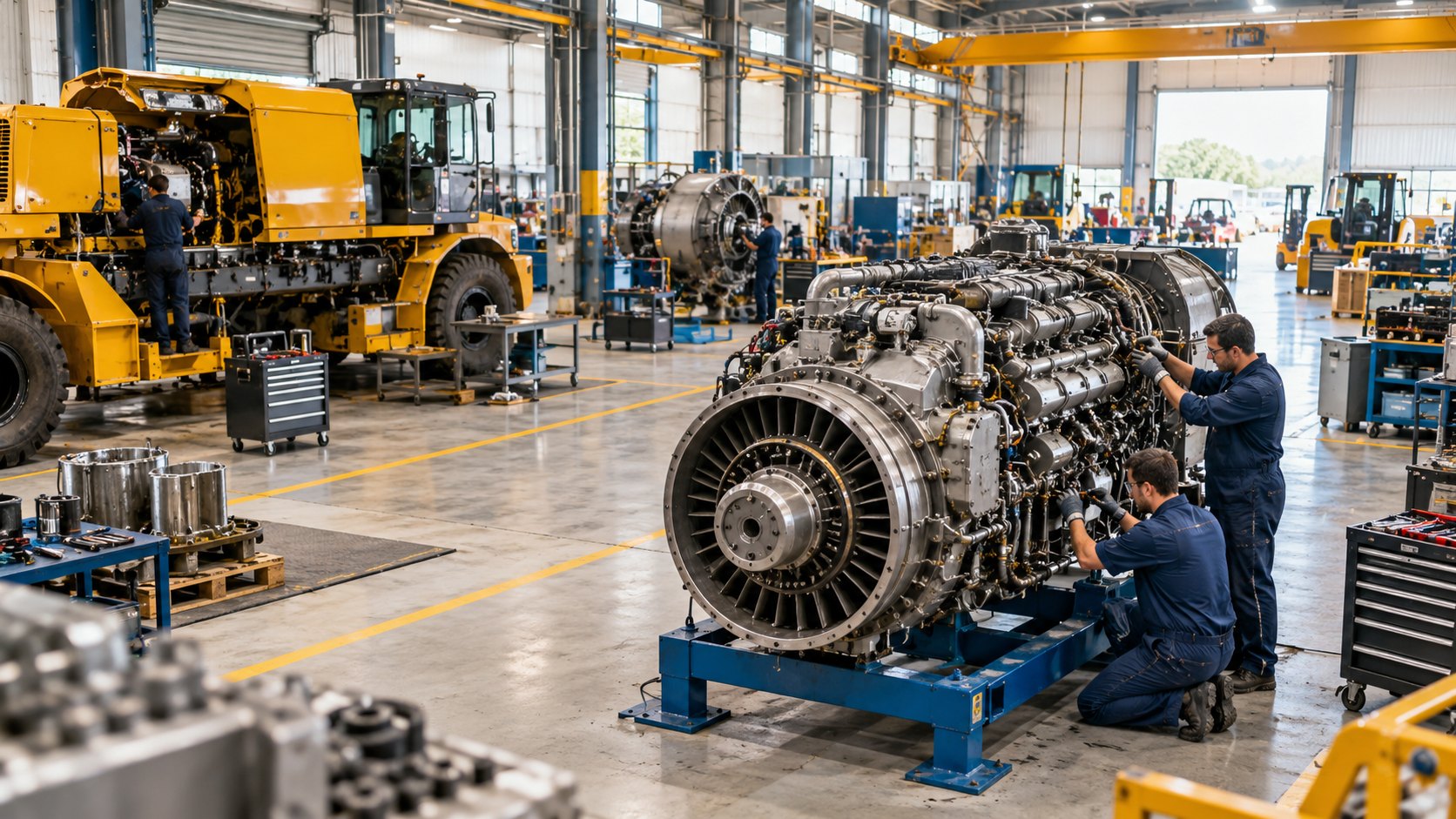
This line covers returning mechanical plant and equipment to working order: fault-finding, dismantling, replacing worn or broken components, reassembly, alignment, adjustment and the test run that proves the job is finished. It is the general workshop activity for machinery, and it is broad on purpose, because the underlying skill crosses industries. A fitter who can set the clearance on a gearbox can set it in a bottling plant, a quarry or a bakery.
The work is three things, in falling order of scarcity
Diagnosis first. A wrong diagnosis costs the customer a part and a day, and costs you the account. Parts second: knowing which component can be bought in the country this morning, which has to be ordered, and which can be repaired rather than replaced at all. Hands third — skilled, but the most replaceable of the three and the only one you can hire in volume.
The workshop question decides the business, and it comes first
Before the trade name, before the tenancy, before anything, settle one question: does the machine come to you, or do you go to the machine? Very little else about the company survives a change of mind on that. A workshop-based repairer needs an industrial unit with headroom, three-phase power, lifting and a floor that will take load, and can run a small team at high utilisation. A site-based repairer needs vehicles, tool kits that live in them permanently, technicians who can work inside somebody else's building under somebody else's safety rules, and an honest allowance for the hours lost between jobs. Most established firms end up doing both. They get there by choosing one and adding the other deliberately, rather than by drifting.
six kinds of job, four places they get done
- A bench-sized machine the customer can lift onto a pickupTools, lifting and light are all where you need them
- A gearbox or a spindle that needs stripping and measuringThe job wants a clean bench and a week, not a shift
Your own workshop
- A bearing or a seal on a machine bolted into a running lineMoving the machine would cost more than the repair
- A guillotine or a press too heavy to shift at any priceThe machine is effectively part of the building
The customer's site
- A machine still inside its supplier's coverOpening it can void the cover the customer is relying on
The maker or its appointed agent
- A failed drive, controller or sensorThe fault is electronic and this line is mechanical
A specialist you subcontract
Read those four destinations as a costing exercise rather than as a flowchart. Each carries a different overhead — a unit, a vehicle, a supplier relationship, a subcontractor — and a firm that has never decided which of them it is built for pays for all four while being good at none.
Most of the difficulty is physical, not administrative
A workshop that carries out hot work — welding, grinding, cutting — and keeps oils, solvents and gas cylinders on site attracts fire-safety conditions on the unit itself, which Dubai Civil Defence sets and inspects. Used oil, oily rags, spent filters and scrap metal are controlled waste streams, which in practice means a disposal route the municipality accepts rather than a skip at the back of the yard. Where the work is treated as an industrial rather than a purely commercial activity, national standards and conformity requirements sit federally with the Ministry of Industry and Advanced Technology. Technician work permits are issued against the licence and the premises by the Ministry of Human Resources and Emiratisation, so the size of the unit quietly sets the size of the team you are allowed to field. Imported spare parts move under a customs code held in the company's own name.
Which of those actually apply, and what each costs to satisfy, depends on the emirate, on the authority issuing the licence and on the mix of work you genuinely intend to take. They are questions to settle before signing a tenancy rather than after it, and ConsultZone confirms them against a specific plan.
Four neighbouring licences that look like this one
Machinery repair sits in a family of activities whose names overlap far more than their work does, and the wrong choice is expensive to correct after the licence is cut.
Repair of fabricated metal products is the metalwork end of the same yard — tanks, frames, structures, hoppers, ducting. The tool is a welding set rather than a micrometer, and the object has no moving parts to speak of.
Repair and maintenance of industrial machinery and equipment is the closest relative and the one most often confused with this line. The hands are the same; the commercial model is not. That activity is written around planned, recurring servicing sold as a contract, where the customer pays whether or not anything has broken. This one is written around the call-out. A reader weighing the two should read both pages together, because for a great many firms the honest answer is that they hold both and price them quite separately.
Repair and maintenance of non-automotive engines narrows to propulsion — ship and rail engines and the auxiliary sets around them. It is heavier, more specialised, has its own customers and its own approvals, and a general machinery workshop should not assume its licence reaches that far.
Repair and maintenance of pumps and related equipment is a single-component specialism. Pumps recur across every industry in the country in large enough numbers to support a company on their own, which is precisely why they were given a line of their own.
Two further boundaries catch people out. Vehicle repair is not in this family at all: cars, vans, trucks and buses belong to a garage activity with its own premises conditions. And if you begin making replacement components in quantity rather than one at a time for a named repair, you have drifted out of repair and into manufacturing, which is a different activity with different conditions attached.
The operators this line rewards
Tradesmen who leave with a following
The most common entrant and the most durable. A fitter, millwright or maintenance engineer who has spent years inside one industry and walks out holding the phone numbers of the people who ring when a line stops. The customer list arrives before the company does. The risk is the inverse of a sales problem — it is capacity, and finding people who diagnose as well as the founder does.
Parts suppliers moving into service
A spares trader already knows what fails, how often and who has been buying. Adding the repair turns a one-off parts margin into a service relationship and makes the stock on the shelf earn twice.
Plant owners with idle workshop hours
Contractors and industrial operators already running a maintenance bay for their own fleet, with capacity to sell outward. Worth confirming the permission extends that far: maintaining your own equipment is not the same as invoicing a third party for it.
Where this is the wrong purchase. If the plan is to sell machines, spare parts or consumables, this is not the licence for it — that is a trading line, with different premises expectations and different customs arrangements. If the plan is electronics, control boards and instrumentation, the work is electrical rather than mechanical and belongs to another activity. And if the plan is servicing building plant and air conditioning under a service agreement, that is usually a contracting permission rather than a machinery repair one.
References
- Ministry of Industry and Advanced Technology — the federal body for industrial classification and national standards, which bears on whether a general repair workshop is treated as industrial rather than commercial. Ministry of Industry and Advanced Technology
- Dubai Civil Defence — the fire-safety conditions a repair unit carries because it welds, grinds and cuts on its own premises. Dubai Civil Defence
- Dubai Municipality — premises suitability, and the approved disposal route for used oil, spent filters and scrap metal. Dubai Municipality
- Ministry of Human Resources and Emiratisation — work permits and labour contracts for a technician workforce. Ministry of Human Resources and Emiratisation
- Dubai Customs — customs codes and the import of spare parts and components. Dubai Customs
Elsewhere in Manufacturing
Activities that sit beside this one
Most licences carry more than one activity. Adding a neighbouring line at the application stage costs a fraction of amending the licence afterwards.
Begin with a clear conversation
Tell us what you intend to build.
A consultant will map the structure, jurisdiction, approvals and likely cost against what you actually described — not against a package.
