
Activity CZ 49
How to Start a Machine Rigging Business in Dubai
Rigging sells a lift plan before it sells a lift. What the trade covers once the crane is taken out of the picture, who actually buys it, and why the load path decides the jurisdiction.
ConsultZone licensing desk
- Activity code
- CZ 49
- Category
- Manufacturing
- Reviewed
- Read
- 8 min
Listen instead
44 seconds
An audio summary of this guide.
Topic summary
How to Start a Machine Rigging Business in Dubai
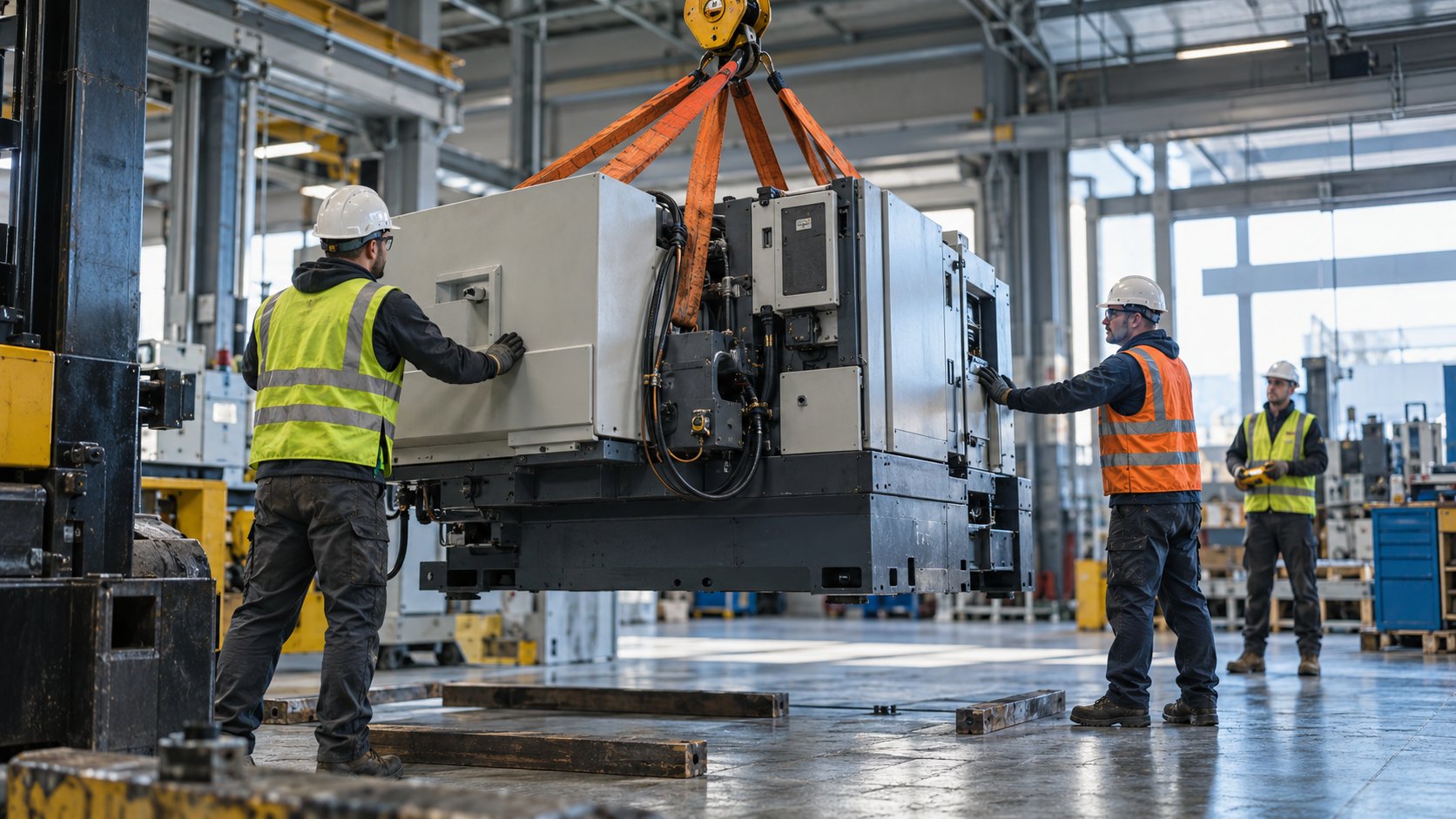
Picture the problem this trade exists to solve. A machine weighs more than the floor it has to stand on. It is wider than the only door into the room. There is a live production line eleven metres away that cannot be stopped, a steel column exactly where a crane would want to be, and a date by which the machine has to be bolted down and level to a fraction of a millimetre. Nobody solves that with muscle. It is solved on paper first, and the paper is the product.
That is the thing to understand before anything else about rigging as a business: the deliverable a client accepts is a lift plan and a method statement, and the physical work is the execution of a document that has already been agreed. A firm that can produce a plan a site will accept has a business. A firm with gear and no planning capability has a hire company that cannot get onto the sites where the money is.
The second thing to understand is who pays. Rigging is rarely bought by the owner of the machine. It is bought by the contractor installing it, by the contractor taking it out, or by the engineering firm running the project — which makes this a subcontractor's trade, with a subcontractor's pricing and a subcontractor's payment terms.
What rigging is, once you take the crane out of the picture
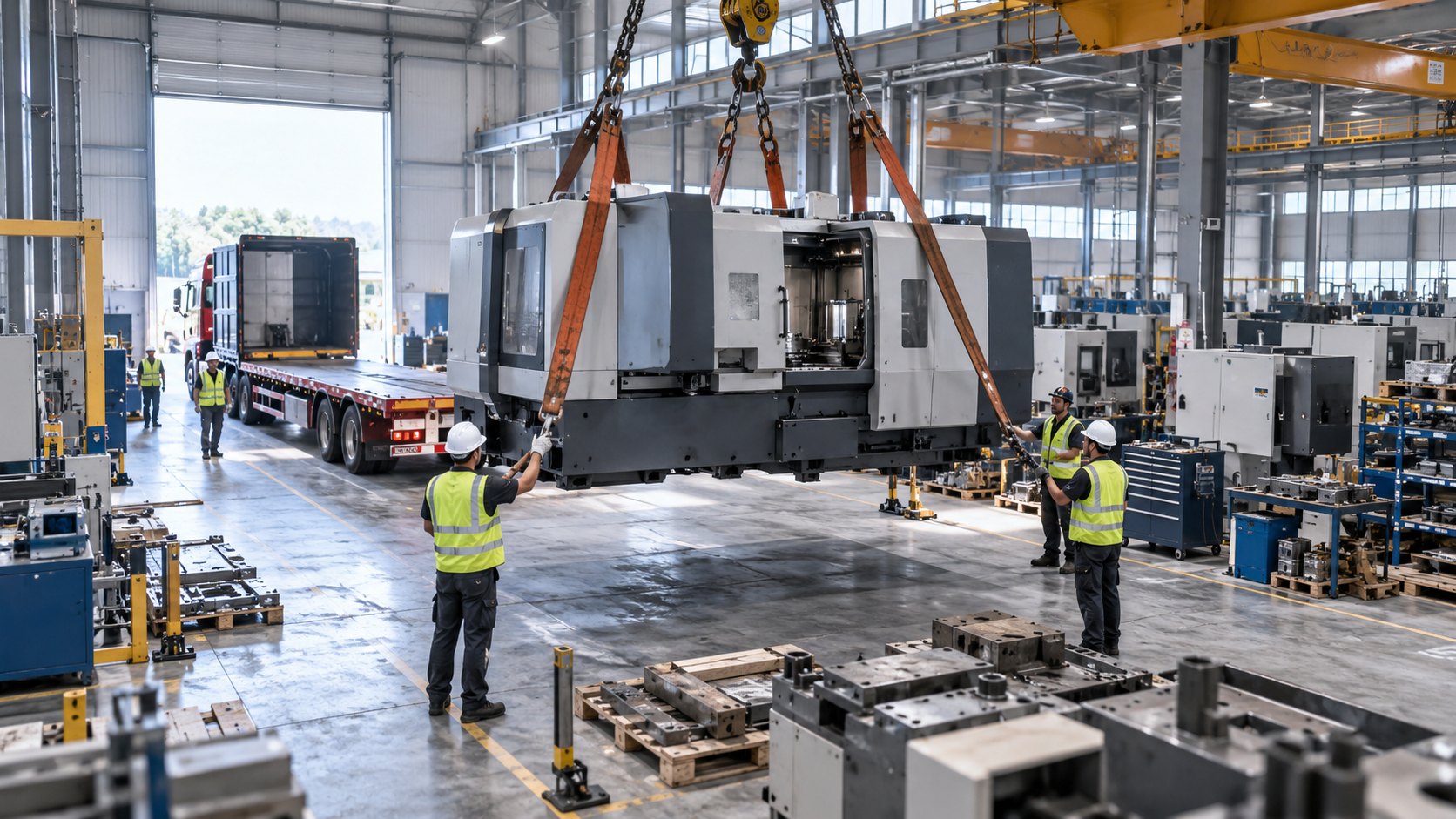
Cranes are the part of this trade everybody pictures and the part a rigging firm most often does not own. Crane hire is equipment rental, usually bought in by the hour with an operator. What the rigging company brings is everything that happens when a crane cannot reach, cannot fit, or is the wrong tool entirely.
Moving a load without lifting it
Skidding on greased or roller track, air skates riding on a film of compressed air across a sealed floor, hydraulic push-pull systems, turntables to get a long machine around a corner it will not otherwise turn. Most heavy machinery in an existing building travels horizontally far more metres than it ever travels vertically, and horizontal is where the skill is.
Lifting without a crane
Hydraulic gantries that walk their own load along a beam, chain blocks and lever hoists on temporary steel, climbing jacks that raise a machine in increments while packing builds under it, strand jacks for the genuinely large. These are what get a press out of a basement or a chiller onto a roof plant deck with no crane access.
Load path and temporary works
The calculation that decides everything else: what the floor, the slab edge, the beam or the ground will actually carry, and what has to be built or spread to make the route viable. Load spreading with mats, steel plate or grillage is not an accessory to the lift — on a suspended slab it frequently costs more than the lift.
Gear, and the certificates behind it
Slings, shackles, spreader beams, lifting eyes, hooks, chain, jacks and the frames they sit in are inspected and certified items, and the certificate travels with the item. A client's site will ask for the paperwork on the specific piece of gear on the specific day, and a missing certificate stops the lift as effectively as a missing crane. Gear is therefore not a one-off capital cost but a maintained inventory of certified assets — inspected, re-certified, and retired when an item fails.
Precision setting
The final centimetre. Levelling to the machine builder's tolerance, grouting, packing, anchoring and alignment — after which the installation contractor takes over and commissions. That handover point is worth agreeing in writing, because it is where disputes about a machine that will not run correctly usually land.
Who this suits, and it is rarely a first business
Riggers and lift supervisors going independent
The realistic founder is somebody who has planned and supervised lifts for years. What they bring is the judgement that makes a survey right the first time and the credibility that gets a method statement accepted. Both are personal and neither is quick to replace, which is also the succession risk in the business.
Plant movers and heavy logistics firms
Companies already moving industrial cargo for whom the last hundred metres — off the trailer, through the building, onto the plinth — is currently subcontracted. Bringing it inside turns a delivery into a placement, which is a materially better thing to sell.
Installation and dismantling contractors taking the lift in-house
Firms that hold the industrial equipment installation activity, or the dismantling activity, and keep buying the lift from somebody whose availability governs their programme. This is the most common reason a rigging activity gets added to an existing licence rather than opening a new company.
Where this is the wrong purchase. If the plan is to own cranes and hire them out with operators, that is equipment rental and a different activity. If the plan is to carry machinery between sites on the public road, that is transport. And if the plan is to connect and commission the machine after it is set, that is industrial equipment installation — the line next to this one. Rigging, dismantling and installation are three consecutive links in the same chain, and the catalogue keeps them apart because the skills, the gear and the liability are genuinely different.
- Read the load: weight, centre of gravity, lifting points, tolerance
- Read the route: door widths, corners, headroom, floor and slab capacity
- Will the load path carry the weight as it stands
- YesThe lift is planned with standard gear and conventional spreading
- NoTemporary works come first, and they change both the price and the programme
- Choose the method: crane, gantry, skates, jack and pack, or a combination
- Match every item of gear to the load, with a current certificate for each
- A lift plan and method statement the client's site will accept
Where it sits between the mainland and a free zone
The structural answer is unusually clear on this activity, because the work is physical and it happens somewhere specific. A rigging job takes place on the client's site, inside the UAE, for a client who is almost always a UAE-licensed contractor. A free zone licence gives a company and an address inside that zone's boundary; performing the activity on the mainland is a question the zone answers, in its own terms, and the answer is not the same in every zone. A mainland licence is the ordinary route for a firm whose customers are mainland contractors, and the exception worth examining is the firm whose work is genuinely concentrated inside one zone's own industrial estate.
Three practical facts push the same way, and none of them is about tax.
The first is the gear. Lifting equipment needs a secure store and a maintenance space, both of which are premises with conditions attached rather than a desk. Where national standards and conformity marking apply to industrial equipment, the Ministry of Industry and Advanced Technology is the federal body behind them.
The second is the crew. This is a people-heavy trade with a high ratio of skilled staff to turnover, so work permits, labour contracts and the visa allocation that comes with premises are a live constraint rather than an administrative afterthought — all of which sits with the Ministry of Human Resources and Emiratisation. Site acceptance matters too: crews have to be able to get onto controlled sites, which the client governs.
The third is the client's procurement. A main contractor's approved-subcontractor process asks what the company is licensed to do, where it is licensed, what gear it owns and what insurance it carries. That process, rather than any licensing rule, is frequently what decides which jurisdiction a rigging company should be in — so it is worth asking the two or three contractors you expect to work for what they require before the licence application is made rather than after.
What the licence costs, which emirate suits the company, what the premises must provide and which approvals apply to a particular lift depend on the site, the load and the emirate, and they should be confirmed for the specific case. Getting a load onto public roads, for instance, is a transport permit matter in Dubai and belongs to the Roads and Transport Authority — but only once the load stops being an ordinary one, and where that line falls is a question to ask before the trailer is booked.
References
- Ministry of Human Resources and Emiratisation — work permits, labour contracts and the employer obligations that fall on a firm running site crews. Ministry of Human Resources and Emiratisation
- Roads and Transport Authority — vehicle and transport permits in Dubai, which is what moving a load on the public road turns on. Roads and Transport Authority
- Ministry of Industry and Advanced Technology — national standards and conformity marking for industrial equipment. Ministry of Industry and Advanced Technology
- UAE Government portal — federal law and general government information on licensing and the mainland or free zone choice. UAE Government portal
Elsewhere in Manufacturing
Activities that sit beside this one
Most licences carry more than one activity. Adding a neighbouring line at the application stage costs a fraction of amending the licence afterwards.
Begin with a clear conversation
Tell us what you intend to build.
A consultant will map the structure, jurisdiction, approvals and likely cost against what you actually described — not against a package.
