
Activity CZ 85
How to Start an Auto Phones Installation and Repair Business in Dubai
The line is named for car phones and the trade has moved on. The money is in fleet telematics now, and anything that transmits answers to the telecommunications regulator first.
ConsultZone licensing desk
- Activity code
- CZ 85
- Category
- Trading
- Reviewed
- Read
- 6 min
Listen instead
41 seconds
An audio summary of this guide.
Topic summary
How to Start an Auto Phones Installation and Repair Business in Dubai
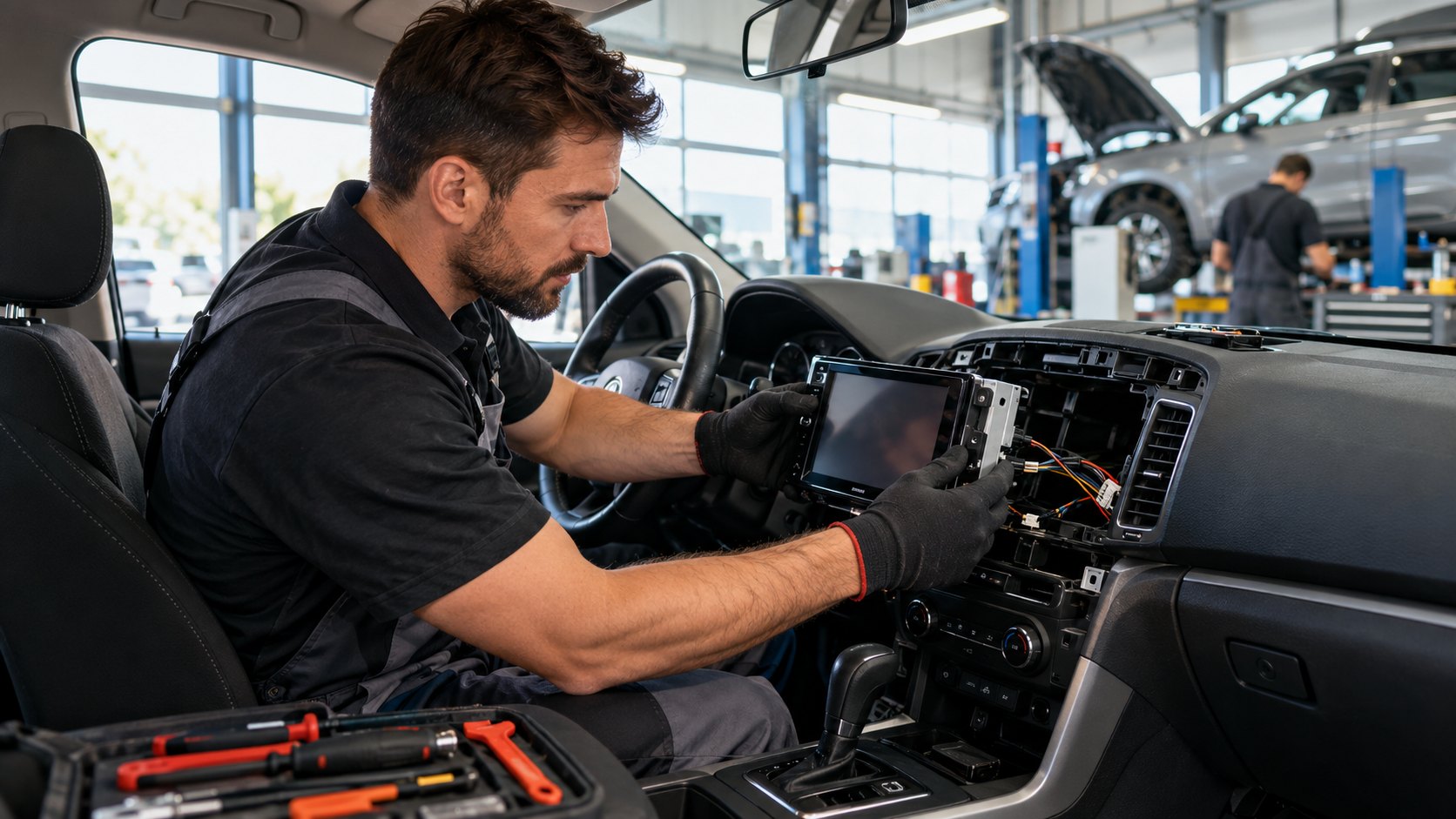
The activity name is a fossil. An auto phone was once a handset screwed to a centre console with an aerial drilled through the roof, fitted by a specialist because nobody else could. That product is gone, the licence line survived it, and what sits under those words today is a considerably better business: everything electronic that is added to a vehicle after it leaves the factory and needs somebody competent to make it work.
Two facts carry this page, and neither is obvious from the name. The first is regulatory. A great deal of what this trade fits does not merely carry data — it transmits, over a mobile network or a short-range radio link, which means the equipment itself is the regulated object and the telecommunications authority is a gate the licensing authority cannot answer for. The second is commercial. Hands-free kits and boot-lid speakers were a consumer accessory trade with a consumer accessory margin. Vehicle tracking and telematics are a business-to-business data trade with recurring revenue behind it, and that single shift is why this line is worth holding now.
CZ 85 — Auto Phones Installation & Repair
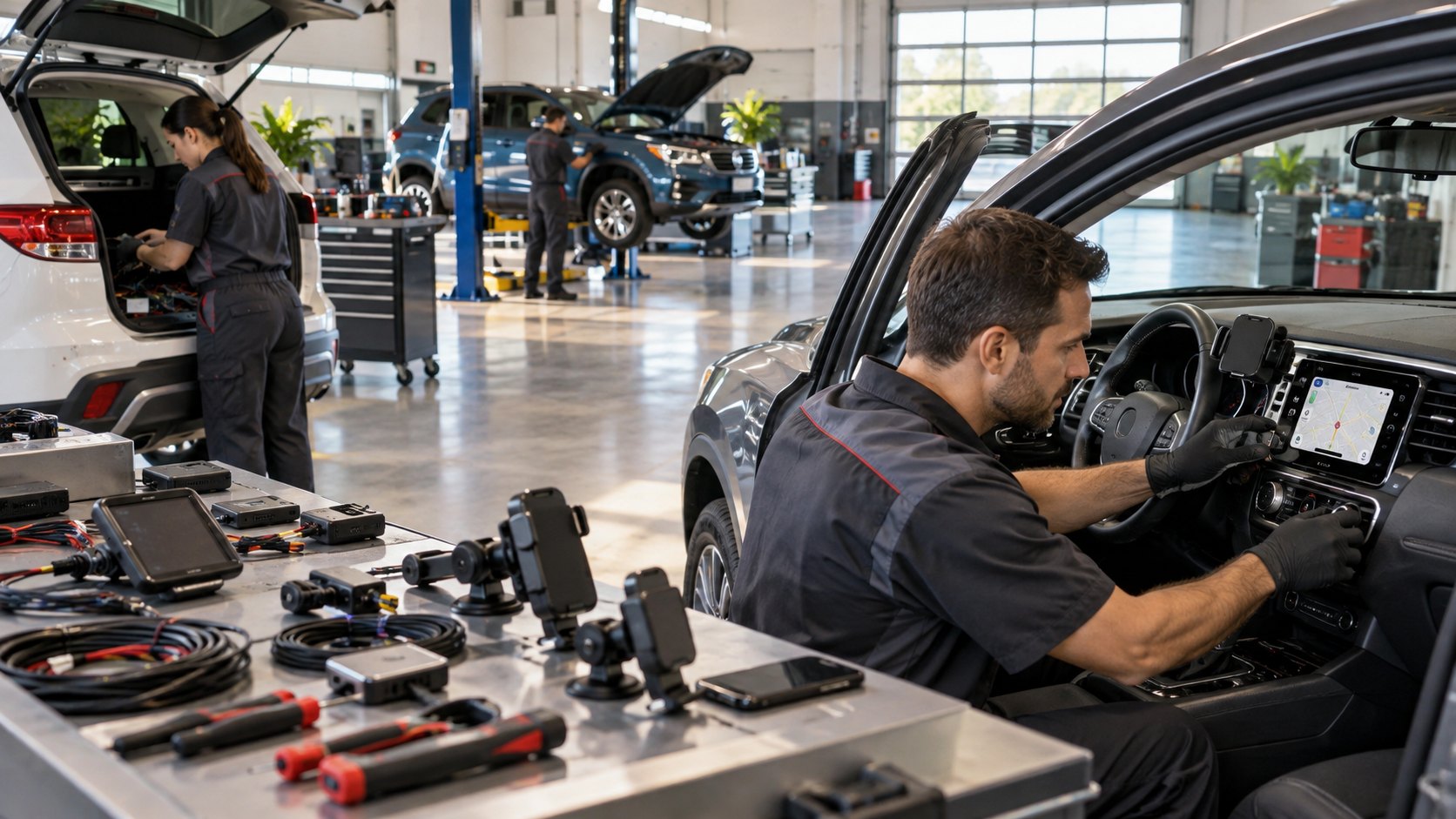
What sits honestly under this activity is the fitting, wiring, commissioning and repair of electronic equipment added to a vehicle. In practice that is four groups of work.
Communications. Hands-free and Bluetooth installations, the surviving handset and aerial work, signal boosters and mobile antennas — the direct descendants of the name on the licence.
Telematics and tracking. Vehicle tracking units, driver behaviour and fuel monitoring, fleet dashcams, temperature telemetry on refrigerated bodies, immobilisers and stolen-vehicle recovery devices. This is where the volume and the repeat revenue are, because a tracker is never sold once: it is sold with a subscription, a portal, a support relationship and an eventual replacement.
Entertainment and screens. Head units, reversing cameras, rear screens, amplifiers, speakers and the increasingly delicate business of adding any of that to a vehicle whose original head unit is welded into the car's own data network.
Repair of all of the above, which is a genuinely different skill from fitting it. Most faults in fitted electronics are not in the device. They are in a power feed taken from the wrong place, an earth that was never properly made, or a connector that corroded in a wheel arch.
The gates over that work are worth setting out plainly, because they are not all held by the same body and the one most people miss is not the licensing authority.
the six gates named on this page
The emirate's economic department
- Trade licence carrying installation and repair of vehicle electronicsFirst, and nothing else moves until it is cut
The federal telecommunications and digital government regulatory authority
- Type approval for any unit that transmitsBefore the equipment is imported, not after it is fitted
- Whether a particular tracker or radio device may be supplied at allAt the moment you choose a supplier, which is earlier than most people ask
The emirate's customs authority
- Clearance of the consignment at the borderOn every import, and it waits behind the approval above
The municipality
- A bay fit to work on vehicles, with the tenancy recorded against itWith the lease, not afterwards
The emirate's transport authority
- Anything that alters the vehicle's own wiring, lighting or bodyworkPer vehicle, and per modification
The drawing makes the argument better than a paragraph does. Two of the six gates belong to the telecommunications authority, and they both sit before the first unit reaches the workshop — at the point of choosing what to stock. A fitter who buys a pallet of cheap trackers from an online marketplace and discovers afterwards that the radio inside them cannot lawfully be supplied here has not bought stock. He has bought a problem that customs will hand back to him. The type approval question belongs in the procurement conversation, not in the installation one, and confirming it for a specific device is part of what we do before a supplier is committed to.
Four neighbouring lines, and where this one stops
Selling the equipment over a counter is parts and accessories retail, a separate activity. Fitting what you sell is normal and expected; but a shop whose business is the sale, with fitting as a courtesy, is really in the retail line and should hold it.
General auto electrical repair is the vehicle's own wiring — the alternator, the starter circuit, the loom the manufacturer installed, the fault codes the car generates about itself. That is repair work on the car. This line is about what was added to the car. The skills overlap heavily and the two activities are frequently held together, which is sensible; the distinction still matters when a licence is being drafted.
The telematics platform itself is a software and data business. Writing the fleet portal, hosting the tracking data and selling the analytics is an information technology activity, not an installation one. A fitter who grows into a platform provider has outgrown this licence and needs to say so — and should think carefully about the data he is holding on other companies' vehicles and drivers before he starts holding it.
Vehicle security as a trade — alarms, immobilisers and the guarding side of stolen-vehicle recovery — shades into the security equipment activity, which has its own line and its own approvals. An immobiliser fitted as part of a tracking installation is comfortably inside this activity. Selling security systems as the proposition is not.
The installer who should buy this line usually has a fleet customer first
The people who do well here arrive from three directions. The commonest is the experienced auto-electrical fitter who has been doing this work inside somebody else's workshop and already knows which vehicles hide their power feeds where — the technical risk is low and the gap is commercial rather than practical.
The second, and the strongest start available in this line, is the person who already holds a relationship with a fleet: a transport, rental, delivery or taxi operator with a few hundred vehicles that need fitting once and supporting forever. One fleet contract is worth more than a year of walk-in trade and it is what turns a bay into a business. Anyone in that position should also look at the mobile repair line beside this one, because fitting a hundred vehicles is work you take to the customer's yard rather than work that comes to you.
The third is the accessory retailer adding fitting to a shop. That works, with one caution: the shop's instincts are about margin per unit and this trade's money is in recurring support. A retailer who prices installation as a loss-leader to move boxes will never build the annuity that makes the line valuable.
What none of these three can be given here is a figure. The licence cost, the premises class, the equipment approvals a specific product range attracts and the visa allocation that follows from the bay all depend on the emirate, the jurisdiction and the activity mix, and a free zone licence and a mainland one do genuinely different jobs depending on whether the customer is a UAE fleet or a regional distributor. We establish the real position for the specific plan before anything is filed.
References
- Telecommunications and Digital Government Regulatory Authority — type approval for radio and telecommunications equipment supplied or fitted in the UAE. Telecommunications and Digital Government Regulatory Authority
- Dubai Customs — import clearance for electronic equipment, and restricted or controlled goods. Dubai Customs
- Roads and Transport Authority — vehicle modification and transport permits in Dubai. Roads and Transport Authority
- Dubai Municipality — premises suitability for a vehicle workshop bay. Dubai Municipality
Elsewhere in Trading
Activities that sit beside this one
Most licences carry more than one activity. Adding a neighbouring line at the application stage costs a fraction of amending the licence afterwards.
Begin with a clear conversation
Tell us what you intend to build.
A consultant will map the structure, jurisdiction, approvals and likely cost against what you actually described — not against a package.
