
Activity CZ 156
How to Start a Woodenware and Wickerwork Wholesale Business in Dubai
A rattan basket and a plastic one are the same product to a buyer and two different consignments at the border. Woodenware, wickerwork and cork are plant matter, and plant matter is treated on entry.
ConsultZone licensing desk
- Activity code
- CZ 156
- Category
- Trading
- Reviewed
- Read
- 7 min
Listen instead
46 seconds
An audio summary of this guide.
Topic summary
How to Start a Woodenware and Wickerwork Wholesale Business in Dubai
A pallet of rattan baskets and a pallet of moulded plastic baskets sit side by side in a homeware aisle and a shopper cannot tell them apart in any way that matters. At the border they are not comparable at all. One is a manufactured article. The other is dried plant matter, and dried plant matter can arrive with something alive inside it — a boring insect, larvae in a joint, fungal spores in an unseasoned core. That is the whole reason this line behaves differently from every other household-goods activity in the catalogue, and it is the thread that runs through sourcing, storage and the kind of supplier worth dealing with.
Everything else about the trade is ordinary homeware distribution. The plant-health layer is the part that surprises people who came into it from plastics or metalware, and it is also the part that separates a wholesaler who can hold a hotel specification from one who cannot.
Who is this for?
The buyers here are furnishers, gardeners and hospitality operators rather than households, and they want different things from the same pallet.
Homeware retailers and interior suppliers take the decorative end: serving boards, bowls, trays, storage baskets, boxes and turned pieces, bought in small assorted lots and reordered on how well a look sells. Garden centres and landscape contractors take the outdoor end: planters, trellis, screening, cork mulch and bark, where the volume is larger, the finish matters less and the season is short and sharp. Hospitality is the third and often the most valuable: hotels, beach clubs, restaurants and spas buying rattan, cane and teak because a particular look has been specified by a designer, which makes the order large, dated and unforgiving about substitutions.
The fit-out contractor is a fourth buyer worth naming separately. He buys once, in quantity, to a drawing, and he will not accept a near-match. Supplying him is closer to project work than to distribution, and the money in it is in being able to say yes to a schedule rather than in the unit price.
Provenance is becoming a condition of the sale
Hotel groups and the larger retailers increasingly ask where the timber came from and whether the source is certified as responsibly managed. That question is commercial rather than regulatory — nobody is stopping the sale — but the specification goes to the supplier who can answer it with paperwork from the mill rather than an assurance over the phone. Wholesalers who built a relationship with a documented producer years ago are winning that work now, and it is very hard to retrofit.
Where this is the wrong purchase. If the plan is to make the pieces — a turning shop, a joinery, a cork-cutting line — that is production, not trade, and the wording is industrial. If the plan is to install what you sell, laying a cork floor or building a pergola is contracting work on somebody else's premises.
CZ 156 — Wholesale Of Woodenware, Wickerwork And Corkware Etc.
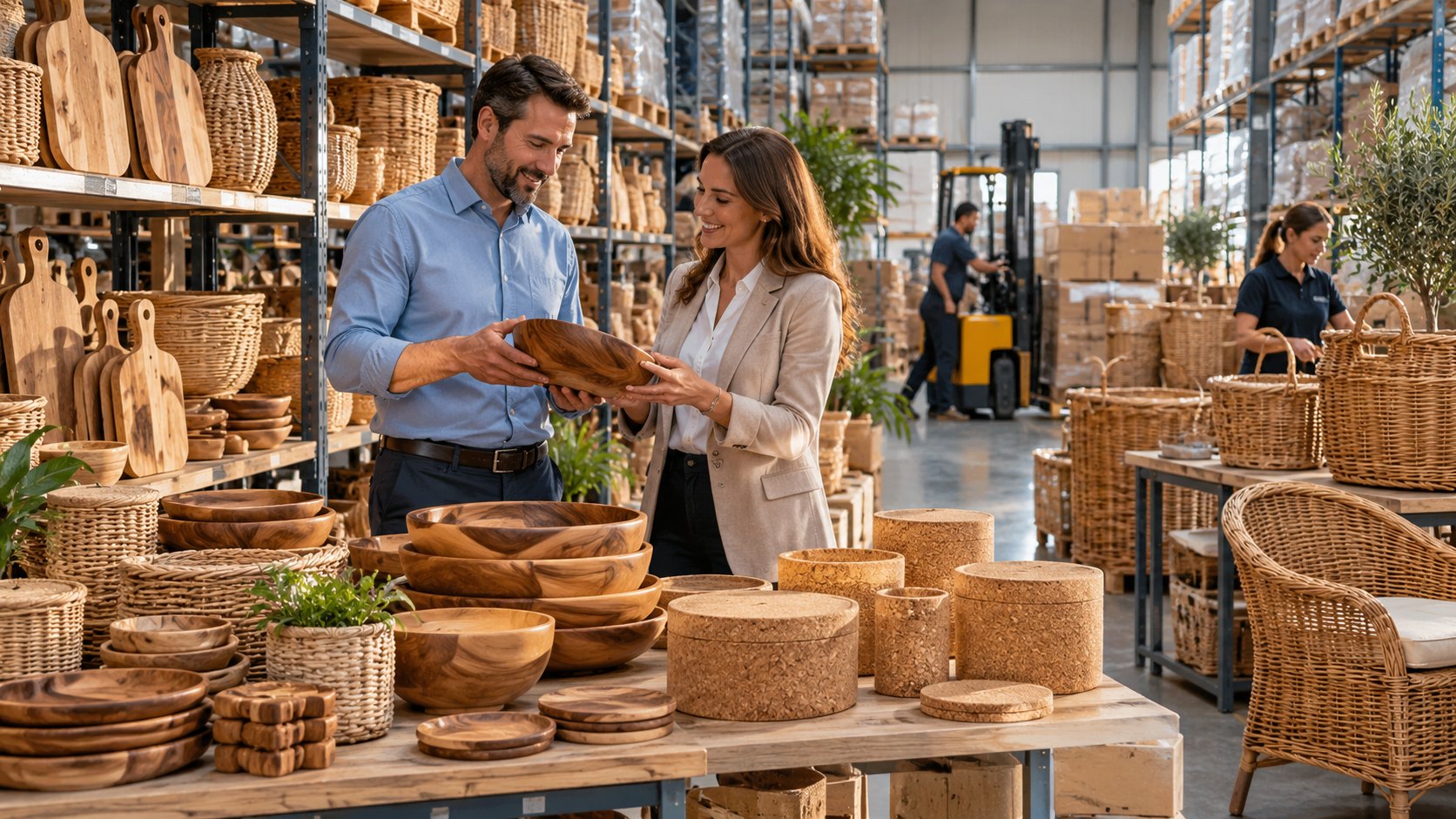
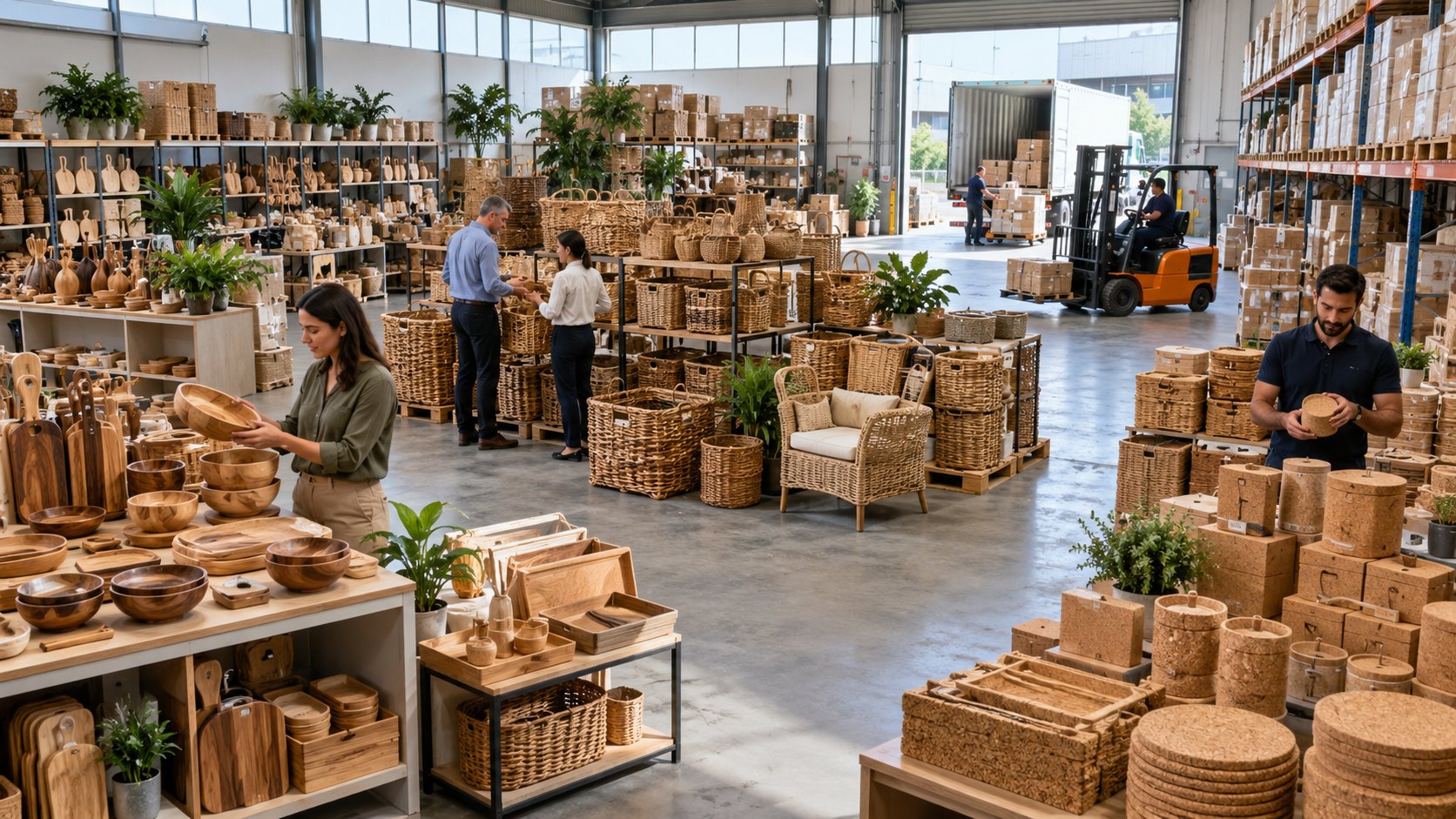
The name is doing a lot of work, and the abbreviation at the end of it is doing more. Woodenware is the carved, turned and assembled wood object: boards, bowls, utensils, trays, boxes, racks, small stands. Wickerwork is anything woven from a plant stem or leaf — rattan, cane, willow, bamboo, seagrass, palm leaf — which in practice means baskets, trays, hampers, screens and the woven elements of furnishing. Corkware is the narrowest of the three and the most useful commercially: mats, coasters, boards, sheet cork, tiles and the sound and thermal products that sit just behind interior fit-out.
The plant-health thread, in the shape it actually takes
Because these goods are unprocessed or lightly processed plant material, they attract quarantine attention that a moulded equivalent never does. The control is about what might travel with the material: wood-boring insects, live larvae, and pests carried in the untreated core of a stem. It applies to the goods and, separately, to the wooden pallet underneath them, which catches out first-time importers who specified the cargo carefully and let the packaging arrive untreated. The federal Ministry of Climate Change and Environment is the authority for plant and agricultural material, and what is asked of a specific consignment depends on the species, the treatment the producer has already applied, and the country it is coming from. Those conditions are confirmed case by case rather than quoted, and getting them settled before a container is booked is the single highest-value thing an adviser does on this file.
Moisture is the second material problem
A bowl that was stable in a humid producing country will crack in a dry conditioned warehouse, and it will crack along the grain where nobody wants it to. Rattan dries, loses its spring and splits at the bends. Cork is more forgiving but discolours in direct sun. None of this is a defect the producer will accept a claim for, because the piece left the mill sound. It is a storage discipline: acclimatise, keep stock off hot walls and out of direct light, and do not hold a decorative range through a summer in an unconditioned unit unless the price allowed for the losses.
The third question is how you source at all, and there are only three honest answers. They carry the plant-health exposure differently, and that is the real difference between them.
judged on the same five rows
| Judged on | Import direct from the mill | Buy from a UAE importer | Commission a local workshop |
|---|---|---|---|
| Who carries the plant-health treatment | You, on every consignment | Settled before you ever see it | Pushed back onto the timber supplier |
| Control of finish, size and quantity | Full | None | Full, and changeable mid-run |
| Working capital committed at a time | A container | A pallet | A production run |
| Lead time on a new pattern | Months | Days | Weeks |
| Provenance you can show a hotel buyer | Only if the mill documents it | Whatever the importer happens to hold | Easiest to evidence, hardest to scale |
Direct import is marked because it is the only one of the three that is a wholesale business rather than a trading position — it is where the margin, the range and the provenance story live. It is also where every consignment's treatment and documentation lands on your desk. Most operators arrive at a mixture: direct containers for the lines they sell in depth, a local importer for filling gaps and small assorted orders, and a workshop for the bespoke pieces a designer specified and nobody stocks.
What the licence does not cover
Four things sit outside this line and each one has caught somebody out.
It does not cover making the goods. A lathe, a saw bench, a steam bender or a cork press is manufacturing, and the licence wording, the premises class and the conditions attached to it are different in kind from a trading file.
It does not cover furniture. A woven rattan armchair is household furniture, CZ 150, however similar the material is to the basket next to it. A woven laundry hamper is wickerwork; a woven chair is a chair. Where a range straddles the two, that is a conversation to have with the licensing authority before the licence is cut rather than during an inspection.
It does not cover fuel. Charcoal, firewood and wood pellets are a combustible commodity sold by weight into an entirely different market, and nothing about a decorative-woodenware file prepares a business for handling them.
And it does not override species protection. Whether a particular hardwood may be traded at all is decided by its listing under the international convention on trade in endangered species and by the conditions the UAE applies to listed material — not by what the activity line permits. A decorative bowl turned from a protected timber is as restricted as the log it came out of, and a buyer who checks the species only after the container has arrived can end up holding stock that cannot lawfully move in either direction.
Two neighbouring lines are worth knowing about rather than guessing at. Household goods that are not specifically wood, wicker or cork sit under the wider umbrella at CZ 149, and cutlery — including wooden-handled pieces whose commercial identity is the blade — is CZ 154. What a particular mixed range should be licensed as depends on what the bulk of it actually is, and it is cheaper to decide that once, correctly, at the start.
References
- Ministry of Climate Change and Environment — plant health, agricultural material and quarantine treatment of plant products on entry. Ministry of Climate Change and Environment
- Dubai Customs — import and export, customs codes, and goods subject to restriction or prohibition on entry. Dubai Customs
- Ministry of Industry and Advanced Technology — national standards and conformity marking on consumer goods. Ministry of Industry and Advanced Technology
- UAE Government portal — federal law and general government information, including the international convention on trade in endangered species. UAE Government portal
Elsewhere in Trading
Activities that sit beside this one
Most licences carry more than one activity. Adding a neighbouring line at the application stage costs a fraction of amending the licence afterwards.
Begin with a clear conversation
Tell us what you intend to build.
A consultant will map the structure, jurisdiction, approvals and likely cost against what you actually described — not against a package.
