
Activity CZ 131
How to Start a Fishery Products Wholesale Business in Dubai
A fishery products wholesale line buys from a supply nobody schedules and sells stock that spoils on a clock. What the trade covers, who buys it, and where the cold chain decides the margin.
ConsultZone licensing desk
- Activity code
- CZ 131
- Category
- Trading
- Reviewed
- Read
- 8 min
Listen instead
50 seconds
An audio summary of this guide.
Topic summary
How to Start a Fishery Products Wholesale Business in Dubai
No other food wholesale line has a supplier who cannot say what will be in the box. A dairy plant runs to a production schedule and a biscuit factory to a forecast. A boat comes back with what it found, in the volumes the season and the closure calendar allowed, and a wholesaler who built a price list around a species that stopped landing has a problem no purchasing department can solve. That is why a large part of what moves through a seafood warehouse here arrives by air or in a reefer container from somewhere else entirely: imported stock is what levels out a local catch that cannot be ordered.¹
The second fact about the trade is the clock. Fresh fish is the most perishable thing in any food warehouse — it degrades faster than milk and faster than cut fruit, and it does it visibly, which means a buyer can see the loss you are hoping to sell past. A day lost at clearance, an hour standing on a loading bay in August, a chiller running two degrees warm overnight: each of those is written off rather than discounted, and the write-off takes the whole margin on the consignment instead of a slice of it.
So the licence is the easy part of this line and the operation is not. Anyone planning it should think about the cold chain first and the company structure second.
The people who buy fish by the box, not by the fillet
Nobody walks into a seafood wholesaler. The customer list is short, professional and unsentimental, and each kind of buyer wants something different from the same pallet.
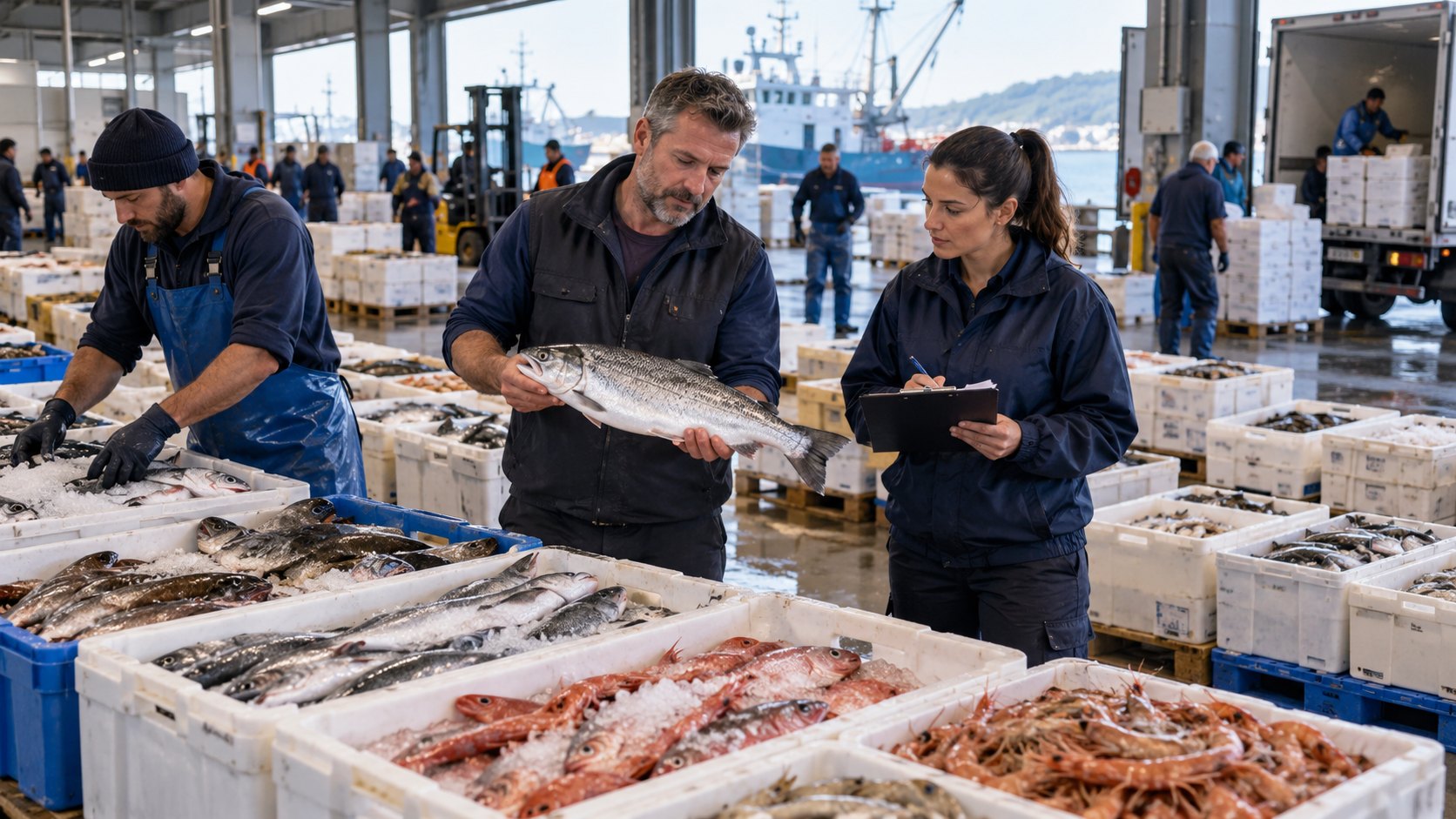
Hotel and restaurant kitchens buy on quality and consistency and will pay for both. A chef who has put a fish on a printed menu needs it to arrive at the same size and the same standard every Tuesday, and will change supplier over two bad deliveries. This is where the best price per kilo is, and it is also the most demanding service: small drops, early mornings, and a phone that gets answered.
Retail fish counters and supermarket chains buy volume, on terms, against a specification and a delivery window they set rather than you. Winning a listing is slow and losing one is fast. Margin per kilo is thinner than the hotel trade, and the volume is what makes a warehouse pay for itself.
Processors and re-packers buy frozen material as an input — a factory making breaded portions, a caterer packing meal kits, an exporter consolidating for another market. They care about landed cost, yield and paperwork rather than about how a fish looks, and they order in sizes that fill a container instead of a van.
Caterers, airline and offshore kitchens and institutional buyers sit between the three: fixed contracts, fixed specifications, and a penalty for a short delivery.
CZ 131 — Wholesale Of Fishery Products
The sheet files this line under trading, and fishery products means considerably more than fish. Read it as everything edible that comes out of the water and is sold on to another business, in whatever state it reaches you.
Fresh and chilled
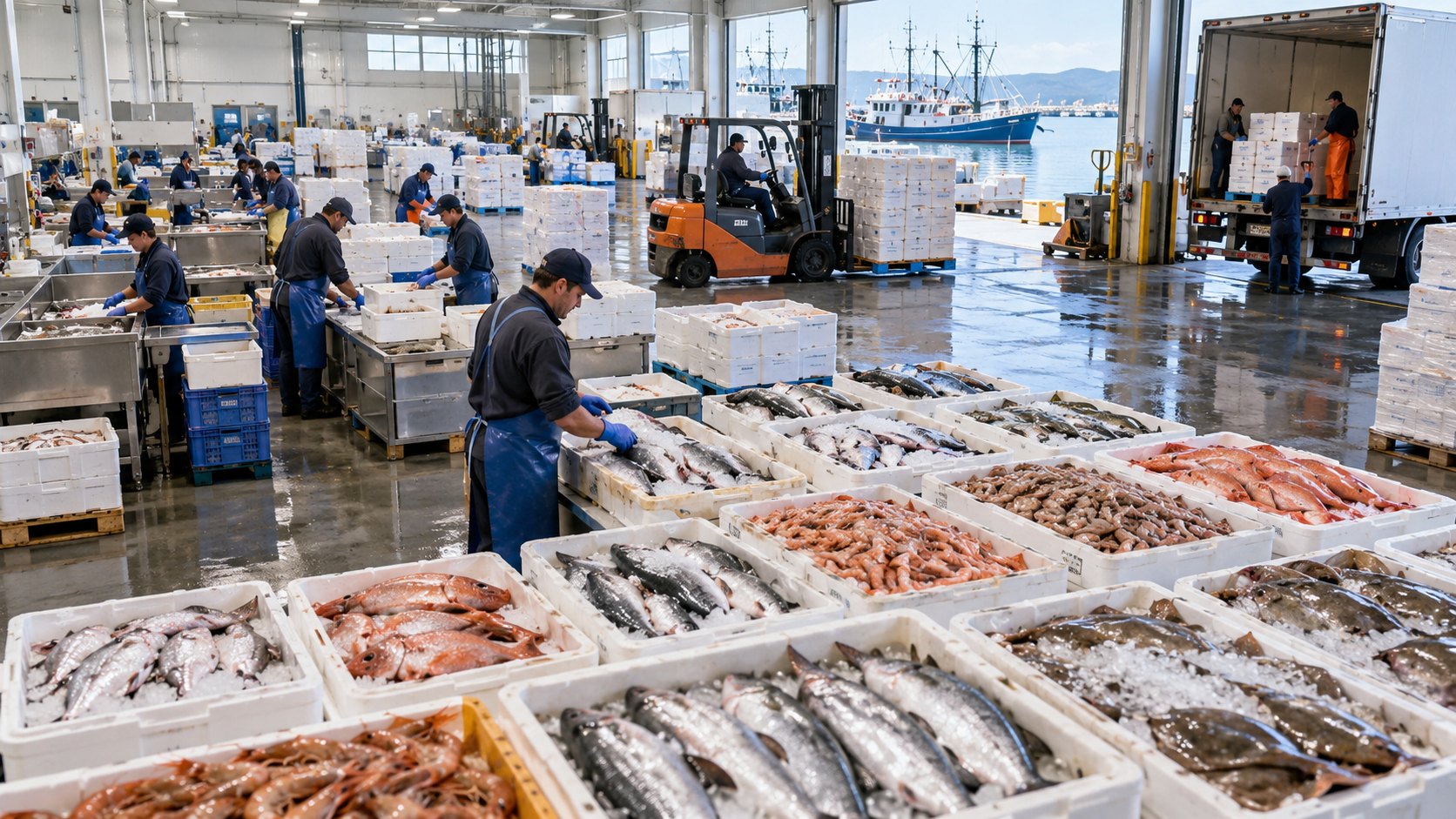
Whole fish, gutted fish and cut portions held on ice or in a chiller and sold within days of landing. This is the part of the trade that behaves least like wholesaling and most like perishable logistics. Stock does not sit. It arrives, it is graded, it goes out, and whatever is left at the end of the week has already cost money.
Frozen
Whole fish, fillets, blocks and individually frozen portions, together with the shellfish that almost always travels frozen — shrimp, squid, cuttlefish, crab and lobster. Freezing turns a perishable good into an inventory item, which changes the business entirely: stock can be bought on price rather than on availability, held against a season and sold months later. What it cannot survive is a thaw. One warm shipment leaves product that looks acceptable in the box and fails on the plate.
Processed and preserved
Canned tuna and sardines, smoked and cured fish, dried and salted product, roe, surimi and prepared seafood in retail packs. These are shelf goods rather than fresh ones. They are bought on brand, pack and price, they sit next to groceries, and the quality risk moves off the thermometer and onto the label.
The box and the fish are not always the same species
Species substitution is a genuine integrity problem in seafood supply anywhere in the world, and it is the wholesaler who carries it. Nobody further down the chain checks a fillet against its Latin name; the invoice, the label and the buyer's trust all carry your name instead. A trade that buys on price from whoever answers the phone will eventually sell a cheaper species under a dearer name without meaning to, and will hear about it from a customer rather than from a supplier. The defences are dull and they work — a short supplier list, whole fish where the species can be identified on sight, documentation kept per lot, and a willingness to refuse a delivery.
Taken together, the three states above are three different businesses sharing one activity line.
| Fresh and chilled | Frozen | Processed | |
|---|---|---|---|
| How long it stays saleable | Days, and falling | Months, if the chain holds | Long-dated or shelf-stable |
| Who buys it | Hotel kitchens and fish counters | Processors, caterers, retail freezers | Retail shelves and food factories |
| What the margin rests on | Freshness a buyer can see | Landed cost per kilo | The brand and the pack |
| What destroys the batch | A warm hour on a loading bay | One thaw, once | A label that fails at clearance |
| Where the working capital sits | Turning over daily | Stock, frozen literally | Stock, plus packaging and label work |
Read the marked row before the rest, because it names the failure that will end each business. Fresh trading dies of delay. Frozen trading dies of a single lapse in temperature that may have happened before the container ever reached you. Processed trading dies on paperwork — a label or a product file that does not satisfy food control, on goods that are otherwise perfectly sound.
What the fish licence does not reach
The line covers buying and selling. It does not cover catching, growing, cooking or serving, and each of those is a separate activity carrying its own conditions.
Operating a fishing vessel is not wholesaling, and what attaches to a boat, its gear and its catch is a different matter from what attaches to a warehouse.¹ Fish and shrimp farming is aquaculture, which is production rather than trade. Running a counter that sells to the public, or a restaurant that cooks what it buys, is retail or food service. Canning, smoking, breading or otherwise manufacturing a seafood product is production too, and a wholesaler who starts processing rather than simply re-packing has crossed into it.
Two nearby lines are worth naming because they look as though they travel with this one and do not. Fish and meat wastes are their own trade: handling offal, trimmings and by-product for rendering or feed carries separate premises conditions, and the catalogue lists it apart for exactly that reason. Live ornamental and aquarium stock is bought as livestock rather than as food and should never be assumed to sit inside a food line.
Where this is the wrong purchase. A single retail fish shop in a residential area, selling to the household that walks in, is not this activity. The retail line is cheaper to hold and is what a licensing authority will expect such a shop to run under. Choose the wholesale line at the point the buyer is a company rather than a household.
What attaches to the goods themselves is where the real work sits. Fishery products are food, so each item and each source establishment is cleared before it can be sold here, the premises and the cold chain are inspected rather than declared, and the vehicles carrying chilled stock are part of that same picture.² ³ Imported consignments need a customs code in the company's own name and a clearance plan that treats a chilled airfreight arrival differently from a frozen container.⁴ None of the figures anybody will quote around all of that — what the licence costs to hold, how many visas the unit carries, which conditions genuinely apply — is the same in two emirates or for two activity mixes. Those answers belong to the authority issuing the licence where the company is placed, and ConsultZone obtains them for the case in hand before a lease is signed.
References
- Ministry of Climate Change and Environment — fisheries, aquatic animal health, closed seasons and national food security. Ministry of Climate Change and Environment
- Dubai Municipality — food control on imported products, premises suitability and the cold chain in Dubai. Dubai Municipality
- Abu Dhabi Agriculture and Food Safety Authority — food safety and aquatic animal health for stock held or sold in Abu Dhabi. Abu Dhabi Agriculture and Food Safety Authority
- Dubai Customs — importer code and the clearance of chilled and frozen consignments. Dubai Customs
- UAE Government portal — federal food security policy and general government information. UAE Government portal
Elsewhere in Trading
Activities that sit beside this one
Most licences carry more than one activity. Adding a neighbouring line at the application stage costs a fraction of amending the licence afterwards.
Begin with a clear conversation
Tell us what you intend to build.
A consultant will map the structure, jurisdiction, approvals and likely cost against what you actually described — not against a package.
