

Activity CZ 134
How to Start a Beverages Wholesale Business in Dubai
Beverages are the heaviest and cheapest stock in a food warehouse, so a beverages wholesale line lives or dies on cost per case. Who buys, what the line reaches, and what the store must do.
ConsultZone licensing desk
- Activity code
- CZ 134
- Category
- Trading
- Reviewed
- Read
- 6 min
Listen instead
41 seconds
An audio summary of this guide.
Topic summary
How to Start a Beverages Wholesale Business in Dubai
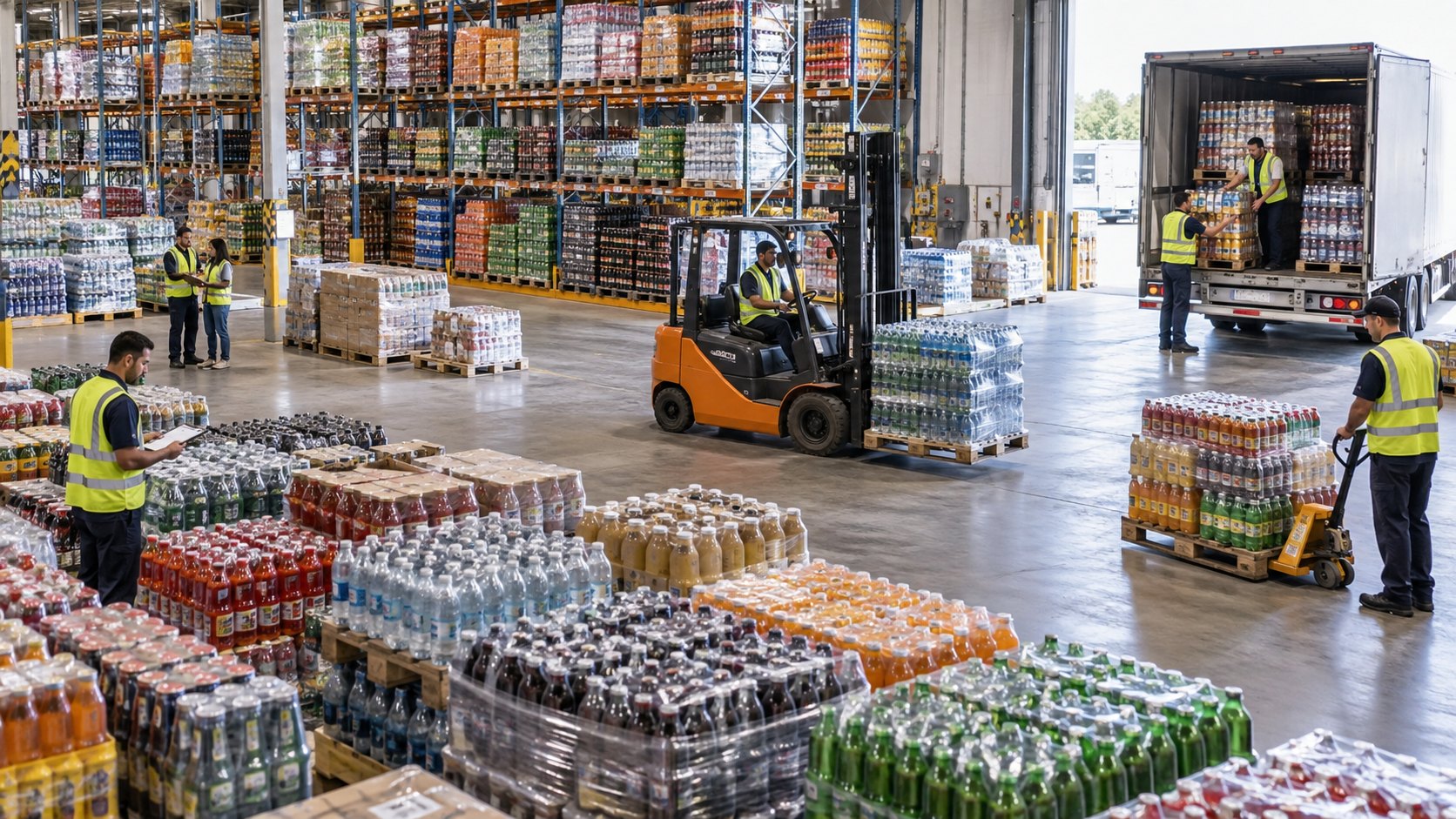
A pallet of bottled water is worth less than almost anything else on a food warehouse floor and weighs more than all of it. That single ratio explains most of what is peculiar about this trade. The goods are cheap, heavy, bulky and universally available, so nobody wins an account on the product. The account is won on delivered cost per case, and delivered cost per case is a warehouse rent, a distance, a vehicle and a load factor rather than a purchasing decision.
Which means the margin is made in places that do not look like selling. Filling the van instead of running it two-thirds loaded. Taking a store further from the city and closer to the customers. Buying a full container rather than part of one. Stacking to the height the racking actually allows. A beverage distributor with good discipline and an ordinary price list beats one with a good price and a half-empty truck, every time.
The range hides three quite different operations inside it, and the mistake new entrants make is treating them as one.
The buyers who order by the pallet and pay by the case
Volume buyers come first, because volume is the whole model. Supermarket and hypermarket chains, and the cash-and-carry trade behind them, move the quantity that makes a warehouse viable, on terms that test whether it has been financed properly.
Then the food service trade, which is larger than it looks from outside: restaurants, cafés, canteens, hotels, and the catering companies supplying offices, sites and schools. They buy narrower ranges more often, in smaller drops, and they pay more per case for the convenience of a reliable Tuesday delivery. Labour accommodation and construction camps are a real and under-served version of the same thing, taking water by the pallet on a standing order.
Groceries, cafeterias and convenience stores are the long tail — hundreds of small accounts, each ordering little, collectively worth more than any single chain and far harder to serve. A route built for them needs a different vehicle and a different driver from a route built for a hypermarket.
Exporters and re-exporters buy differently again. Goods consolidated here and moved on to another market never enter local retail at all, which changes the sensible licensing choice more than any other factor in this trade: a business selling to shops and kitchens inside the country belongs on the mainland side, while one consolidating for onward shipment may be better placed in a free zone. That decision follows the customer rather than the tax table, and it is made before the store is leased.
What the beverages line reaches, and where it stops
The line covers buying beverages in quantity and selling them on to other businesses — importing them, holding them, distributing them. It does not cover making or bottling them, which is production and a different activity. It does not cover selling to the public from the unit, which is retail. And it does not cover serving them, which is food service: a juice bar and a beverage distributor are two companies even when the owner is one person.
Two boundaries catch people out. Coffee, tea and cocoa sit on the neighbouring line in the catalogue rather than on this one, so a beverage distributor adding roasted beans or tea to the range is crossing an activity boundary and needs it written in instead of assuming it travels along. And alcoholic drinks are not part of a general beverages line at all: their trade is controlled separately at emirate level, on permissions of an entirely different kind, and a beverages wholesale licence confers none of them.
Inside the line, the honest division is not by brand. It is by how the stock has to be handled.
six kinds of stock, three ways of handling them
- Bottled water, moved by the palletNothing about it needs cold and everything about it needs space
- Long-life juice and ambient carbonatesMonths of shelf life, so the exposure is price rather than date
Ambient store, priced on cost per case
- Fresh and short-dated juiceThe date on the bottle is the deadline for the whole round
- Dairy-based and cultured drinksA break in the chain is a loss no inspection can undo
Chilled chain, priced against the date
- Carbonates with added sugarThe tax position changes landed cost before a case can be quoted
- Energy drinksSame regime, and usually the highest value per case in the range
Excise-liable, priced before it is bought
Three destinations, and they are three businesses. The ambient half is a logistics exercise where the exposure is price. The chilled half is a perishable one, and the date on a bottle of fresh juice runs the route rather than the other way round. The marked row and the one below it are the only ones where a tax question sits in front of the commercial one: sweetened carbonates and energy drinks fall inside the federal excise regime, and which specific lines are caught — along with what the company itself then has to do — is confirmed with the federal tax authority before the range is bought rather than after it has been priced.¹
The store, the chain and the vehicles
The rent is paid per pallet position, not per square metre
Beverages are bought and sold in cube. A unit is judged on clear height, floor loading, racking, and how many pallets can be picked and loaded in an hour — not on its address. A cheap warehouse with a low ceiling, a single loading door and a yard a trailer cannot turn in is an expensive warehouse, and the cost of it shows up in every delivery for the length of the lease.
Two temperatures in one building
An ambient range and a chilled range want different rooms, different picking and, in practice, different vehicles. Running short-dated juice out of an ambient store is how a beverage business discovers stock loss; running bottled water through a chilled one is how it discovers it is paying to cool a commodity. Either take one half of the range, or build the store for both from the start.
The vehicles carry the licence's reputation
Food-carrying vehicles are inspected, refrigerated vehicles are inspected on their temperature record, and the permits a commercial fleet needs in Dubai come from the transport authority.² ³ A distribution round is a staffing question as well — early starts, driver licensing, and a labour file built for shift work.⁴
Beyond that, four things differ by emirate, by premises and by the mix of lines on the licence: what a beverages licence costs to hold, how many visas a given unit will carry, which food control conditions attach to a specific store or vehicle, and whether the mainland or a free zone is the right side of the line for a particular customer base. Those answers belong to the authority issuing the licence, and ConsultZone establishes them for the case in hand before the first container is ordered.
References
- Federal Tax Authority — excise tax on sweetened and energy drinks, and the enrolment and filing obligations that follow. Federal Tax Authority
- Dubai Municipality — food control on beverage storage, the cold chain, and the condition of delivery vehicles in Dubai. Dubai Municipality
- Roads and Transport Authority — permits for the commercial and refrigerated vehicles a distribution round runs on in Dubai. Roads and Transport Authority
- Ministry of Human Resources and Emiratisation — work permits, contracts and shift conditions for drivers and warehouse staff. Ministry of Human Resources and Emiratisation
- Dubai Customs — importer code, and the clearance of beverage consignments including goods consolidated for onward export. Dubai Customs
Elsewhere in Trading
Activities that sit beside this one
Most licences carry more than one activity. Adding a neighbouring line at the application stage costs a fraction of amending the licence afterwards.
Begin with a clear conversation
Tell us what you intend to build.
A consultant will map the structure, jurisdiction, approvals and likely cost against what you actually described — not against a package.
