

Activity CZ 197
How to Start a Specialised Wholesale Business in Dubai
Other specialised wholesale is the residual class at the end of the trading catalogue, and it holds some of the most controlled goods in it. What it covers, who buys, and what attaches to the goods.
ConsultZone licensing desk
- Activity code
- CZ 197
- Category
- Trading
- Reviewed
- Read
- 7 min
Listen instead
43 seconds
An audio summary of this guide.
Topic summary
How to Start a Specialised Wholesale Business in Dubai
Every classification of trade ends with a line that means everything the earlier lines did not name. This is that line. It is easy to mistake for a convenience — a broad licence, no awkward product boundary — and that reading is the single most expensive misunderstanding in this part of the catalogue.
The reason is simple. A residual class is residual because the goods inside it did not fit anywhere else, and a surprising number of them did not fit because they are industrial, hazardous or valuable: chemicals, fertilisers, scrap and recovered materials, intermediate products, precious metals and stones. Those are not lightly-regulated goods that nobody bothered to classify. They are goods whose controls sit on the product rather than on the trade, which is precisely why the trade description is vague and the obligations are not.
So the useful version of this page is not a list. It is a warning followed by a method: find out what your specific goods attract before you rely on a licence that names none of them.
What the activity covers
In practice, four groups of goods account for most companies holding this line.
Industrial chemicals and intermediates
Solvents, acids, bases, resins, additives and process chemicals sold to manufacturers rather than consumers. Almost every one carries handling, storage and transport consequences, and a meaningful minority are controlled because of what they can also be used for.
Fertilisers and agricultural chemicals
Sold to growers and distributors. Controlled because they enter the food chain and because some compositions are restricted for reasons that have nothing to do with agriculture.
Scrap, waste and materials for recovery
Metals, paper, plastics and e-waste bought for their material value. Commercially one of the most interesting trades in the region; administratively one of the most watched, because the line between a recovered material and a waste is drawn by the authorities rather than by the trader, and exporting it engages international rules on waste movement.
Precious metals, stones and high-value goods
A genuine Dubai speciality with its own institutions and its own reporting expectations, because high-value portable goods are a recognised money-laundering risk. A trader here is subject to obligations about who they deal with and what they record, not merely about what they sell.
Beyond those four, the line simply absorbs whatever else has no home — industrial textiles, technical components, specialised consumables. The absorbing is the point.
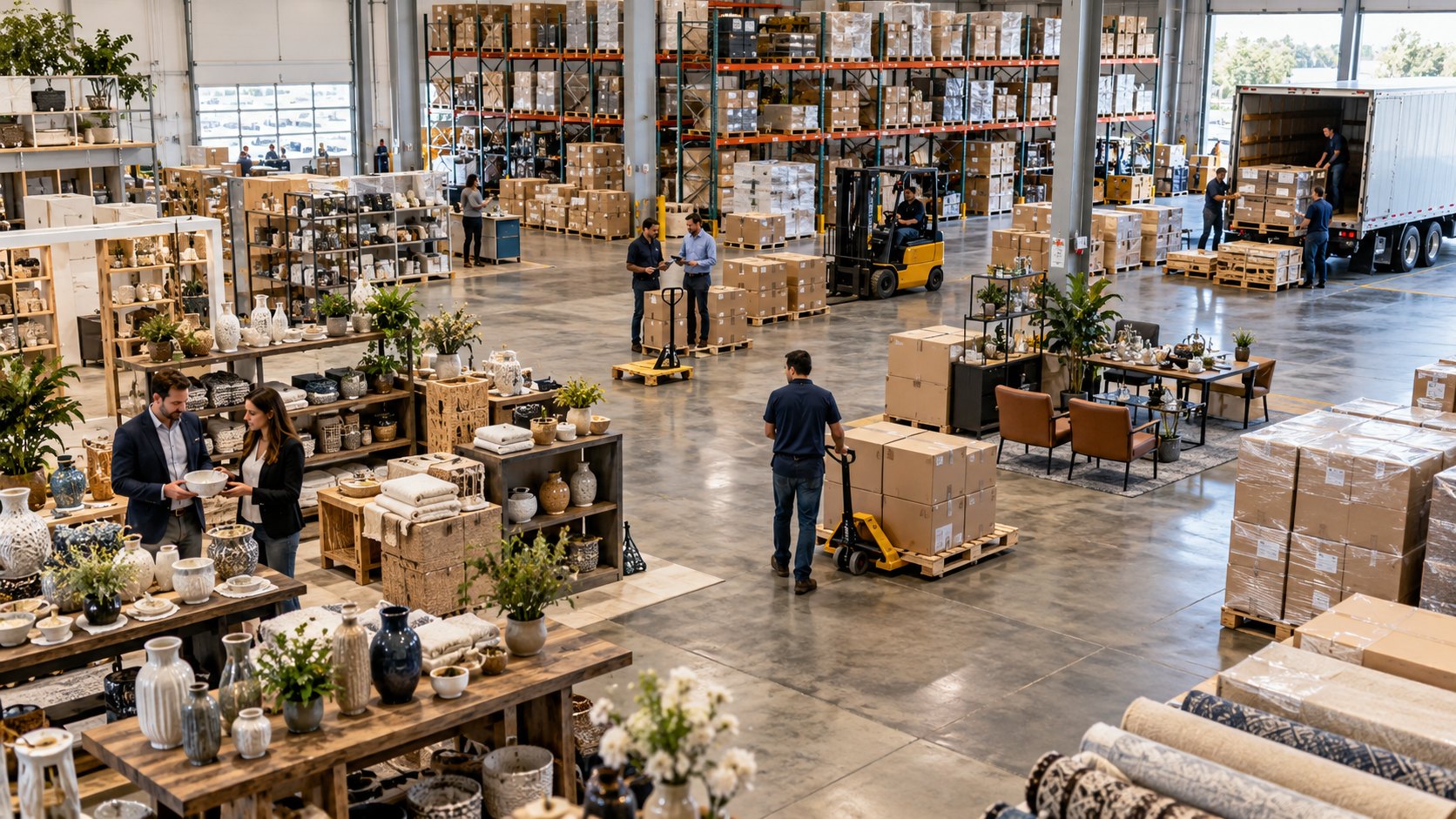
The buyers, and the route to them
Manufacturers buy inputs against a production plan, on credit, with specification and continuity mattering more than price. Other wholesalers and distributors buy to break bulk, and they compete with you as soon as they can buy direct. Contractors and industrial operators buy to consume on a project, unpredictably. Exporters and re-exporters buy because the UAE holds stock the region cannot hold itself — which is the real reason a specialised wholesaler exists here at all.
What it givesWhat it costs
- Manufacturers buying a production inputContracted, repeating volume, and a relationship that is slow to moveCredit terms, held stock, and a specification you cannot quietly change
- Distributors buying to break bulkLarge clean orders and very little sales effortThin margin, and a customer who becomes a competitor
- Contractors and industrial usersBetter margin on urgency, and no tenderUnpredictable demand, and stock sitting between projects
- Exporters and re-exportersVolume, and the reason to hold regional stock at allDocumentation, origin questions, and rules on where goods may go
Read the marked row as a warning rather than a recommendation: urgency is the best margin in this trade and it is paid for with inventory risk, which is the thing that closes specialised wholesalers.
Conditions that attach to the goods
This is the section that matters, and every item on it sits on the product rather than on your licence.
Hazard classification decides how you may store and move it. A chemical's classification determines the premises, the separation, the firefighting provision and the paperwork that travels with it. The civil defence authority and the environmental authority impose those, and a general trading licence tells them nothing.
Dual-use and restricted goods exist in this category. Some chemicals and technical items are controlled because of alternative uses. That is a customs and national-control matter, decided per item, and it is a question to ask before buying rather than after the container arrives.
Waste and recovered material is governed as waste until somebody says otherwise. Whether a consignment is a commodity or a waste is a regulatory determination, and exporting it engages international movement rules. Companies get this wrong in good faith.
High-value goods carry client-and-record obligations. Dealers in precious metals and stones sit inside the anti-money-laundering framework: knowing the counterparty, keeping the records, and reporting what the framework requires. That is an operating obligation rather than a licensing one.
Standards and labelling still apply. Where an item reaches a consumer or a workplace, national conformity and Arabic labelling requirements apply regardless of how the activity is described.
And the licence must actually match the goods. A residual activity is not a permission to trade anything. Where a product has its own named line in the catalogue, that line is the correct one, and an authority reviewing a shipment will look at the goods, not at the breadth of the wording.
What it costs to hold
The licence fee turns on the emirate, the jurisdiction and the activity mix in the ordinary way. What determines the real cost of this line is which goods you intend to carry, because the premises, the approvals and the insurance are set by the product. We establish what your specific goods attract before anything is filed, which is the one part of this that cannot sensibly be done afterwards.
The description the licence does not give you
A licence line that names no goods still has to be read by people whose job is knowing exactly what the goods are: the bank opening the account, the insurer writing the policy, the forwarder filing the entry, the corporate customer running a supplier check. None of them can answer that from the activity wording, so the description gets supplied by you, in writing, four times over — and the risk in a residual line is that the four versions do not agree.
The bank asks what is traded, with whom, and in which direction. An account is opened on the strength of a commercial story: the goods, the markets at each end, the counterparties, the expected flows. An activity meaning everything unnamed contributes nothing, so whatever you write does all the work. A description wider than the business invites questions about goods you never intend to touch; one narrower than the licence leaves a gap the next reviewer finds.
The insurer covers a declared schedule, not an activity. Cover is priced on what the goods are and how they are held, so the schedule you declare is the exact extent of the protection. Anything carried outside it is carried uninsured — and the goods most likely to be added opportunistically here are precisely the ones an insurer wants named.
Your own forwarder declares the goods for you. A customs entry is filed in your name by an agent working from whatever description you supplied, so an activity that names nothing hands the classification decision to the person with the least knowledge of the product. The error that costs money at the border usually entered the paperwork in your own office.
A corporate buyer's supplier check wants a category. Procurement forms and tender documents ask what you supply, and an answer meaning the things nobody classified reads as evasiveness to a reviewer who has never heard of a residual class.
The discipline that follows is dull and it is the only part that matters: keep one written schedule of goods, treat it as the document the licence failed to give you, give every counterparty the same version, and extend it before buying a new product rather than after. Nothing in a catch-all line will tell you when you have stepped outside it.
References
- Dubai Civil Defence — storage and handling requirements for hazardous and flammable materials. Dubai Civil Defence
- Dubai Customs — classification, restricted and prohibited goods, and export documentation. Dubai Customs
- Environment Agency Abu Dhabi — environmental permitting and the handling of waste and recovered materials. Environment Agency Abu Dhabi
- Ministry of Industry and Advanced Technology — national standards, conformity and labelling requirements. Ministry of Industry and Advanced Technology
- UAE Government portal — the anti-money-laundering framework applying to dealers in precious metals and stones. UAE Government portal
Elsewhere in Trading
Activities that sit beside this one
Most licences carry more than one activity. Adding a neighbouring line at the application stage costs a fraction of amending the licence afterwards.
Begin with a clear conversation
Tell us what you intend to build.
A consultant will map the structure, jurisdiction, approvals and likely cost against what you actually described — not against a package.
