

Activity CZ 198
How to Start a Solid Fuel and Naphtha Wholesale Business in Dubai
Charcoal, coal, coke, fuel wood and naphtha share a licence and almost nothing else. What the activity covers, which lines people confuse it with, and who it suits.
ConsultZone licensing desk
- Activity code
- CZ 198
- Category
- Trading
- Reviewed
- Read
- 7 min
Listen instead
48 seconds
An audio summary of this guide.
Topic summary
How to Start a Solid Fuel and Naphtha Wholesale Business in Dubai
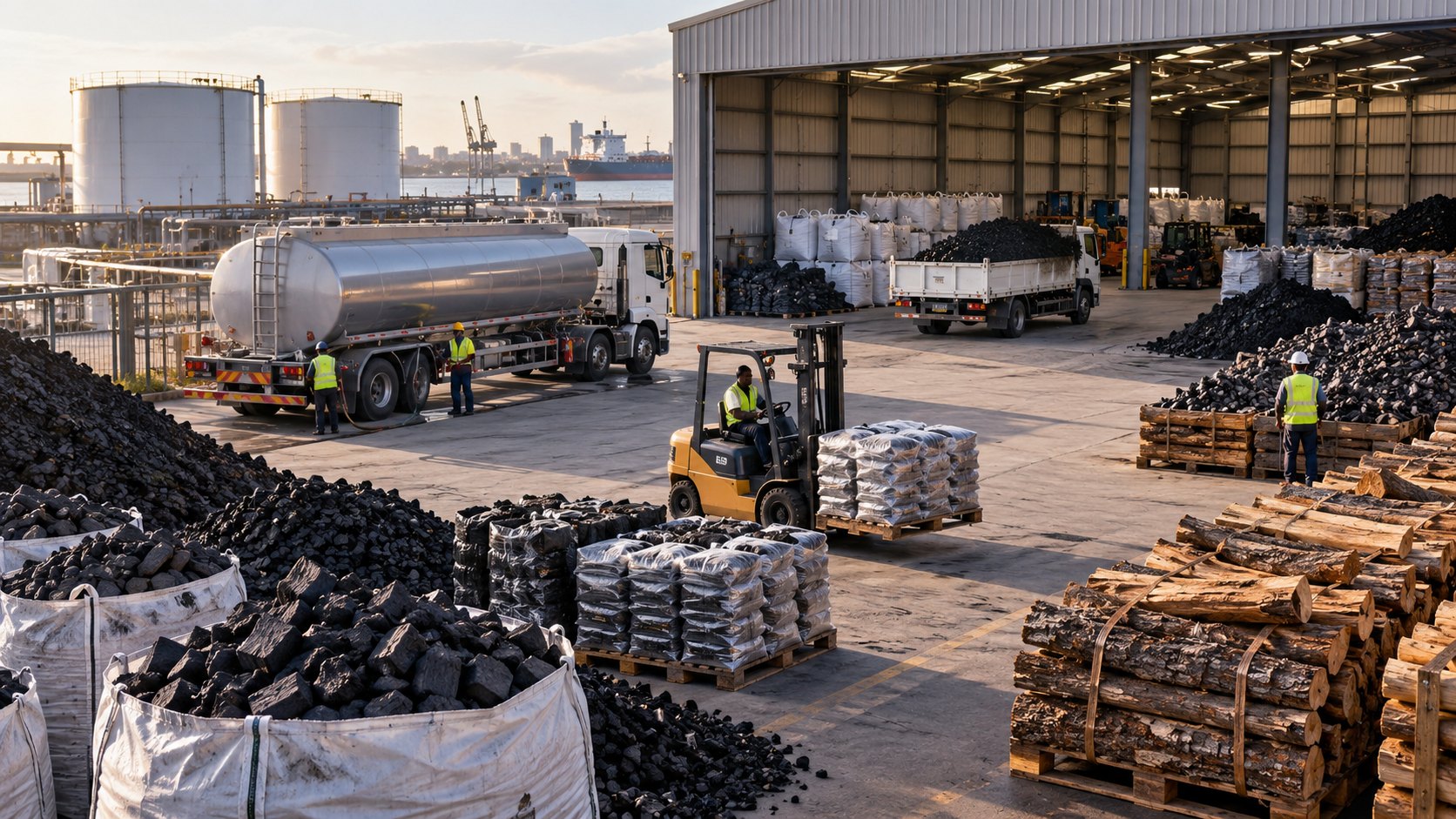
This is one of the strangest groupings in the catalogue, and understanding why it exists is the fastest route to understanding the business. Four of the five items are solid fuels that burn. The fifth, naphtha, is a volatile petroleum liquid that mostly does not get burned at all — it is fed into petrochemical plants to be turned into plastics. They sit together because a statistical classification once grouped fuels by purpose rather than by hazard, and the licence inherited that logic.
For anyone planning a business here, the practical consequence is that this single activity contains at least three unrelated companies, and nobody sensibly runs all of them. A charcoal importer serving restaurants has nothing in common with a coke trader supplying a smelter, and neither resembles a naphtha trader moving cargoes between refiners.
CZ 198 — Charcoal, coal, coke, fuel wood and naphtha
Charcoal
Commercially the most interesting item for a new entrant in this market, because demand here is large, year-round and cultural: shisha cafes, restaurants, grills and households. It is a light, bulky, low-value-per-tonne product that is almost entirely imported, and it is sold on burn characteristics — how long it lasts, how much ash it leaves, whether it taints food. Hardwood lump and compressed briquettes are effectively two products with two customer bases.
Coal and coke
Industrial inputs rather than consumer fuel. Metallurgical coke goes to smelters and foundries; thermal coal goes to industrial heat and cement. These are bulk cargoes measured in shiploads, handled at port terminals, priced against international indices, and bought by a handful of very large customers. This is not a business a small company enters incrementally.
Fuel wood
The smallest line, and honesty serves the reader better than optimism: firewood has no real domestic heating market in this climate. What demand exists is for restaurants, pizza ovens, smokehouses, shisha and the leisure and camping trade. Treat it as a speciality supply business, not a fuel one.
Naphtha
The outlier, and the one that changes the compliance picture entirely. Naphtha is a volatile flammable liquid, traded in cargoes as a petrochemical feedstock and a gasoline blending component. Anyone actually holding it needs tankage, hazard approvals and a customs position; anyone trading it on paper needs credit and counterparties. It belongs in this licence by classification and in the oil trading world by practice.
five product groups, three regimes plus customs
- Charcoal and briquettes for cookingIt is used on food, so composition and labelling matter and the emirate's food control has an interest
- Fuel wood for ovens and smokingSame reason — it touches the cooking process rather than a boiler
Food-contact and consumer goods control
- Thermal coal and metallurgical cokeDust, stockpiles and terminal handling are the constraint, and the buyer is an industrial plant
Bulk industrial and port handling control
- NaphthaA volatile flammable liquid: tankage, firefighting provision and customs control govern it, not consumer rules
Hazardous petroleum control
- Any of them, on arrivalClassification decides the duty, the documentation and sometimes whether it may be imported at all
Customs control
The drawing is the reason to read this page before choosing the activity. Two products in the same licence line sit under consumer and food-related control; two sit under industrial handling; one sits under the petroleum hazard regime. The licence does not distinguish them. Every other authority does.
Adjacent lines people confuse with it
Refined oil products trading is a different line. Diesel, gasoline, fuel oil, kerosene and lubricants belong there, not here. Naphtha's presence in this activity confuses people into thinking the whole petroleum range comes with it. It does not.
Selling motor fuel to the public is its own controlled activity. A forecourt is tied to its site and to the fuel retail framework, and no wholesale licence extends to it.
Gas is separate. Liquefied petroleum gas for cooking, cylinders and bulk gas supply are their own activities with their own storage and handling approvals, which are stricter again.
Shisha and tobacco products are not charcoal. Supplying the charcoal a cafe burns is this activity; supplying the tobacco it serves falls inside the tobacco trade, with excise tax and stamping obligations attached. Companies serving the same customer frequently need both and assume they need one.
Waste wood and biomass recovery is not fuel wood. Collecting and processing waste timber is a waste activity before it is a fuel one, and the permissions follow the waste rather than the product.
Who is this for?
Food-service suppliers adding charcoal
The most natural entrant: a company already delivering to restaurants, cafes and caterers, for whom charcoal is another pallet on an existing van and an existing relationship. The margin is thin and the volume is reliable.
Commodity traders handling bulk cargoes
Companies with port relationships, freight competence and the credit to finance a shipload of coal or coke. For them this is one line among several, and the UAE's terminals and location are the reason to be here.
Petrochemical and oil traders holding naphtha
Desks trading feedstock into the region's refiners and crackers. They will normally hold refined products activities alongside this one, and their real constraints are credit lines and storage access rather than licensing.
Speciality and leisure suppliers
Businesses selling to campsites, barbecue retailers, pizzerias and smokehouses, where the product is a consumer good with a brand and a bag rather than a commodity in a tonne.
What it costs to hold
The licence fee depends on the emirate, on the jurisdiction and on the activity mix in the ordinary way. What actually determines the cost of this line is which of the products above you intend to carry — a pallet of briquettes and a naphtha cargo are the same words on a licence and entirely different businesses to set up. We confirm the licensing position for the specific case and say plainly which conditions sit with other authorities.
Grouped by purpose, priced by density
The classification put these five products together on the basis of what they are for. A freight invoice separates them again on the basis of what they weigh per unit of space, and that second line falls in a different place from the hazard line — so the licence divides into unrelated businesses twice over rather than once.
Charcoal and fuel wood fill a container long before they reach its weight limit. The box runs out of volume while there is still tonnage to spare, so what is being bought is space, and the landed cost of a usable tonne is decided mostly by how completely each one was packed. That is also the quiet commercial argument for compressed briquettes over lump hardwood: briquettes stack, travel without crumbling and arrive as the product that left, while lump earns the better price and loses a share of itself to fines on the way. A trade that sells by weight and ships by volume pays twice for every gap in the stow.
Coal and coke reach the weight limit first, and the constraints move to the ship. Charter, berth, draft and the terminal's grab or conveyor decide what is possible, and the parcel size is set by what a terminal is willing to handle rather than by what a buyer would like to order. Being small here is less a disadvantage than a disqualification.
Naphtha is a liquid and shares none of it. It moves in ship tanks and parcel lots, so the whole question is access to storage at the right port on the right dates — a conversation with a terminal operator rather than a stowage problem.
The consequence for anyone choosing this line is that the three competences do not transfer. Buying origin well and filling containers well is what a charcoal importer is actually good at; chartering and terminal access is what a coal or coke trader is good at; tank access is what a naphtha trader is good at. One application covers all three on paper, and holding it makes neither of the other two easier than starting from nothing.
References
- Dubai Civil Defence — storage and handling of flammable and hazardous materials, including volatile petroleum liquids. Dubai Civil Defence
- Dubai Customs — classification, duty and documentation for fuel and bulk commodity imports. Dubai Customs
- Dubai Municipality — food control interest in products used in cooking, and environmental controls on dust and stockpiles. Dubai Municipality
- Ministry of Industry and Advanced Technology — national standards, conformity and labelling requirements for packaged consumer products. Ministry of Industry and Advanced Technology
- UAE Government portal — the general framework for commercial licensing in the UAE. UAE Government portal
Elsewhere in Trading
Activities that sit beside this one
Most licences carry more than one activity. Adding a neighbouring line at the application stage costs a fraction of amending the licence afterwards.
Begin with a clear conversation
Tell us what you intend to build.
A consultant will map the structure, jurisdiction, approvals and likely cost against what you actually described — not against a package.
