
Activity CZ 62
How to Start a Used Automobile Export Business in Dubai
What an export buyer pays for is not the automobile but its paperwork. Why Dubai clears the region's used cars, what decides which are worth buying, and where the licence should sit.
ConsultZone licensing desk
- Activity code
- CZ 62
- Category
- Trading
- Reviewed
- Read
- 8 min
Listen instead
44 seconds
An audio summary of this guide.
Topic summary
How to Start a Used Automobile Export Business in Dubai
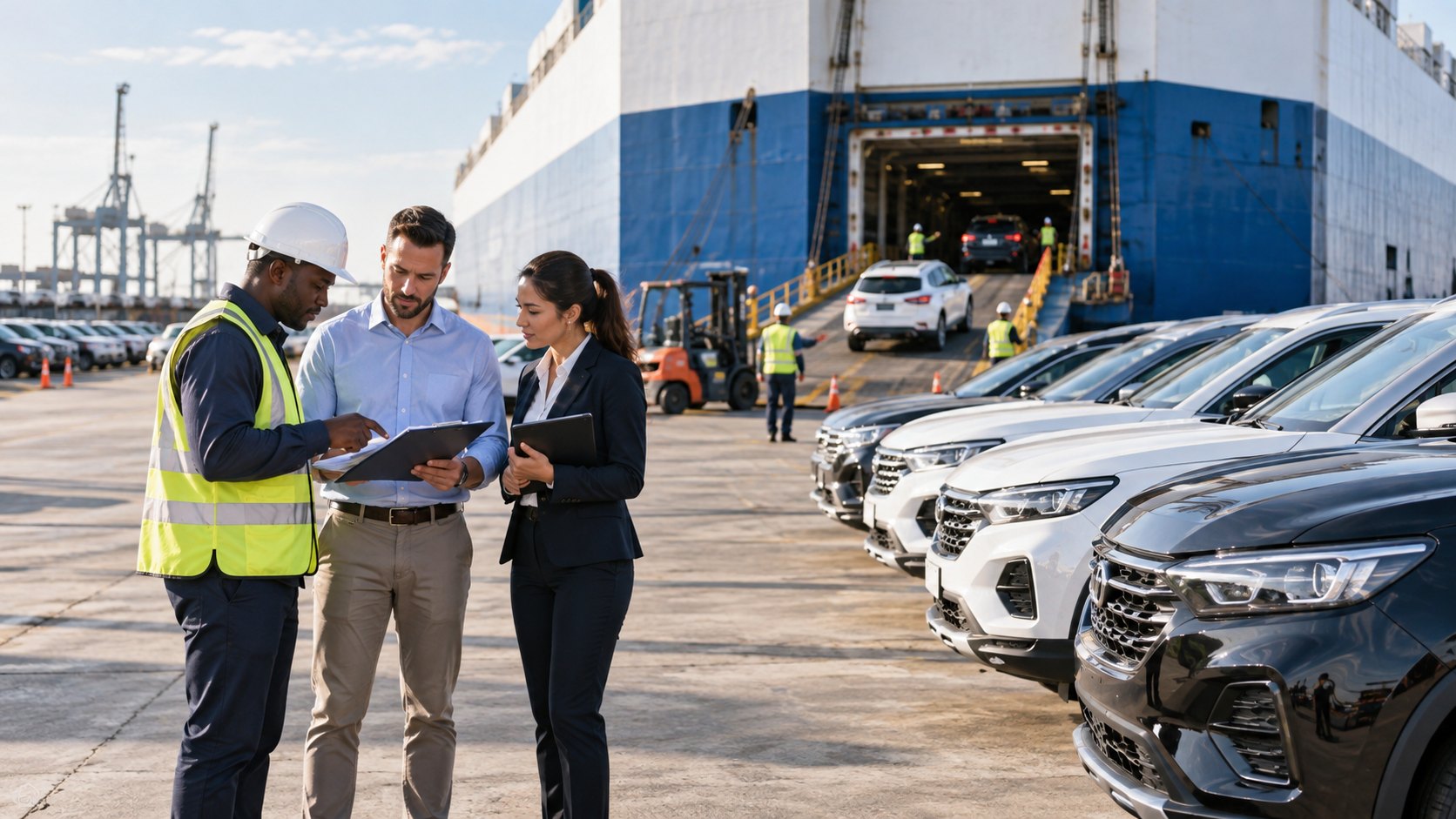
The product in this trade is not a car. It is a car that can lawfully enter another country, accompanied by the documents that let it. Two vehicles standing side by side in the same yard, identical in age, mileage and condition, can be worth very different amounts to an export buyer because one has a clean title and a complete file and the other has an open lien, a missing transfer or a chassis number nobody can match to a document. The car is the easy part of this business. Assembling the paperwork that travels with it is the part people pay for, and it is the part that fails.
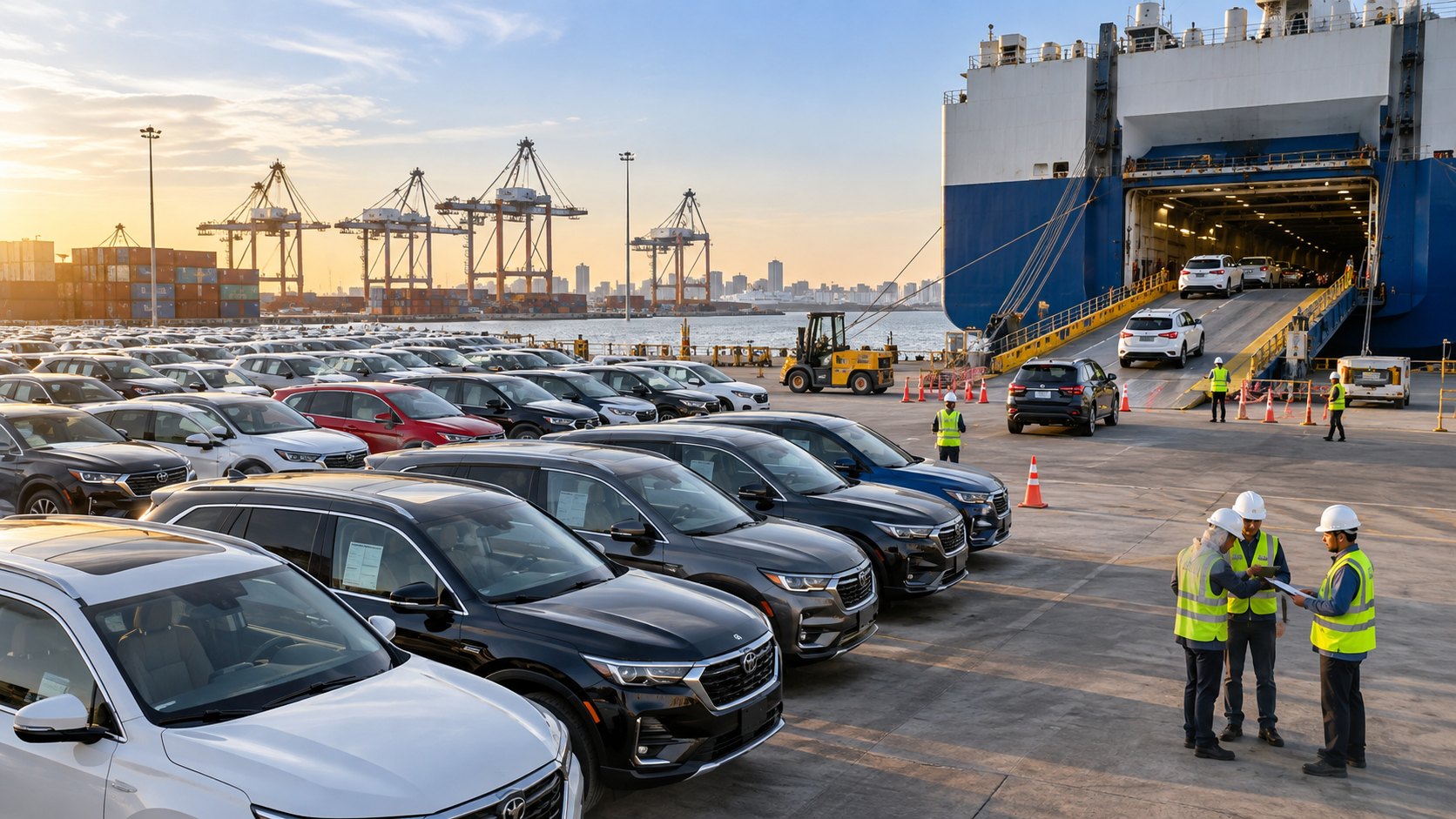
Dubai became the clearing house for the region's used vehicles for reasons that have nothing to do with cars being cheap. The fleet turns over fast, so good stock is constantly released. Vehicles have spent their lives in a dry climate, which is worth real money to a buyer in a market where rust is the usual killer. There is a port that handles roll-on traffic at scale and a customs system built for goods that arrive in order to leave again. And there is a dense population of buyers, sellers, shippers and clearing agents in one place, which is what actually makes a market — a seller in a thin market waits weeks for a bid, and here the bid arrives the same afternoon.
What the line covers, and what the buyer is really paying for
Under this activity a company acquires used motor vehicles in the UAE and sells them to buyers outside it. The sale is an export, not a local sale, and that single distinction runs through everything: how the vehicle leaves the local records, what customs treatment applies, what the tax position is, and what the buyer receives besides the keys.
Three things sit inside the line and are easy to underrate.
The file matters more than the car. Ownership has to be clean and provable, any finance against the vehicle has to be cleared, the transfer out has to be done properly, and the export documentation has to be assembled so the buyer's own clearing agent abroad can work with it. An exporter who ships a vehicle whose papers do not satisfy the destination's customs is not late; the vehicle is stranded at somebody else's port, accruing charges, with a customer who will not pay.
Sourcing is a competence, not a market. Auctions, insurance disposals, fleet and leasing releases, dealer part-exchanges and private sellers all feed this trade, and each has a different risk profile. An insurance-damaged vehicle with a repaired structure is perfectly saleable to a market that wants exactly that, and a disaster sold to a market that does not. Knowing which is which is the buying skill.
The destination decides the purchase. This is the point the whole business turns on, and it is why buying first and finding a market afterwards is how new entrants lose money. Steering side, engine size, emissions specification, age, body type and even colour are all preferences of a particular destination rather than of the trade in general. The UAE's own fleet is left-hand drive, which makes it a natural source for markets that use left-hand-drive vehicles and an awkward one for markets that require right-hand drive. Many destinations also cap how old an imported vehicle may be, and some restrict or prohibit particular categories outright. None of that is knowable in the abstract — it has to be read for the specific country before a single vehicle is bought.
- Choose the destination market before buying anything
- Read that market's own conditions on age, steering side and specification
- Buy only vehicles that answer those conditions
- Does the destination require right-hand-drive vehicles
- YesThe local fleet is the wrong source, and stock has to be found elsewhere at a worse price
- NoThe UAE's left-hand-drive fleet is the natural supply, which is why this trade sits here
- Clear the title, settle any finance and transfer the vehicle out
- Assemble the export file the buyer's clearing agent will actually use
The question in the middle is not a detail. It decides whether the business is sourcing locally at an advantage or importing stock into Dubai in order to re-export it, which is a different and much thinner business. Every entrant should answer it before taking a licence, because the answer determines whether Dubai is the right place to be buying at all.
Who is buying, and who should be selling
The buyers
They are almost never end users. They are dealers, importers and consolidators in Africa, Central Asia, the Caucasus, parts of the Middle East and occasionally further, buying to resell in their own market. They are professionals, they buy on photographs and specification sheets, they compare several suppliers on the same day, and they judge an exporter on two things: whether the vehicle matches its description and whether the documents arrive complete and on time. Price gets the first order. Paperwork gets the repeat orders, and repeat orders are the whole business.
Traders who already have a buyer abroad
The strongest position to start from. Someone with a brother-in-law, a former employer or a long-standing customer in a destination market has the hard half already, because they know what sells there and they have somebody who will actually pay. The Dubai end is then mostly execution.
Existing local dealers adding an export channel
A trader already holding used stock who is currently selling only into the local market. Adding this line gives a second outlet for cars the local market does not want, which is often exactly the stock an export buyer prefers, and it smooths the disposal problem that every used dealer has.
Logistics and clearing operators moving upstream
Shippers and clearing agents who already handle other people's vehicles and can see the margin they are not taking. They begin with the documentary competence that everyone else has to learn, which is the single best qualification for this trade.
Where the neighbouring lines fall
Domestic used vehicle trading covers the same cars sold to buyers inside the UAE — a different customer, a different tax treatment and no export file at all, and a business selling mostly locally should hold that line instead. New vehicle export is a separate line again, and a genuinely different business: it deals with appointed supply rather than sourcing, and the constraint there is access to stock rather than judgement about condition. Classic car trading is not this line either, however old a particular vehicle happens to be, because there the buyer is a collector paying for provenance rather than an importer paying for transport.
Where it sits between the mainland and a free zone
Both are real routes and they answer different businesses, which is why this is the question worth resolving first rather than last.
A mainland licence lets the company buy and sell inside the UAE market as well as export. That matters more than it sounds: the cars are here, the sellers are here, and a business that wants to buy freely from local dealers, auctions and private sellers, hold stock in its own yard, and sell either locally or abroad as the market allows, is describing a mainland operation. It also keeps open the option of selling into the local market when a car does not move for export, which is a useful release valve for stock that would otherwise sit.
A free zone licence is built for goods that pass through rather than land. Where the model is consolidation — vehicles arriving from several origins, held under customs control and shipped onward without entering the UAE market — that is what a free zone is for, and the customs handling is simpler because the vehicles are never treated as having been imported for local use. The trade-off is the mirror image of the advantage: selling to a buyer inside the UAE is no longer a simple transaction.
The honest test is the direction of the flow. A business whose stock originates in the UAE and leaves belongs on the mainland. A business whose stock originates elsewhere and merely changes hands here belongs in a free zone. A business doing both should decide which is the larger half and structure around that rather than trying to have both cheaply.
Licence cost, yard requirements, the customs facilities available and the tax treatment of each sale all depend on the emirate, the jurisdiction and the shape of the flow. We put real figures against a specific plan before anything is filed, rather than the other way round.
References
- Dubai Customs — export procedures, declarations for vehicles leaving the country, and restricted or prohibited categories of goods. Dubai Customs
- Roads and Transport Authority — clearing a vehicle out of the local records, ownership transfer and lien clearance before export. Roads and Transport Authority
- Federal Tax Authority — how an export sale is treated for value added tax against a domestic sale, and corporate tax filing. Federal Tax Authority
- UAE Government portal — the general basis for commercial licensing and for trade with markets outside the UAE. UAE Government portal
Elsewhere in Trading
Activities that sit beside this one
Most licences carry more than one activity. Adding a neighbouring line at the application stage costs a fraction of amending the licence afterwards.
Begin with a clear conversation
Tell us what you intend to build.
A consultant will map the structure, jurisdiction, approvals and likely cost against what you actually described — not against a package.
