

Activity CZ 63
How to Start a Specialized Vehicles Trading Business in Dubai
Specialized vehicles are a chassis with a body somebody else built, so trading them means selling to an operator with a contract rather than to a motorist with a preference.
ConsultZone licensing desk
- Activity code
- CZ 63
- Category
- Trading
- Reviewed
- Read
- 7 min
Listen instead
53 seconds
An audio summary of this guide.
Topic summary
How to Start a Specialized Vehicles Trading Business in Dubai
Almost every vehicle in this trade left two factories. A truck maker built the chassis, the engine and the cab. Somebody else entirely built the tank, the tipping body, the mixer drum, the crane, the chilled box or the sweeper gear that makes the thing worth buying at all. A trader in this line stands at the point where those two halves meet, and nearly everything that is unusual about the business follows from that.
It explains the customer first. Nobody buys a concrete mixer because they liked the look of it. It is bought against a job — a contract already won, a route already priced, a plant that has to move a known tonnage a known distance. The buyer is a civil contractor, a haulier, a ready-mix operator, a facilities company or a municipal subcontractor, and they will ask about payload, body condition and hours on the hydraulics long before they ask the price.
It explains the risk too. On a passenger car the odometer tells most of the story. Here the chassis and the body wear out at different rates for different reasons, and the expensive half is not always the half with the wheels on it.
The buyer is an operator with a contract, not a motorist with a preference
Civil contractors and plant operators
Tippers, mixers, water tankers and mobile cranes bought to service a project. Buying follows the contract's programme, which means demand arrives in bursts, and the trader who happens to have the right unit in the yard that week takes the sale. Losing it is rarely about price.
Haulage and distribution operators
Fuel, water, chemical and refrigerated haulage. These buyers work to a written specification, know exactly what they want and repeat-buy when they win a renewal. They are the best customers in this trade and the hardest to win the first time.
Facilities and municipal contractors
Sweepers, jetting units, skip loaders, recovery trucks and waste bodies, bought to serve a cleaning or waste contract. The buying cycle is tied to tender timetables rather than to the market, so it is predictable in a way the rest of this trade is not.
Body builders and the second-hand trade
Companies that build bodies onto bought-in chassis and want to sell the finished unit, and dealers whose whole book is used specialised equipment. For both, trading sits beside a workshop, and the two are separate lines on a licence rather than one.
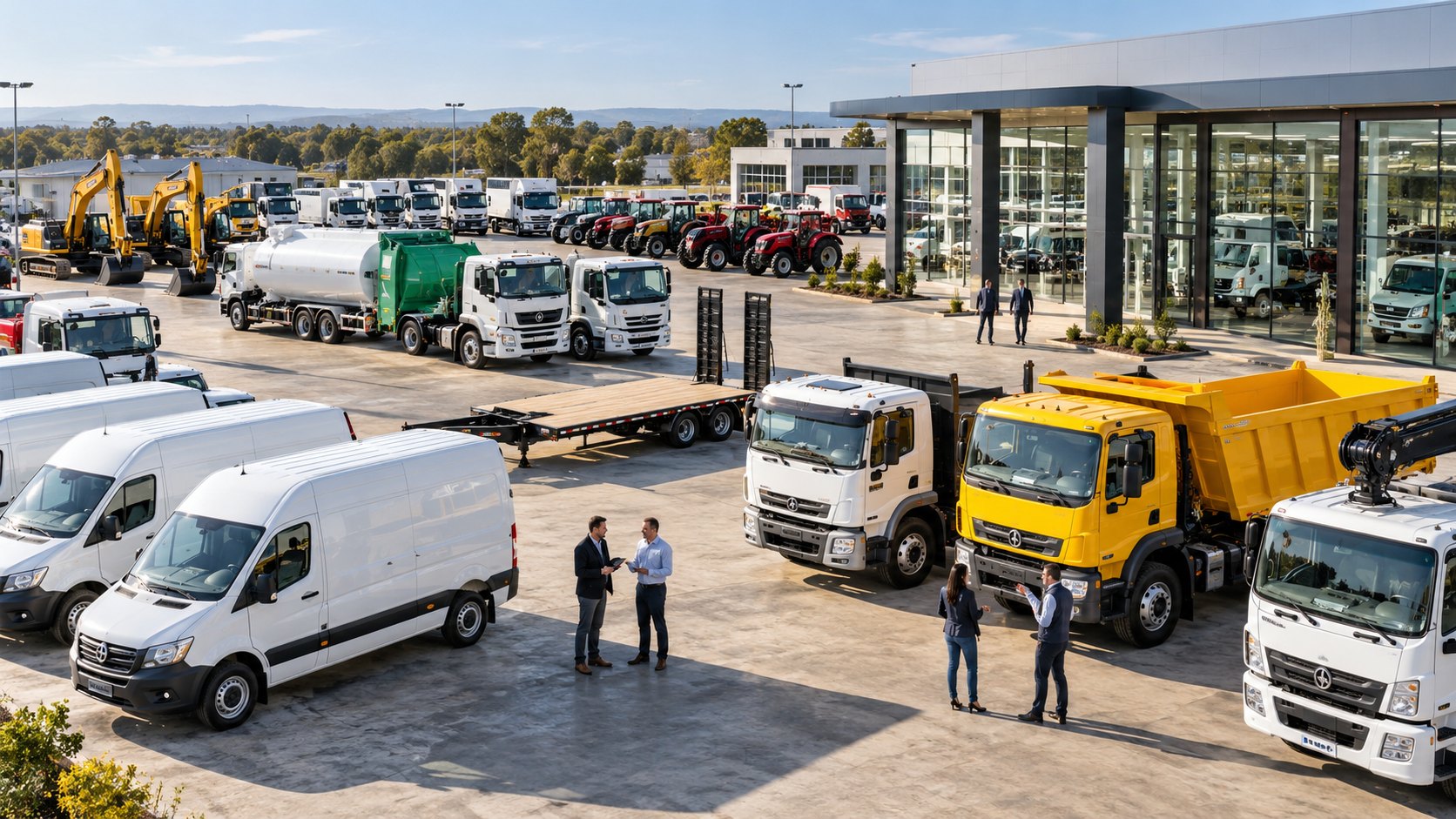
CZ 63 — Specialized Vehicles Trading
Under this line a company buys and sells specialised commercial vehicles, new or used, wholesale or retail, on its own account. In practice the stock divides into families that have very little in common beyond being road-going, and a trader who treats them as one category will misprice all three.
Tank and bulk bodies. Fuel, water, chemical, sewage and bulk powder tankers. What a serious buyer inspects is the tank — its material, its compartments, its fittings and everything that has ever been inside it. Fuel and chemical work is a controlled business in every market, and the part of that control a trader meets directly is the fire-safety and hazardous-storage condition attaching to premises that hold such equipment.
Tipping, mixing and lifting bodies. Tippers, mixers, skip and hook loaders, cranes and aerial platforms. Here the value is mechanical: hydraulics, rams, the subframe, the boom, and whatever the machine's working hours have done to them. A bent frame or a tired ram is a bill the size of a small vehicle, and it is invisible in a photograph.
Refrigerated and municipal bodies. Chilled and frozen boxes, sweepers, tankers for cleaning work and compaction bodies. On a refrigerated unit the cooling plant is worth more than the box around it and fails more expensively. A body that carries food also has to satisfy the municipality's hygiene expectations rather than merely look clean in the yard.
| Tank and bulk | Tipping, mixing, lifting | Refrigerated and municipal | |
|---|---|---|---|
| Who buys it | Fuel, water and chemical hauliers | Civil contractors and ready-mix | Food distributors and cleaning contractors |
| Where the value sits | The tank and its history | The hydraulics and the subframe | The cooling plant, not the box |
| What destroys the price | An unclear tank history | Hours, and a bent frame | A failing cooling unit |
| Which control bites hardest | Flammable and hazardous storage | What a loaded vehicle may do on the road | Hygiene of a food-contact body |
| What you are really selling | Documented condition | Working life left in the machine | An unbroken cold chain |
Read the marked row on its own. In none of the three families is the buyer paying for a vehicle. They are paying for a history they can trust, for the hours left in a machine, or for a promise about temperature. That is why this trade rewards record-keeping far more than it rewards salesmanship, and why the traders who last are the ones who can produce a file on every unit in the yard.
The licence trades the vehicle. It does not let you build it or run it for hire.
It does not cover building or converting a body. Fabricating a tank, mounting a crane or fitting a refrigeration unit onto a chassis is workshop work with its own line in this catalogue. Traders who arrange a conversion for a customer buy it from a body builder instead of performing it.
It does not cover operating the vehicle for payment. Carrying somebody else's goods, water, fuel or waste for money is a transport business with its own permits and its own relationship with the road and environmental authorities. Selling a waste-collection truck and collecting waste are two different companies' work, and holding one activity has never implied the other.
It does not cover the carriage of hazardous goods. The conditions that attach to moving fuel, chemicals or hazardous waste attach to whoever carries them, not to the trader who sold the tanker. Where a buyer asks, the honest answer is that they satisfy those conditions in their own name.
It does not cover repair and maintenance. Servicing, hydraulic repair and bodywork are separate activities, held deliberately by dealers who want the aftersales income rather than picked up by accident.
It does not cover vehicles built around a protected passenger. An ambulance and a school bus are specialised vehicles by construction, and a spreadsheet would file them here. They belong to safe transport vehicle trading instead, because their buyer answers to a health or transport authority for what it puts on the road and the specification is settled before the price is discussed. The boundary is not the body. It is whether the thing the body protects is cargo or a person.
What it costs, and why nobody can quote it down the phone
The licence fee, the yard or workshop the activity requires, the stock that yard will physically hold and the approvals a particular body attracts all follow from the emirate, from the jurisdiction and from the mix of activities on the licence. Two companies holding identical words — one turning over three used tippers from a shared yard, one importing tankers by the container-load — have nothing else in common. We establish the real figures against the actual plan before anything is filed.
References
- Roads and Transport Authority — vehicle and transport permits in Dubai, including what a loaded commercial vehicle may do on a public road. Roads and Transport Authority
- Dubai Civil Defence — fire-safety and hazardous or flammable storage approvals attaching to premises that hold tank and fuel equipment. Dubai Civil Defence
- Ministry of Industry and Advanced Technology — national standards and conformity marks that reach manufactured bodies and mounted equipment. Ministry of Industry and Advanced Technology
- Dubai Municipality — premises suitability and the food-control expectations that reach a refrigerated food-carrying body. Dubai Municipality
Elsewhere in Trading
Activities that sit beside this one
Most licences carry more than one activity. Adding a neighbouring line at the application stage costs a fraction of amending the licence afterwards.
Begin with a clear conversation
Tell us what you intend to build.
A consultant will map the structure, jurisdiction, approvals and likely cost against what you actually described — not against a package.
