
Activity CZ 74
How to Start an Anti-Rust Treatment Business in Dubai
Anti-rust treatment is sold against damage the owner cannot see yet, which is why it is sold beside a new car rather than to a rusty one. Who buys the treatment, and what the bay needs.
ConsultZone licensing desk
- Activity code
- CZ 74
- Category
- Trading
- Reviewed
- Read
- 9 min
Listen instead
41 seconds
An audio summary of this guide.
Topic summary
How to Start an Anti-Rust Treatment Business in Dubai
This is a business selling a problem before it happens, and that is harder than it sounds. A worn brake pad announces itself. A failing compressor announces itself in July. Corrosion announces itself years after the moment when treating it would have been cheap — inside a sill, behind a wheel arch, under a floor pan, in the seams and box sections nobody looks at until something structural is already gone. The customer standing in front of you has no symptom, no deadline and no pain. They have a car that looks fine.
So the trade is genuinely a trade, and it does not work the way a repair bay works. Understanding why it exists here, and who is actually in a mood to buy it, is most of the plan.
The climate is the demand, and it is specific to this region. Corrosion needs moisture, salt and oxygen. A Gulf coastal environment supplies humid air for much of the year, salt carried inland off the water, condensation cycling daily on cool metal, and fine airborne sand and salt that packs into drainage channels and seams and holds damp against bare steel long after the surface has dried. This is why protective treatment is normal practice in preparing a vehicle here rather than the niche it is elsewhere, and it is a claim about geography a customer can be walked through in two minutes.
It is preventative work, not corrective work, and the distinction is the whole business. A sealant, wax or protective coating applied into cavities and across the underbody displaces moisture and puts a barrier between salt and steel on metal that is still sound. It is not a repair. Once a panel has corroded through, coating it is cosmetic — the answer then is cutting out and replacing metal, which is bodywork and belongs to a different licence and a different bay. Being clear about that boundary protects the business as much as the customer: a shop that treats rotten metal and warrants the result has taken on a liability it cannot control.
The sale happens at the moment of purchase, which means the dealership is the real customer. Nobody wakes up wanting rust-proofing. What people do have is a ten-minute window, immediately after agreeing to buy a car, in which they are already spending money, already thinking about protecting it and already being offered extras by the person selling it. That window belongs to the new-car showroom, the used-car yard, the finance and insurance desk and the fleet buyer specifying a batch. A treatment bay that waits for members of the public to drive in and ask for it will wait a long time and stay empty. One with two dealer agreements and a fleet contract has a booked diary.
That changes the commercial shape completely. Selling through dealers means a per-vehicle rate negotiated with a trade buyer rather than a retail price list, work arriving in batches, invoices to a business rather than cash from a driver, and competition on turnaround because the dealer's own customer is waiting at handover. The sales effort is business development — a few relationships worth a great deal each — not advertising to motorists. And being a short drive from a dealer cluster is worth more than visibility to passing traffic, because nobody passes in search of this.
- Fix the activity wording against the treatment actually being appliedLets the trade name be reserved and the documents drawn
- Take a unit whose ventilation and drainage suit sprayed coatingsDecides whether this work may lawfully happen on the site at all
- Fire clearance for the coating, its solvent and the compressed air driving itAllows the bay to be fitted out and put to use
- Trade licence issued against the approved premisesAllows the treatment to be sold and invoiced
- Dealer and fleet agreements signed before the doors openTurns an empty bay into a booked diary
The last row is the argument. Two stages are licensing, two are about the building, and the one that determines whether the business earns anything is not a government stage at all — it is a commercial conversation with the people who sell cars. Founders in this line routinely complete the first four and then discover that the fifth is the hard one. Which body signs which clearance, in what order and on what conditions differs between the emirates and between a light industrial unit and a workshop plot, and ConsultZone settles those with the licensing authority for the specific case before a lease is committed.
Who this suits, and it is rarely a first-time founder
People who already have the dealer relationships. Anyone who has worked in vehicle sales, in a dealer's aftersales department or at a finance and insurance desk starts this business with the only asset that matters, because they can pick up a phone to the person who controls the ten-minute window. That is worth more than a better bay.
Existing workshops adding a bay with spare capacity. A general repair or bodywork shop already has the lift, the drainage, the extraction and the fire arrangements, and much of what this trade needs is already approved and installed. For them the treatment is an added activity that uses a quiet bay and sells to customers they already see.
Fleet, leasing and rental operators protecting their own residual values. A company holding vehicles for years and selling them at the end has a direct interest in what the underside looks like on disposal. Treating in-house starts as protecting an asset and becomes a trade the moment it takes work from outside.
Detailing and protection businesses extending downwards. Operators already selling paint protection and interior coatings to the same buyer at the same moment. The sales motion is identical and only the surface changes, though the underbody is dirtier, slower and more demanding of the premises than anything done on paintwork, so the existing unit may not stretch to it.
The founder this suits least is the one with no automotive channel and a retail instinct, planning to open on a busy road and wait. Passing trade is how a tyre bay fills; it is not how this one does.
What you can and cannot do under this line
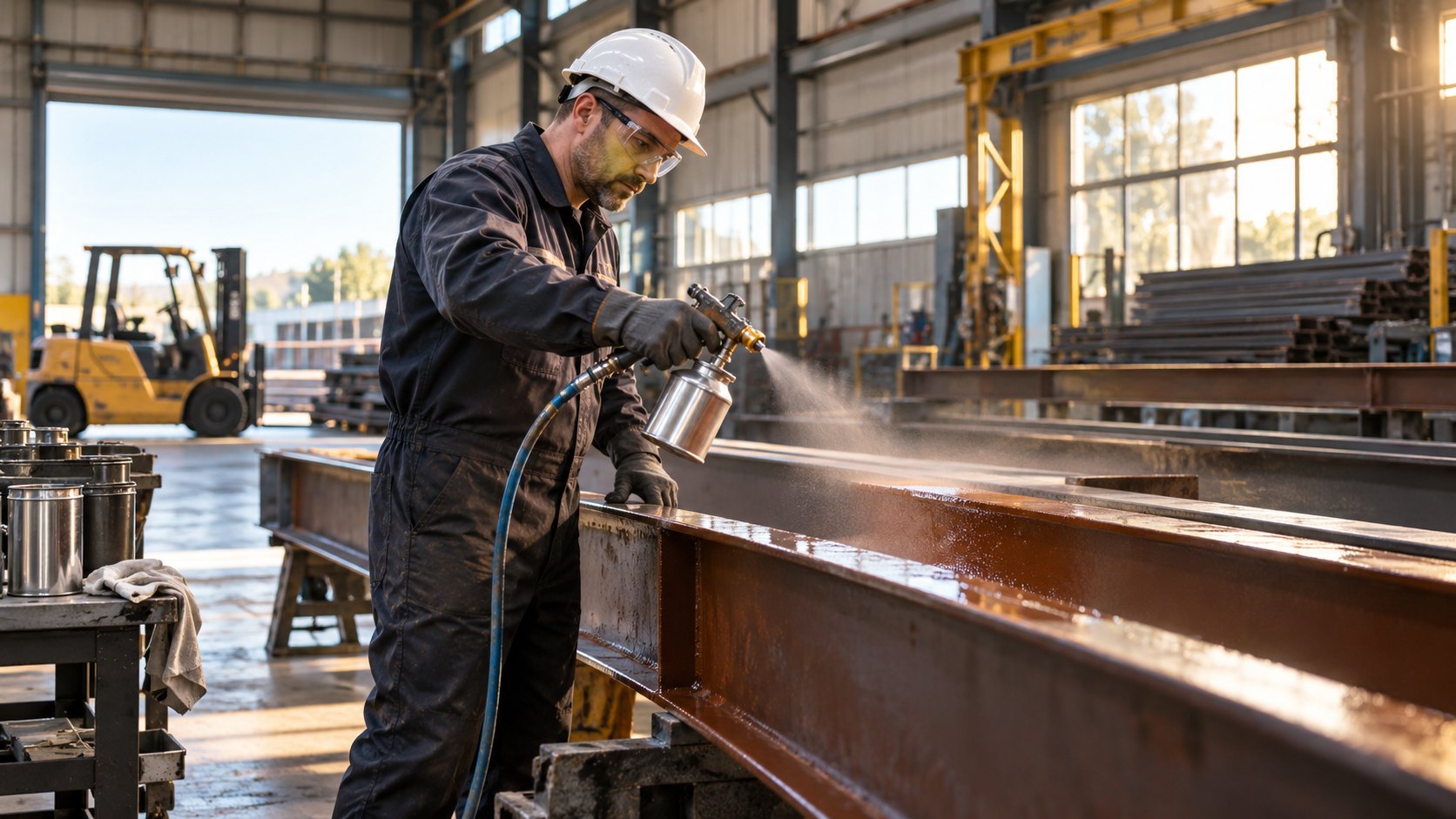
You can apply protective treatment to a sound vehicle. Cleaning and drying the underbody, spraying or injecting cavity wax into sills, doors and box sections, coating the underside and wheel arches, sealing seams, and treating exposed fixings. That, with the preparation and the drying time it needs, is the line.
You can serve trade and fleet as readily as retail. Nothing about this activity is confined to individual owners. Batches of vehicles arriving from a dealer or a leasing company are the same work, and commercially the better version of it.
You cannot repair corrosion that has already gone through. Cutting, welding, replacing a panel, filling and repainting is bodywork. It sits in the wide vehicle repair line, not here, and a treatment bay that takes that work on is operating outside its licence.
You cannot treat this as a paint licence. Refinishing, colour work, respraying a panel and protective paint coatings applied as a finish are a different trade with heavier premises requirements. A protective underbody coating is not a paint job, and the reverse does not follow either.
You cannot fold in the washing trade by default. Every treatment starts with a cleaned and dried underside, and doing that inside your own process is preparation. Selling vehicle washing and cleaning to the public is its own line here, and a bay that puts a car wash on its signage has taken on a second activity.
One boundary is worth settling before the trade name is reserved. The catalogue also carries a separate auto rust-proofing services line covering much the same ground in different words. Which of the two wordings an authority will put on a particular licence, and whether both are wanted, is a question to ask at the outset rather than after the documents are drawn — a licence whose wording does not match what the business actually does is a problem that surfaces at renewal or at an inspection, when it is least convenient.
The bay, the extraction and the drum of coating
The premises do the gatekeeping in this trade, as they do across the vehicle workshop group, but the reasons here are particular.
Access underneath the vehicle. A lift or a pit, with enough height to work above head level for an extended period. The work is slow and the car occupies the space for hours rather than minutes, so bay count maps directly onto capacity.
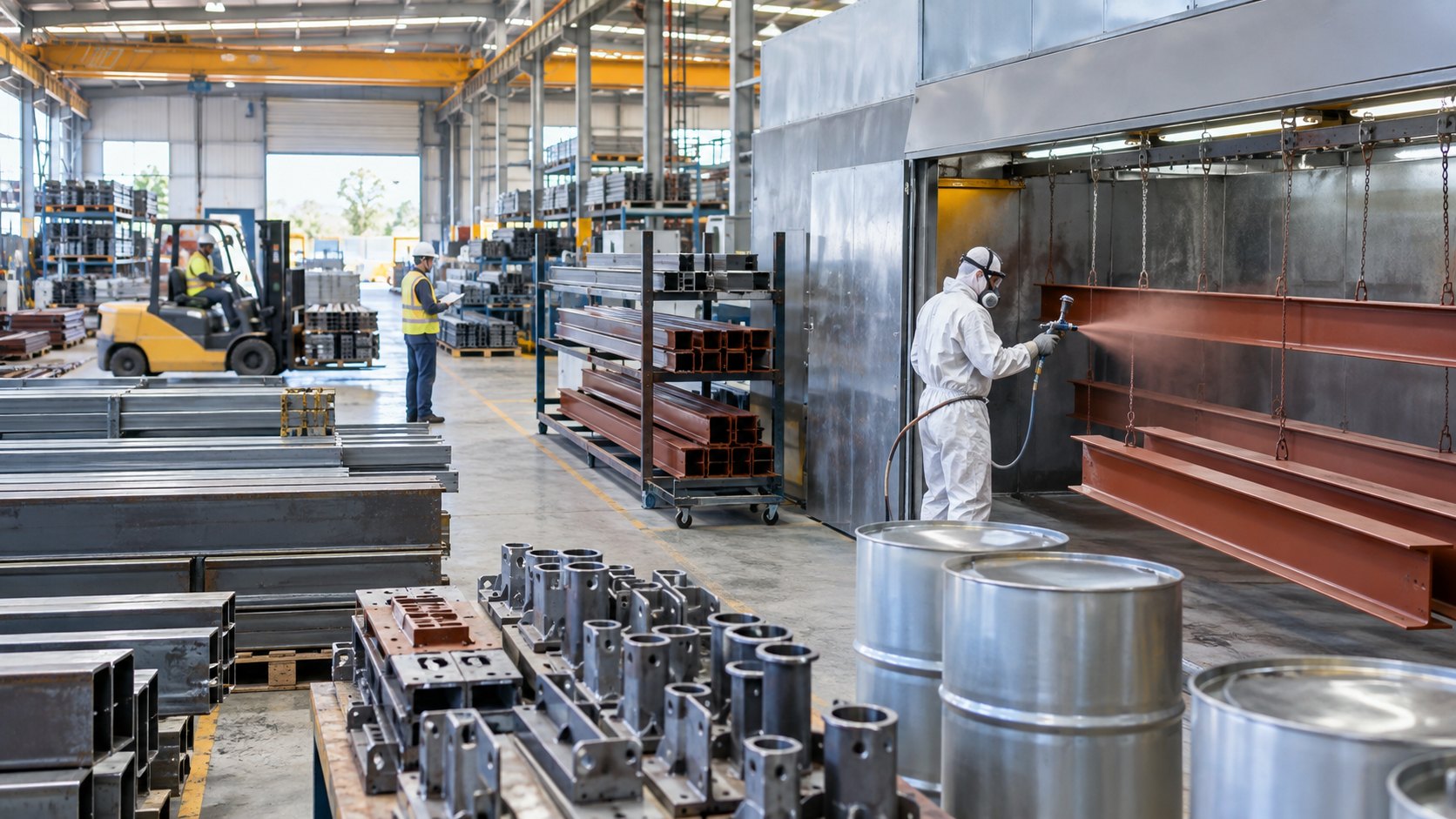
Ventilation and extraction. Atomised coating and its solvent carrier have to be drawn away from the person holding the gun. This is examined as part of the premises rather than as equipment that happens to be installed, and an open bay with the shutter up does not answer it.
Storage for the material. Many of these products are flammable and arrive in drums or pails. A controlled store, separated and ventilated and satisfying the fire authority, is part of the fit-out rather than an afterthought — precisely the subject Civil Defence exists to assess.
Drainage and waste. The preparation wash takes road salt, sand and residue off the underbody and the coating produces overspray, neither of which belongs in surface water, so the floor, the interceptor and the discharge route are the municipality's question about the site. Empty drums, contaminated rags, filters and masking leave as controlled waste rather than ordinary rubbish, by a route inspected over time rather than filed once.
Consistency of application. Not an approval, but the operating risk. This work is invisible the day it is done and visible years later, so a dealer buying it is buying trust. The same preparation, coverage and drying, recorded per vehicle, is what keeps a trade account and is the only real defence when a claim arrives long after the car left.
What the licence costs to hold depends on the emirate, the unit, the staff allocation and the activity mix, and any figure quoted without those four is a guess rather than an estimate.
References
- Dubai Civil Defence — fire safety requirements for storing and spraying flammable protective coatings and their solvents. Dubai Civil Defence
- Dubai Municipality — premises suitability for a treatment bay, ventilation and drainage, and disposal routes for coating waste. Dubai Municipality
- Ministry of Climate Change and Environment — environmental handling of solvent-bearing materials and the waste arising from them. Ministry of Climate Change and Environment
- Ministry of Human Resources and Emiratisation — work permits, written contracts and wage protection for bay staff working with coatings. Ministry of Human Resources and Emiratisation
Elsewhere in Trading
Activities that sit beside this one
Most licences carry more than one activity. Adding a neighbouring line at the application stage costs a fraction of amending the licence afterwards.
Begin with a clear conversation
Tell us what you intend to build.
A consultant will map the structure, jurisdiction, approvals and likely cost against what you actually described — not against a package.
