

Activity CZ 359
How to Start a Specialized Equipment Maintenance Business in Dubai
Specialized equipment maintenance is defined by what the machine is not, and the business turns on access to parts and diagnostics rather than on skill. What it covers and where it belongs.
ConsultZone licensing desk
- Activity code
- CZ 359
- Category
- Maintenance
- Reviewed
- Read
- 6 min
Listen instead
58 seconds
An audio summary of this guide.
Topic summary
How to Start a Specialized Equipment Maintenance Business in Dubai
The word doing the work in Specialized Engineering Equipment Maintenance is a negative. The machine is not the building's — a chiller, a lift or a distribution board belongs to a different line. It is not a vehicle, and it is not a wellhead. What is left is the machine a business bought in order to produce something: a CNC machining centre, a printing press, a bottling filler, a laboratory analyser, a bakery oven line, an industrial laundry tunnel, a packaging machine, a textile loom, a quarry crusher. Equipment that a company's output depends on, that nobody in that company built, and that stops the revenue when it stops.
That makes this a residual activity, and residual activities are usually vague. This one is not, because the economics are sharp and they have almost nothing to do with technical skill. An independent maintainer of specialised machinery competes with the manufacturer's own service arm, and the manufacturer controls three things the independent needs: spare parts, diagnostic software and the service documentation. Whether a company holds an authorisation from the maker, or works without one, decides its margin, its warranty exposure, its parts cost and which customers will even take its call. Everything else on this page follows from that single fork.
- Fix the machine families the company will actually service
- Decide whether the work travels to the customer's floor or the machine comes to a workshop
- Do you hold the maker's service authorisation
- YesParts, diagnostics and documentation arrive through the channel, and the work leaves the warranty intact
- NoParts come from the open market, access to diagnostics is the binding constraint, and warranty work stays with the maker
- Price the response time, because that is what the customer is actually buying
Neither arm is the wrong answer. Authorisation brings legitimate parts and a defensible position, and it brings territory restrictions, sales targets and a maker who can withdraw it. Independence brings freedom across brands and the obsolescence work that makers abandon, and it brings a parts supply that has to be solved machine by machine. What fails is choosing neither deliberately — quoting against an authorised competitor on a warranty-sensitive machine without having established where the parts will come from.
What the activity actually covers
Five kinds of work sit under this line, and they do not have the same customers.
Scheduled servicing
Planned attendance against a maintenance schedule — consumables, wear parts, lubrication, alignment, calibration where the company is competent to do it. Sold as a contract that renews, which is the only part of the business with predictable cash flow.
Breakdown response
The reason the contract exists. A production machine down is a factory not producing, so the customer is buying attendance time and first-visit fix rate. Pricing this honestly means pricing the standby, the van stock and the engineer who is not billable while waiting.
Overhaul and refurbishment
Equipment stripped, measured, re-machined or re-built and returned to service. Workshop work rather than site work, with a longer cycle and a materially better margin, and the part of the business most clearly bounded by the authorisation question.
Relocation and re-commissioning
Moving a machine to another building or another country and proving it works afterwards. Undersold and genuinely difficult, because the risk of a machine that will not hold tolerance after a move sits with whoever moved it.
Obsolescence management
Keeping a machine running past the point at which its maker stopped supporting it. Reverse-engineered parts, substituted controls, retrofitted drives. This is where independents earn what authorised partners cannot, because the maker's commercial interest is in selling a replacement machine.
What the line stops short of is equally definite. Designing or building machinery is manufacturing. Selling machines or spares as goods is a trading line. Writing the control software as a product is a technology line. Certifying equipment for a third party is inspection work with its own licensing. And maintaining your own production plant, inside your own factory, needs no licence of this kind at all — this activity is for selling the service to other people.
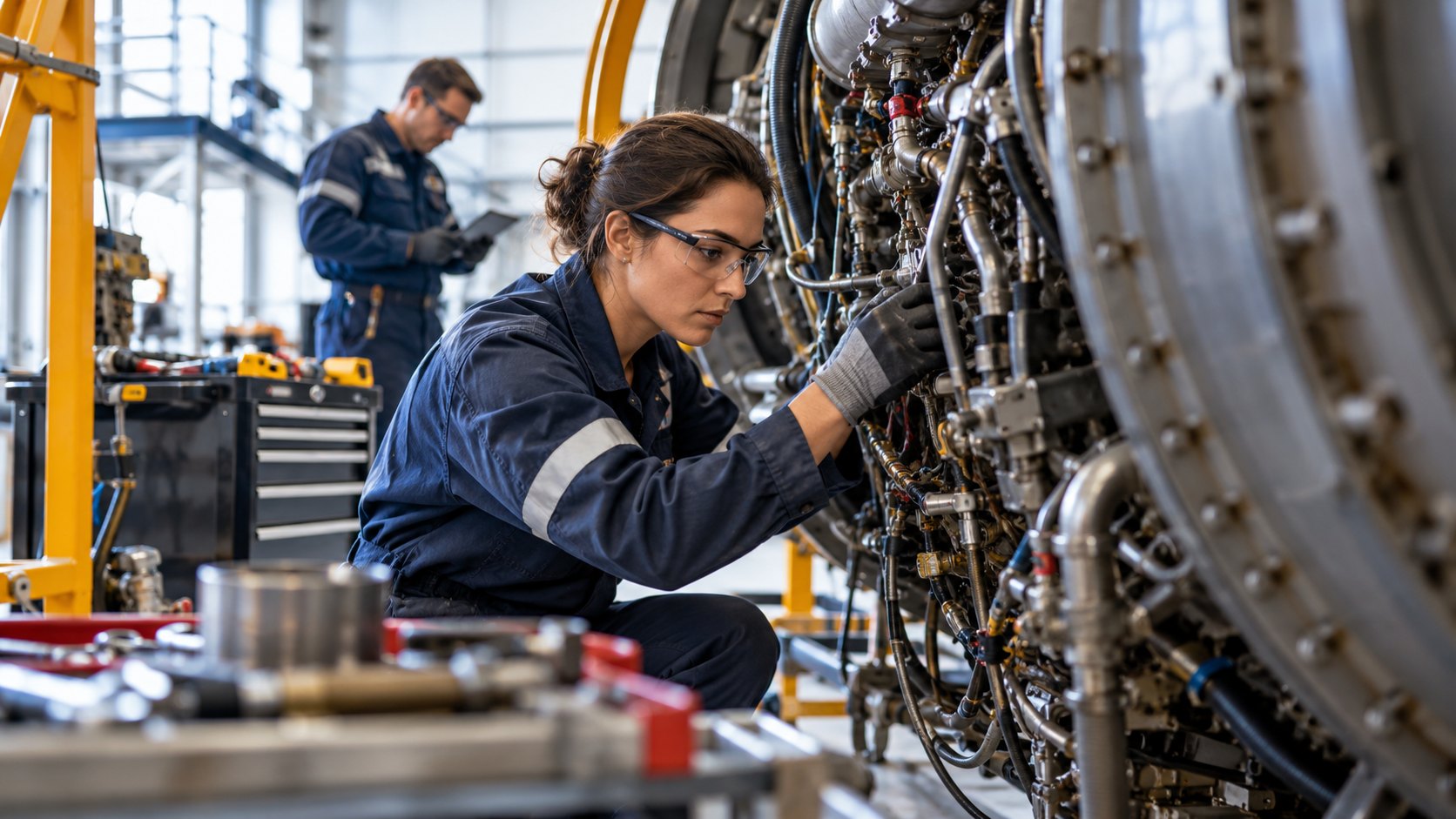
Who is this for?
Service engineers leaving an employer
The commonest and the strongest start. Somebody who has serviced one family of machines for a decade already knows the installed base in this country by name and address, which is an asset no newcomer can buy. The constraint is parts, and the first serious conversation is with the maker rather than with a customer.
International service companies
Firms with an authorisation covering the region and a need for a local entity to invoice and employ from. For them the licence is administrative and the real work is the spares holding and the response radius.
Parts dealers adding labour
Companies already supplying components and watching the installation and service margin go to somebody else. They hold the supply chain, which is the hard half, and need the technicians and the liability position, which is the expensive half.
Manufacturers in-housing maintenance
Factories large enough to employ their own crew, considering whether to sell spare capacity to neighbours. Worth settling the question properly: servicing your own plant is an internal cost, and the moment capacity is sold to a third party it becomes a licensed activity with a different insurance and liability profile.
Where it sits between the mainland and a free zone
This is the decision most often made for tax reasons and most often settled by geography, because the work is performed where the machine is.
A mainland licence is the straightforward answer where engineers attend customers' premises across the emirates. The machines are in factories, print houses, hospitals, hotels and laboratories on mainland plots, and the contract is with the UAE business that owns them. A company licensed inside a free zone that intends to service clients across the mainland is describing an arrangement that needs looking at carefully before it is committed to, rather than afterwards.
A free zone licence earns its place in the other half of the business — the half where the machine comes to you. A workshop refurbishing equipment that arrives from abroad, is overhauled and leaves again never enters the UAE market, and a zone with customs facilities is built for exactly that movement. The same is true of a regional parts hub serving engineers in several countries.
Three practical points decide it more often than the tax position does. The premises has to be a workshop with power, lifting capacity, a clean area if the equipment demands one and a secure parts store, which narrows the list of plots before the licence does. The office address recorded against the licence is one input into how many technician visas the company can hold, and this is a people business. And customers under a response-time commitment measure the distance from your door to theirs, which is a commercial constraint that no jurisdiction will fix.
References
- Ministry of Industry and Advanced Technology — industrial licensing, national standards and the conformity regime applying to machinery and components. Ministry of Industry and Advanced Technology
- Dubai Customs — import and export of machinery, spare parts and equipment moving in and out for overhaul. Dubai Customs
- Ministry of Human Resources and Emiratisation — work permits and labour contracts for a technician workforce. Ministry of Human Resources and Emiratisation
Elsewhere in Maintenance
Activities that sit beside this one
Most licences carry more than one activity. Adding a neighbouring line at the application stage costs a fraction of amending the licence afterwards.
Begin with a clear conversation
Tell us what you intend to build.
A consultant will map the structure, jurisdiction, approvals and likely cost against what you actually described — not against a package.
