
Activity CZ 17
How to Start a Print Finishing and Trade Services Business in Dubai
A trade finisher owns no press and works on somebody else's printed sheets. What print finishing covers, why the customer is another printer, and where the liability sits.
ConsultZone licensing desk
- Activity code
- CZ 17
- Category
- Manufacturing
- Reviewed
- Read
- 8 min
Listen instead
38 seconds
An audio summary of this guide.
Topic summary
How to Start a Print Finishing and Trade Services Business in Dubai
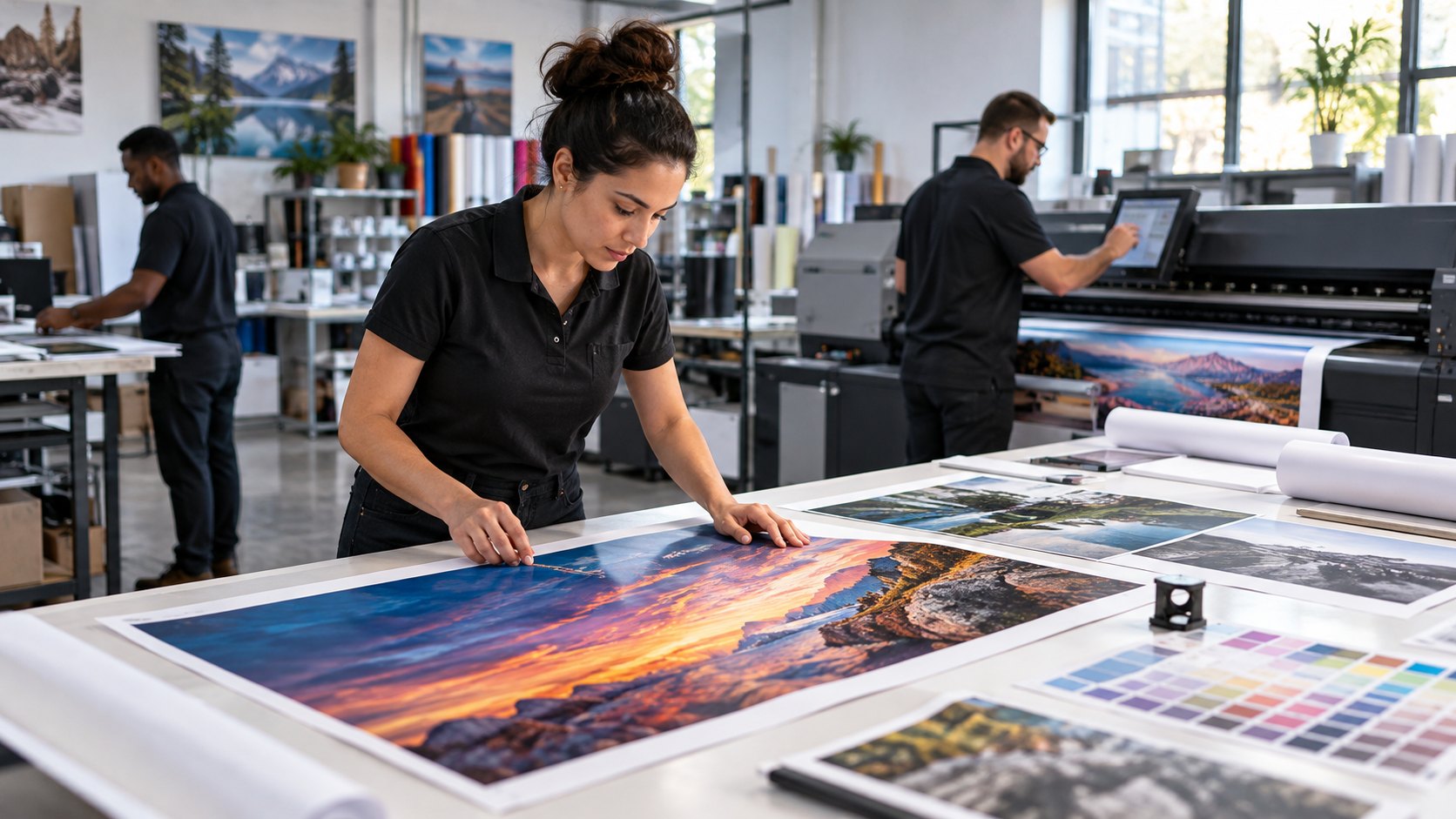
Your name will never appear on anything you make. A trade finisher's work reaches the public on the cover of a magazine, inside a pharmaceutical carton and across a restaurant's menu, and in each case the credit, the end client and the relationship belong to somebody else. The customer on this line is a printing plant, not a brand. That one fact settles the premises, the machine list, the pricing model and the size of the risk — and it is the part most people entering the trade have not thought through.
Take the risk first, because it is the half nobody quotes for. A press carries its own paper. A finisher carries the printer's. By the time a job reaches a guillotine or a folding machine it already has ink on it, and the ink is the expensive part: plates, make-ready, press hours and stock have all been spent before the sheets arrive at your door. Spoil a run at the folding stage and the loss is not your fee — it is the whole job printed again, at your cost, against a delivery date that has not moved. Established trade houses price that exposure into every thousand. New ones discover it on a job they were pleased to win.
The compensation is a balance sheet a press would envy. There is no paper to buy, no stock to finance, no commodity price to hedge and no end client to chase for payment. What is sold is machine time and a pair of hands that knows what a crease does to a coated stock. Utilisation is nearly everything and materials are nearly nothing, which is close to the inverse of the plant sending the work over.
The customer is a printer, so the entrant is usually a printer's employee
Finishing managers who leave a plant
The most common route in and the strongest. Somebody who has run a bindery inside a print works already knows which jobs go wrong, what each operation should cost per thousand, and — the real asset — which competing plants are short of the capacity they are about to be offered. The customer list is a handful of names rather than a market, which makes it winnable in weeks and loseable just as fast.
Small presses whose finishing kit is already full of other people's work
A plant that bought a folder for its own jobs and finds it half occupied by trade work has a second business it has not licensed. Making that deliberate is an activity-wording question before it is a machine question, because only what the licence carries may be invoiced.
Pre-press and plate bureaus adding the other end
A bureau that already prepares files and makes plates sits at the front of the sequence and sells to exactly the same buyers. Taking on finishing doubles the reasons a printer calls, and the two ends of the trade fall due at different moments in the same job — which steadies a workshop that is otherwise idle on a Monday and frantic on a Thursday.
Buyers of a bindery that is closing
Finishing machines hold their value badly and outlive their owners' businesses, so working capacity comes up for sale well below its cost new. What comes with it is somebody else's maintenance history, and the operators who understood the machine rarely transfer.
CZ 17 — Service activities related to printing
This line is the work that attaches to printing without being printing. It divides into three groups, and a printer buys them quite separately.
Before the press
Preparing and correcting supplied artwork, imposing pages so a folded sheet reads in the right order, colour proofing, and making the plates or screens the press will run. Low capital, high judgement, and the stage at which a job is settled: an imposition error is cheap on a screen and ruinous once ten thousand sheets carry it.
After the press
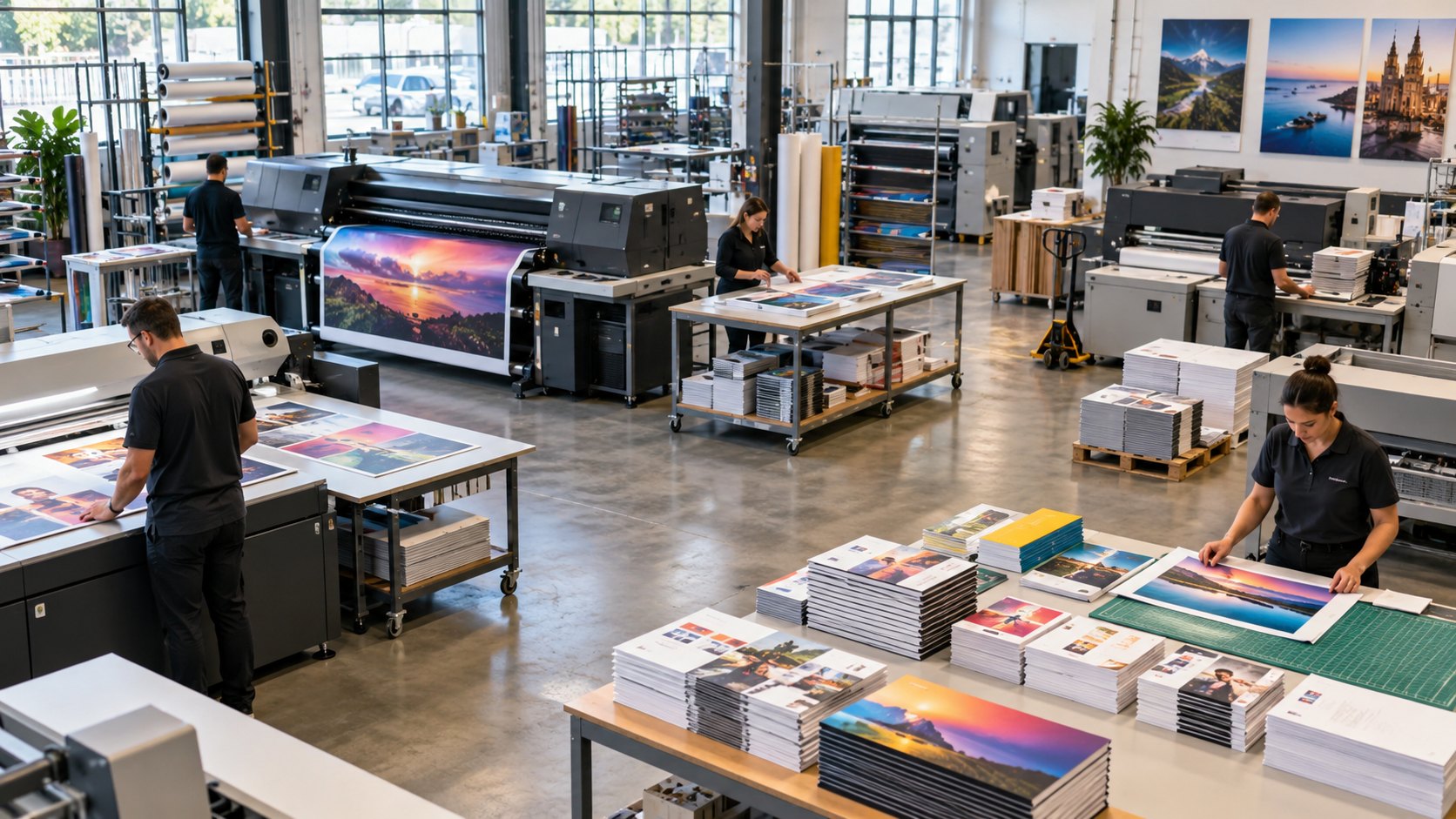
Cutting and trimming, creasing, scoring and folding, gathering and collating, saddle-stitching, sewing and perfect binding, laminating and varnishing, then counting, wrapping and preparing the result for despatch. This is where the floor space goes, and where the customer's own customer finally notices something.
The operations that are a trade in themselves
Die-cutting, foil blocking, embossing, numbering, personalising and mailing work. Each needs a tool made for the job, a pairing of machine and tool that has to be proved on a test sheet before a run, and an operator who has done it before. They command better prices for exactly that reason.
The three groups do not behave alike, and treating them as one workshop is how a new trade house ends up equipped for the least profitable of them.
| Plate and pre-press | Bindery and finishing | Die-cutting and foiling | |
|---|---|---|---|
| What the printer sends you | A file | Printed sheets | Printed sheets, and a tool |
| What it costs to equip | A workstation and an output device | A floor of machines | A machine, plus a tool made per job |
| What a mistake destroys | An hour, before anything is printed | The printer's finished sheets | The sheets and the tool together |
| What the work is priced on | The plate, or the file | The thousand | The thousand, and the tool once |
| When the plant needs you | Before the run | On the day it is due out | On the day it is due out |
Read the fourth row as the whole commercial argument. Pre-press is sold by the piece and grows with skill; finishing is sold by the thousand and grows only with machine hours; the specialist operations are sold by the thousand as well, but carry a tool charge a customer accepts without argument because the tool plainly exists. A house that can quote all three on one sheet of paper wins work a single-operation shop is never shown.
Demand here is derived rather than created, which is worth saying plainly. You sit downstream of somebody else's order book, so their busy fortnight is yours and their quiet one is too. The peaks arrive together — diaries and calendars before a year turns, promotional material before a retail season, catalogues before an exhibition — and they arrive for every press in the emirate at the same time. Capacity has to be sized against somebody else's calendar.
The conditions on the unit follow from the machines rather than from the licence. Guillotines, folders and foiling presses are industrial plant needing floor loading, three-phase power and headroom, so the premises are a matter settled with the municipality rather than assumed. Laminating films, adhesives, glues and cleaning solvents are a fire-safety question judged on site by the civil defence authority. Offcuts and trim are a saleable by-product; contaminated glue, film waste and spent solvent are a disposal obligation with a route the municipality accepts. Machines, tools and consumables arrive as imports, under a customs code held in the company's own name. Which of those apply in a given emirate, and what each costs to satisfy, depends on the authority and the premises, and ConsultZone confirms them against the actual plan before a tenancy is signed.
The one thing this line will not let you own is a press
Four boundaries matter, and all four are cheaper to settle before the licence is cut than afterwards.
It does not let you print. The press itself belongs to the printing line, and the combined plant that holds a press with finishing around it is CZ 11. Buying services alone and quietly running a small press on them is the fastest way to have a licence amended under pressure.
It does not reach printing onto objects, or onto labels. Printing directly onto textiles, plastic, glass, metal, wood and ceramics is its own activity in this catalogue, and so is printing on labels and tags. Both involve machines that look like finishing kit to anybody who has not operated them.
It does not make you a publisher, and it does not reach security papers. Deciding what is on the page and issuing it is publishing; cheques, documents of title and stamps are instruments rather than print jobs, and neither is picked up by holding a broader services licence.
It is not a design licence. Drawing the layout, specifying the stock and building the dummy is the design of printing products, and selling the idea and the artwork to a brand owner is a design and artwork studio. Those are two further lines, with lighter premises and quite different customers.
Where this is the wrong purchase. If the plan is to make a product of your own — notebooks for retail, cartons sold as cartons, books published in your own name — the workshop is making something rather than servicing somebody's job, and the licence, the premises expectation and the customs arrangements all change with it.
References
- Dubai Municipality — premises suitability for industrial finishing plant, and the approved disposal route for film, glue and solvent waste. Dubai Municipality
- Dubai Civil Defence — fire-safety conditions on laminating films, adhesives and cleaning solvents held in a workshop. Dubai Civil Defence
- Ministry of Industry and Advanced Technology — industrial classification, and the national standards reaching a plant in the manufacturing family. Ministry of Industry and Advanced Technology
- Dubai Customs — importing finishing machinery, dies, films and consumables, and the code an importer holds in its own name. Dubai Customs
- Ministry of Human Resources and Emiratisation — work permits and labour contracts for bindery and machine operators. Ministry of Human Resources and Emiratisation
Elsewhere in Manufacturing
Activities that sit beside this one
Most licences carry more than one activity. Adding a neighbouring line at the application stage costs a fraction of amending the licence afterwards.
Begin with a clear conversation
Tell us what you intend to build.
A consultant will map the structure, jurisdiction, approvals and likely cost against what you actually described — not against a package.
