
Activity CZ 21
How to Start a Metal Products and Machinery Repair Business in Dubai
A repair shop never chooses its own work — the customer and the breakdown choose. This is the widest of the repair lines in the catalogue, and what it buys you is the right to say yes.
ConsultZone licensing desk
- Activity code
- CZ 21
- Category
- Manufacturing
- Reviewed
- Read
- 7 min
Listen instead
50 seconds
An audio summary of this guide.
Topic summary
How to Start a Metal Products and Machinery Repair Business in Dubai
A pump arrives on a trailer at seven in the morning with a bearing gone and a production line standing still behind it. Whether you can take it through the door depends entirely on a sentence somebody chose months earlier, when the licence was drawn up. Repair is the one trade that never picks its own work: the customer picks, the failure picks, and the shop either holds the licence to accept it or sends a paying job down the road to a competitor.
That is why this particular line matters. Three neighbouring activities in this catalogue cover the same yard from different angles. One covers fabricated metal products only. One covers machinery only. This one covers both — fabricated metal products and machinery and equipment — and it is bought almost entirely by operators who have worked out that saying no is the most expensive thing a workshop does.
Who is this for?
The workshop that already exists
The largest group by a wide margin. The bays are full, the tradesmen are good, the invoicing is informal, and somebody has finally asked for a trade licence and a tax invoice before releasing a purchase order. Nothing about the work changes. Everything about who is permitted to buy it does.
The equipment supplier adding a service arm
A distributor selling pumps, compressors or handling gear, watching the aftermarket go to somebody else. The economics on this side are better than on the sales side: the machine is sold once and serviced for a decade, so the service contract is the annuity that the sale merely introduces. This line is what allows the same company to hold the spanner as well as the invoice.
The maintenance engineer going independent
A plant or facilities engineer with fifteen years inside one operator's site, leaving to sell the same competence to five of them. The technical risk is close to nil; the commercial risk is entirely about whether the former employer becomes the first client or the first obstacle.
The fabricator whose own work keeps coming back
A metalwork shop whose own bays keep filling with repairs and customer rework. Putting repair on the licence turns an overhead into a revenue line without adding a machine.
CZ 21 — Repair of fabricated metal products, machinery and equipment
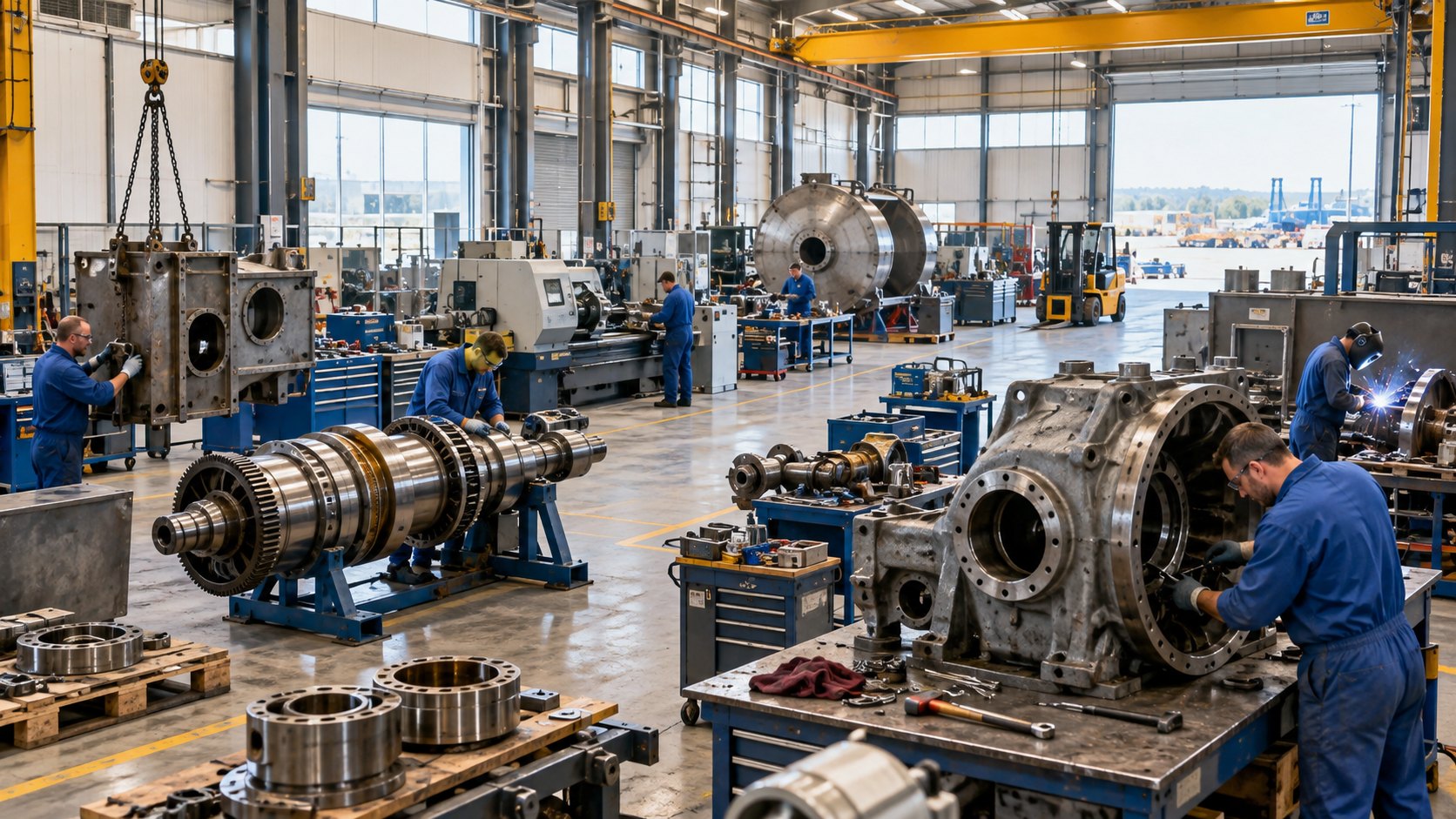
This line runs across two families of object, which is the whole reason it exists as one activity rather than two.
The metalwork half
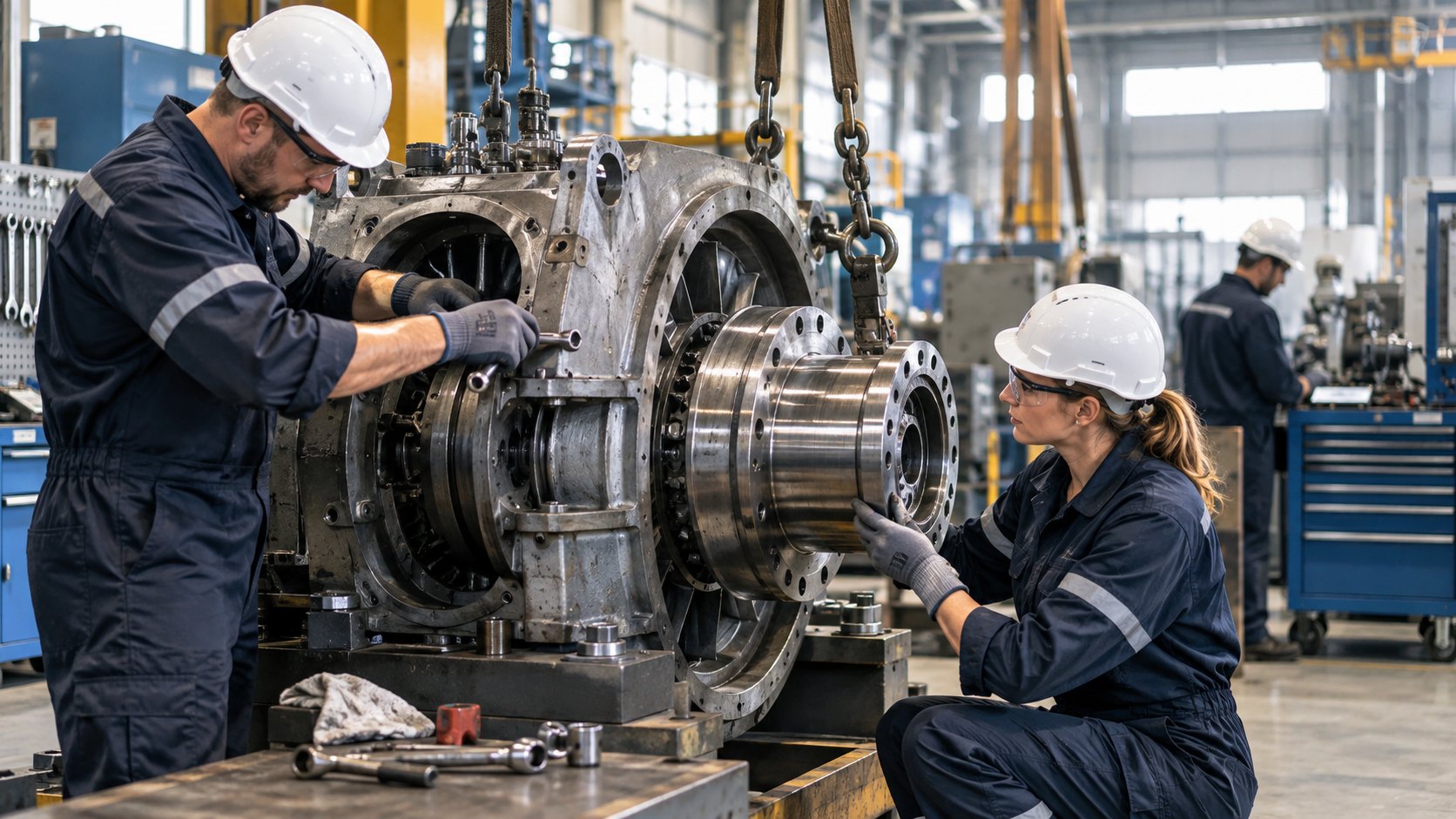
Anything fabricated from metal that has cracked, bent, corroded, worn or sheared: structural steel and frames, access platforms, staircases, handrails and ladders, gates and roller shutters, storage tanks and pressure vessels, ducting and enclosures, skips and freight containers, fabricated components and sub-assemblies, down to hand tools and fasteners. The work is welding, cutting, straightening, section replacement, re-coating, and machining a part to fit where the original is no longer available.
The machinery half
Anything mechanical that has stopped doing its job: pumps and compressors, electric motors and gearboxes, conveyors and materials-handling equipment, hydraulic and pneumatic systems, industrial fans and ventilation plant, workshop and production machines. Here the work is diagnosis, strip-down, parts replacement, reassembly, alignment and testing — and the diagnosis is the part customers expect for nothing.
Where the money actually is
Three revenue shapes sit under one licence and they behave completely differently. Breakdown work pays the best rate and cannot be planned; it is bought on response time rather than on price. Scheduled maintenance contracts pay less per hour and are worth more per year, because they fill the bays between emergencies and make the wage bill predictable. Reconditioning and exchange units — rebuilding a spare so the customer swaps instead of waiting — turn your own shelf into the product. Most shops find the third only after the first two have taught them that what the customer is really buying is the end of downtime.
The working capital in this trade is not equipment; it is parts and patience. A part ordered for one job and never fitted sits on a shelf for years. A machine left in the yard by a customer who has stopped answering the phone occupies a bay that would otherwise earn, so the terms of acceptance — what happens to an unclaimed item, and when — belong in writing before it comes through the gate rather than in an argument afterwards.
Who decides what, and in what order
Files on this activity run long for one reason: the premises get chased after the licence instead of alongside it. A repair workshop is an industrial-shaped tenancy with power, access for a forklift or a crane, drainage, and somewhere to put swarf, scale and used oil — and the body that approves the space is not the body that issues the licence.
the five gates named above, and who holds each one
The emirate's economic department
- Trade name and initial approvalFirst, and the constitutional documents wait on it
- Trade licence carrying the repair activityOnce the premises are settled, not before
The municipality
- Suitability of the workshop for the work you intend to acceptWith the tenancy, before any fit-out is paid for
The emirate's civil defence authority
- Fire clearance where there is hot work, gas or solvent on siteBefore the bays are put into use
The federal labour ministry
- Work permits for the tradesmen the licence depends onAfter the licence and the premises both exist
Two qualifications on that, both honest ones. Where a workshop's activity is treated as industrial rather than as a service, the federal industry ministry's standards and industrial-licensing framework comes into the picture as well, and which side of that line a particular shop falls on is settled by the licensing authority rather than by the applicant.¹ And the exact wording, conditions and cost of each of those approvals differ between the emirates and between the free zones — which is what ConsultZone establishes for a specific site and a specific activity mix before anything is committed.
What the licence does not cover
The line ends where repair ends, and almost every argument we have on this activity is about that edge.
Making something new is manufacturing. Fabricating tanks, structures or components for sale is a manufacturing activity with its own classification and its own conditions. This licence lets you machine a replacement part in order to restore a machine; it does not let you produce that part as a product.
Selling machinery or spares is trading. Stocking pumps, motors or parts to sell across a counter is a trading line. Supplying the part you fit in the course of a repair is inside this activity; running a parts counter is not.
Vehicles sit on their own line. Motor vehicle repair — cars, trucks, trailers, plant on wheels — is classified separately and carries its own approvals, including the road transport authority's involvement in Dubai.² A machinery repair licence is not a garage licence, and the distinction is one the authorities enforce rather than overlook.
Electrical and electronic equipment is a different family. Rewinding a motor overlaps this line; repairing control panels, drives, instrumentation, computers or household appliances belongs to the electrical and electronics repair activities instead.
Installation of new plant, commissioning and ongoing building maintenance are contracting and facilities activities rather than repair. The test is short enough to apply at the gate: if the object arrived working and left working, this licence covers it. If it arrived as a delivery and left as an installation, it does not.
Where this is the wrong purchase. If the intention is genuinely one half of the trade and will stay that way — steelwork only, or machinery only — the narrower line is cheaper to hold and simpler to get approved. The fabricated-metal-products page in this catalogue sets out what that narrowing actually costs you, and it is worth reading before the wider licence is paid for.
References
- Ministry of Industry and Advanced Technology — industrial licensing, national standards and conformity requirements where a workshop's activity is treated as industrial rather than as a service. Ministry of Industry and Advanced Technology
- Roads and Transport Authority — vehicle and transport permits in Dubai, which sit over vehicle repair rather than over this line. Roads and Transport Authority
- Dubai Civil Defence — fire safety and hazardous or flammable storage approvals for workshops using hot work, gases and solvents. Dubai Civil Defence
- Dubai Municipality — premises suitability, public health and waste conditions on a workshop site. Dubai Municipality
- Ministry of Human Resources and Emiratisation — work permits and labour contracts for the tradesmen the workshop depends on. Ministry of Human Resources and Emiratisation
Elsewhere in Manufacturing
Activities that sit beside this one
Most licences carry more than one activity. Adding a neighbouring line at the application stage costs a fraction of amending the licence afterwards.
Begin with a clear conversation
Tell us what you intend to build.
A consultant will map the structure, jurisdiction, approvals and likely cost against what you actually described — not against a package.
