
Activity CZ 16
How to Start a Commercial Stationery Printing Business in Dubai
A diary delivered in January is waste paper. Commercial stationery printing is three trades under one licence line — seasonal gifts, shrinking business forms and high-margin personal work.
ConsultZone licensing desk
- Activity code
- CZ 16
- Category
- Manufacturing
- Reviewed
- Read
- 8 min
Listen instead
49 seconds
An audio summary of this guide.
Topic summary
How to Start a Commercial Stationery Printing Business in Dubai
A diary that arrives in January is waste paper however well it is printed, and that fact says more about this business than any description of the machinery in it. Commercial stationery is made against other people's calendars. A year planner has to be on a desk before the year starts, a tender document has to be bound before a submission closes, an invitation has to go out weeks before the wedding. The product is ordinary and the deadline is not, which is why this line rewards scheduling and estimating far more than it rewards presswork.
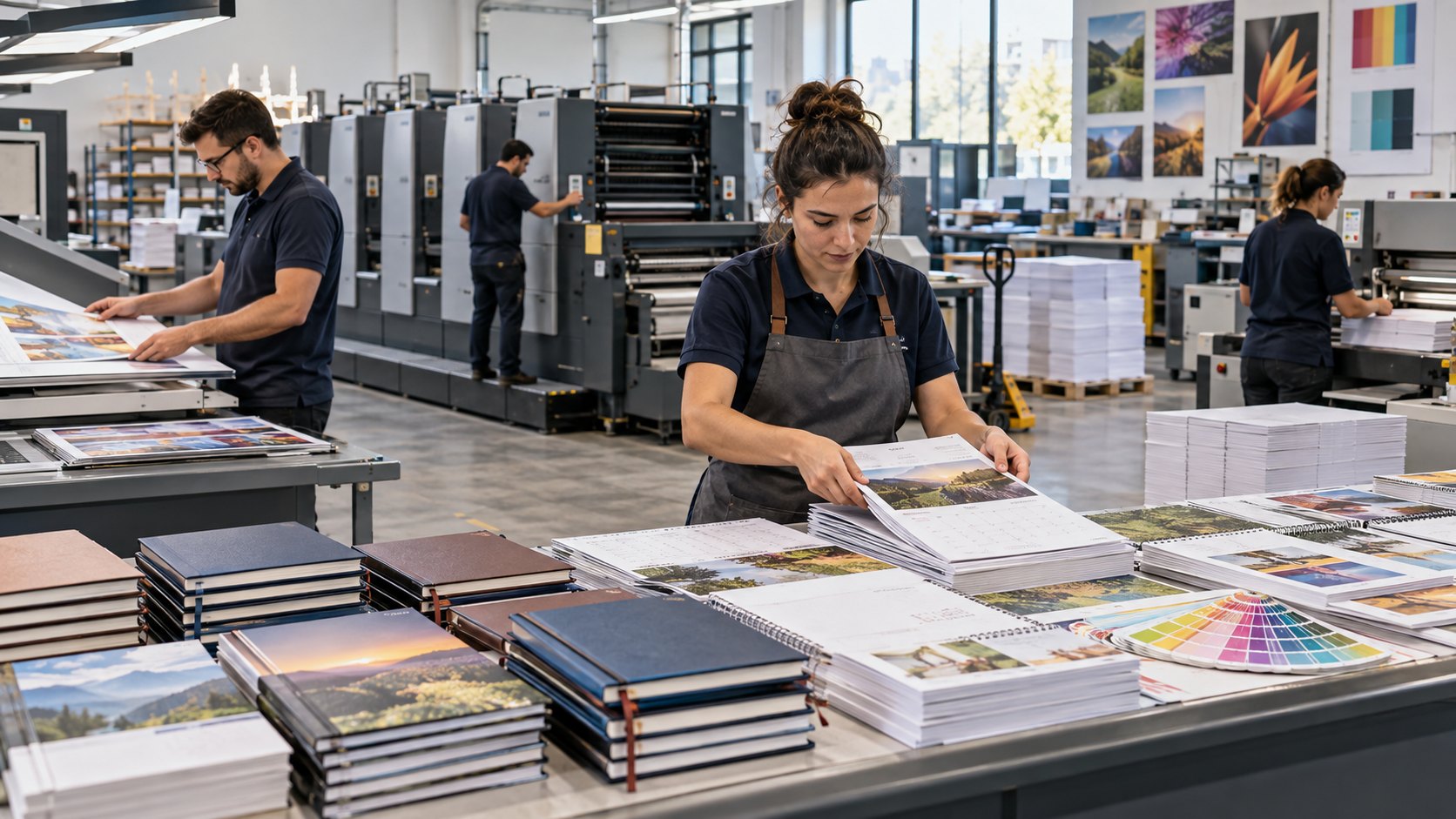
It is also three businesses wearing a single activity name, and they behave nothing alike. Corporate gifting — diaries, planners, calendars, folders — is violently seasonal and settles almost entirely into the last quarter of the year. Business forms, the invoice books and delivery notes and job cards that keep a workshop's paperwork moving, are steady, unglamorous, repeat work in a category software has been eating for two decades and has not finished. Personal stationery — invitations, visiting cards, monogrammed sheets, anything foiled, embossed or letterpressed — is tiny in volume, expensive per piece, and the only one of the three where a customer will pay for craft.
What this line covers, and it is broader than a press
The activity name is long, and the length is doing real work. It lists the products — diaries, calendars, business forms, other commercial printed matter, personal stationery and other printed matter — and then it lists the means: letterpress, offset, photogravure, flexographic and other printing presses, duplication machines, computer printers and embossers. That last clause is the part worth reading twice, because it places a digital print shop and an offset printing house on the same licence line.
Practically, then, the line covers making printed matter for a business to use or to give away, and printed matter for a person, by any means at all. The examples worth naming are the ones people assume must be somewhere else: letterheads, envelopes, continuous and carbonless form sets, delivery notes and gate passes, compliment slips, visiting cards, certificates, menus, notepads, presentation folders and dividers, diaries, wall and desk calendars, invitations and order-of-service booklets, and the embossed or foiled version of any of them.
Where it stops
Three boundaries matter, and each is a separate activity rather than a grey area. Newspapers, magazines, books, maps and — importantly — cheques, documents of title and other security papers belong to a different printing line, and security work in particular is nobody's side project. Labels and tags are a second line, because a label is a packaging component bought against a specification rather than a stationery item bought against a requisition. And printing directly onto objects and materials, which is where branded drinkware and engraved awards live, is a third, even when the same client orders those alongside the diaries.
The one decision that separates two kinds of shop here
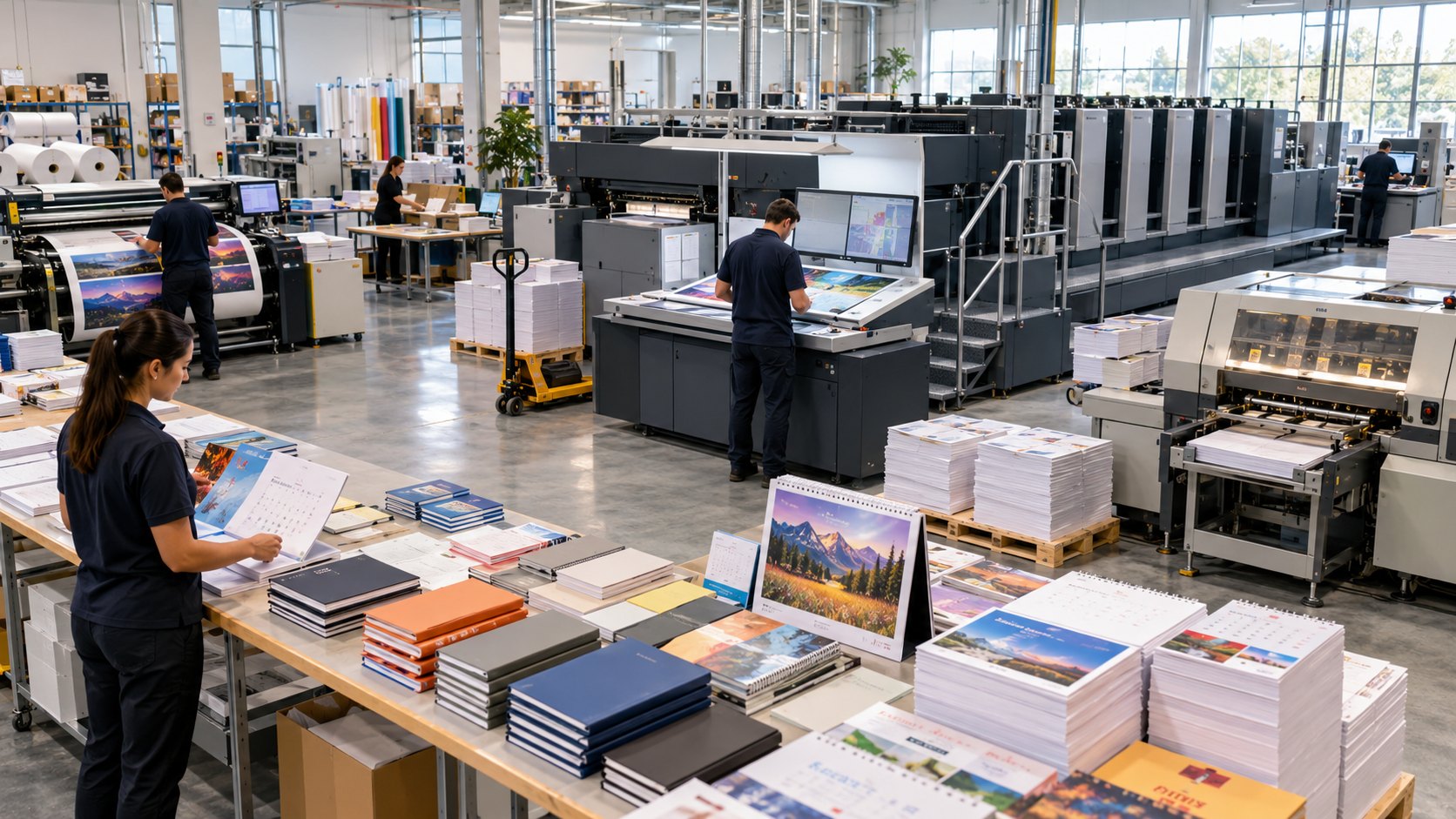
A press earns its keep on a long run of one thing, because the cost of setting it up is spread across the run. A digital machine earns its keep on a short run, or on a job with fifty versions, because there is nothing to set up. Almost every quoting mistake on this line is a failure to ask which of the two a job actually is before pricing it — and the finish usually decides, because foil, embossing, die-cutting and letterpress all need tooling and a press pass whatever the quantity turns out to be.
- Read the job as a quantity and a finish, not as a product name
- Count the versions, because each version is another set-up
- Does the finish itself need a press — foil, embossing, die-cutting, letterpress
- YesTooling and a press pass go into the price, whatever the quantity is
- NoA digital machine and a guillotine will do it, and the price is per sheet
- Quote the set-up separately from the run, so the customer can see the crossover
- Two shops, one licence lineWhich is what the activity name means by admitting presses, duplication machines, computer printers and embossers alike
Three buyers who have nothing in common
The office that has run out of something
An administrator reordering letterheads, envelopes, forms or visiting cards. The order is small, the specification is last year's, and the only thing being judged is whether the delivery arrives when it was promised. It is the least interesting work on the line and the reason a shop survives a quiet summer, because it repeats without having to be sold.
The marketing or HR budget in the fourth quarter
Diaries, planners, calendars and folders bought as year-end gifts, in the hundreds or thousands, branded, often with a bespoke cover treatment. The margin is decent, the volume is real, and the window is short enough that capacity in October and November is the binding constraint on the whole year. A shop that fills that window with a few large corporate accounts has a different business from one that does not.
The person spending their own money
Weddings, engagements, graduations and family celebrations. Here the buyer is an individual, or a planner acting for one, the quantities are small, the expectations are high, and the willingness to pay for letterpress, foil, edge painting, envelope liners and hand assembly is genuine. This is the part of the line where craft is the product, and the only part a competitor with a cheaper press cannot take away on price.
And the founder it suits
Someone who can estimate. The machines on this activity are available to anybody, the paper is available to anybody, and the difference between a shop that makes money and one that does not is almost entirely the quality of its quoting and its proofing discipline. One approved proof that nobody actually read costs a whole reprint, and reprints are where the margin on this line goes to die.
Why this one is almost always a mainland licence
Most licensing questions on this activity have the same answer, and it comes from the customers rather than from the rules. The buyers here are down the road: offices, schools, clinics, hotels, contractors and private individuals in the same emirate, placing small orders at short notice, with a meaningful share of the work arriving because somebody walked in or somebody was recommended. A licence that lets you sell directly to those customers, on the UAE market, from a commercial address they can reach, is a mainland licence.
A free zone company can print. What it cannot easily do is serve that customer base directly without a distribution arrangement on the mainland side, and for a business whose orders are small and frequent, a distributor's cut applied to a hundred small invoices is not a structure that survives contact with the year. The free zone case does exist and it is specific: printed matter produced for export or for group companies abroad, or a plant sited in a zone because the zone had the industrial unit and the power supply the presses needed. Where the customer is a UAE business or a UAE resident, the mainland answer holds.
Two practical points follow from that rather than being separate decisions. The first is premises: this line can be a small commercial unit with digital machines and a finishing bench, or an industrial unit housing offset presses, and the licence does not decide which — the equipment list does. The second is people. Presswork, finishing and bindery are hands-on trades, and staffing them means work permits and labour contracts under the federal employment framework rather than anything print-specific.¹ What a licence costs to take and to hold depends on the emirate, the premises and the product mix, and conditions differ enough between emirates that the comparison is worth making against the actual plan rather than in the abstract.²
One more thing to settle early, because it is often assumed to be part of the print licence and is not: material intended for publication and distribution, rather than for a client's own internal use, falls under the country's media and publication controls, and that is a separate question from the activity on the trade licence.³
Where this is the wrong purchase. If the intention is to publish rather than to print — to own a title, a magazine or a book list — this activity is the wrong instrument. It licenses the making of printed matter to a customer's order, and content issued under your own name is governed somewhere else entirely.
Corporate tax applies as it does to any UAE business, at nine per cent on taxable income above AED 375,000 and nil below that, with a zero rate available to a qualifying free zone person on qualifying income subject to the substance conditions.⁴ Personal stationery sold to individuals is sold with value added tax inside the price, and enrolment for it with the Federal Tax Authority follows the same thresholds as any other trade.⁵
References
- Work permits and labour contracts for press, finishing and bindery staff. Ministry of Human Resources and Emiratisation
- Licensing and municipal conditions differ between emirates; Sharjah's own requirements are a useful comparison against Dubai's. Sharjah Government
- Media and publication controls on printed matter intended for publication and distribution. UAE Government portal
- Federal Decree-Law No. 47 of 2022 on the Taxation of Corporations and Businesses. Ministry of Finance
- Value added tax and corporate tax enrolment and filing. Federal Tax Authority
Elsewhere in Manufacturing
Activities that sit beside this one
Most licences carry more than one activity. Adding a neighbouring line at the application stage costs a fraction of amending the licence afterwards.
Begin with a clear conversation
Tell us what you intend to build.
A consultant will map the structure, jurisdiction, approvals and likely cost against what you actually described — not against a package.
