

Activity CZ 20
How to Start a Design & Artwork Services Business in Dubai
A design and artwork licence is quick to hold and keeps no competitor out. What the studio actually sells, who pays for it, and why the client list settles the jurisdiction question.
ConsultZone licensing desk
- Activity code
- CZ 20
- Category
- Manufacturing
- Reviewed
- Read
- 8 min
Listen instead
40 seconds
An audio summary of this guide.
Topic summary
How to Start a Design & Artwork Services Business in Dubai
Almost nothing about this business sits on a balance sheet. A design and artwork studio owns a few laptops, some software subscriptions and the working time of people who are good at something hard to describe. There is no stock to finance, no plant to commission, no shipment to clear. That is why the licence is one of the easier ones in this catalogue to hold — and exactly why holding it achieves so little on its own, because the same licence is available to everybody else who wants it.
So the page worth reading is not about how to obtain the licence. It is about what the licence lets you invoice for, what it quietly excludes, and which of two jurisdictions your client list points at.
What the studio is actually selling
Not files. A studio that believes it sells files prices by the hour and competes with whoever is cheapest this month. What a design and artwork business sells is permission to use a piece of work — in named media, in a named market, for a named period. The identity is made once; the usage is sold repeatedly. Extending a campaign's licence to a second market or a second year is revenue with almost no new cost behind it, and it is the difference between a studio that grows and a studio that is merely busy.
That has a practical consequence for the paperwork rather than for the art. The contract has to say who owns the artwork once the invoice is paid, what happens to the working files, and what the client may do with the result afterwards. Clients in this market ask that question late and expect the answer to have been written down already.
The people who buy this licence, and the one who should not
The freelancer who has outgrown invoicing personally
The most common case by a distance. The work already exists and the clients already pay; what is missing is a company that can issue a compliant invoice, sponsor its owner's own visa and be accepted onto a procurement system. This is the smallest version of the licence and the one case where the licence itself is the whole purchase.
The studio founder with two or three people
Here the licence is the least of it. The decisions that matter are the premises, the visa allocation those premises support, and whether the first hires are employees or subcontractors — because each answer carries a different obligation towards the federal labour authority.¹
The overseas studio opening a delivery arm
A studio in London, Mumbai or Cairo with regional clients wants a UAE entity to contract and invoice through. The question is where the work is consumed rather than where it is made, and that is the question the last section answers.
The brand team spinning out
An in-house team leaving a client in order to sell the same service back to it. Strong start, obvious risk: the first client is also the former employer, and the contract has to survive that relationship changing shape.
Where this is the wrong licence. Printing what you design, buying media space on a client's behalf and building the application whose screens you drew are three things this line will not carry. Each belongs to somebody else's activity, and amending afterwards costs more than choosing correctly at the outset.
What the line lets you sell, and where it stops
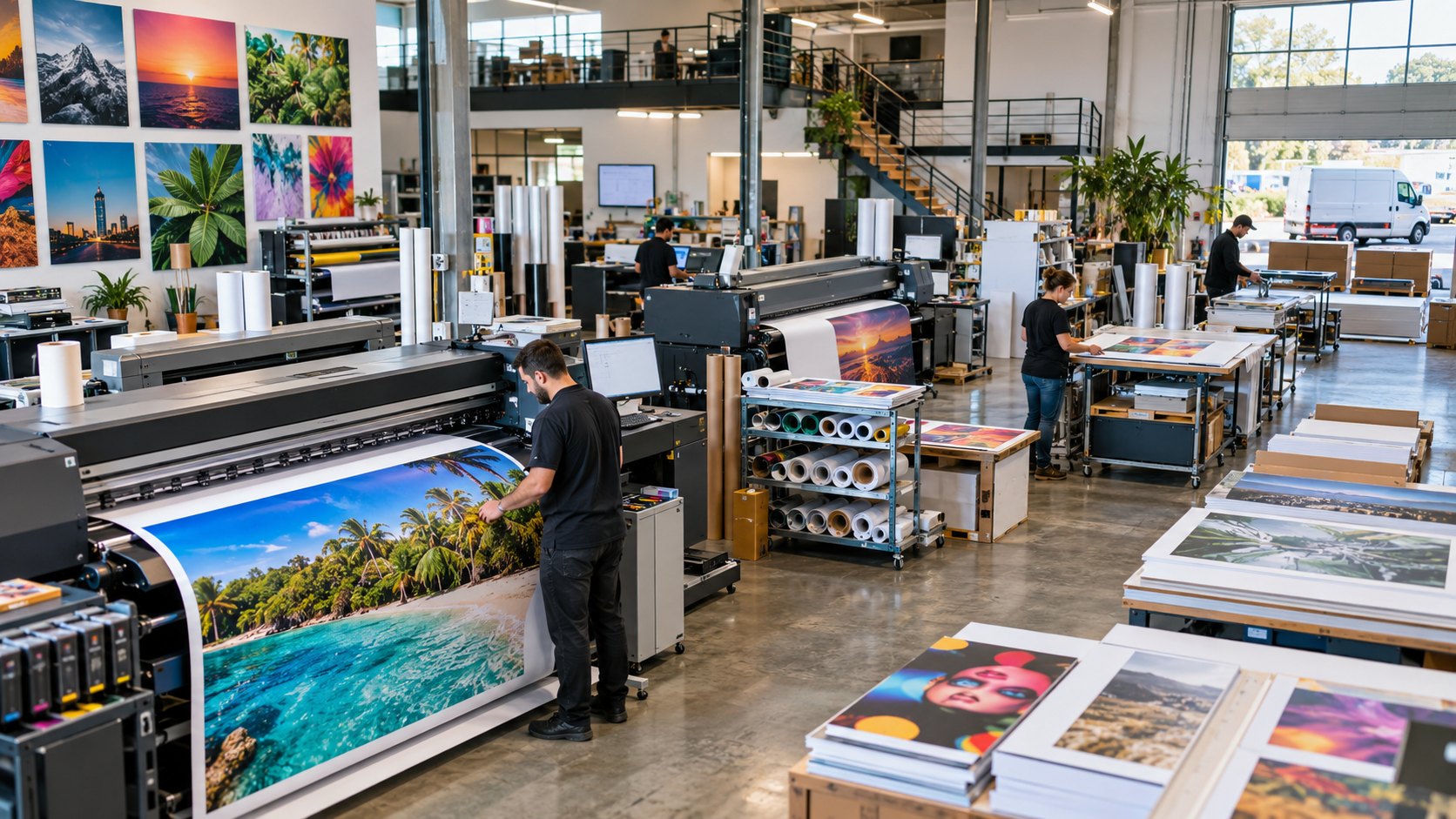
Design and artwork services covers the creative and production work that turns a brief into finished visual material somebody else then uses. In practice: brand identity and the guidelines that govern it; packaging and label artwork; campaign key visuals and the adaptations that follow them across print, outdoor and screen; presentation, report and pitch design; illustration and image retouching; signage, wayfinding and environmental graphics as drawings rather than as fabricated objects; and the artwork files a client's own agencies and suppliers then work from.
The boundary with design of printing products
The neighbouring line in this catalogue — design of printing products, covering sketches, layouts and dummies — is the same craft aimed at a different buyer. That work is pre-press: it exists to be handed to a press, and the customer is usually the printer or the print buyer. This line is the broader commercial studio, selling the idea and the artwork to the brand owner, whose press is somebody else's problem. A studio that genuinely does both should say so before the licence is cut rather than after, because the two lines answer to different customers and only what is on the licence may be invoiced.
Four things it does not reach
Printing and production: designing a carton is inside the line, printing it is a press activity with its own premises and its own conditions. Media placement: choosing where an advertisement runs and buying the space is an advertising activity, not an artwork one. Fabrication: the signage you specified has to be manufactured and installed by somebody licensed to do that. Software: screens drawn are artwork, screens built are development work.
A studio's real conditions are a desk, a visa quota and a bank account
The premises requirement here is the lightest in this catalogue, which is precisely why it gets decided carelessly. A studio needs desks, a network and somewhere to meet a client; it does not need a workshop, a cold store or a yard. What the space does decide is the visa allocation, because that follows from the premises rather than from the activity — so the office is a hiring decision dressed as a rent decision. Take the desk arrangement that matches the headcount you will actually reach, not the one that matches the headcount in the plan.
Two further conditions are worth settling before the first invoice rather than after. The bank account: a services company with no inventory, receipts from abroad and a founder who is also the only employee attracts more questions at account opening than a trader with a warehouse, and the answer to those questions is contracts and a credible client list. And tax: the company sits inside the corporate tax net like every other UAE business, and enrolment for VAT becomes mandatory once taxable supplies pass the federal threshold the Federal Tax Authority publishes.² Whether a fee invoiced to a client outside the UAE is zero-rated depends on conditions that same authority sets, which is worth confirming before the invoicing pattern is established rather than in the first filing.³
The client list decides the jurisdiction
Clients raise this before anything else and get it wrong more often than any other decision on this page, because they put it as a cost comparison. It is not one. A free zone licence and a mainland licence buy different rights to sell into the UAE market, and for a studio with no goods and no premises constraint the only real input is who signs the purchase order. Government and semi-government buyers, retail and hospitality brands with outlets here, developers and contractors commissioning brand and signage artwork, and UAE agencies passing on overflow work are all buying from inside the market. Overseas brands and studios paying from abroad are not. And a studio taking its first licence before it has a client list at all is choosing the cheapest lawful way to start invoicing while the work is still being won.
who signs the purchase order, and where that puts the licence
- Government and semi-government buyersPublic procurement generally contracts with mainland suppliers
- Retail, hospitality and property brands with UAE outletsBought by a UAE business and consumed in the UAE market
- UAE agencies handing over overflow artworkOne UAE company invoicing another for work done here
- Developers and contractors commissioning brand and signage artworkThe buyer sits inside the market the work is made for
Mainland licence
- Overseas brands and studios paying from abroadNothing is sold into the UAE market, so the zone's limits do not bite
- A first licence taken before the client list existsThe cheapest lawful way to invoice while the work is still being won
Free zone licence
Read the shape of that rather than the rows. Most design money in this market belongs to buyers who are themselves inside the UAE market, which is why the mainland side of the drawing is the heavier one. The free zone answer is right for a studio whose work genuinely leaves the country — and expensively wrong for one that intends to serve UAE brands and finds the limitation out after signing its first retainer. Which conditions attach in a particular emirate or zone, and what the licence costs to hold there, depend on the jurisdiction and the premises, and ConsultZone confirms both for the specific case.
References
- Ministry of Human Resources and Emiratisation — work permits, labour contracts and the obligations that attach to employing or subcontracting creative staff. Ministry of Human Resources and Emiratisation
- Federal Tax Authority — VAT enrolment thresholds, the treatment of services supplied to clients outside the UAE, and corporate tax filing. Federal Tax Authority
- Federal Decree-Law No. 47 of 2022 on the Taxation of Corporations and Businesses — the instrument behind the corporate tax position. Ministry of Finance
- UAE Government portal — how mainland and free zone companies differ in what they may sell inside the UAE market. UAE Government portal
Elsewhere in Manufacturing
Activities that sit beside this one
Most licences carry more than one activity. Adding a neighbouring line at the application stage costs a fraction of amending the licence afterwards.
Begin with a clear conversation
Tell us what you intend to build.
A consultant will map the structure, jurisdiction, approvals and likely cost against what you actually described — not against a package.
